
How I Grow & Monetize My Website — Tips from an SEO Expert
My site has 62 pages, 5,500+ monthly traffic, and makes 4 figures a month.

A well-performing website means many opportunities.
As a website owner, you can monetize your website by running ads, selling your products and services, participating in affiliate programs, and more!
Opportunities are endless!
Many enthusiasts launch websites with big goals only to fail later. This is not my assumption. It’s proved by data.
According to Ahrefs, roughly 90.64% of all web pages get zero organic search traffic from Google.
It’s mind-blowing that we only see roughly 10% of existing web content!
Some website owners are luckier than others.
Perhaps, it’s not even luck.
As an SEO specialist who worked with SaaS and B2B companies, I’ve learned proven-to-work strategies and implemented them while growing my own website.
Since July 2021, I have published over 60 web pages, generating roughly 5,500 organic search visitors monthly.
Here is the proof.
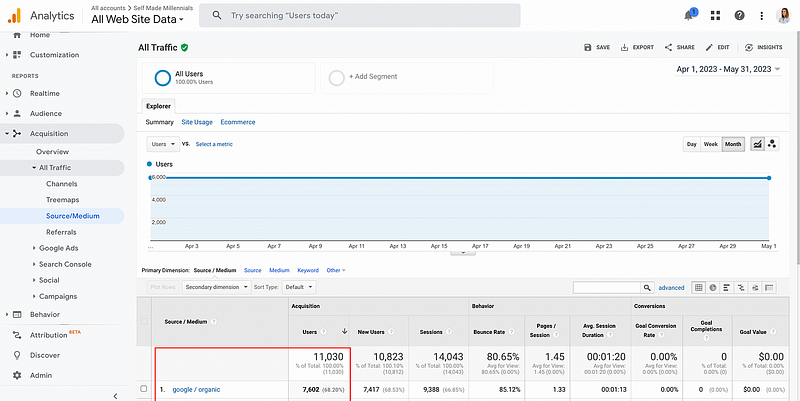
When I shared this news online, some people said, “Oh, you could do better.” I agree, but only to some extent!
I’ve worked on my website next to my full-time job for a year!
Imagine coming home after an exhausting day, and instead of watching Netflix or socializing with friends, you open your laptop and start typing.
It was extremely challenging.
But my desire to grow a website was bigger than any excuses. So, I diligently worked on it.
Today, I monetize my website using various strategies and make 4-figures monthly.
If you want to grow and monetize your website, these tips will help you get started.
1. Target keywords with business & search traffic potential
If no one is searching for what you write about, you should not expect much from your content.
The key to creating a consistent traffic-generation channel is niche keyword research, which will help you discover users’ frequently used search phrases.
For example, let’s compare the following two keywords:
“healthy meals” and “nutrient-dense meals.”
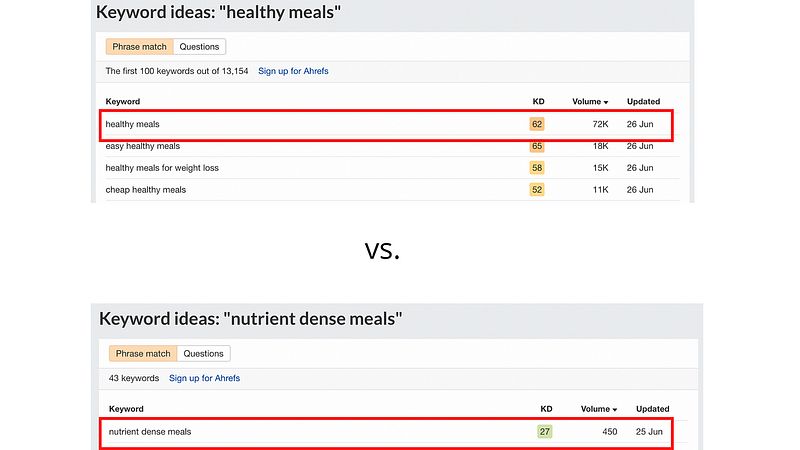
According to Ahrefs, the “healthy meals” keyword is competitive and has a 72,000 search volume in the USA. That’s a lot!
You’ll get relevant and targeted traffic if your website ranks high for this keyword. However, new websites have almost zero chance of ranking in the top 10 for such competitive keywords.
The second keyword has low traffic compared to the first one. Furthermore, it has relatively low competition (27/100).
These keywords have similar search intents, but the performance metrics differ. The second one is less competitive, giving new websites higher chances of ranking in the top 10.
As an SEO specialist and a website owner, I follow the same principle when searching for the right keywords for my website. I focus on keywords with high search traffic potential and low competition.
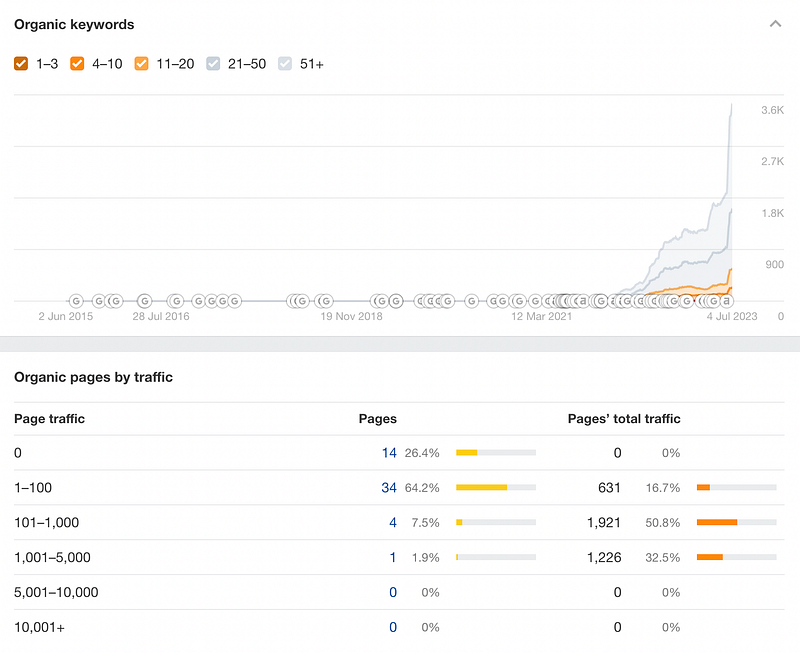
Today, roughly 73,6% of all my website pages generate traffic from organic search results.
I explained my step-by-step process in this ebook if you want to achieve similar results for your website.
2. Analyse search intent
One of my clients asked me,” Look, we publish optimized content on our blog, but it does not rank. We built several backlinks, but it did not help. The keyword should be easy to target. What’s the problem?”
Your website pages won’t rank on Google if they don’t align with users’ search intent. What is it? It’s a “why” behind users’ search queries.
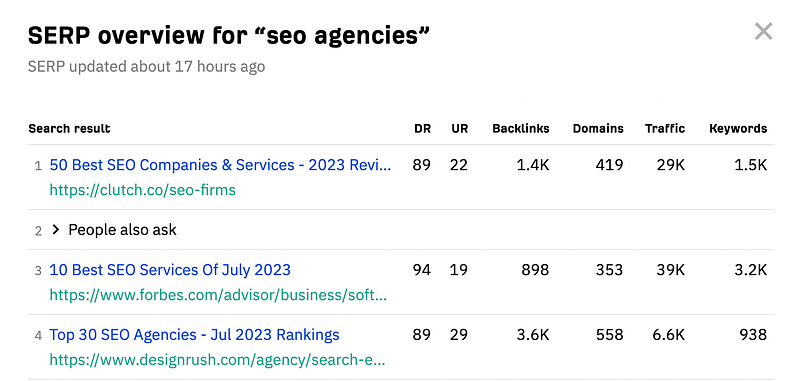
Users searching for “SEO agencies” on Google are looking for options. They don’t necessarily want to read your sales page and buy from you. That’s why listicles populate the top 10 results.
If you don’t know it, you’ll waste a lot of time squeezing your landing pages into the top 10.
That’s why I always recommend analyzing the top-10 ranking web pages before creating optimized content.
It won’t take more than 10 minutes of your time, but the results are worth it.
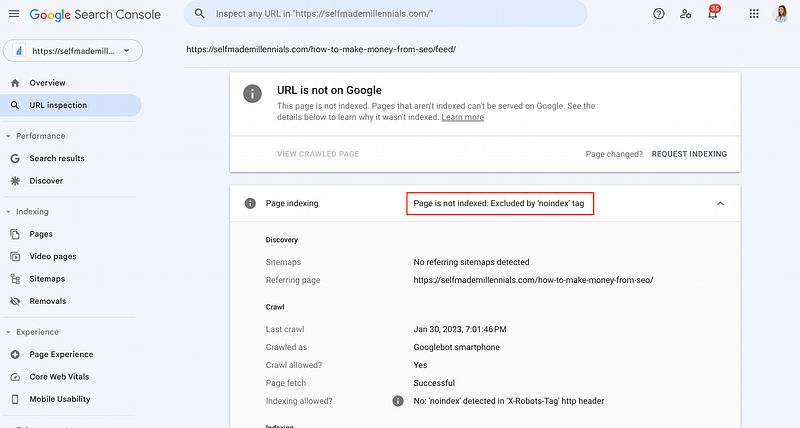
3. Ensure your content is actually on Google
A published web page does not guarantee that it will rank in organic search results.
Search engine bots have to crawl your new web page first and add it to its main index (a massive database of online content) before it will start ranking.
How do you check whether your website is indexed, and if not, why?
Google Search Console is a free tool that shows how your website performs in organic search results and whether your website pages are indexed. If not, you’ll also see the reason why.
I wrote an in-depth piece on “how much time is required to start ranking on Google.” If you’ve recently launched a new website, you’ll find it useful.
4. Optimize your work with tools
I could not grow my online business as a solopreneur without using various tools.
As for now, I use the following tools to create, optimize, publish, and promote my website content.
- Ahrefs — my keyword research and site audit tool.
- Semrush — a powerful alternative to Ahrefs I use almost daily. It has a free version and a 30-day trial.
- Frase — this is a beginner-friendly tool to optimize content for SEO. I’ve used its AI writer feature.
- Robinize — a cost-effective tool I’ve recently discovered for quick keyword research and topics you need to drive organic traffic. I use its free version.
- Convertkit — the email marketing software I use to nurture and monetize my audience.
5. Monetize when you get at least 100 visitors a day
Trying to monetize your website when there is no traffic is worthless.
Therefore, don’t waste time on monetization strategies at the beginning of your website growth. They won’t help you make money.
Instead, focus on creating optimized content to attract the target audience to your website.
My website had been live for 1.5 years before this webpage started making me $500+ per month.
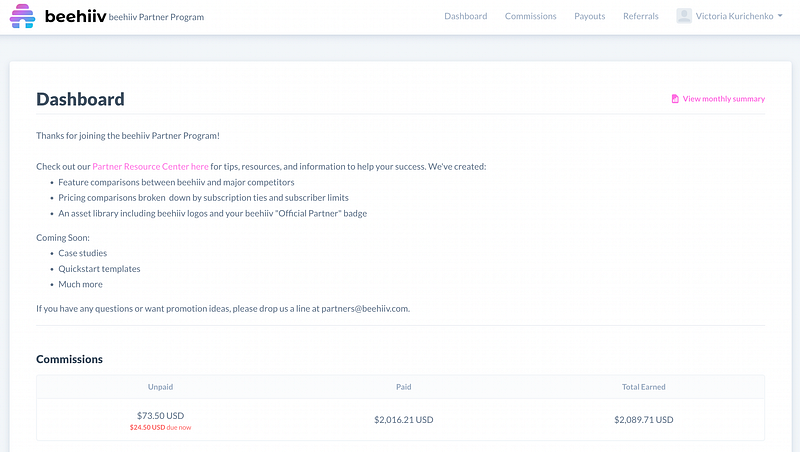
I use the following strategies to monetize my website:
- Selling my digital products and services
- Affiliate programs ( I search for affiliate programs on PartnerStack and Impact)
- Sponsored brand mentions.
In conclusion
My experience proves that a small website without a fancy design can rank high in search results and make sales.
I achieved it by targeting low, competitive keywords with search traffic potential, optimizing my content for organic search, and using referrals.
I practiced SEO writing for four years before I realized what strategies work and can be replicated.
If you want to grow your website, you are now one step closer to making it happen.
📖 Grab my guide to learn how I create blog posts that hit the Google front page.
📈 Want to learn more about SEO? Join my free email course.