
HOW I DID IT
How I Got Published in 6 of Medium’s Largest Publications
9 steps to get into the best and biggest
The quickest way to earn any (real) money and grow your audience on Medium is to get published in one of the top publications. I should know. After slogging away in obscurity for a few months with mostly self-published pieces, I took a chance and submitted to some of Medium’s most popular publications including:
- The Startup (685k followers)
- P.S. I Love You (224k followers)
- The Writing Cooperative (212k follower)
- The Ascent(107k followers)
- MindCafe (100k followers)
- Better Marketing (90k followers)
- Curiosity Never Killed the Writer (54k followers)
- The Post-Grad Survival Guide (34k followers)
- and about a dozen others
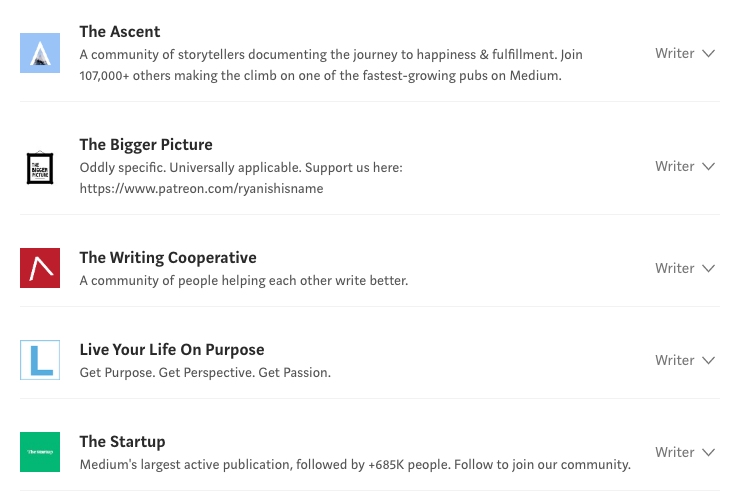
And I got published, a lot, actually.
And you can too. You just have to follow the checklist below before you click “Add to publication.” Oh, and it helps if you’re a good writer. Did I already say that part? It should be obvious, but I’m just gonna go ahead and say it again in case that wasn’t clear: You need to be a good writer to get published in major publications.
Phew. Got that out of the way. Now that we’ve established that you’re a solid writer, you’re ready to break into the big-time. Here are nine simple steps to help get your foot in the door at some of the biggest, and best, publications on Medium.
1. Create a Professional Medium Profile
One of my first tips for beginner writers is to create a professional portfolio. That same advice holds true for submitting to publications on Medium. The quickest way to become a professional writer is to look like a professional writer. Luckily, that doesn’t mean wearing a blazer in your profile picture or pretending you’re Hemingway.
It just means putting a little thought into your Medium profile and adapting it to suit the platform. You get 160 characters. Use them wisely.
Editors for top publications get hundreds, sometimes thousands of submissions, each week. They don’t have time to work with amateurs. Make sure your profile doesn’t make you look like a newbie. Here’s what your Medium profile should include:
- Your full name (or pen name). Don’t be cute.
- Your area of expertise and any (quick) qualifying information. Are you an MIT psychics professor? Have you traveled to 100+ countries? Did you help build the Mars Rover? Are you a former call girl? Editors (and readers) want to know why they should listen to your story. Tell them in your profile.
- One or two relevant links. Less is more when it comes to links, but it’s more than ok to promote your other writing or projects. Include your personal website and/or newsletter landing page (you should have one) but stop at two links. If you have a huge social media presence (Instagram, Twitter, Twitch, Quora) include your handle if you think that matters
- Any other major publications you’ve written for. This can be a Medium publication of course, but by all means name-drop if you’ve written for The New York Times, McSweeney’s, Vox, or Vanity Fair. This is no time to be humble.
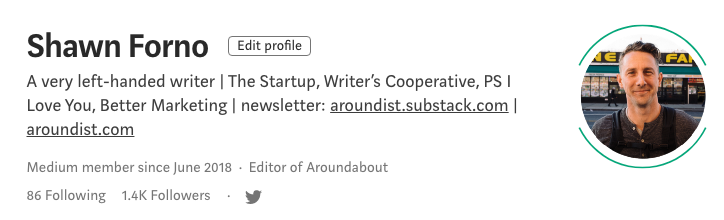
When an editor sees that you know how to present yourself, and you’ve been approved by other popular publications, they’re far more likely to add you to their roster of writers and eventually publish your writing.
2. Carefully Read (and Reread) the Publication Submission Guidelines
You’d think this would be a given, but it’s amazing how few people actually read the submission rules and guidelines before they submit their stories to major publications. Seriously, it’s unreal.
It’s not rocket science, guys. Every single publication has a clear, concise submission guideline where they literally spell out the types of stories they publish (and don’t publish), as well as their formatting preferences, preferred article length, and a thorough list of do’s (“include photo credits for every image”) and don’ts (“don’t include ads or affiliate links in your article”). If you can’t comply with these explicit instructions you have exactly 0% chance of getting published in a large publication.
Take the time to read and re-read the submission guidelines. Pay special attention to section heading directions, preferred topics, article prompts and suggestions, and whether the publication only accepts unpublished drafts vs. finished articles before you click “Add to publication.”
3. Follow the Publication (and the Editor)
This is another easy one. If you aren’t following the publication you clearly don’t “love what they publish.” Follow a publication for at least a week (hopefully longer) before submitting.
Bonus points if you go the extra mile and follow the editor and one or two of their more prolific writers. It shows that you actually like the work they produce.
4. Read the Publication for at Least a Week
You have to know what makes a publication tick before you can write for it. Every publication has a niche, tech, relationships, science, productivity, essays, but until you immerse yourself in the voice and style of that specific publication, you’re not going to be able to speak to their readers. And that’s what really matters to editors.
Obviously, each article should still sound like you, but there’s a rhyme and rhythm to each publication. Learn how to speak their language and format according to their general style before you submit.
5. Format Your Submission Carefully
Again, this goes along with the submission guidelines, but I’m bringing this up for another reason. Poor formatting can kill an otherwise great article.
Medium is largely a mobile-first content platform. I like to read at my computer, but that’s not how most people consume content on here. So if you’re writing these massive, unbroken paragraphs of text it’s not going to translate well. And publications won’t be interested.
Editors want submissions that are ready to publish. No editing required aside from possibly tweaking your title (that’s the most common edit I’ve seen so far). If your piece is full of basic formatting errors, like random pull quotes and tons of images, publishers will pass.
6. Proofread Your Story a Million Times
One typo can be all it takes to ruin your submission. Check and recheck and then check your story for errors, grammar missteps, typos, and just plain mistakes. Then go deeper.
- Did you repeat yourself?
- Is there a better way to word that last paragraph?
- Is that the most concise way to make your point?
- Is that the best example you can come up with?
- Are your transitions between sections tight and fluid?
Editors for major publications are professional writers. They can tell when you’ve given an article your full attention and when you haven’t. Don’t waste their time with a first draft.
Edit and proofread every submission to make it as good as you can. Then offer it up to the editing gods with your hands clean and your conscience clean. That’s all you can do.
7. Pick a Unique Featured Image
There’s an art to choosing a unique Unsplash image. And while I know it can be tough to find something fresh and descriptive for each and every one of your articles, it’s especially important when you submit to a big publication.
Do your best to find a new angle and a fresh image, because I guarantee you, an editor is going to be turned off if they recognize your featured image, and they’ve seen hundreds of them.
You’ve worked your ass off on this article. Don’t ruin all that hard work with a basic stock image of a clock or a person working in a coffee shop. Dig a little deeper.
8. Rewrite Your Headline (at Least) Ten Times
Your headline is the most important part of your story. Truly. If an editor isn’t inspired to open your submission based on your headline, they’re probably not going to slog through a 12-minute read about what you learned on your Greek vacation.
It takes time to learn how to write really engaging headlines, but it’s a skill you need to cultivate if you want to get traction with major publications, both on and off Medium.
When you finish your article, rewrite your article at the bottom of your post at least ten times. I’m serious. Try weird variations. Change the point of view to the first, second, and third person. Add adverbs. Take them away. If you can make your headline pop you’re halfway to the big leagues.
I’ve also discovered great headlines for my stories when I rewrite the SEO description. Being forced to “sum up” my story in 155 characters is usually just the push I need to condense my headline down into a real winner.
9. Sleep on it
I know you want to publish your latest opus as soon as possible. But there’s no rush. If you finish your article at 11 p.m., maybe don’t shove it in an editor’s inbox that night.
Odds are, you’ll find a few errors or edits if you just sleep on your submission. Even if you finish your piece in the morning, give it a couple of hours. Then reread it. I’ve never regretted waiting to submit a story to a major publication, and I’ve almost always improved my article in the meantime.
Unless it’s incredibly timely, give it a beat. You’ll be glad you did.
10. Get Used to Rejection
You can’t win ‘em all. I’ve been rejected from publications literally dozens of times. It happens every week. And I’m not alone. Even rockstars like Tim Denning get rejected from major publications.
Learn to hone in on certain publications for specific stories and you’ll increase your success rate. But no matter how good you are, it’s never 100%. And that’s ok. At the end of the day, if you don’t find a home for your story at one of the big outlets, you can always shop it around smaller publications, or just start your own.
The Power of Publications
Each of the top tier publications on this list reaches tens or even hundreds of thousands of followers every single day, both on Medium and with their newsletters and websites. Leverage that massive audience and grow your readership (and earnings) with a few well-placed articles.
Who knows, you might even get curated, too.