
How I Got Myself Off Anti-Depressants After 15 Years
Know Your Own Body
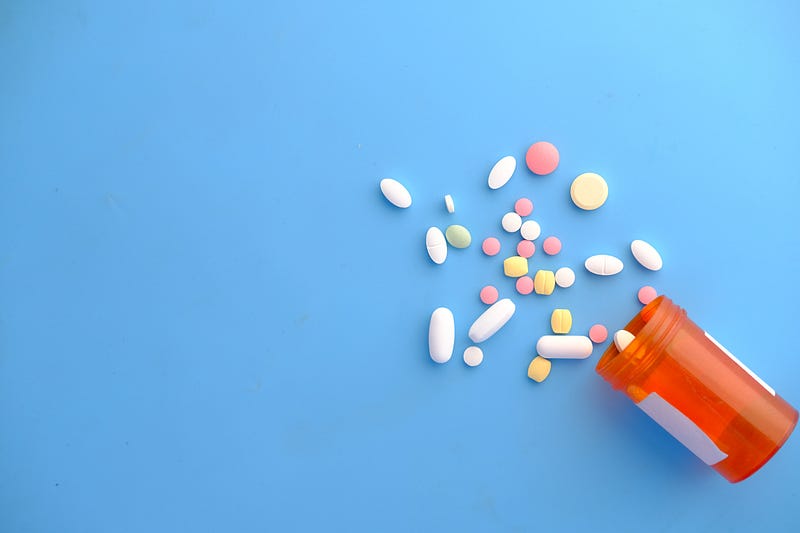
I am one for anti-depressants.
Persistent parental abuse sent me into a depression in my childhood and teenage years, but this was never diagnosed. I just muddled through life sustained by sheer obstinacy.
Severe panic attacks in my 20s (family abuse continued) brought the first course of medication, leading to a long dependency.
Amitriptyline, Clomipramine, Citalopram— the “mild” “first generation” —I have tried them all. To a point they helped — then stopped.
When life did not improve, I had to recourse to “the second generation” — the real “serious” ones.
Prescribing them, doctors warned me that it was still my choice whether to live or die.
I disagreed. Who would choose not to live, if they are given the security, affection, and support they need? In my case, the little red-and-yellow pills worked that magic. I was not exactly happy, but at least not suicidal.
Meanwhile, I started observing myself. I listened to my thoughts and feelings and tried to establish patterns. I tracked my moods and symptoms and noticed how closely they corresponded to my life circumstances.
I found that my depression episodes never happened “out of the blue”. Every attack or deterioration of my condition was linked to a cause. For 15 years this has been my dead-end, “hourly paid” job. Each term I was left with very few teaching hours, I slid into anxiety and emotional decline; every time matters improved, I felt “nearly normal”.
I had to teach myself to manage my anxiety, rather than expect it never to occur. Leaving my abusive environment, I was unprepared for “life in freedom” — I had to teach myself to communicate and problem-solve through observing people and reading books. I saw a counselor, who also helped.
I realized that the more strategies I learned to cope with life, the less frequent my anxiety attacks would appear, and the more prepared I would be to “meet” them.
I started noticing when I needed an increase or a reduction of the medication dose. I even tried guessing by how much. With each change of circumstances and mood, I went to the doctor; they tested me, confirmed my hypothesis, and changed the prescription dosage.
My medicine allows dosage alteration by 75mg. I started on 150mg (medium dose). I soon learned when I needed 225. During happier times I went down to 75. Only one time did I need an increase to 300mg — this was an embarrassing period. I felt defeated, though I understand now, I should not have.

Slowly I started “getting used” to life’s unfairness and struggles. I became more able to manage my panic — at one point I even stopped having anxiety attacks. I learned how to beg managers for more work. I extended my applications to more colleges, despite the exhaustion and frustration of commuting. I learned to trust God more.
After a couple of years of leveled moods on low medication dosage, I said to my doctor that I would like to try to come off it completely.
He was suspicious. They always are. They tell you that, since you have been on the pills for so long, you will never be able to function without them. Still, he agreed to try.
My psychiatrist prescribed a 2-week “weaning” course, daily alternating a lower and a higher dose until you’ve reached the minimum, which you then alternate with medication-free days.
This got rid of the side effects in my body….but not of the depression symptoms.
A month after the end of the course, the symptoms returned with violence, even though there were no real triggers for them (I was going through a relatively “peaceful” life period).
Beaten again, I had to go to the doctor for another prescription. I cried, trying to reconcile myself with the fact that I may never be able to live without anti-depressants.
The “light at the end of the tunnel” came when I accidentally came across an article in a medical magazine — I do not even remember where. A specialist psychiatrist there shared his view that doctors do not give patients long enough periods to adjust to life without the anti-depressants. In my case, this had been 2 weeks — “a joke”, according to this article.
The psychiatrist stated that weeks between the dosages was not enough for patients, who had lived on the medication for years. His advice was to prolong the gradual reduction periods to months. Thus, the complete weaning may come after years.
This made sense. It corresponded to my experience of my body and the changes I had noticed in it. My body had been slow to adjust to stress triggers; it probably would also be slow to adjust to living without its “props”.

I went to the doctor and showed him the article.
We discussed it and agreed I had nothing to lose.
We decided to gradually reduce my medication by devoting 4 months to each stage, first alternating daily between a higher and lower dose, and then “consolidating” the lower doses by another 4 months:
We came up with the following schedule:
July — October — 225/150 mg alternate daily
November — February — 150 mg consistently
March — June — 150/75 mg alternate daily
July — October — 75 mg consistently
November — February — 75/35 mg — alternate daily
March — June — 35 mg consistently
July — October — 35/0 mg — alternate daily
November…. freedom!!!
In total it took me 2 years and a bit.
This is not to say that I did not have a “wobbly” period when I came off the medication completely. I had a couple of crying spouts and periods when I spent days in bed. But these quickly passed, as I applied my life-coping strategies and forced myself to spend time with cheerful people.
Someone told me about the existence of a herb, called St John’s Wort, which is known for its anti-depressant qualities. Following my coming off the chemical pills, I took the herb in tablet form, for 4 months — the maximum length of treatment recommended on the packet.
So far I have not looked back.
Rummaging through the internet again, I never found the article that changed my life. I regret I never saved it. But its common-sense principles and positive effects have stayed with me.
Takeaway:
- Observe and listen to your body. Notice patterns of changing moods/depression symptoms; what triggers them, and what relieves them.
- Learn anxiety management and problem-solving skills. Observe people, read books, and try counseling. Do not underestimate your friends and family.
- Find a good doctor who understands you and would be willing to support you on your journey. Ask them to prescribe you a long course of gradual reduction of your medication dosage.
- Do not disclaim herbal medicine — it has been practiced by 1000-years-old cultures.
- Celebrate your successes and cry if you need to, every time you need to.
- Do not blame yourself. If in the end, you fail again, it will not have been your fault. Love yourself, regardless.


