
How I Got My Startup Covered in the New York Times
My exact 7-step process

Since joining my most recent startup a year ago, the company has been featured in the New York Times, TechCrunch, The Wall Street Journal, Guardian, CNBC, Fast Company, Wired, and Ad Age. This was based on creating a series of white papers for our niche. I thought I would share some of what I learned from the period from preparing an idea to pitching to journalists.
The Blockbuster White Paper
The channel I used to get media coverage was a “blockbuster” white paper. A whitepaper is a persuasive, authoritative, in-depth report, and represents a fantastic route to PR coverage. Executed well, it represents a brand of thought leadership that provides value for news audiences that this is not a stunt or sales fluff (one of the most famous such blockbuster pieces of content is Mary Meeker’s Internet Trends Report, covered by most of the technology and business media for in-depth insights statistics and research).
For any white paper to succeed in achieving top-level media coverage, it must tick a number of boxes: it should never have been done before, be absolutely core to the unique proposition of your brand, be obsessively researched, avoid selling, and be newsworthy enough to be confidently pitched to premium news publications (such as The New York Times). This article goes through a number of core steps taken to get our research into prime time.
1. Establish Your Niche Area of Research
The company I work for, CHEQ, has a mission to create the “Trusted Web” — using its background in cybersecurity and AI (many of our leaders are former commanders in Israeli cybersecurity) to prevent fraud and fakery in digital advertising and the online ecosystem. Our technology is designed to block online harm, such as ad fraud, and restore trust in the digital ecosystem.
2. Creating a Powerful Newsworthy Angle
With your niche in mind, there requires lots of research to consider ideas and angles to service it. Through vast research, I identified a phrase that had achieved significant traction to describe online harm that CHEQ aims to protect against (from bot attacks to fake news stories). The phrase was “Bad Actors”. The threat of online “bad actors” is summed up by a quote I found from the father of the internet, Tim Berners-Lee:
“While the web has created opportunity, given marginalized groups a voice, and made our daily lives easier, it has also created opportunity for scammers, given a voice to those who spread hatred, and made all kinds of crime easier to commit.”
This led to my decision to create a series of white papers exploring “the economic costs of bad actors online.” The study was designed to be the first comprehensive look at the price paid (in dollars each year) by businesses from attacks by online bad actors. In a series of reports, I set out to reveal the economic price tag for businesses of individual menaces including ad fraud attacks, fake influencer marketing, bot networks, fake news, bots, and brand safety failures.
Knowing that we all like statistics, I realized that putting a cost on these amorphous threats was a tangible way to show they are very real. I was personally and genuinely fascinated to discover how businesses were suffering economically, and I hoped that audiences (including journalists) would also like to find the answers to a major and under-researched economic problem.
3. Collaboration
Because of the economic angle (to reveal the economic cost of these online problems), I decided to collaborate with an economist. Previously, at a professional services firm, Ernst & Young, I managed communications for their EY Item Club, one of the world’s leading economic forecasting groups. I had seen from the inside the power of independent economic research to air economic data relied upon by media (and to indirectly sell our expertise at EY).
I researched and interviewed many economists to find someone who would be comfortable with doing quick and impactful number crunching, but with a passion for presenting data in a readable way. I found Professor Roberto Cavazos, Executive in Residence at the University of Baltimore’s Merrick School of Business.
He shared my passion for delving into these economic issues (the City of Baltimore itself had just faced a massive shut down because of a cyber ransomware attack, so this theme was particularly relevant for the University of Baltimore). Having a noted professor on board helped put our research beyond reproach, providing authority and air cover, and could put our analysis in a different order than the mostly self-serving and sales-driven white papers in the industry.
4. Think Like a Journalist
In having an end goal of PR-worthy research, the reports we created had to quickly appeal to time-poor journalists. I created newsworthy infographics, country data, and headlines in the reports that made the angles and data and analysis clear and digestible. It included interviews with experts in each field, so it was not simply promotional but bigger than one company.
I avoid all sales talk but talked about the problem (not the solution). The use of cuts of individual country data for each problem, where possible, meant that one report could be covered extensively in different countries. For instance, our report on the online cost of fake news was covered across the U.S., UK, and Australia with Indian data picked up by their country’s The Economic Times.
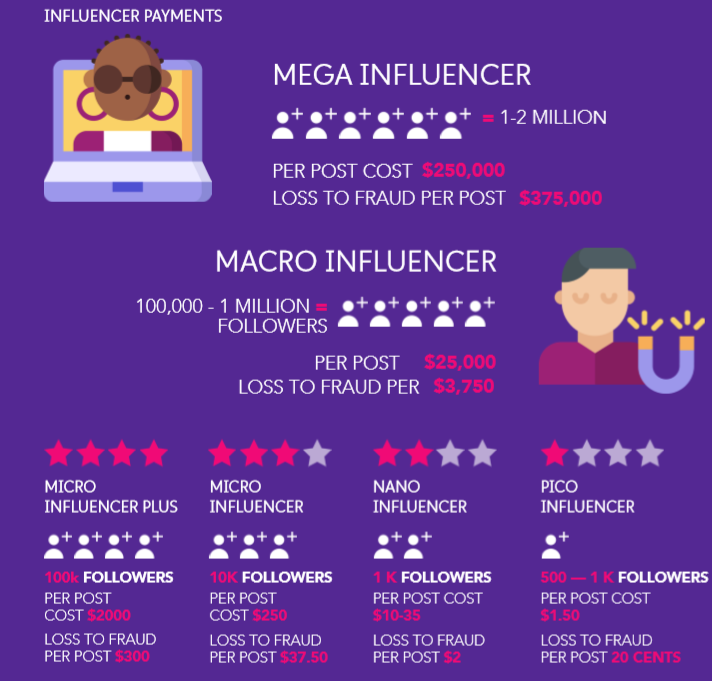
The infographics created were used directly in some of the online news stories. The following image, for instance, was used by ZDNet in their coverage of our analysis that fake influencer follower fraud is costing global businesses $1.3 billion each year.
5. Results
In the end, under this umbrella of “The Economic Costs of Bad Actors Online”, CHEQ and the University of Baltimore have produced the following reports: The Economic costs of Ad Fraud, influencer marketing fraud, OTT ad fraud, brand safety blacklists, and fake news.
These white papers have achieved thousands of news mentions around the world. We have been invited to conferences and appeared as guests at conferences, podcasts, and television studios, and have had prominent academics get in touch about our research. The reports have been downloaded in their thousands by prospects.
6. Pitching
Some words on pitching to journalists: though all of the reports were written in-house by CHEQ and researchers at the University of Baltimore, we had a PR agency pitch the stories to journalists. This freed me to create the reports commission infographics and design and write releases, while the PR agency pitched to top tier journalists.
There were still many journalists that refused to cover the research, but at no point did I feel that we were wasting the journalist’s time. The research had taken an insane amount of time and had drawn on the most extensive data we had, alongside independent sources. This was not data or research that was available elsewhere.
Our strategy involved pitching an exclusive for each report to one premium publication. This is because many journalists value an exclusive and it gives us the chance to have an online news version with detailed interviews with our experts. This requires an earlier process of building a relationship with a journalist in question and working out what they are interested in.
Thus, we had already prepped journalists in question that a report was coming, making them more receptive to opening our email when it arrived. Once a premium news site had published the article (say CNBC for our report on influencer marketing), we then pushed the release and report immediately to other outlets. The fact that they received a detailed white paper (as well as a press release) helped to underpin the fact that it was a substantive piece of research.
7. The Evergreen Power of White Papers
Our two New York Times pieces of coverage actually came not because of direct pitching to the NYT (though we did try to pitch their journalists directly, and failed) but after the story had settled. Weeks later, two separate journalists at The New York Times independently picked up our data as they had seen it elsewhere. It was seen as authoritative enough to quote in articles they were penning about online threats facing businesses (quoting CHEQ once about ad fraud) and a story about the challenges facing publishers because of brand safety blacklists (another report in the series).
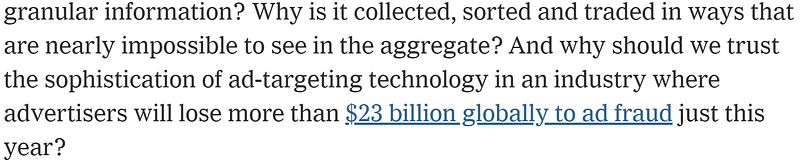
On a daily basis, we see these reports being quoted organically on a daily basis across media. This shows that even if you do not get immediate coverage, high-quality content can have a slow and steady burn.
Conclusion
The nature of startups is that you are at a disadvantage in most marketing spend against Goliaths. But research and white papers stand and fall on their originality, creativity, newsworthiness, and execution. This is not something that competitors can just outspend you on. Done right, this creates an evergreen asset explaining and amplifying your niche, bolstered by the authority of being cited across major news sites.