
How I Got My Bachelor’s in Italy for Under $3,000
How Does Graduating Debt-free With a Little Gelato on the Way Sound?

What if I told you I graduated debt-free and spent three years enjoying gelato and exploring Italian cities while earning a degree in Management — and that you can do it, too?
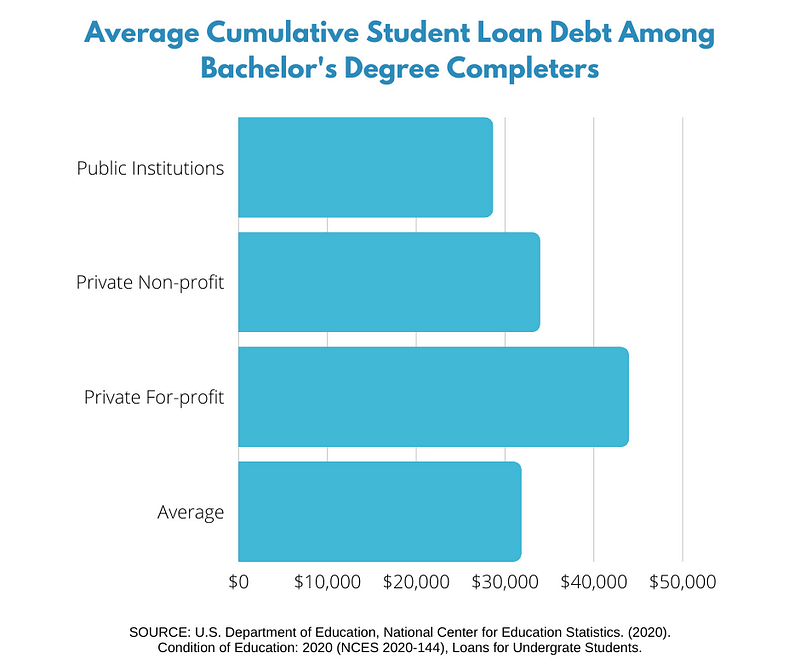
According to the U.S. Department of Education, National Center for Education Statistics, the average for bachelor students who attended public universities is $28,600, and for private university graduates, that figure rises to $43,900 (2020).
Rather than having to shell out thousands of dollars by taking out a student loan for a degree in the US, I decided to pack my bags and head overseas to Italy, where I earned my Bachelor’s degree, no loan required.
Not only did this afford me the opportunity to live in Europe — it also allowed me to learn fluent Italian. I spent under a thousand dollars each year to study Business and Management at both the University of Turin and the University of Rome: Tor Vergata— graduating with $0 in debt!
With U.S. tuition being so expensive, why not explore greener pastures abroad?
If you’re a high school senior thinking of studying in the U.S., you’re probably greatly concerned about becoming enslaved by thousands of debt. Why not take the unconventional, and much cheaper, route by getting a degree abroad?
The Benefits of a Degree Abroad
There are plenty of advantages to getting a degree abroad — from saving thousands of dollars on tuition and not having to take out a loan, to exploring a different culture and learning another language, to gaining an invaluable international perspective and standing out in future job applications.
Some of the many benefits of getting a degree abroad include:
- Saving Money. Duh! Tuition can be incredibly cheap in Europe, Latin America, and parts of Asia.
- Traveling the World. See an exciting part of the world in-depth.
- Learning a New Language. Boost your profile and exercise the brain.
- Visa Extension. Stay longer, see more.
- Limiting Biases. Learn from professors and peers with different mindsets.
- Shine on Future Applications. Whether academic or professional.
Getting a degree in Italy had its fair share of challenges (mainly bureaucracy and communication barriers. While the bureaucracy was a pain, had I not navigated it alone I would have never learned Italian) but the outcome — and its final price tag — were well worth it.
I’ve had no problems landing jobs in marketing, and in fact, I think I’m favored among other applicants due to my international degree. It shows two things: you’ve got an international edge, and you’re clever enough to have avoided starting out young adulthood with debt.
If you’d like to avoid piles of debt and earn your Bachelor's or master’s abroad, here are a few strategies.
The Process
Before I dig in, I should mention that there are three types of credible programs that allow you to study abroad:
- Degree abroad: earning your degree in its entirety abroad.
- Study abroad: studying for a semester or year through your US-based university
- Government-sponsored Programs: such as Fulbright (for U.S. scholars seeking to study abroad) and NSLI-Y (a program for high schoolers to study critical languages abroad)
How to Find the Right Degree Abroad
Your brief, step-by-step plan to finding the right program and navigating student visa barriers.
How I Made +$1,000 Online — While Studying Full-time
I Graduated Debt-free. You Can, Too.
medium.com
1. Find Your Program
There are a variety of websites you can use to search for your program, but the best tools I’ve found are bachelorsportal.com and mastersportal.com. When finding your desired program, you can filter for tuition, location, and degree type.
Be sure to use Numbeo.com to check the cost of living. In my case, I found and selected Arteveldehogeschoole in Belgium on bachelorsportal.com since I was looking for a winter-start program.
2. Apply and Get Accepted
The obvious part: you’ve got to apply and be accepted. Thankfully, the application process in most European schools is much less rigorous than that in the US. That means no Common App and no requirement for multiple essays. You may have to write a letter of motivation (I did for my master’s program in Work and Organizational Psychology in Spain, but it was only a page) which isn’t too demanding.
Some programs may require an interview; my acceptance in the program at Tor Vergata required this.
3. Find Funding
Getting scholarships for non-US based programs can be tricky, but it’s possible. Many scholarships explicitly require that you be enrolled in an American university, however, there are ways to filter out programs that are open to American students who plan on expanding beyond borders.
Not only do you have scholarship resources from private sources, you may also be able to crowdfund and score a scholarship with the university abroad itself.
4. Get a Visa
This may be incredibly straightforward and pain-free (as was the case when I applied for my Belgian visa) or it may be intense, bureaucratic, and unreasonably challenging (as was the case for my Italian visa). Or, it may be somewhere in between (in the case of my Spanish visa).
In general, you should be prepared to gather the following documents: an FBI background check that’s apostilled by the U.S. Department of State, your acceptance letter, passport, current photos, letter of explanation, the required visa form, and more.
5. Take-off!
Wipe your brow and prepare for the experience of a lifetime.
Get In-depth Information Through My Experience
In my book, Ultimate Guide to a Debt-free Degree Abroad, I’ve covered my experiences earning a degree abroad in Italy at two universities (Tor Vergata and the University of Turin), and studying in Belgium. Not only, but I’ve also given you actionable steps to help you get your degree without getting into debt.
You’ll also get insider information on travel programs for high schoolers like NSLI-Y (National Security Language Initiative for Youth — a full-ride, year-long program. I was 1 of 50 selected for this experience) and other exciting programs.
This book is ideal for:
- High School Seniors
- Undergraduate Students
- Graduate Students
- Recent Grads
- Language Nerds
While mostly geared toward university students, there are plenty of opportunities to travel free or extremely cheap for high school students, too (such as the National Security Language Initiative for youth, a program sponsored by the U.S. Department of State, where I was selected as a finalist. I’ll explain how I think I won further along in the book!)
Even if you’re beyond your high school and university days, there are language programs that are available to adults of all ages.
For an A-to-Z Walkthrough, Download My Guide
Who says you can’t enjoy your passion for travel AND study? When you opt to study abroad, you’ll submerge yourself in the culture of your host country while gaining an accredited, usually high-quality education (especially if you choose to study in Europe).
It’s best to apply sooner rather than later. Don’t put your dreams off any longer. Learn how to free yourself from debt and follow your dreams.
My in-depth guide, “Ultimate Guide to a Debt-free Degree Abroad” is available both as a paperback and print.
You’ll get valuable information on:
- Multiple scholarship resources
- Insider information on government-sponsored travel programs
- Tips to boost your application
- Actionable steps to get your degree for real
Order this book as a graduation gift — if you’re a high school student, take your first step before getting thousands in debt!
Thank you for reading my story. Follow me for more stories & updates. Disclosure: This story may contain affiliate links. You can find me on Pinterest, Facebook, LinkedIn, and RyanScottSEO.
If you’ve enjoyed this story, please consider contributing to my college fund.


