
How I Got My 5-Year-Old Hooked On Science
Five ways of getting kids interested in research from an early age
Children are born scientists.
They experiment with everything right from their birth. They learn that when they cry, they are cared for. They discover their hands and fingers by putting them in their mouth. They sample their toys and other things around them to understand shapes and textures.
They throw things from heights and discover gravity with joy. They love peek-a-boos because they discover that their parent does not go off forever but returns in a few seconds. They’re constantly testing out their theories and adjusting their understanding of the world around them.
So, they’re natural scientists, as Carl Sagan articulates:
“Every kid starts out as a natural-born scientist, and then we beat it out of them. A few trickle through the system with their wonder and enthusiasm for science intact.”
As parents, we have this phenomenal opportunity when children are young to pique their interest in the sciences. It is not with the aim that they end up in careers in the sciences; it is too early to think of that. But with the simple aim of building on their curiosity and increasing their awareness of the world around them.
Expected Outcome: Curiosity about the sciences will enrich their lives in the least.
Parents can introduce concepts in smart ways. If you make science exciting and interesting, the kids will not take long to fall in love with it. After all, as Kurt Vonnegut puts it— “Science is magic that works.”
And kids love magic! They love it when they are expecting something to happen, and it does happen. Assumption proved! There’s great satisfaction and learning to be had with such experiments.
We have to be careful, though, in not overdoing it. The last thing we want is for kids to be bored with the constant bombardment of various ‘science things.’
It should be introduced subtly and interestingly without the ‘teaching’ element, which drives away all their interests.
“We should not teach children the sciences, but give them a taste for them” — Jean-Jacques Rousseau
This quote aptly sums it up. Let’s find ways to give our children a taste of the sciences without the burdensome theory.
Here are five ways in which I have attempted to do the same with my son
1. Museums
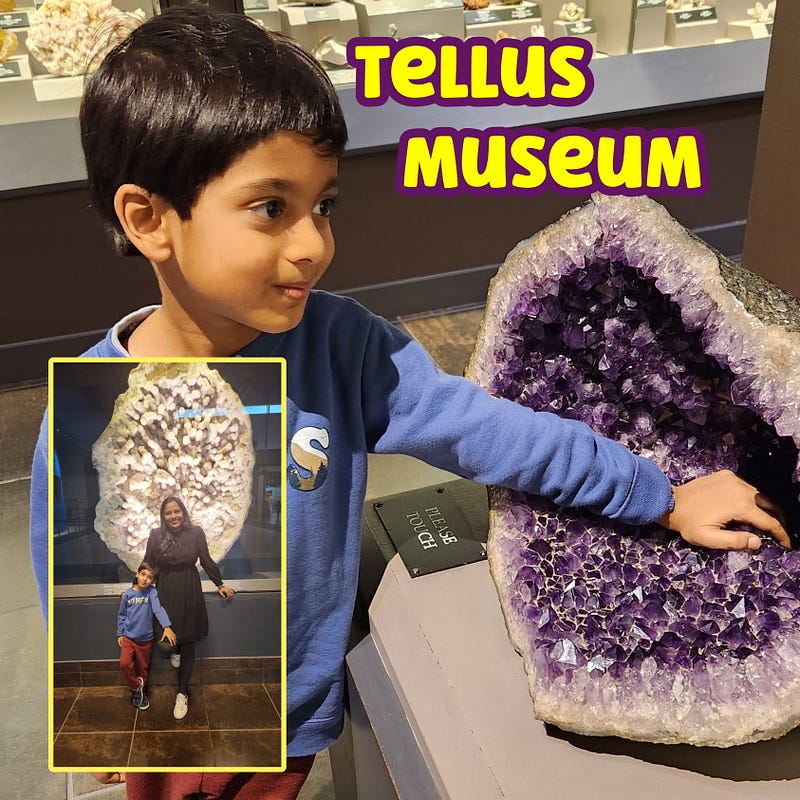
Museums are outstanding places to absorb and soak in all things science while having loads of fun. You can easily spend hours interacting with the interesting exhibits and fun science activities.
We love visiting the Tellus Museum, which is currently nominated as USA Today’s 10 Best Science Museums for 2024 and was ranked #4 in 2023. It certainly deserves the spot with its phenomenal exhibits and collections.
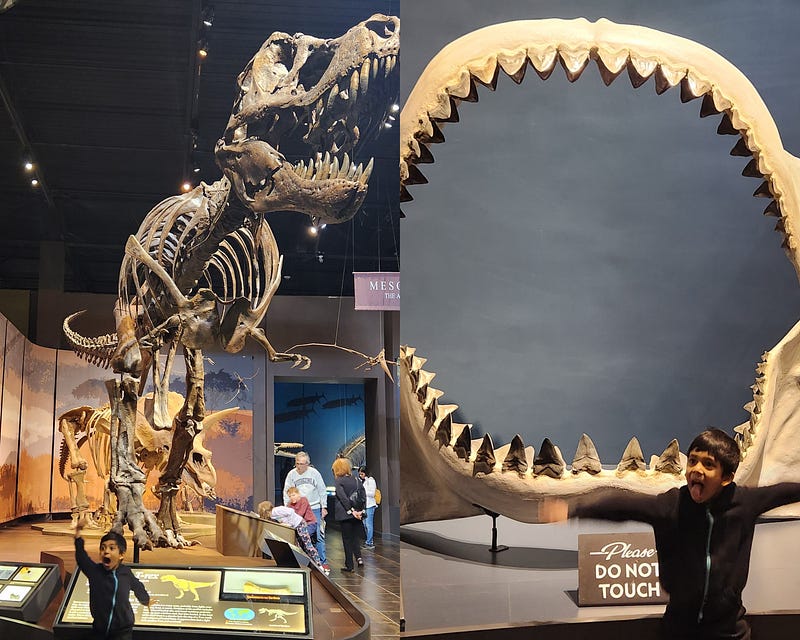
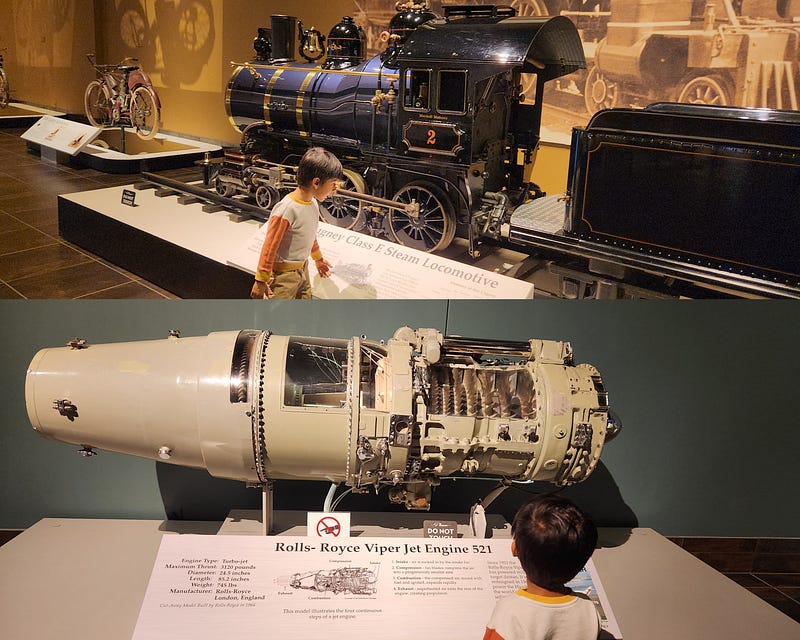
There’s just so much to draw a child in and blow their minds. Be it Mr. T-Rex or a giant Megalodon jaw, or steam engines and car motors. The Space missions section with the rocket models is another mind-blowing exhibit.
Our latest attraction was, of course, ‘The Periodic Table’. To see all of the elements or artifacts made out of those elements was such a surreal experience. Here’s me posing with ‘The Living Periodic Table’ :D.
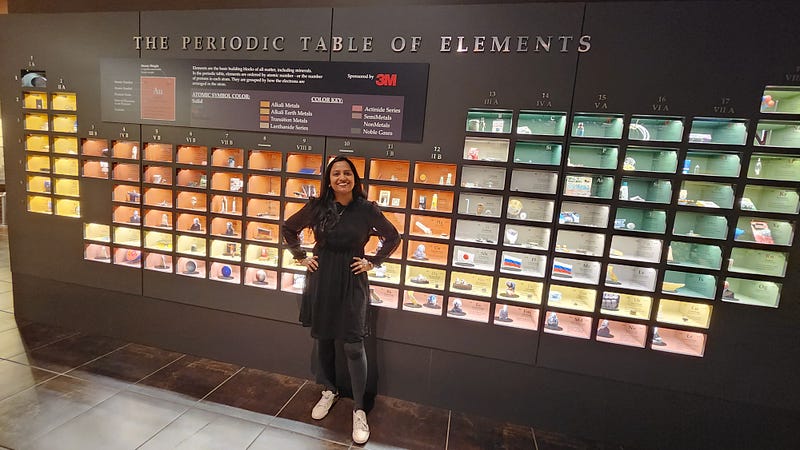
The museum’s fossil-digging and gem-panning section is another precious section for children to have their little adventure. The museum has given a lot of thought to making these sections attractive and attention-grabbing for the children. They also work hard to maintain it really well despite the mess these activities can cause.
A great thank you to all the volunteers at the museums — you make it such a wonderful and positive learning experience for the children and their families.
2. Books
Books are our next source for promoting a good and solid foundation in Science. There are countless wonderful kids’ science books. Our local library has rows and rows of them, and you’re sure to find treasures in those stacks.
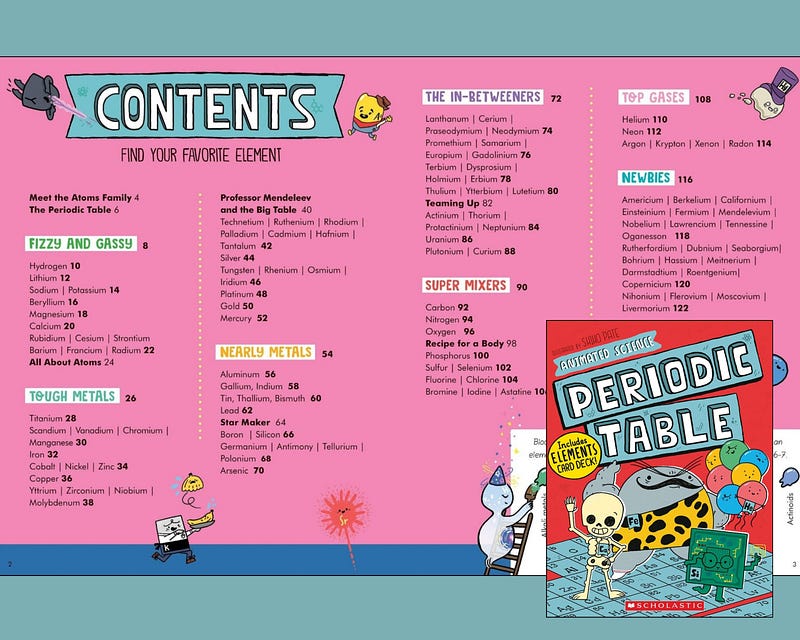
One such treasure was the book — Animated Science: Periodic Table
I instantly fell in love with this book, especially the extraordinary illustrations by Shiho Pate.
As a kid, you cannot but fall in love with the periodic table when you see this. It is so beautiful.
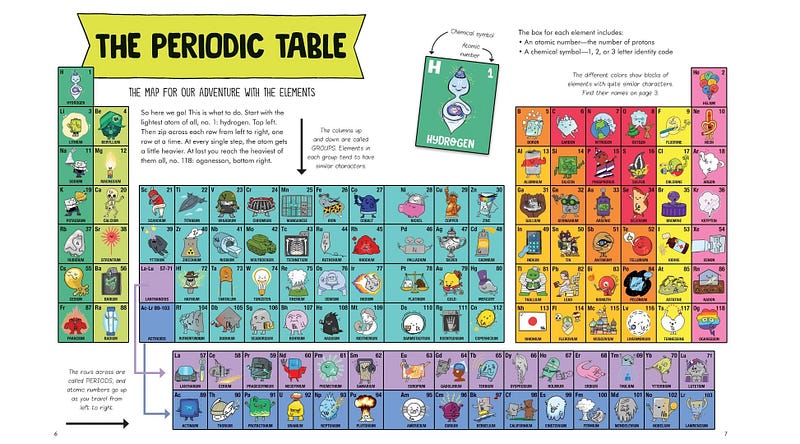
This was the book that certainly helped grow my son’s interest in the individual elements and how they are all so special.
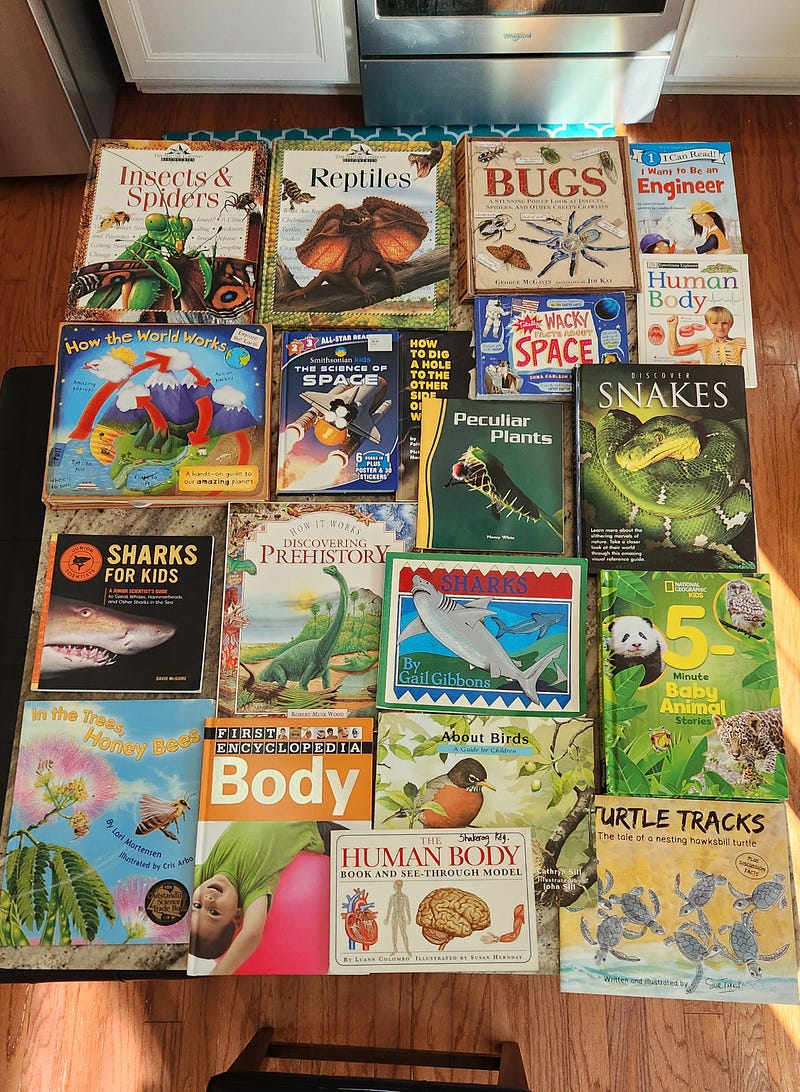
Here are some of our Kids’ Science books that I could get my hands on. I placed them on our kitchen island to get a good picture. We’ve read many other excellent ones from the library and ebooks online.
Not just my kid, but even I love all of these books. They’ve all enriched our lives and increased our understanding of the world around us.
3. Activities & Experiments
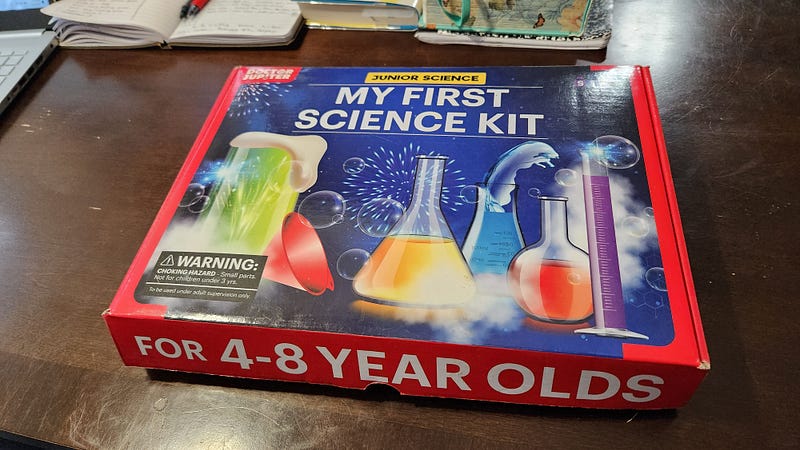
Experiments are so much fun. We enjoy doing small and easy experiments with this really cool science kit. It has a bunch of interesting ones, and most of the things you need are included, needing only some basic household items on the side.
It has also been a fun thing to do with friends during play dates. It is not that messy, I promise :D.
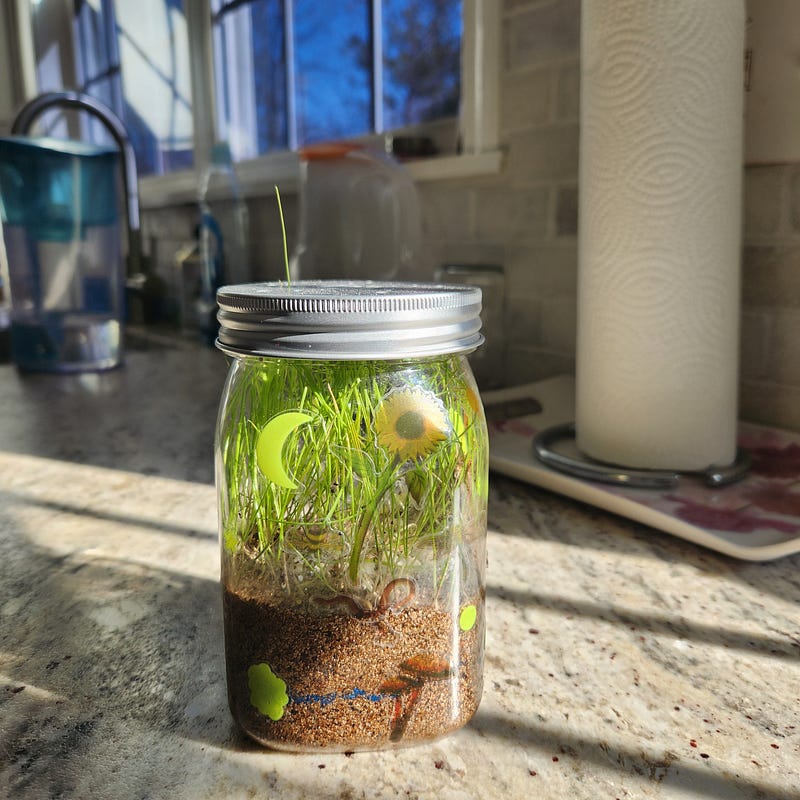
We also loved doing the Terrarium Grow Kit, which turned out really nice.
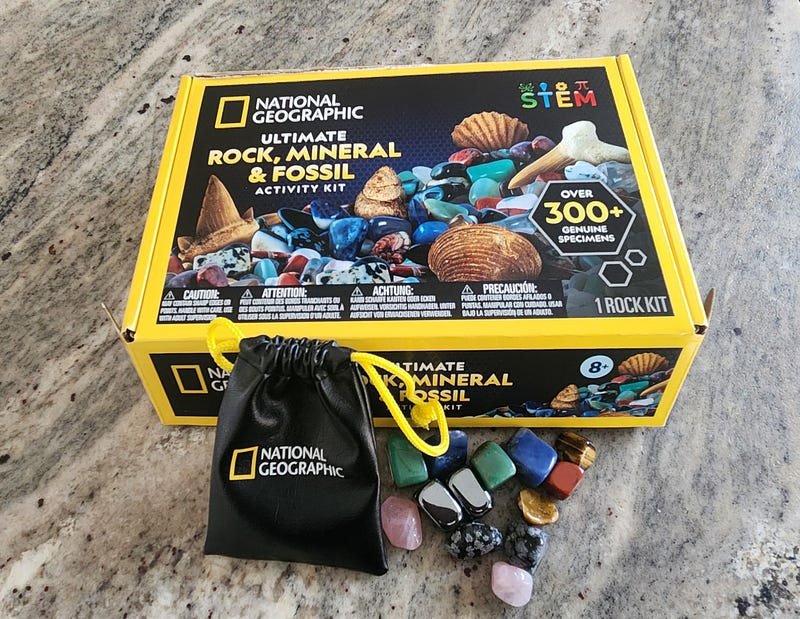
Another one of our favorites is our rock, mineral & fossil activity kit. It has a phenomenal collection of rocks and minerals to pique the interest and fascination of not just a five-year-old but his mom, too :). This kit spawns so many discussions and learnings of various kinds. I absolutely love it.
4. Artifacts
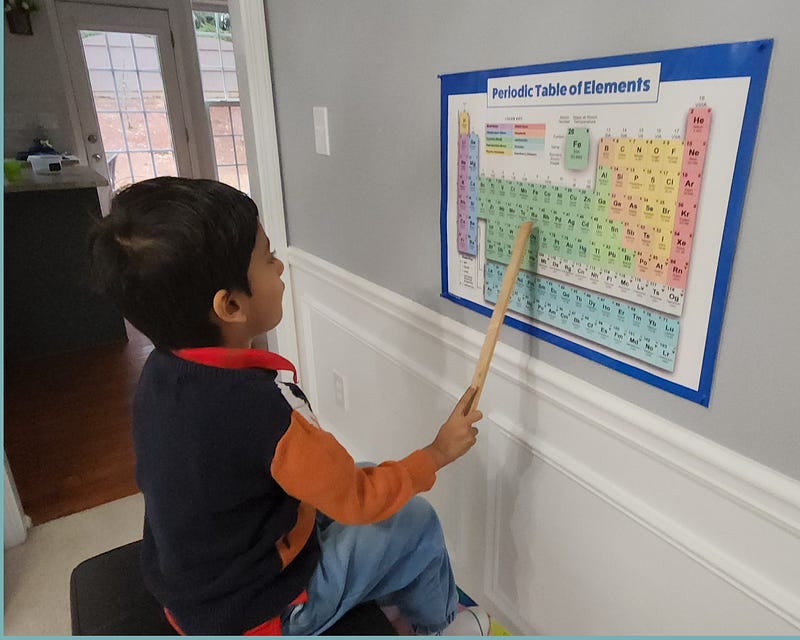
We’ve also been studying the periodic table through this very well-illustrated laminated Periodic Table poster. It’s a very cost-effective yet impressive way of having the information readily available right in front of your eyes as you play. We have it put up in our son’s play area. And so, you’ll find him often strolling over to it to read it or observe.
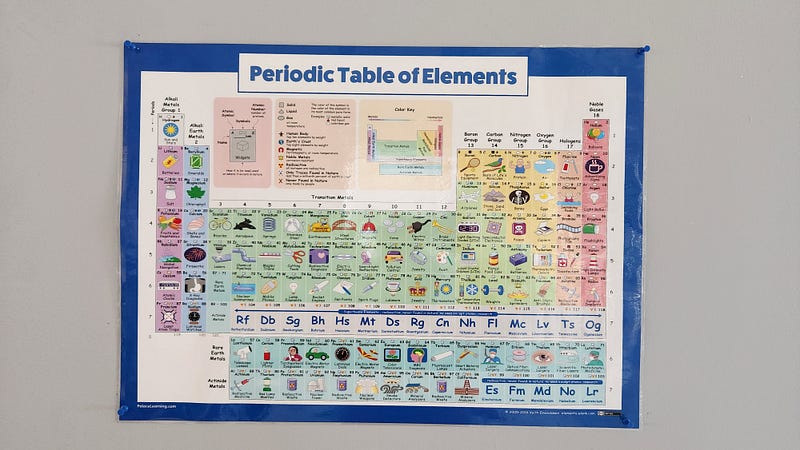
Well, he also likes to teach me the elements sometimes :D …
What are some other scientific artifacts?
Scientific Artifacts are the tools, equipment, and supplies used for the observation of natural phenomena or to apply knowledge gained from such observation. — Mayborn Museum
They’ve provided an interesting classification of items that I felt would be good to mention here because the items that we collect might fall into one of these categories:
Acoustic | Armament | Biological | Chemical | Construction | Electrical and Magnetic | Energy Production | Maintenance | Mechanical | Medical | Merchandizing | Optical | Regulative and Protective | Surveying and Navigational | Timekeeping | Weights and Measures
Our host of artifacts that we love collecting includes many, like simple musical instruments, rocks, stones, gems, small fossils, magnets, maps, simple measuring equipment, batteries, a magnifying glass, and a host of other things.
They have become an interesting part of independent play and pretend play, as well as learning and discovering together.
5. Electronic Media (YouTube, Phone Apps, etc..)
An interesting smartphone App that we love is called Stellarium. It gives you the live configuration of the night sky — with stars, planets, constellations, and a host of other celestial bodies.
But not just the natural one — it also tracks the man-made satellites and other bodies in the sky around you. See the second picture, where you can see a Starlink satellite.
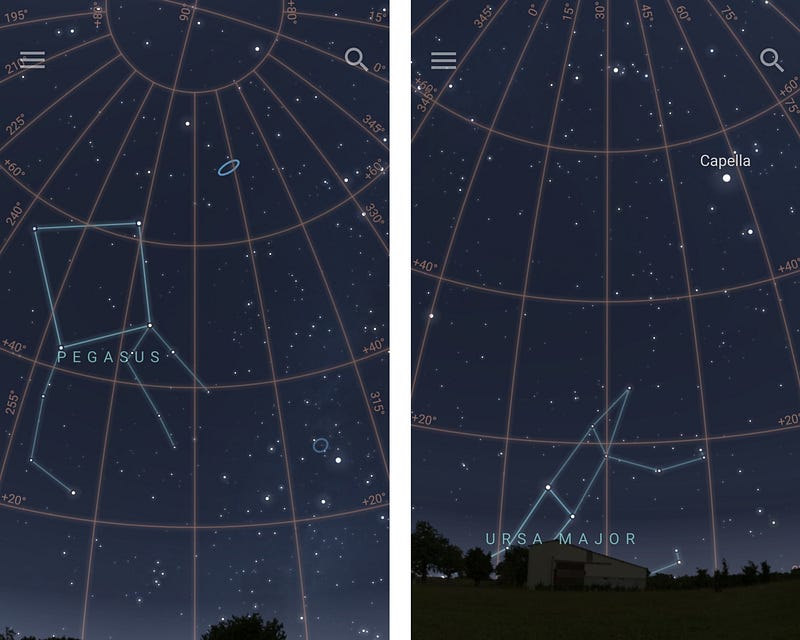
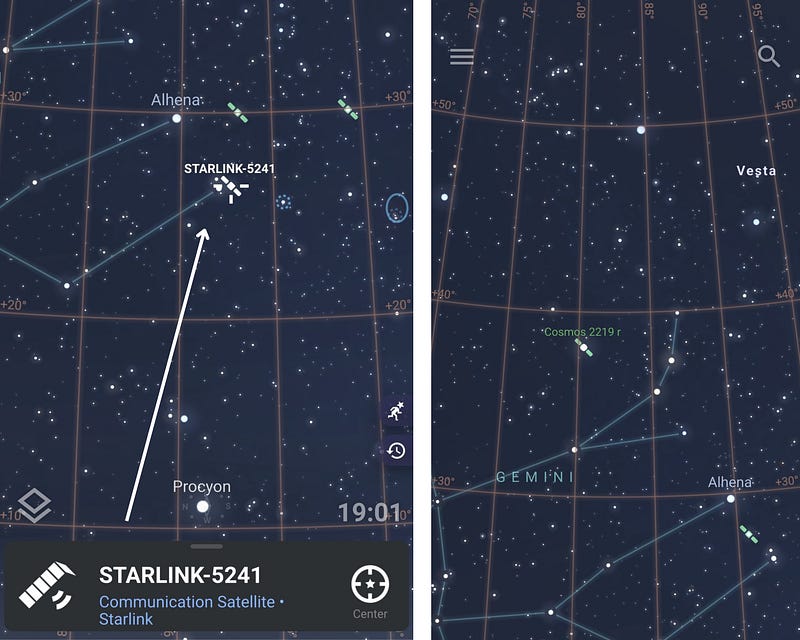
This is such a fun way to talk about outer space, new technology, and other related things while you are on the go in your car or out camping. It is enriching to use such small experiences to add knowledge and value to our children's lives.
Also, there are a bunch of YouTube channels that are such a great source of all things science for very young kids. Here are a few that my son loved to watch —
Hopscotch | Peekaboo Kidz | Science Max | TED-Ed | SciShow Kids
There are many more, which I might add as I recall.
Conclusions and Takeaways
In the delightful journey of parenting, encouraging our child’s fascination with science creates a world of exploration and wonder.
Whether it’s an enchanting visit to a science museum, sharing engaging science books, conducting fun experiments, exploring scientific artifacts, or utilizing electronic media like educational apps and YouTube channels, the possibilities are as diverse as your child’s imagination.
Keep in mind the wise words of Jean-Jacques Rousseau: “We should not teach children the sciences but give them a taste for them.”
Our goal is to turn our child into a scientist by cultivating a lifelong love for learning and discovery. Through these shared experiences, we enrich our child’s world with knowledge and strengthen the precious bond we share.
You can see, from all my personal examples and numerous ideas, that getting your child interested in science is not only easy but also very rewarding. Please try out some of these if you have not already.
I myself have grown and learned so many things in the past few years and can vouch that it will open your eyes to so many new learnings and discoveries, too.
Thank you for reading! I hope you enjoyed my story.

The story contains Amazon affiliate links to some of the products, which help me earn commissions if purchased using those links.


