
How I Found the Good in My Life
What can you do when you look back and only see troubles?
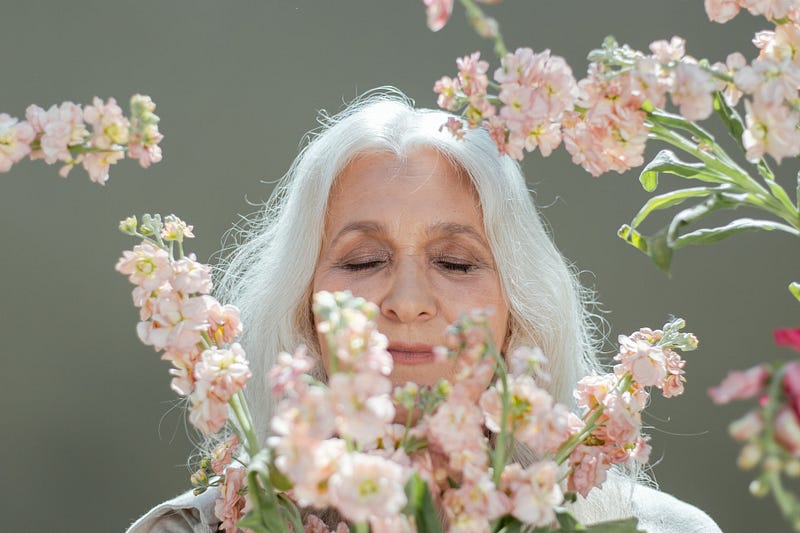
Whatever your age, it feels unpleasant to look back and only recall challenges, struggles, and troubles. Imagine how the unpleasantness compounds after six decades of lived experience.
This likely explains why I rarely looked back at my life. I didn’t want to open the Pandora’s box of disturbing emotions. When I finally did take a glimpse, about a year ago, I felt sadness, pain, and disappointment.
I didn’t like how my life had gone—not that moment, but everything that had occurred before it. It seemed far from the idealistic vision of my young adult years.
How did that happen? Life slips by so fast.
I had expected my life would come to a crescendo and then level off in peaceful equanimity. Now it felt like ending on a down note.
Could I rectify this?
A bad case of negativity bias
I’ve had many negative events occur over the course of my life. Who hasn’t? But I seem to suffer from an especially strong case of what researchers call “negativity bias.”
Negativity bias refers to the brain’s tendency to recall and ruminate on negative experiences far more often than positive ones. Scientists believe negativity bias is rooted in the behavior of our ancestors.
Our ancestors lived in dangerous environments. They were vulnerable to predators, falling branches, and warring tribes. Thus, the ability to remember and attend to negative stimuli likely played a role in their survival.
Negativity bias refers to the brain’s tendency to recall and ruminate on negative experiences far more often than positive ones.
The same is true for infants and young children. The sooner they learn to avoid potentially harmful stimuli the better.
Most adults still remain hardwired to enshrine negative memories in the forefront of their brains and relegate positive ones to the dark corners where they’re harder to find.
This explains why we fume for hours after being cut off in traffic, fixate on a dubious comment about our attire, or can’t forget the mistake we made at work.
What can we do to counteract this negativity bias?
Recall the positives more often
After realizing the degree of negativity I felt toward my life, I decided to reframe my past decade by decade. I journaled about the positives in each set of 10 years.
Here’s how I re-examined my childhood.
First, let’s be clear, bad stuff happened in my childhood. Remembering the positives doesn’t mean whitewashing the bad—at least not for me.
- A scary man endlessly stalked my neighborhood. I felt afraid before I had a traumatic encounter with him. Afterward, that dose of fear quadrupled.
- Around the age of ten, the landlord of our rental flat kissed me on the lips when my parents were out shopping. Disgusting! My parents didn’t believe me until a month later when he attempted the same with a woman renter who called the police.
- I convinced myself that my parents didn’t love me and therefore, I’m unlovable. I repeated this thought often in my mind along with fantasies of being kidnapped or contracting a serious disease, hoping that would make them love me at last.
But there were positives too:
- I had working-class parents. But they always bought me special toys. I could see the delight on my father’s face when he gave me the just-released Cathy Chatty doll. When you pulled a string, she talked!
- My parents were generous with food treats too. As soon as we heard the distant but distinct music of the ice cream truck, we rushed out to choose our favorite indulgence. We had pizza nights, watermelon in the summer, and chocolate-dipped bananas too.
- We always had the tallest Christmas tree and decorated it with an array of unique ornaments. A whole village of houses sat on a white cloth beneath its lowest branches including an oval mirror for a skating rink with small bendable skaters who had metal blocks for skates.
My parents hadn’t had easy childhoods. My father was abandoned first by his mother and later by his father. My mother was the youngest of 11 children. They lived through the Depression as well.
All that may have impacted the way they expressed loved, which didn’t meet my needs or expectations as a young girl.
Dr. Gary Chapman had identified five love languages:
- Acts of service
- Receiving gifts
- Quality time
- Words of affirmation
- Physical touch
I suspect my parent’s love language revolved around giving and receiving gifts. Obviously, I loved gifts. But I also longed for affirmation, as a young girl so unsure of her own value in the world.
But I don’t have to stay stuck on what I didn’t get, entrenching it further into my brain. I can instead focus on the good I received and see it as my parent’s unique expression of love.
I journaled about the positives in every decade. I emphasized everything I had done right, all the positive statements people had made about me over the years, and all the good times, even the small ones.
Joy is what happens to us when we allow ourselves to recognize how good things really are.—Marianne Williamson
Savor positive experiences
I must have been born with a larger dose of the negativity bias than the average person. I often seem to be a glass-half-empty kind of person.
Maybe it’s due to my Virgo astrological sign or the fact I’m a Four on the Enneagram of Personality and thus easily perceive what seems to be missing.
Whatever the reason, I now know one’s tendencies can be abated. I won’t look back and see only the negative after my reframing experiment.
And going forward, I’ll create and savor positive experiences. This makes stronger positive memories and thus provides competition for the negative ones when it comes to space in my brain.
For example:
- I pepper my day with tiny pleasures like savoring my morning cup of green tea, feeling the warmth of running water as it showers down upon my skin and delighting in the feeling of clean bed sheets.
- When I visit my best friends, I notice how relaxed and peaceful I feel. Last time, we especially laughed a lot. I thanked them and made a mental note of the joy and delight. I wrote about it in my journal too.
- I smile at others as I go about my day. They tend to smile back, which creates a happy, warm feeling inside. I take an extra moment to lock the joy in my brain.
I don’t have to chase extraordinary moments to find happiness—it’s right in front of me if I’m paying attention and practicing gratitude.—Brené Brown
Concluding thoughts
When I looked back on my life, I saw only challenges, struggles, and troubles—a lot of them.
It’s easy to remember our problems because humans have a built-in negativity bias. We tend to recall the bad times far more than the good ones.
To counteract this negativity bias, I decided to conduct a life review, recalling all the good bits and thus reinforcing good memories in my brain. That process brought a lot of smiles and a feeling of pride too.
To refocus my lens in the present time, I savor whatever positive experiences occur. This fills my mind with stronger positive memories, leaving less space for negative ones.
It’s a two-step process:
- Recall the positives from the past
- Savor the positives in the present and going forward
If you’ve gotten stuck in the negative, like many humans do, why not give it a try?
For more inspiration, sign up for my bi-monthly Wild Arisings newsletter and receive access to free self-discovery resources.


