
The Depression Chronicles: The Battle
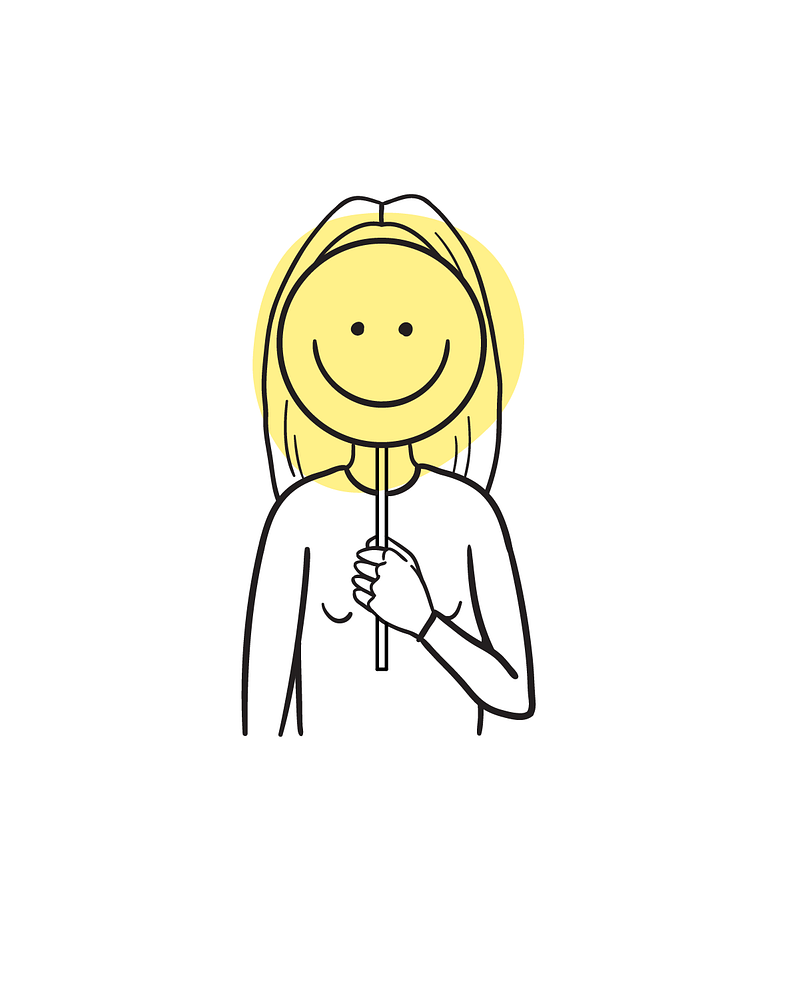
For over three years, I’ve been trying to overcome the depression that was caused by the death of a loved man, which left me totally devastated, with a lost sense of identity, lost purpose in life, and a complete lack of hope for things to ever get better.
However, I never lost the will to fight for my life, although I had no idea how to do it and where to start. I was strongly attached to the memory of my loved one which made the whole process incredibly difficult. I didn’t know how to let go and I didn’t want to accept what has happened back then.
The whole world felt like one huge chaos and I was lost. When my consciousness failed, I intuitively started to take small actions to regain my life. I initiated the everyday process of hard work which began by looking at all the pieces of myself that were shuttered all over as a result of this event and then, taking each of them, one by one, and assessing them through direct questions:
- do I want to keep this part of me as it is?
- do I want to keep it but improve it?
- do I want to get rid of it completely to eventually be happier?
I would make one of these decisions for each of the “pieces”, and slowly, step by step, over the months, started rebuilding myself.
Sounds easy but it was a nearly unbearable amount of pain most of the time. Of course, there were countless moments when I felt like wandering aimlessly and I kept questioning myself every single day. Of course, I felt like my whole life was falling apart and that I will never be okay again. And I felt all of this even more so because I had an extremely romantic idea of life, and especially relationships, that I got from books which were my second parents as I was growing up. Songs weren’t much of help either.
For the whole of my life, I would only listen to sad songs. I was feeding myself with this masochistic dessert over and over again. Songs and books applied a specific filter to the way I perceived the world. It created some sort of deep sadness in me, which wouldn’t leave me on any occasion. I would keep repeating to myself that this is how I am and that I should learn how to live with it because there’s nothing I can do about it. Yet, I failed to accept it and in fact, I never wanted to, because deep inside I knew that I didn’t want this kind of life. I envied people who were laughing carelessly so much! I always felt that I’m mentally way older than my friends and I would also act like it.
I was carrying the imaginary burden around and I kept adding to it more and more as I went. I cherished this sadness in some toxic, very complex way and it eventually made me think that this sadness is what makes me Me, that it’s my nature, and that I wouldn’t be myself or worthy without it. At the same time, it made me constantly think that there was something wrong with me. I kept criticising myself in my thoughts, asking why I can’t just be simply happy when I had so many reasons for it. So this way, I created a cosy, soft bed for my depression to come, that was just waiting for the trigger to get unleashed and nest in this really nice and nourishing place I had ready for her.
When the suffering of grief became close to agonising and I got really scared of it, I realised that I stopped listening to music at all. Maybe some classical music occasionally. But, intuitively, I finally stopped torturing myself with the songs that kept reminding me of all the lost love and the life that will never come back. I stopped reading novels and stopped watching movies unless they were documentaries. I realised that most of them were created by people in moments when they were the most hurt and miserable. They used art as a way of dealing with pain and loss and unconsciously recorded its energy in the texts that continue to project itself on others.
The decision to stop interacting with novels and songs turned out to be crucial in the process of regaining my peace of mind. I got rid of external narratives and created the space for my own narrative to grow.
I had enough personal drama to deal with so I didn’t need any extra “entertainment”.
This was about 1,5 years after he passed away.
I still missed him and was in a lot of pain, I still had no self-confidence, no belief in a better future, and not much hope. But I kept fighting. And among all of this chaos and purposelessness, I had one thing that never failed to show up and that kept me going through all of this hell. Self Belief. I gave a TEDx Talk where I covered it in more detail because I strongly believe that this is something hugely unappreciated in our society (and often confused with self-confidence, which is a completely different thing and serves a completely different purpose).
I attended three therapies (short-term because I couldn’t afford to continue them for longer) and incorporated many self-help techniques. I was meditating, doing yoga, spending time in nature, and journaling.
I kept working on my approach to life, my beliefs, my habits, my thought patterns, my goals, my perfectionism, my high ambitions, and many more things, every-single-day. It became more important than anything else because I knew that if I can’t rely on the therapy, I am the only person who can get myself out of all this mess. After all, I was the one who created it in the first place. Of course, death wasn’t my fault, but I had a big contribution to the condition that I kept my mind in for years.
However, I knew that nothing lasts. And so the pain will pass away eventually and I will grow. The same rule applies to breakups.
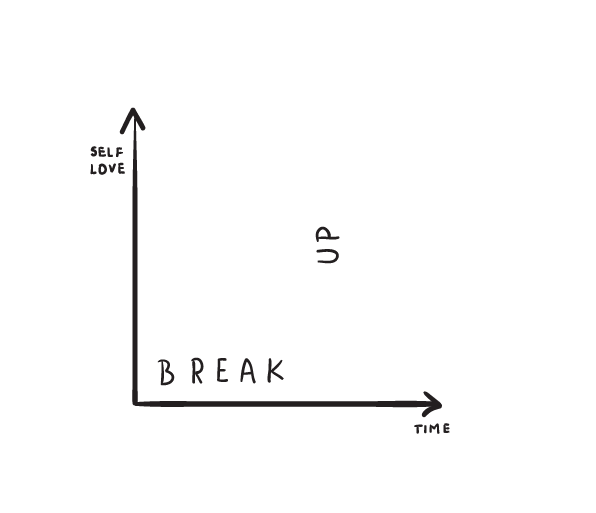
I started believing that I deserve to be happy and that my beliefs don’t need to determine my life and ruin it. After about two years, I slowly became to feel better. I refused to use quick “fixes” like alcohol, drugs, etc. but rather was aiming to build a solid stem from which I can grow in the future. I really learned how to be kind to myself and how to stay true to my needs and emotions. I was trying not to judge myself too much and not to force myself to do things I don’t feel are right for me at the moment. It required learning how to say “no” for my own good.
I know that for a person who is depressed right now, reading all of this might make them think that it’s something unachievable and that they can’t do it on their own. But I’m the living proof that it is possible to get out of the deepest emotional shit almost by yourself.
Almost, because I can’t say that therapies did completely nothing for me. They helped a bit (and probably would help a lot if I was able to pay for them), but they wouldn’t help at all without my work and my commitment to keep improving my situation, and simultaneously, myself. All of my friends and family were only saying “I don’t know what to tell you”, and I didn’t blame them, I understand that not everybody is aware of how to act in such situations. It hurt but I was trying to accept it.
I threw myself into the ocean of amateur psychology studying and I was spending hours absorbing all kinds of articles and books that I could’ve found helpful. I’ve deepened my sense of spirituality and my faith in God, which I know isn’t something that everybody shares, but this was definitely a factor that offered me a lot of support in the most overwhelming times.
When I was feeling fairly strong and okay, I moved to London from my home country to finish my Bachelor’s degree. Being a very active and sociable person, I’ve been a part of a few really strong and amazing communities back in my home city. I was volunteering with many organisations, doing charity work, organising events and workshops, and hung out with team members in my free time. Suddenly, I found myself in a completely unfamiliar city, in a shitty flat with difficult flatmates, heaps of university and job responsibilities, and struggling with finances. I quickly realised that it won’t be easy to rebuild what I had before and that forming friendships in London is super hard, even at the university. A few people that I managed to connect with on a higher level confirmed that it is a real struggle.
As months were passing, I found myself feeling more and more lonely, aimless, and sinking back into depression. I had no energy at all, the simplest everyday tasks caused physical pain and I struggled to work efficiently. If I was going out, I’d do it more out of a duty of reason, than a desire to entertain myself. I remember being on the tube, on my way to the university campus, curling inside from acute pain, crying, unable to catch my breath, and listening to my mind screaming on repeat “I don’t want to die so much but I don’t know how I can make it here anymore”. I’ve reached a border. At that point I only had two choices: give up and harm myself or somehow keep myself going and utilise any remnant of willpower I could’ve found. I don’t even know how, but I survived until the end of the day, and then the other, and one more. My willingness to stay alive forced me to start working on improving my situation once again.
After a few more months have passed, I finished the last year at the university and I came back home, to my country (on the edge of the pandemic outbreak). I started practising even more self-love and self-care techniques (which isn’t easy at all for the selfless person that I am), I learned about mindfulness and made it a part of my everyday life. I made sure to reconnect with nature as often as possible. I decided to finally provide myself with time to rest, cancel some of the less-necessary responsibilities, end some of my projects and give myself time to heal.
I’ve attended two other therapies from the university on the go and I was almost insisted on by counselors to start taking antidepressants once again. I was made to feel like I was ill and needed to be treated like something was wrong with me. At some point, I even started believing it and I would think of myself as “depressed”, using that label as a sort of excuse not to take up more action to help myself and as an explanation for my insecurities. I’m not saying that taking medicine when we feel like we can’t cope anymore is a bad thing, and it surely helps a lot of people, but I knew it wasn’t the right option for me at that time and I probably wasn’t lucky enough to meet the right therapist who would explain how they work to me.
Somehow I still believed that there must be a different way and that it’s impossible that the only solution for me is medicine and that I would never really learn how to deal with difficult emotions in my life and wrong thinking patterns. So I decided to keep fighting.
I got really into minimalism at the very beginning of the healing process and now I revisited this idea with even more commitment. There is something incredibly freeing in decluttering my space and it also gave me a sense of control over a little part of my life. As the space around me was becoming cleaner, my mind also was feeling better and more at peace.
At this point, I’ve read a book that, without doubt, changed the way I think completely. It is a book that I am recommending to everybody and I believe that each person should read it at least once in their lives. I started practicing the simple rule of Letting Go and Surrender of my feelings and the energy that they hold. It brought the most relief I’ve felt since letting go of the idea of that sadness about a year earlier. It directed me to the new process of healing that was the fastest and most effective in these three years.
I reevaluated my life and from being a highly ambitious, strongly career-oriented person who would take pride in the multitasking skill and the number of tasks on my to-do lists, I became a person who values first and foremost the free time that I can dedicate to myself and the loved ones, the person who is no longer seeking confirmation of self-worth in the achievements and job positions but is aware that a sense of it can come only from the inside. I am no longer working to prove something to others and I made Joy a gratification for achievements instead of Pride. I became way calmer and adopted acceptance for myself and my life.
I no longer try to control everything and instead, I allow my life to lead me. I know that my thing to do here is to be flexible and able to adjust to changing circumstances without losing a sense of purpose or value (which I no longer associate with something that is easy to change by external factors). I got to know myself even better and I understood my needs.
I finally stopped living in the past and I am no longer getting over-anxious about the future. Instead, I keep reminding myself, after Eckhart Tolle, that suffering, fear, and stress come from the difference between what we have now and what we’d wish the now to be like. Whether it’s a difference between what has already passed and is no longer a part of the present moment or the difference between what we imagine about our lives and what we have — it all causes pain.
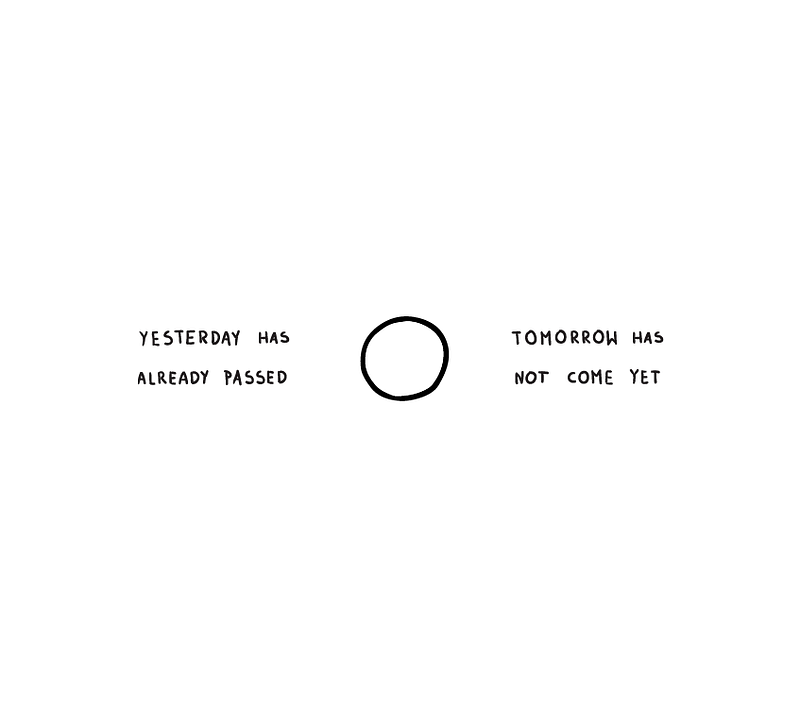
Yesterday has already passed, tomorrow hasn’t come yet. The only moment worth caring about is now, even if it sometimes means taking your life minute by minute. It’s easy to get overwhelmed by the vision of the whole year that’s ahead but I tried to remember that I only have to survive this day, and when I wake up, I only have to survive the next day. I realised that acting in the present moment to create a better future is the only solution for me, even if I didn’t see the direction yet. I just took the first step and, with time, the path unfolded naturally. I allowed myself to accept the things that I couldn’t control and to channel my energy into something that I had an influence on.
For the first time in my life, I fully understood that less is more. Fewer unnecessary thoughts, fewer activities, fewer responsibilities, fewer deadlines. More books, more time with loved ones, more hugs with a dog, more free time, more space to just sit and breathe. Paradoxically, limiting the amount of work, took a lot of hard work. Yet, for the first time in many years, I’m not anxious about the future but excited about it.
However my life will look like, it surely is always going to be good enough. And that is my new standard.
Thank you for reading! :)
I kindly invite you to have a look at the Build Your Own Thoughts Instagram page where I share some of the insights I gained during my journey.