
My Hearing Aid Journey — Part I
How I Ended Up With Hearing Aids at 35
Visiting the audiologist, testing, and trying them on for the first time

Nine-year-old me sits in a waiting room, back sticky with sweat as my feet dangle in the air above a white laminate floor. The brown vinyl chair cushion clings to my legs as I fidget, waiting for them to call my name. The humid air of the midwest summer is oppressive.
Mother sits beside me, reading.
My name is called, and I reluctantly stand. A pit sits in my stomach; I don’t like failing. I know that I will fail this test.
I follow the doctor up a ramp to a tiny room within a room. It’s stuffy and warm, and various corded contraptions hang ominously from the walls. The doctor grabs one and puts it on my ears. They are tight and they pinch, but I’m too nervous to say anything. He smiles and gives the instructions: press the button when you hear the beep.
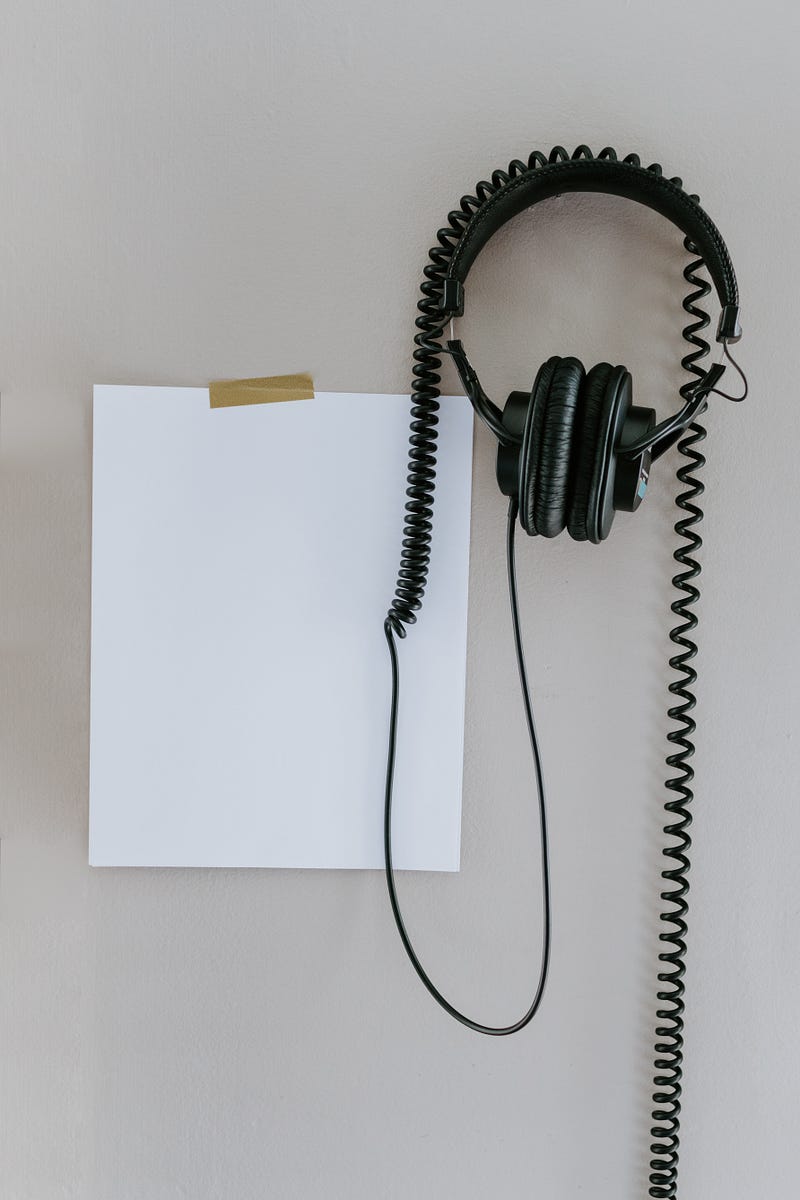
The door closes and I’m enveloped by silence.
Was that a beep? I’m not sure. I press the button just in case. My frustration grows as the pauses between beeps lengthen, but it’s over soon enough. I already know what he’s going to say.
The summer ritual of the hearing test was always frustrating and never enlightening. Every year the doctor would say that my hearing was damaged and that I needed to sit at the front of the class when school started again.
Me, the girl who blushed when her name was called, the girl who tried her best to remain unnoticed, the girl who could barely speak when spoken to. I was to sit in front of prying eyes, the place where the teacher was most likely to notice me and call my name.
I didn’t think there was a problem. I didn’t notice that I had a hard time hearing; everything sounded fine to me.
When I grew up, I stopped going to the audiologist. My very mature attitude was one of “I’m not going, and you can’t make me!” Everything was fine. And even if it wasn’t, there was no teacher to sit close to anymore; what was the point?
Marriage and children happened, and suddenly my hearing did become a problem. In group conversations, I found myself missing words. If I was brave enough to ask the speaker to repeat, I often still couldn’t quite make out the words.

When a speaker was more than a few feet away, their words were just a murmur punctuated by sharp consonants.
I had the hardest time hearing my children speak. They were so patient to repeat themselves when I asked, but I grew frustrated and asked them to come to stand next to me if they wanted to talk to me.
I learned to watch lips closely. The shape of the mouth combined with the sounds that I could catch was often enough for me to find each word, but it was exhausting. It required hyper-focus on the person speaking, mentally trying to fill in the gaps of any words I did miss, and then constructing the sentence in my head a half a beat after the words were spoken.
Finally, enough was enough. I made an appointment with an audiologist. I dreaded being told that there was nothing that they could do, but I had to at least try.
She was very kind and very gentle. After my test, she showed me my audiogram.
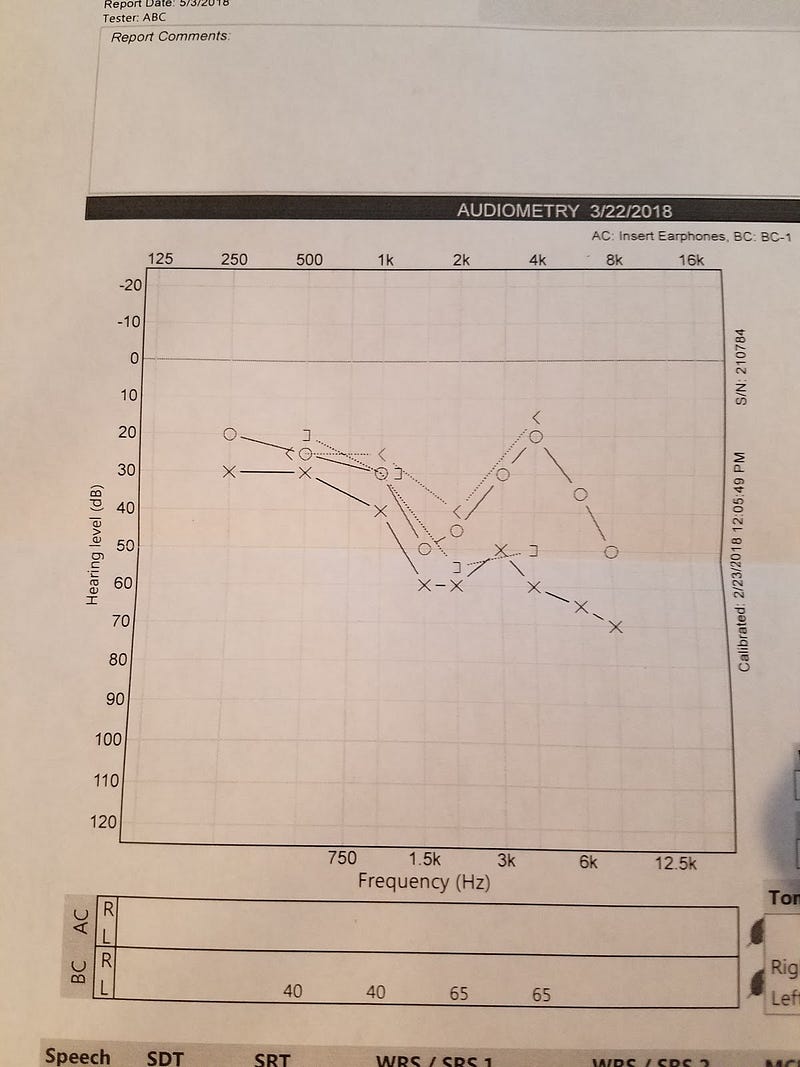
Most children hear at 10 decibels; normal hearing for adults is around 20 decibels since hearing naturally deteriorates over time.
Between 20 and 40 decibels is considered mild hearing loss, 40 to 70 is considered moderate hearing loss, and 70 to 90 is severe hearing loss. The picture above is my audiogram, showing both ears capitulating between mild and moderate levels of hearing loss.
She called it a cookie-bite hearing loss. Since the two sides were so similar, it was likely that I had been born with it, but that as I aged it was becoming worse.
Hearing in the higher frequencies is important for distinguishing speech sounds such as sh, b, p, s, f. It explained so much about why speech was so muddled for me, and I felt tears prick my eyes as I listened to her explain what I had been missing out on.
But then, she offered me a solution. A solution!
“I recommend that you begin wearing hearing aids. Some people need glasses to see; some people need hearing aids to hear.”
She could adjust them to amplify only the frequencies that I needed to be amplified, resulting in hearing evenly across the board. And she had some sitting right there, would I like to try them?
I mean…yes? She worked quickly, programming them in her computer and then fitting them into my ears. A small hearing aid sat just behind my ear, and a clear, almost invisible tube fit down around my ear, ending with a soft silicone funnel that fit right into my ear.
She smiled at me and clicked a button on her computer.
My eyes grew wide as the sounds began pouring into my ears. I started as I heard voices behind me — people chatting in the hallway just outside the door. They were there before; I hadn’t been able to hear them. The fan on her computer was humming quietly; it had been silent. All of the audio input was overwhelming and I shifted in my seat — what was that sound? I looked down and realized that it was the sound of my clothes rustling with my movement.
The cost of hearing aids is astronomical. That was the only thing holding me back from purchasing them then and there. I am a bit of a miser sometimes, especially when it comes to spending money on myself. If you’re curious, they were four thousand dollars. They should last for five to eight years with proper maintenance.
After listening to me explain everything, my husband told me to call her right now and order the dang hearing aids! He had been living with repeating himself for years, the poor man was worn out and I don’t blame him one bit. And so we ordered them, and now we waited two weeks for them to arrive.
Now that I knew just how bad my hearing was, I began noticing so much more about what I was missing out on.
The next Sunday we attended a class at church with about fifty or so people. Someone introduced himself, but a large pole blocked me from being able to see his lips. He made a joke; at least, I assume it was a joke because everyone else laughed, but I couldn’t even catch one of the words he said. I couldn’t hear well enough even to make a guess.
There’s something quite disconcerting about sitting in a room full of people who are laughing together and being the only one missing out. I looked around at the laughing faces and smiled weakly, trying to fit in and not look like a jerk for being the only one not laughing. That was the moment that I was confident that getting hearing aids was the right choice.
This is the first in a series about hearing aids. Part 2 is here, and Part 3 is here. I’ll be adding more over the coming weeks about what my first days and weeks wearing hearing aids were like, and what life is like now, two years later.


