
How I “Cured” My Anxiety to Live a Life Worth Living
To beat anxiety, you need to change the way you think about it

Lots of people ask me how I “cured” my anxiety.
In fact, just the other day, a good friend of mine called me. He’s one of those guys that parties like a rockstar.
Work hard. Play hard.
That type of guy.
Early in the convo, he asked, “Hey, your brother said you’ve been through some shit — like anxiety and stuff. I’m having some problems of my own and wanted to talk about it.”
We spent about an hour talking.
He told me his story — the anxiety, panic attacks, feelings of impending doom — and then I told him mine. Mostly though, I just listened.
Toward the end of the call, he bluntly asked, “So, how did you finally cure your anxiety? How did you get rid of it?”
I love him to death, but at that moment, I felt sorry for him and the long journey ahead on his road to recovery.
Let me explain.
Anxiety Doesn’t Ever Go Away, At Least Not Really
I would never say that I have “cured” my anxiety. That’s just silly.
Would you ever find yourself saying you’ve cured your feelings of anger, lust, sadness, or surprise?
No…
Anxiety, like the rest of those feelings, is fleeting. And, usually, it’s not permanent.
Have I gotten a handle on my anxiety? Yes.
Would I say it’s gone forever? Absolutely not.
Am I able to continue living my life anyway, happy as can be? You bet your ass I can.
My Story
I didn’t always feel this way. When I was 17 and first experiencing the ill effects of stress and anxiety, I did what everyone else would’ve done — I went to the doctor.
“There must be something wrong with me to feel this way,” I thought to myself.
For most of my life, if I felt sick, I went to the doctor, who gave me a pill and told me to sit on my ass and wait until everything got better. I didn’t have to do or change anything while it worked its magic. Pretty awesome, right?
Western medicine led me to believe this was how healthcare worked.
You feel bad.
You take a pill.
Problem solved.
I had been conditioned to believe doctors had all the answers. Then, anxiety came along and wrecked my world.
Over the 5+ years I spent dealing with anxiousness, panic attacks, night terrors, and hypochondriasis, my beliefs on the system were shattered. Everything I thought I knew about health flew right out the window.
At my worst, I was home from college sleeping in the same bed as my mom — crying and feeling legitimately scared to fall asleep. Sleep paralysis is fun.
At my best, I was out with friends, putting on an alcoholic mask to enjoy life for a few hours.
I saw doctors, specialists, therapists, you-name-it. Every one of them offered me a pill to make my problems go away. None of it worked.
Each time I saw someone new, I had to explain my ever-growing sob story. At the beginning of those appointments, the doctor would ask, “So, what brings you in today?”
“Well, it all started…”
And 10 minutes later the doctor would give me a puzzled look then say “I think we can take care of this.”
A few days later, after little to no improvement, I’d already started thinking about my next appointment.
I naively hoped each new professional would be the one to finally fix my life. But with every failed attempt, I slipped further and further into depression.
One fateful night- my “hero’s journey” moment as I call it — I had had enough.
I decided no more doctors.
No more feeling like shit.
No more feeling bad about myself.
That night, a fire lit inside me as I had never felt before. It’s as if I had hit rock bottom and my only way back up was to rise to the occasion. Think Bruce Wayne in The Dark Knight Rises.

The only way to beat Bane was to daringly climb out of that miserable pit of despair.
It took far too long for me to realize that I had it all wrong.
Doctors and specialists shouldn’t be who I rely on for my health. They should be my backup plan.
I should be my first line of defense. I should be responsible for my own health through my behaviors and actions.
This is why the healthcare system is fucked.
People are conditioned not to be responsible for their own health. They rely on doctors and medicine to “cure” their shortcomings. It’s only those that experience chronic illness and fight through the long road to recovery that then understand how important a healthy lifestyle truly is.
Disclaimer: I’m not knocking doctors by any means. They save lives, and if you think you need to see a doctor, then you absolutely should. Some people see great results taking medicine for anxiety and depression. I’m only sharing my story and saying what didn’t work for me.
The moment I took accountability for my own health is when I realized how shitty my lifestyle had been:
- I played video games all day long
- I frequently pulled all-nighters — again playing video games — only to finish my college assignments 1 hour before 7 AM deadlines
- I ate like crap
- I drank 4–5 nights per week, blacking out 2 of those on average
- I barely exercised except for basketball once per week, if that
During the several months after my hero’s journey moment, I made some simple lifestyle changes that drastically improved my situation.
With my health on the line, the tiny shifts in my daily habits were rather easy to make. Sure, I had to read and learn a few things about healthier living, but in comparison to what I had endured the last several years, that was nothing.
Two Important Weapons in the Battle Versus Anxiety
Looking back at my battle with anxiety, there were two crucial things that I learned:
1. Anxiety, in my experience, wasn’t a disease. It was a feeling that I had never been equipped to manage.
That’s exactly what I tell people these days when asked about my anxiety.
I never “cured” it. I’ve simply learned how to “manage” it.
There wasn’t actually anything wrong with me, at least not in the “I have cancer and I’m slowly fading with each day that passes” kind of sense.
I was just experiencing elevated levels of anxiety for the first time and I had no idea how to manage.
For most of my life, I had been living in a reactive state. If something felt off, I went to the doctor and blasted it away with the best that modern medicine had to offer.
To manage anxiety I had to become proactive.
Looking at my lifestyle, I could see why I felt like an anxious, nervous wreck. The daily activities of my life had been filling up my anxiety bucket and I had been doing nothing to drain it.
That’s how I view managing my anxiety these days — like a bucket.
If I spend a few days eating like shit and neglecting exercise, I feel my bucket overflow with anxiety.
But if I spend a few days practicing healthy behaviors, I return to a balanced state.
My bucket becomes half-full, so to speak. Right where it belongs.
2. Stop fighting the feeling.
When you feel angry or sad, what do you do? Do you try to fight the feeling with all your might, or do you recognize it for what it is — a feeling — and allow it to slowly fade?
The problem with anxiety is that it’s a feeling no one enjoys experiencing.
The nervousness.
The on-edge-ness.
The worry.
The fear.
The impending doom.
I don’t blame you for not wanting to feel like that, but that doesn’t mean you should fight it. It took me a painfully long time to learn this.
Anxiety, isolated from other issues, isn’t anything to worry about. In fact, it can actually be a good thing to have.
However, in today’s world, there are so many stressors that cause anxiety and not enough outlets for expelling it — at least not unless you actively work to drain to your bucket. Anxiety builds and builds, then, when you experience the overflow of anxious thoughts and feelings, you struggle. You hate those feelings…
So you fight back. You resist.
The resistance to anxiety is what makes it stronger. It allows your anxiety to grow, adding to your already overflowing bucket.
I remember days lying in my bed, waking up after a decent night’s sleep and actually feeling normal. My first thoughts were, “Please God, don’t let me start feeling anxious.”
And without fail, I’d start feeling anxious. It was the resistance that brought on the very thing I feared.
But if you let go, you allow yourself to be free.
Feel the feeling of anxiety. Recognize it’s just a feeling. Learn to accept the uncomfortableness. Then move on.
“Oh, I’m feeling anxious. I don’t like it, but it’s not going to hurt me.”
This is what I practiced doing for several months, in addition to all the lifestyle changes I talked about earlier. Eventually, I got to a point where a month had gone by and I hadn’t felt overly anxious.
No more panic attacks. No more night terrors. No more dragging ass.
I remember saying to myself, “Hm, that’s weird. I can’t believe I haven’t felt like that in a while.”
Then I continued on with my day.
Several years later…
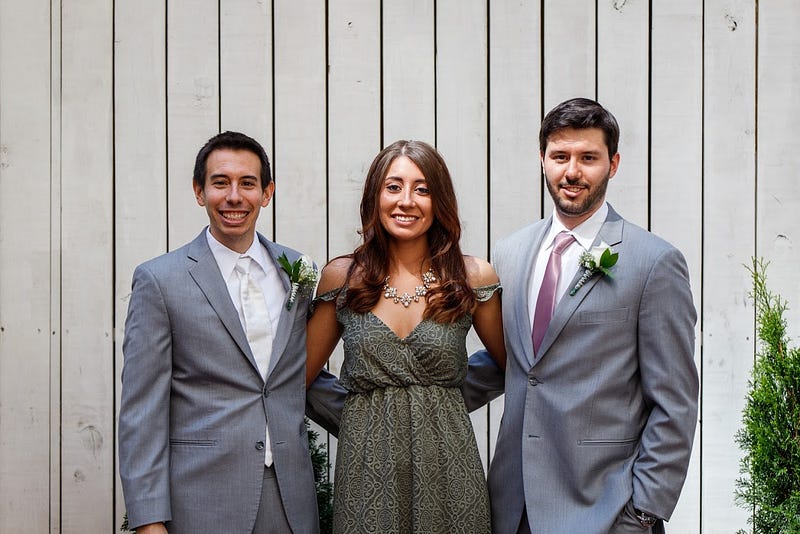
…and on most days (because anxiety never really goes away) I‘m still as happy as can be.
I rose from the pit of despair and conquered my fears. Today, I happily and healthily “manage” my anxiety, but I sure as hell haven’t “cured” it.


