
How I Cured 30 Years of Knee Pain (in 30 Days) With One Simple Exercise
You don’t have bad knees.
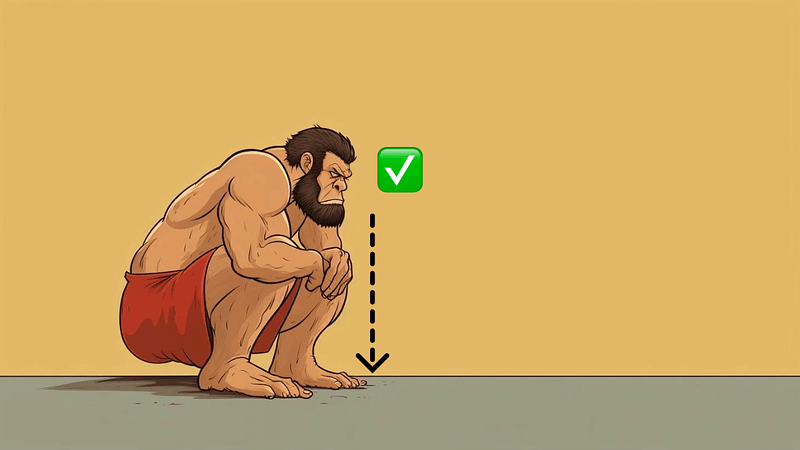
“Ah, it’s ok. You go ahead, I’ll catch up.”
This was me, for the majority of my life.
Chronic knee pain stopped me from enjoying many fun aspects of life. Hiking, team sports, and as I got older, even stairs would spark a symphony of cracks and pops.
Luckily, this story has a happy ending.
Here’s how I bulletproofed my knees, hips, and ankles, for free, with one simple exercise practiced a few times per week.
You don’t have bad knees.
Today, chronic knee pain is a way of life for 25% of adults.
Yet, most people aren’t born with degenerative knee diseases. And, our joints weren’t made to give way after just a few decades.
The problem is our way of life.
We sit too much, work too much, and exercise the same parts of our bodies over and over again. Missing the parts that really matter.
“I’ve got bad knees.”
How often have you heard someone say this?
Probably about as often as you hear bodybuilders complain about shoulder pain or runners suffering from shin splints.
The knees are the body’s 2 largest joints, and we use them for almost everything. Walking, crouching, sitting, standing, and bending over. Yet, most people don’t know how to strengthen them.
Or, keep them healthy…
Start with this.
Humans weren’t built to be the biggest or strongest mammals on Earth. But, our unique knee joints have given us a biological advantage over the rest of the animal kingdom.
Yet we squander our gift.
We walk primarily on flat ground, take elevators, and avoid movements that strengthen our knees. All of this, causes us to devolve much quicker than nature intended.
Resulting in knee pain, painful surgeries, and the limiting belief that you were born with “bad knees”.
One 36-year study in Wales revealed humans to be better long-distance runners than horses.
Humans are designed to navigate uneven terrain. To walk, climb, hike, and cover long distances as we explore new territories. Yet, most people spend the majority of their days sitting, walking primarily on flat ground, and rarely moving side to side.
Over time, these restrictive habits create imbalances in the body which inevitably leads to injury. And, have even been shown to shorten your lifespan.
Your body operates on the move-it-or-lose-it principle.
If you think of your body like a building, you need a strong foundation to keep it from toppling over. Strength is built from the ground, up:
- Core
- Hips
- Knees
- Ankles
- The feet
A structure is only as good as its weakest link. And, naturally, weak joints create shaky foundations. So, to create a strong and mobile body, you must start by strengthening your foundation.
Insert, “Kneesovertoesguy”.
It’s been a longstanding myth that when performing squatting or lunging movements, your knees should never move past your toes, as it was thought to put too much stress on your knee and ankle joints.
Yet, some of the strongest, most flexible, and longest-standing athletes are those who practice a full range of motion when exercising.
Most notably, George Hackenschmidt, a pioneer of strength training, inventing both the bench press and hack squat exercises, preached the importance of extending one’s muscles to their maximum range of motion.
And, because of this, was able to perform strength-based and athletic movements far into his later years.
Today, Ben Patrick, known on social media as “Kneesovertoesguy”, has re-ignited this philosophy, focusing on rejuvenating the most injury-prone parts of the body with…admittedly odd-looking exercises.
He calls it “bulletproofing”.
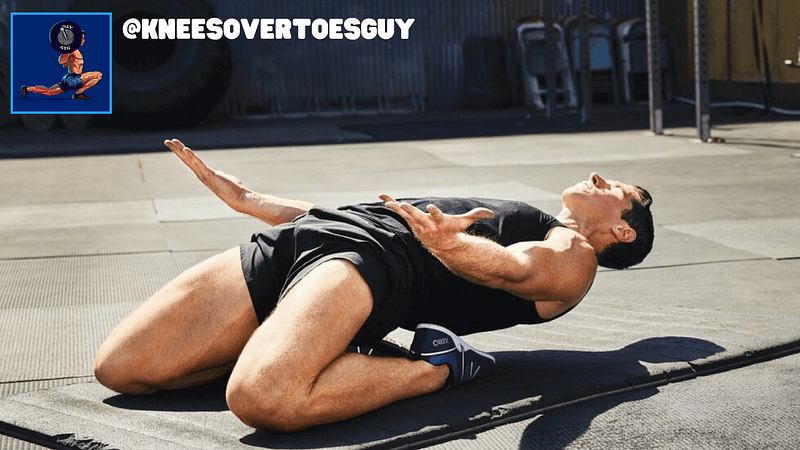
Through self-study and experimentation, Ben was able to overcome debilitating knee injuries, including an artificial knee cap, to enjoy his love for basketball, despite being told he’d never play again.
What makes Ben’s program unique is it involves no stretching or conventional rehabilitation exercises, but rather strengthening weak areas of the body through a full range of motion.
Naturally, when I first came across Ben’s videos, I related to his story. But, I didn’t feel quite inspired enough to pony up hundreds of dollars for his program.
So, I started with one simple at-home exercise…
How I cured my knee pain.
We often think of age as coming with wisdom.
And, for the most part, as we experience more of life, we become more savvy to it. Except when it comes to our bodies.
For most people, getting older comes with the sad reality of increased injury coupled with decreased mobility. We fear war and cancer, yet in 2021, falls were the second-leading cause of death, worldwide.
And, new studies show one’s ability to perform simple mobility exercises, such as balancing on one leg, to have direct correlations to lifespan.
Movement is in our DNA, yet somewhere along the way, we become partisan to our sedentary lives. And, we lose touch with the way our bodies were designed to move.
For example:
Walking backward is an essential movement for knee health. It promotes blood flow and carries your body’s natural joint lubricant (known as synovial fluid) to your knee and ankle joints.
It’s also the basis of bulletproofing your knees.
On an episode of The Joe Rogan Experience, Ben shared this advice to anyone looking to regain mobility in their life.
“For anyone out there who wants to start bulletproofing their body, but can’t afford the full program, do this one exercise. Do reverse sled pulls before every workout.”
If you’ve never heard of reverse sled pulls, it involves pulling an object backward (as seen below):
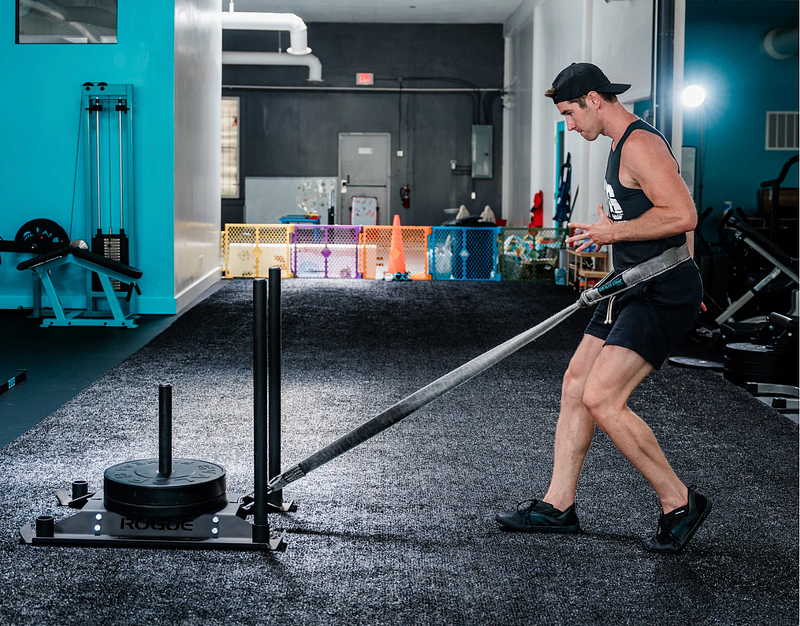
A lack of synovial fluid reaching your synovial joints (this includes your shoulders, elbows, wrists, knees, hips, and ankles) can lead to degenerative and inflammatory diseases such as arthritis, gout, and bursitis.
And, synovial fluid has powerful healing qualities when allowed to reach your joints. In short, reverse sled pulls help inject your joints with proper blood flow and synovial fluid. And, the exercise is as simple as pulling an object while walking backward.
As Ben writes in his blog,
“The better you are backward, the more protected you are forward.”
But, if you’re like me, you probably don’t have access to a fancy sled. Here’s how you can get started at home.
How to get started at home.
If you’ve ever worked out at a fancy gym, you may have seen the sled machines in the image above. So, if you have access to one, great.
Ben recommends starting with approximately 60 metres before each workout, aiming for 2–3 times per week.
But, if you’re like me, and don’t have access to a sled, you can get creative. Here’s a makeshift sled I use when working out at home:
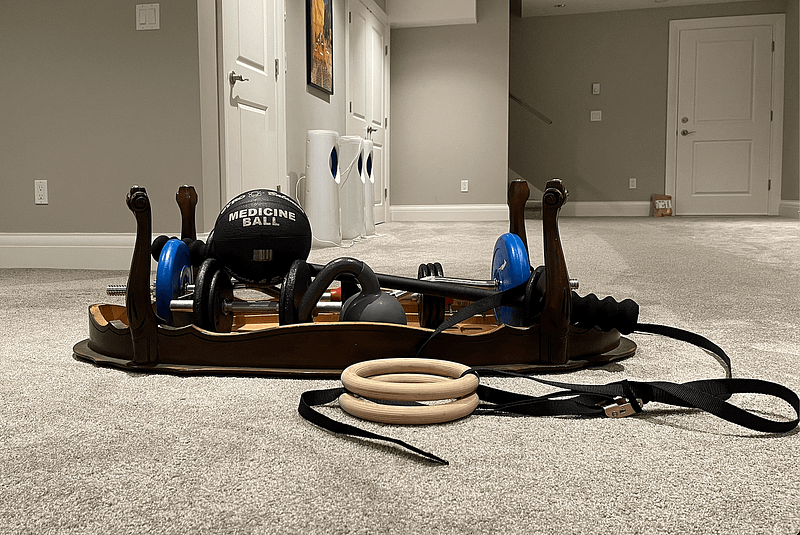
It’s not pretty, but it gets the job done.
And, since I have no idea how far 60 metres is, I simply pull my coffee table sled back and forth in my basement 5 times before every workout or until I can feel blood pumping into my knees.
The purpose of this exercise isn’t to exhaust the knees, but rather to give them some lubrication for your workout.
And, although reverse sled pulls are my favourite exercise for strengthening my knee and ankle joints, there are many free small-space alternatives…
3 reverse sled variations.
As much as creating my own sled has made the practice of knee rehabilitation incredibly easy, I understand not everyone has the space to do so.
And, to be honest, it’s nice to mix things up once in a while. So, here are 3 variations to the reverse sled.
1. Step-downs:
Also known as Poliquin step-up, a step-down is exactly what it sounds like.
How to do it: Stand at the top of a step or stair, step, or weight plate, and step down, keeping your core engaged and shoulders and hips in alignment with your knees. Step down, slow and controlled, and come back up.
Aim for 10–15 reps.
2. Shin strengtheners:
Also known as standing tibialis anterior lifts.
How to do it: Stand with your back touching a wall. Lift your toes up and toward you keeping your heels on the ground. You’ll feel your shoulders slide up the wall.
Aim for 10–15 reps.
3. Backward walking:
Walking backward is the easiest way to build strength in your knees and reduce injury. You can do this outside on a slight incline or using a treadmill.
Although each exercise targets slightly different areas of the body, all of them will help push synovial fluid into your knees, thus repairing damaged knee joints, and strengthening your foundation.
As for how long or often you should walk backward, I find Ben’s advice to the simplest and most effective:
“Just walk backward as often as you can.”
My results after 30 days.
So, I’ll be honest — at the time of writing this, I’ve been prioritizing my knee health for the better part of 2 years.
And, it’s been transformative, to say the least.
When I was young, I used to hate hiking, as I was always holding up the group. And, when playing, it felt like a matter of time before I got injured. Today, I enjoy going for long walks, and hikes, and feel physically rejuvenated from both.
I feel as though I’ve been given an entirely new lease on life. And, it really came down to practicing one of the exercises above, 2–3 times per week, using them as a warmup before exercise.
Although your journey will inevitably differ from mine to some degree, here’s what you can expect…
The first 3 steps:
I’ve never had knee issues to the point of getting surgery. But, for lack of a better description, my knees always felt hollow. As if they were in constant jeopardy of crumbling into dust.
They’d pop, crack, and ache as I walked up or down stairs. And, my shaky base created lower back pain.
But, after just a few weighted backward steps, I felt buried muscles come to life once again. The feeling was intense, even painful. But, a good kind of pain.
Like the screeching of gears as they regain new life.
The first 3 days:
The most immediate benefit was a feeling of fullness in my knees. After my first few steps, I felt like I had a little more weight in my legs — and after a few days, my movement became noticeably smoother.
Although my goal was to lubricate my knee joints, I noticed my ankles and feet feel more stable as well. As if I could grip the ground with my toes as opposed to walking around on canoes like I was used to.
Within a few days, the back of my knees began engaging when walking up and down stairs as well. Not to mention, a drastic decrease of overall knee pain.
The first 3 weeks:
Surprisingly, sticking to a consistent routine was very easy. Mainly, because was able to feel results instantly.
By the end of the first week, I felt more stable through my feet, ankles, knees, and hips. And, after 3 weeks, my back pain dissipated as well. I could stand up straighter and noticed my core carrying the weight of my torso, as opposed to my spine.
The hollow pain in my knees was as good as gone and I noticed better performance in the gym as well — particularly in compound lifts such as squats and deadlifts.
After 30 days:
I blew right past the 30-day mark without even noticing. And now, some form of knee rehab has become an essential part of my exercise routine. I still only practice reverse sleds (or a variation) 2–3 times per week.
And overall, I’ve noticed these benefits:
- Better balance
- Improved posture
- Reduced joint pain
- Improved flexibility
- Better muscle engagement during exercise
What’s been most amazing to me, is how seemingly unrelated areas of the body work in unison. I never would have guessed that dry knee joints could account for back pain.
And, wouldn’t have believed you if you told me stronger feet could cure my life-long battle with bad posture.
Final thoughts: if you do anything, do this.
Although it’s cliche to say, balance is everything.
Your body is a never-ending work in progress. And, through these exercises, I feel like I’ve added new tools to my toolbelt.
My biggest takeaway from this experience is this:
Sometimes, to move forward you must first move backward.
And, since implementing reverse sled pulls into my exercise routine, the future ahead has become much brighter. So, if you do anything after reading this story, I suggest exploring Ben’s videos.
I have no affiliation other than finding his videos incredibly beneficial. He has a great YouTube channel full of tons of free info. But, for starters, I recommend this beginner routine.
Happy moving!
Hi, I’m Hudson. I write about living healthier, happier, and more mindfully. To see my stories pop up on your feed, I’d love for you to follow me (Hudson Rennie). And, to have stories sent directly to you, subscribe to my newsletter.👇
Editorial Disclaimer- The opinions expressed within this content are solely the author’s and do not reflect the opinions and beliefs of the Medium website, its editors, or its affiliates.
💸 Join 1,000+ people who enjoy getting free stuff (online store). 🧘


