THE SECRETS OF WRITING ON MEDIUM, PART 19
How I Climbed to the Top of Google’s Rankings
It felt good to beat Time Magazine and Rolling Stone but is there a formula for going viral?

A lot went into writing THE article and none of it was intentional.
Unlike my friend Reuben Salsa, who created the Moby Dick of viral stories that make no money (167,000 views!), it didn’t destroy my soul.
The shutdown had just started and I was trying to find things to keep my mind occupied. I decided to focus on the best comedy shows in history because we all needed something to laugh about.
Since there were no sports on TV, I decided to turn my rankings game into an exercise of advanced analytics.
But before I could rate the greatest season in comedy history, I had to assign ratings points to each Saturday Night Live cast, a show that has been with us forever. Little did I realize how much work was ahead of me. As I wrote in the article:
I have to admit I didn’t comprehend the depth of the SNL rabbit hole going in, so it took forever to finish this article.
The good news is, by the time you finish reading it, we may be out of quarantine.
I did exhaustive research on each cast member superstar, compiling other rankings, and asking the kind of questions you hear when people argue about the GOAT in basketball.
I put in so much detail and trivia about the cast members over the last 45 years, could it have been the definitive ranking story for Saturday Night Live?
The answer, of course, was “who cares?” as the article immediately sunk to the bottom of the daily feed among the other million articles submitted each day.
Going viral is more about what happens after you hit the publish button.
I was looking at my woeful MPP earnings the other day and noticed something strange.
No, I didn’t earn a ton of money, or discover the cheat codes to the algorithm — I don’t do fiction.
What I noticed was that the story that barely got any attention when I wrote it in April appeared at the top of my earnings list for the second month in a row.
Out of curiosity, I clicked on the view stats link and was shocked by the lifetime summary which showed that I received over 10,000 views. Now before you get too excited, 96% of them were external views, with only a 7% read ratio.
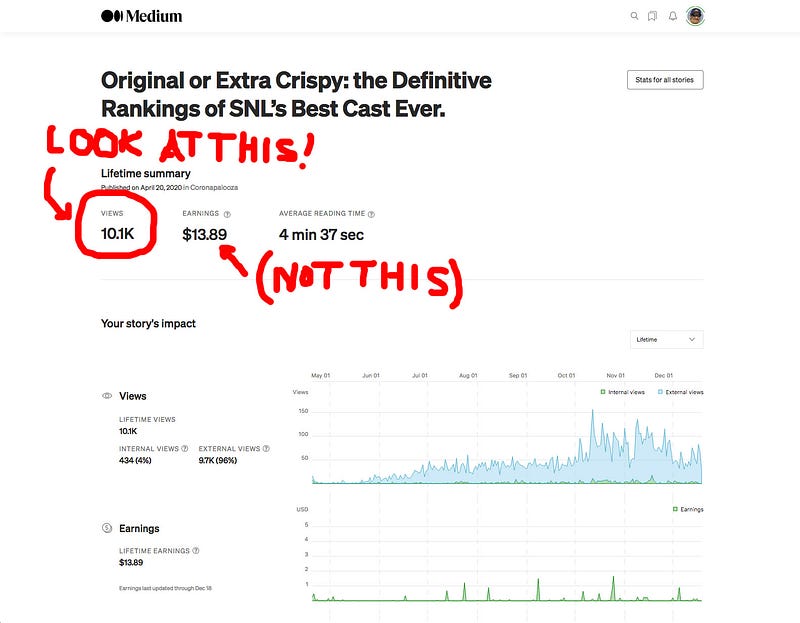
Medium doesn’t supply much in terms of statistical insight.
While I only received 434 internal views, my overall stats showed 734 reads.
Why would Medium include non-subscriber reading time when those reads don’t earn any income?
Do a search for “the definitive rankings of SNL” and you will see why 10,000 people viewed the article.
Somehow, my article was ranked #1 for this search. Here’s the screenshot. Who’s the hip one now, Rollingstone?
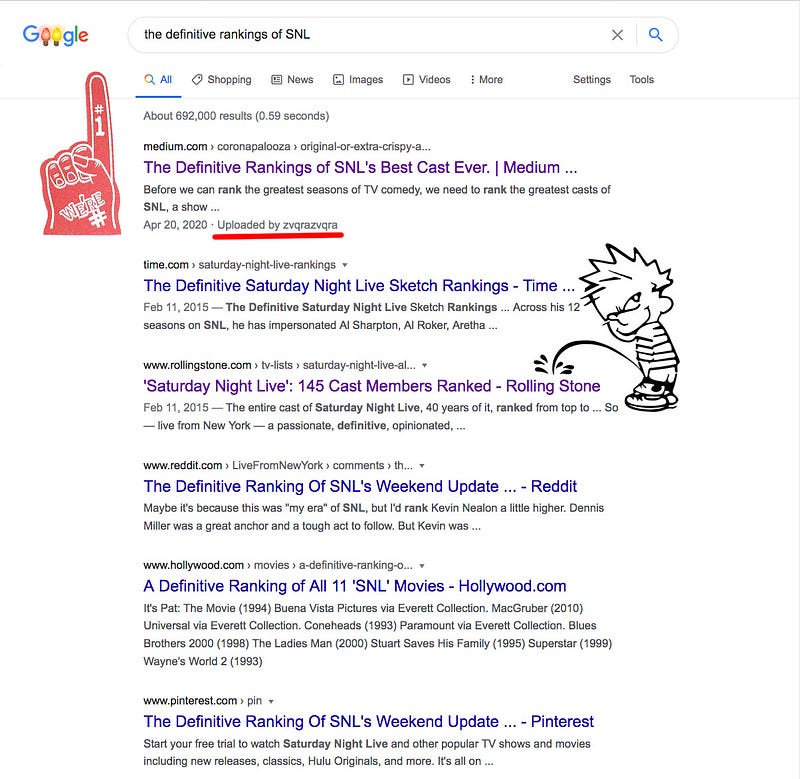
Somebody or something named zvqrazvqra uploaded my article, and I have no idea how or why this happened.
But if you do a search for “the ultimate rankings of SNL” and you would find a featured snippet from the article.
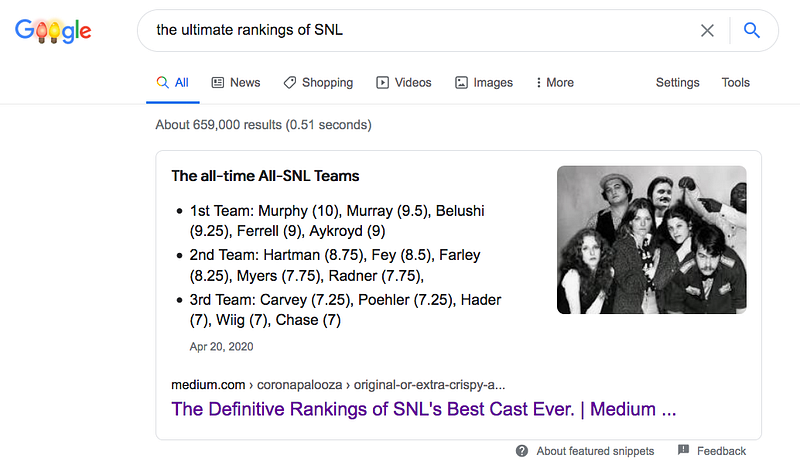
My best guess about social media fame is it has to do with choosing the right title.
We’d all like to think that writing a great article on a subject we’re passionate about would eventually get recognized, so I’m not going to burst your bubbles.
Just do a search on Medium for how to write a successful headline, and you can find a hundred articles to ruin your idealism about writing.
Or you can read this hilarious exploration into headlines.
I have written many headline parodies but their combined total reads represent less than 4% of the response generated by the SEO-powered headline.
The bottom line is writers need to learn about headlines and SEO to have a shot a breaking through the billions of words that barrage us every day on social media. On top of that, many successful authors and writing coaches say that marketing and promotions are vital to success.
That does lead to a problem.
If you spend half your time creating the perfect headline, and half your time promoting your work, where do you find time for the third half, where you actually write something?
Hey, nobody said writers were good at math.