
How I Changed My Mind About Veganism
I thought it was an extremist mindset
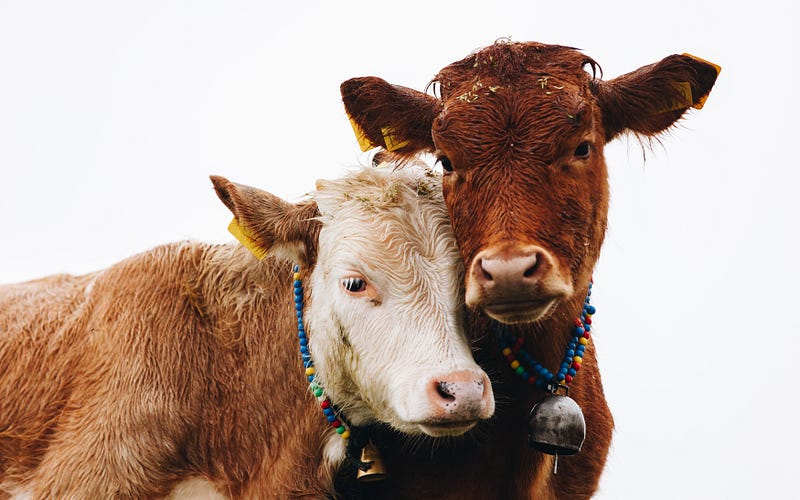
I’m going to tell you my personal transformation story — it’s been a shift in eating habits but an even bigger one in mindset. The mindset change is worth discussing as it’s something I didn’t much understand before and still get lots of frowns as well as “worrying questions” from “helpful” friends.
“I think vegans are stupid”
There’s a moment I like to remember from several years ago. I was meeting up with a friend in London with whom we used to discuss all kinds of matters of the world. Somehow veganism came up and I remember confessing to him loudly that “I think vegans are stupid!” to which he kindly responded “Maybe you should get a vegan boyfriend.” I laughed and that was the end of the topic.
Some time later I met a wonderful man who, I quickly learnt, was indeed vegan.
Turns out life has a great sense of humor and that it definitely had some lessons to teach me before I ever speak my mind again on subjects I know nothing about.
Us humans tend to have strong opinions on subjects we know nothing about
I quickly understood that I actually knew very little on the subject. Sure, I knew that it was a mindset that restricted people from eating animal products, including all milk (cheese!), eggs and honey but I hadn’t really given much thought on the “why”.
It all just seemed so restrictive and being a bit of a rebel I figured these were just people who had started this as a part of some kind of diet or to just be fashionable.
I put veganism to the same category as the people who claimed to be gluten or lactose intolerant without any actual evidence showing that (something that I also wasn’t knowledgeable about).
Let’s just say I was used to making assumptions on topics I hadn’t actually researched.
This tendency is quite possibly one of the biggest hindrances to peaceful human interaction or sensible politics that exists in the human brain. We’re all guilty of that at some point and me definitely no less guilty than the average man.
I thought it was an extremist movement
On top of being ignorant on the topic, the negative associations I had with the word “veganism” probably came from the fact that I linked it with the word extremism and thought it’s something that vegans intend to force on to others.
Having followed a similar lifestyle for a while now, I can’t tell you anymore that I think promoting this lifestyle is wrong. I don’t. However, the word extremism tends to have a negative association with it — and thus, we should be careful with the labels we give out and let sit in our neural networks.
Vegans are really just against animal exploitation
Veganism, put simply, is just the belief that humans have no right or no need to exploit animals the way we do.
It’s a positive movement — one that has received so many negative comments and frowns — when in actuality, the people who follow this diet are just trying to make a positive change in the world.
Vegans are against factory farming, hunting for fun, killing animals for their body parts or skin and being cruel to animals in any way. This does not mean vegans are for cruelty against people as being against one thing does not automatically mean you support the exploitation of other groups (as it sometimes wrongly assumed).
It also doesn’t mean that everyone who calls themselves a vegan, is the same.
The fact that you know someone who eats plant-based does not in any way mean that you know me.
Whatever the beliefs of other people you know, are not necessarily the beliefs of others.
Most people haven’t critically analyzed their “truths”
Once I realized the actual simple truth: that vegans are just against the exploitation of animals, it all became a lot easier.
I was no longer frowning over the use of the word and wasn’t seeing this as anything negative. It was more like my eyes were opened and I realized that it’s actually wrong to eat something that has to spend their entire life in a dirty cage, feels fear and pain when killed and is more likely than not, filled with antibiotics and growth hormones.
There’s probably nobody who doesn’t know where meat comes from but I bet most of the people haven’t really given this a proper critical thought themselves.
We know that animals are being killed for our food and we likely even know that the meat is filled with substances not good for us but we don’t really critically think about that because this is the way society has functioned so far. Someone serves us our food, it’s the same food our parents and grandparents ate, and the same food all our friends consume, and we never really need to take a moment to acknowledge whether this all really makes sense.
Do we really need to let the exploitation of those weaker than us to continue?
Why no eggs, dairy, honey?
I didn’t really know why vegans don’t consume dairy, eggs or honey before I did my research. For anyone interested: dairy cows are constantly being kept pregnant, their calves are being separated from them at birth while they cry for their babies, and they are then killed when they get too old.
Most chicken are being kept in small dirty cages where they almost never see sunlight; and honey, which is the actual food of bees, is being taken away from them for human consumption and being replaced with less nutritious sugar for them to being eaten.
It’s not “just another diet”
The health side of eating plant-based has long ago been proven and there is a ton of research out there.
I’ll likely talk about my own eating habits at a later article but for a preview, I’ve been eating this way for a year and a half now and my body has only changed for the better — there’s nothing that cannot be replaced by plant-based alternatives.
However, the real crux of the argument and the mindset shift for me was that this is not another “diet” or even not a way of healthy eating — even though it has tons of health benefits. To those who don’t get it and think I am torturing myself: the real reason is just because I know longer want to participate in the exploitation of those who cannot speak for themselves.
I’m sure that one day, the society will develop to a stage when factory farming is condemned and considered awful.
I already see it as that.
Whatever your beliefs on veganism, make sure never to abandon your ability to think critically
This is not to force anything on you but I wanted to explain how this realization changed my mindset and the way I view veganism. It wasn’t a sudden “aha” moment for me either: for example, I hadn’t eaten animal products for a while already when I attempted to gift my boyfriend a wallet made of real leather.
I saw it in a store and liked it.
It still hadn’t really hit me — an animal had been killed for it’s skin so that I could enjoy this product.
It’s a long process to change one’s preconceived ideas and a shift in mindset is often not easy to happen. What’s important is to keep critically analyzing anything we do, hear or say.
Even if that does not change your views about veganism, I hope you keep on analyzing your own thoughts the next time you speak up on a topic you haven’t really researched.
Life definitely gave that lesson to me.


