
How I Became Indispensable In A Job I Disliked
It’s not about what you want, but who you have to become to achieve what you want

It is not uncommon to find professionals taking up less desirable roles due to their circumstances. Depending on your situation, it can take anywhere between 6–12 months to find your dream job. The job search may even take longer if you resettle in a new country or industry.
Obviously, as individuals, waiting this long to begin to earn an income is not feasible, as many professionals must fend for themselves and their families, which is why many professionals take up casual or sub-optimal jobs.
When I arrived in Australia in 2016, like many other international students and recent migrants, I realised I had to take up suboptimal casual jobs in warehousing and other sectors part-time to support my living expenses. These were casual jobs that required little or no formal education and were adequate to support me financially as living expenses are exceptionally high in Australia.

Have you ever found yourself or know someone working in a suboptimal job you do not like? Jobs like this does not always have to be a job you dread! There is absolutely nothing wrong with working sub-optimal or low-value jobs to meet one’s immediate needs. These jobs can serve as a stepping stone to understanding the labour force and gaining exposure to the workforce.
Below are some steps from personal experience to ensure I leveraged these undesirable jobs to become the best version of myself and be one of the employer’s favourites!
#1. Put in Your Best on the Job
The first step to achieving excellence is to do quality work
Excellence is key!
Yes, it was not my dream job, but hey, I was being paid in return for services; therefore, it’s a no brainer that I had to fulfil my part of the bargain by putting in my best on the job.
It was also in my best interest to do well on this job if I wanted to be considered for work on an ongoing basis. Yes, the jobs you may consider casual or suboptimal are also competitive. By putting your best, you are at least guaranteed that you will be in the good books of your employer and will likely be given more opportunities.
#2. Have a Positive Mindset and Stay Motivated
You need a growth mindset to succeed
No matter your job or current situation, it’s essential to approach it daily with a positive attitude. Even if you don’t like your job, think of how you can make it more enjoyable. You’ll be more productive and cheerful at work by having a positive attitude.
I maintained a positive attitude regardless of my situation. It didn’t matter to me that it was not my dream role. Having a positive mindset allows you to be your best self and give your best performance.
Of course, this isn’t always easy — everybody has bad days sometimes. However, by making a concerted effort to be optimistic, you can power through any challenge and make the most of your situation.
#3. Learn From the Process
Relax and learn — you never know what might come in handy down the road
Every situation or challenge in life has something positive to offer — a lesson or an experience. The truth is that we tend to focus more on the negatives than the positive experiences. Focusing on the negative experiences will cloud your judgements and close your subconscious mind towards learning.
No one likes doing something they’re not passionate about, but that doesn’t mean you can’t learn to do it well.
The first few weeks and months were particularly challenging for me as I had to adapt to the role since it was entirely new for me. However, I was committed and determined to learn from the process, and was ready with an open mind to learn as much as possible.
#4. Be Humble, Teachable and Respectful of Others
Everyone has something to offer
Do you ever feel like you’re stuck in a job you don’t like, but you must be professional and respectful to your co-workers? This was particularly challenging for me as a postgraduate student in a top University in Australia. I couldn’t understand why I had to do an odd job to get by. I thought I deserved better since I had academic degrees to land jobs that aligned with my skills.
It can be challenging, but it’s also important to remember that we’re all just humans trying to do our best. No one is perfect, and everyone deserves respect.
I tried as much as I could to find the good in the job and my co-workers. I came to understand that everyone has something unique to offer. I learned a lot from co-workers by staying humble, teachable and respectful of my colleagues.
#5. Have an End Goal and Work Towards it Daily
Have a goal and work towards it daily
It can be challenging waking up every day and turning up for a job you do not like. You probably lose motivation on some days as I did. One way that was helpful to me was to have a goal and work towards it daily.
Despite working in an undesirable job, I spent time developing my skills for my dream role, networking and speaking to other professionals in my fields of interest.
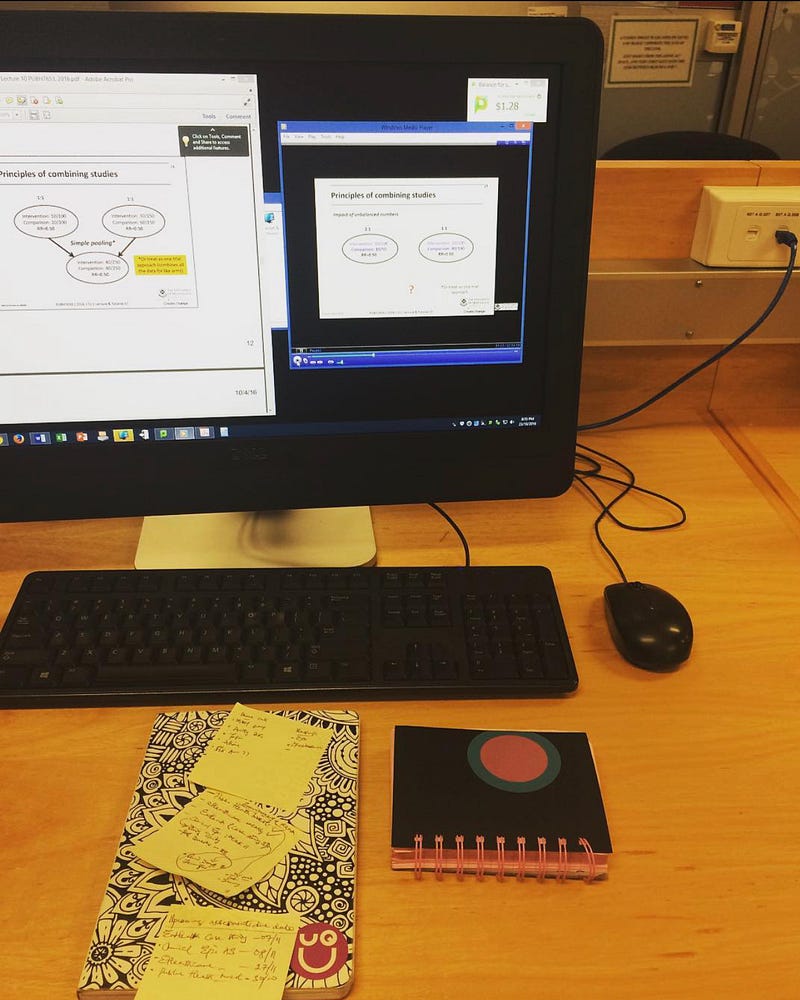
A colleague we worked in this role together recently came across my LinkedIn profile and gave me a call asking if I truly had the skills listed on my LinkedIn profile. He didn’t believe I could amass these skills over the years while working in an undesirable work environment. He didn’t imagine I had other plans and means to achieve my goals.
Your current status does not define you; work towards your desired goals daily. Remember, contribute your 1%, and it will pay off over time like compound interest. I highly recommend you read Atomic Habits by James Clear (affiliate link).
#6. Be Genuinely Interested in the Job
Connect with your role and develop interest
Working in a job you do not like can be challenging; however, if you want to give your best, it’s essential that you are genuinely interested in the role. You want to be able to give your best on the job to get retained.
You might think that if you’re just doing the bare minimum at your job, you’re safe. But in fact, not caring about your work is one of the quickest ways to get yourself fired. It’s essential to be passionate and interested in what you do, even if you do not love it every day. By putting in extra effort and being a team player, you’ll make yourself invaluable to your company. And who knows — maybe eventually you’ll find something more exciting and land your dream role within your current company.
#7. Take Breaks and Look After Yourself
Your well-being is important — look after your physical and mental health
A great way to unwind and forget about my current struggles was taking breaks and doing the things I love outside of work. As I was overseas and my family were far away, I made sure to visit friends and people that mattered to me. I got on planes to travel to neighbouring states and cities to see the places I love. I celebrated and gave myself special treats each time I thought I deserved it. It’s important to celebrate these quick wins — they will provide you with the momentum to keep going!

Life gets busy, and so does work, particularly jobs you consider less desired; therefore, it’s essential to look after your physical and mental health.
What I learnt from the process — the results were outstanding
Those years working jobs I did not desire turned out to be some of the most critical moments of my life. Not because I particularly enjoyed the monotonous job, but because of who I had become while working these jobs. Here are some vital lessons I learned from the process:
i. More Growth Opportunities
Excellence leads to growth
While working these jobs, I realised that I was assigned higher responsibilities over time. I was given a higher level of duties, which ultimately meant doing less manual and tiring work, but more oversight responsibilities, which was relatively easy and chill.
You’ll start to gain recognition and be rewarded more growth opportunities when you give your best in a job despite not liking it. My colleagues would sometimes look at me in awe and amazement and wonder why the managers would trust me with such a level of responsibility. Again, the secret is to do excellent work, put in your best, show initiative and build trust.
ii. You Become the Standard
You become the gold standard, when your become really good at your job
Do you know you can set standards on a job you do not desire? Yes, it’s possible. I was contacted about four months after taking a short break to focus on other priorities. The organisation needed someone for an urgent cover.
After arriving at the job on the said day, I looked around and realised they were heavily short-staffed. I knew staffing wasn’t the problem as the agency responsible for staffing had more than enough staffing to keep the role going.
I was wrong in my assumptions. The manager told me one of the most embarrassing yet important news. He said, “We have had issues finding the right person since you left this role. It’s not their fault; I guess we got so used to you after you set such high standards that everyone else that came afterwards struggled to live up to”. I felt good and terrible at the same time. Would you ever imagine that the standards you set can be used as a performance threshold?
You see, when you become really good at jobs by being genuinely interested in the position and those around you, you become a standard. Giving your all at work will help set new standards for yourself and others. Not to mention, putting in an outstanding performance will make you feel good about yourself. So don’t hold back — give it your all!
iii. Gain Transferable Skills
These skills will open more doors of opportunities wherever you go
This part is one of my favourites. Despite working these odd jobs, I was patient to make the best of it by learning as much as I could. I was in an entirely new country, and I realised any lesson is a good lesson. I was ready to learn and gain transferable skills to adapt to contemporary society.
Transferable skills are skillsets that can be utilised and transferred across many jobs. You will not stop needing skills like communication, teamwork, leadership and time management. They will always come in handy and follow you wherever you go!
iv. They Will Always Want You Back
You will have no problems seeking job opportunities at an old job if you were good and impressed the employer. They will always want you back!
When I left the undesired roles, the common sentences I heard at the point of exit were; “Just give me a call if you need to come back”, “Come back anytime you wish to, we can always make adjustments to our staffing arrangements to accommodate you”, “Why are you leaving, have we done anything wrong; can we do anything to make you happy and stay with us?”. While I felt their pain and wished I could help, I guess it was time to draw the curtains on those episodes. I was ready to move on to follow my passion and dreams. There is time for everything, and I guess it was time to say farewell.
Leaving the jobs you dislike doesn’t mean closing doors entirely to the employers. Leave a good impression until the end. They will always welcome you again with open arms.
Final Summary
Be thankful for everything!
Life has taught me that no condition is permanent, and life is in stages. No matter what job you are on right now — whether a dream job or not, I encourage you to make the best out of it. There is always something new to learn in such engagements.
After three years after leaving the role I did not particularly like, I now have my dream role, and I will forever be thankful for the moments I worked in undesired roles. I would never have been the best version of myself in my current job if I did not work in these previous suboptimal roles. Read my story on how I landed two job offers in Australia without applying online. Life is a phase; stay hungry, stay foolish, keep your mind open and learn.
I wish you the best!
About me
Become a Medium member here to access millions of articles curated for you!