
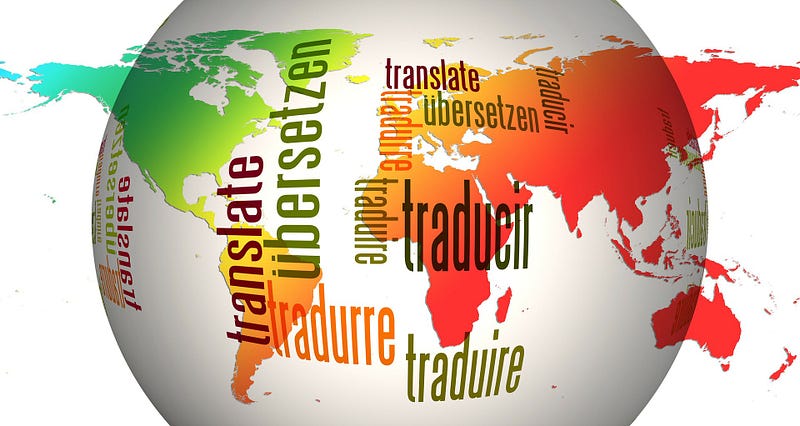
This is How I became Fluent in 5 Languages
Demystifying learning foreign languages + tricks and tips
Speaking foreign languages came naturally during the first 10 years of my life: living in 5 countries made it possible. Rich from that, I was able to speak: Kinyarwanda, Lingala and French.
After that, at school and university I had a real thirst for languages among many other courses (I am the type of people who loved school and university — and I fully own it). I was and still am curious for knowledge and understanding. From the academical background, the list grew: English and Spanish added on to the list.
My why’s for learning languages — this could be different for each one
I am interested in people. And when I am abroad, I want to understand local people on a deep level. That layer is facilitated through speaking the local language in order to understand the subtleties of the language and the culture. While abroad I want to get close to local perspectives in order to understand why they do what they do and behave the way they do (usually total opposite to my own ways). Language allows me to have a closer look at that.
The second reason is to be integrated in the society I find myself in: understand the administrative papers and the whole system. There is no much value for me in living abroad and only hang with people from my home country. Because then I get a limited view into the reality i find myself in. So I make an effort to hang with locals and also with people from my home country. There is balance to find.
In addition to understanding people, getting understood and be integrated in the society; the third reason for learning a foreign language is to maximize ones chances of getting a job abroad. In my case this was a big motivator to learn Norwegian. I was freshly graduated in marketing with little experience, and being a foreigner I thought learning the local language would enrich my CV. In Norway most people speak English, and many companies only require English to work. But in the marketing and advertising domain, adding on the Norwegian language helped at some level.
So, in short, my core why for learning a foreign language is to better understand the local population and at the same time be able to communicate in a way that is familiar to them. Since I am in their country, for me it makes more sense that I do the extra effort. Them being in their country, why would they be the ones making the extra effort of speaking other language than their native language?.
The how
- Vocabulary above grammar
I think grammar matters, but not at the cost of all the rest of a language components. I also think that to be able to speak, you need first of all the vocabulary, then comes verbs as well as grammar.
You can easily say: hungry, want, bread. See, here the other person will understand what you mean. In this example you only needed: the vocabulary/adjective of how to say hungry; the verb to express what you desire: want and one more time the vocabulary: bread.
See, in this sentence the vocabulary occupied the majority of the expression. Of course we are far from correctness in that example. It was for illustration into how vocabulary is central in learning a language in order to speak it.
- Get out, practice with local and make mistakes (in parallel of taking some courses)
Taking courses and learning the academic way to speak a language is one important step, then getting immersed into that language in particular will definitely boost the fluency. I did not speak English until 2011 the year I went on the Erasmus program in Finland (I tell that story of my life here). Before that I had excellent grades academically but I wasn’t fluent. It is during that year when I was studying and socializing in English that it all went from I can write and make essays in English to, I can speak English.
In 2011 I was fluent, yet I undoubtedly wasn’t flawless (and I still ain’t flawless), but the fact of being aware that this is a foreign language and not my own, I don’t need to be perfect, gave me the drive to speak even though I knew I could easily make mistakes. It did not matter whether I made mistakes or not, what mattered was: “Am I getting through my intended message” and “Am I understanding correctly what my interlocutor’s intended message is”?
- Be receptive even demanding of constructive feedback
I am grateful and love people who correct other people, otherwise how on earth would the other person know that they made a mistake and eventually grow from that? So I have had this attitude of receptivity towards feedback since I am able to remember. This makes me learn and improve one word at a time. I remember saying to my local friends and acquaintances: “please, feel free to correct me when I make a mistake while speaking/texting”. Well, some do correct me with constructive feedback, some don’t dare or care. I take what I get and keep on walking my way being grateful for the feedback I get. That is partly what allowed me to be fluent in Norwegian in one year after moving to Norway. I also took intensive Norwegian courses during that first year (4 weeks intensive course at Folkeuniversitet in Oslo).
- Watch/consume content in the original version
This is something I do mostly for Spanish since I have no one to practice with here in Oslo. So I watch videos and shows in Spanish. That allows me to keep the tonality of the language and keep up the vocabulary. My Spanish is naturally getting less and less fluent because of the lack of live practice but at the same time I am confident that if I was put in a Spanish environment for few months, the fluency would easily come back. I still use this practice for the other languages as well: English and Norwegian.
- Keep up the curious mind
Some people may think that: “la curiosité est un vilain défaut” as an old french proverb used to say (meaning: “curiosity is a naughty thing”). Fortunately the French philosopher Ivan Gobry contradicted that one and said this instead: “la curiosité n’est pas un défaut, pour la première raison qu’elle est toujours positive, et pour la seconde qu’elle est désintéressée” = curiosity isn’t a naughty thing because on one side it is “always” positive and on the other side it is pure interest.
So yes, keep the curiosity as high as it is reachable to you and see marvelous things happen…
At this stage of my life I speak Kinyarwanda, French, English, Norwegian and Spanish. I also understand some Swedish and Lingala. My next goal being Japanese, the story is only to be continued…
How about you, any language you would love to learn? Where in the process are you currently?
Until next time, enjoy yourself, do more of what puts your soul on fire. If you get the chance listen to birds sing and feel the air caressing your face.
Find me on IG for daily updates and book suggestions
One love 💜