
How I Applied Cooking Principles to My Writing and Increased My Views by 500% in One Month
— cooking and writing, they really are the same.

If you are anything like me, you love food! I mean who doesn't, right?
Currently, I’m chewing on some scrumptious Jack Links jalapeño beef jerky. Yes, this is the best flavor. Not Teriyaki. Not the original. Jalapeño.
Ok, back to the lesson at hand.
If you can’t tell, I tend to get sidetracked a lot.
Ok, where were we?
You are here to learn how I applied cooking principles to my writing and grew my medium viewership by 500% this month, that's right.
So let me explain.
Making a dish from a cookbook may be overwhelming at first, but with the right tools, you can easily do this. While each dish may be different, what I have found is the process for making one is almost always the same.
Here’s the formula I came up with for cooking, and I quickly realized the same can be used for writing a Medium article!
Recipe+Ingredients+Work= Final Product
Cooking and writing. Same same but different.
Now let's go ahead and break it down step-by-step so you too can learn how to become a better writer and get more views.
Step One — How to come up with a recipe for achieving success?
The first step for most cooks is finding a recipe they want to try.
When I’m craving a good dish, I often find myself texting my mom asking her to send over one of her signature recipes. While we are speaking of my mom's recipes, I could really go for some of her amazing lasagnas right now.
But back to my point.
Why do you need a recipe?
Having direction is foundational to making a great dish — that is unless you are Gordon Ramsey and can cook a gourmet meal with a box of macaroni, a pop tart, and a half-pint of chicken broth. But I'm going to assume most of us are not.
Similarly, writing with direction is pivotal if you are going to be successful. You need to have a plan of attack. Writing willy-nilly works for some, but for most novice writers (myself included), a little bit of structure goes a long way.
You need to first understand the why — or essentially your motive for using your valuable time and resources — to address a certain issue or topic.
Next, you need to figure out what you want to write about and how you plan on sharing that message in a way that is captivating, while simultaneously making it incredibly easy for your readers to understand.
As Simon Sinek explains, once you understand the why, only then will you be able to provide value to your customers in a clear coherent way — or in this case your readers.
For some, figuring out a topic to write about is hard enough, but now comes the challenge of identifying the ingredients you want to use to create your dish.
Let's tackle that below!
Step Two — Identifying the Ingredients to Success?
As is with any dish, you want the ripest, freshest ingredients you can find.
No one in their right mind would willingly choose macaroni from a box over a fresh gourmet macaroni dish from a Michelin star restaurant.
It’s unheard of.
If so, you probably have bigger problems to worry about then writing.
Similarly, its important that you use tried and tested writing techniques to create articles that captivate your audience and keep them coming back for more.
I have found the ones below have helped me exponentially grow my Medium views month over month.
1. Have Titles and Headlines That Draw Readers In
I recently learned the importance of having enticing titles by watching Ayodeji Awosika’s Youtube video. As a top Medium writer, he shows just how big of a difference this can make.
Without this, the whole house of cards comes tumbling down. If you cannot write titles that draw readers into your articles, then you wont even get a chance to share your ideas and thoughts with the world. How sad is that!
All that time wasted for nothing!
If you go to Medium’s homepage and look at the curated articles, you should be able to get a good sense of what a good title looks like.
Whatever you do, don’t make click-baity titles.
Like never ever.
Let me repeat.
Ever.
Articles that over promise and under deliver — those are no bueno — will leave readers feeling deceived and icky afterwards. I know I do.
Not only that, they most likely wont want to read any other articles you have written because you have broken their trust.
With that being said, there is a fine balance. As I chose the title for this article, I wanted to share how my experiences cooking have been translatable to writing better on Medium.
I know all people love food, and I know most Medium writers like to talk about stats.
And, viola!
I combined the two to create my title. Not too hard is it.
Now if I executed this correctly, readers should be able to see how the process of cooking a delicious dish is oddly similar to writing an excellent article.
If I haven’t, then I am sorry to have let you down.
Take time to practice writing titles and even play around with a title generator like the one I have linked below!
Don’t underestimate the power of a good title, this truly is the stepping stone, the key if you will, to sharing your ideas with the world.
If you make this a key ingredient in your writing, I promise you that you will see your viewership grow exponentially as I have.
2. Have a Hook and Follow it Up With a Jab
No I don't mean figuratively, I promise I don't condone violence of any sort!
So what do I mean by this you might ask?
People tend to follow people they can relate too, and in similar fashion, people tend to read and enjoy writing they can relate to.
If you have read anything recently that you thought was outstanding, there is a high chance you gave that author a few claps and maybe even a follow.
Why?
Because they left an impression on you. They hit you with a hook and followed it up with a jab. You definitely wouldn’t forget that in real life, just as you wont in reading.
Good or bad. Just make an impression.
There are many ways to do this in writing but some common ways are:
- Be Funny — Tell a funny story or share an embarrassing moment. Studies show that laughter is not only fun but is also healthy for you.Your audience will appreciate this.
- Appeal to Emotion (Pathos) — I’m a sap head, and I’m not scared to admit it. Thankfully so are many others. Make your reader feel empathy. Make them cry. Make them throw their computer out the window because they spitting mad. Really just make them feel some way other than bored.
- Talk about a Polarizing Topic — I’m not one to read political posts, but the amount of engagement you can get on those is incredible. People have opinions, and they want to be heard. Write an article about politics. Write an article debating whether a dress is blue or gold. Write an article about whether the earth is flat or round . Any of these would work.
These are just 3 quick examples that come to mind, but there are plenty of other ways you can deliver a deadly combo.
Learning and trying to replicate authors like Michelle Loucadoux, MBA and Itxy Lopez have helped me develop my one-two punch. Both ladies hook you in with enticing topics, and then deliver that jab — also known as value — in a way that is memorable.
So knock the preverbal socks off your audience, and they will continue to come back for more.
Don’t forget this all important ingredient, the jab hook, cause this will propel you to new heights if utilized correctly.
3. Be Willing to Adapt and Experiment
Just as you might add a little bit of salt to some under-seasoned chicken, writing takes some experimenting and adapting.
As your Medium journey progresses, you will probably start figuring out how to better relate to your audiences.
Look at the evolution of my writing, I have been able to refine and make my writing sound smoother. This takes practice but it can be done.
When I compare my writing progress to my Medium stats, I can see a correlation between the two. My writing has gone up as my writing style has evolved, and conversely so have my stats.
Another obvious way you can adapt and experiment in Medium is with the layout of your articles — which we will talk about more in depth below. Learning how to format your articles is a science and one that you can experiment with to see which gives you the best results. Ultimately you want to make your articles as easy to read as possible.
Like any other form of social media you publish online, your work will be public and open to scrutiny.
Be open to your audiences feedback — and if appropriate — address them as needed. At the end of the day, your goal is to provide as much value to your readers as possible.
In life, not just in writing, an important ingredient to add to your repertoire is the ability to be adaptable.
4. Make Your Writing Look Sexy
I’m a sucker for Charcuterie boards, not only because they are delicious, but because they are so damn aesthetically pleasing.
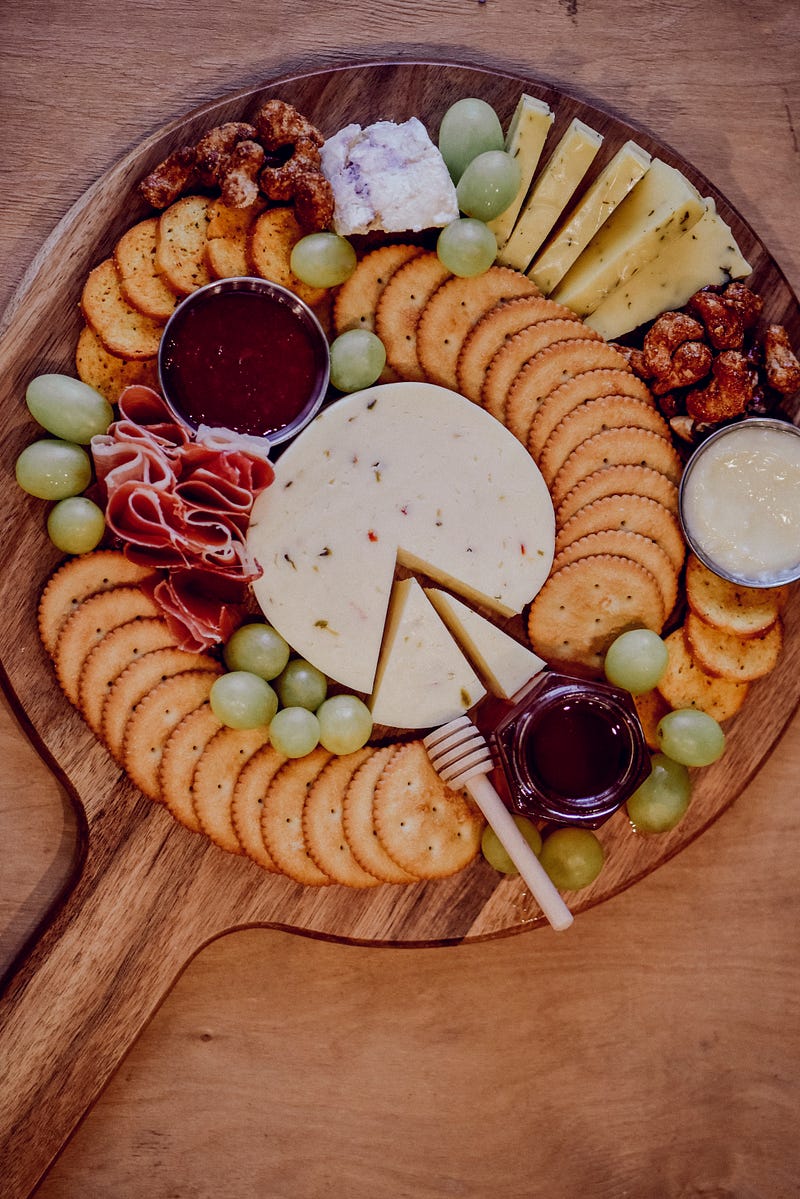
Like honestly, if this picture doesn't make you feel guilty about taking a bite, I don't know what would.
Similarly, you never want to click on an article and get inundated with a wall of text. I’ll admit, that was me not so long ago before I knew that Medium makes it ridiculously easy to make your articles look sexy.
Use their built in tools, they are there for a reason.
Break down your text into bite size chunks that are easy for your readers to digest.
You wouldn’t try to cram a 20 ounce steak down your throat without cutting it up first right? It would be overwhelming!
If you are looking for inspiration on how to do this, Jon Brosio does a fantastic job.
I’m sure you have clicked into someones article and just scrolled through it admiring how well formatted it is. I know I have.
It truly looks like a piece of artwork. Rightfully so too because it is just that — a piece of art.
Include pictures when appropriate. I normally only use pictures if I am trying to get the reader to envision something but it can’t really be put into words. Take for example the picture of the Charcuterie board above.
For the most part I try to stay away from them because this is after all a place for writing — not instagram.
Sexy, whether its the Charcuterie board or the way you format your articles, is bound to draw attention.
And attention is what you want if you are trying to exponentially grow.
5. Add Evidence and Support Your Articles with Facts
Imagine being at a bar 100 years ago in the Wild West with no smart phone or internet and having someone come up to you and tell you about this fruit called rambutan.
Rambu — what?
He then proceeds to tell you it’s this red, hairy fruit.
You probably would have laughed at him and told him he’s had one too many drinks. The only fruit you know of is apples and bananas, and they certainly aren't hairy.
If only he had a smart phone to whip out and prove you wrong.
Today, more so than ever, we have the ability to access an unlimited amount of data through the internet.
Medium — and many other social media platforms — are saturated with false claims, misleading statements, promises of things unattainable, etc.
You get the point.
When possible and when appropriate, use as much data as possible to back up your claims. I get that this depends on the topic of choice, but generally speaking — articles that fall under how-to-do something, factual pieces, and case studies should have data backing them up.
As they say, you can do 100 things right, but make one mistake and thats what you will be remembered for.
Write articles that provide wrong information, and you can kiss your readers farewell.
This is a key ingredient I see in many of the top writers post, and something I am continuously working on.
Use this to help build your creditability and trust with your audience, and you will see readers coming back for more.
Step 3 — How Hard Work Brings it All Together
“Success isn’t always about greatness. It’s about consistency. Consistent hard work leads to success. Greatness will come.” — Dwayne “The Rock” Johnson
The Rock, who is also known to eat monstrous proportions of food, emphasizes the importance of hard work and really hits the nail on the head.
You have probably heard this in every “How to Become a Better Writer” article on Medium, but for good reason. As with any art form, the only way to become better is by putting in the repetitions.
This might mean writing everyday for an hour. Maybe this means writing one article per day for the next 30 days. Whatever you decided it is, you need repetition and practice.
Is it always fun?
Hell no!
But to really grow as a writer and story teller, you need practice picking the right ingredients for your story. Once you have this down, then comes the fun part.
Putting it all together in perfect unison to end up with a masterpiece that leaves you craving more. That 5 star signature dish.
Like writing, as you practice more, not only does the quality of your writing become better — you eventually become more efficient at doing it as well.
Hard work pays off, you just have to keep pressing on.
Summary
So as you can see, cooking and writing really isn’t all that different. The formula I have developed isn't complex by any means, but I do think it's a good starting point for those who want to become successful writers.
Remember —
Recipe+Ingredients+Hard Work= Your Final Product
Step 1: A Recipe is your plan of attack. Your why, your motivation for creating that final product or dish.
Step 2: Good ingredients are pivotal in creating a delicious dish. Similarly, good writing tools are for creating quality articles. Some key ones that I have found include:
- Have Titles and Headlines that Draw Readers In
- Have a Hook, and Follow it Up with a Jab
- Be Willing to Adapt and Experiment
- Make Your Writing Look Sexy
- Add Evidence and Support Your Articles with Facts
Step 3: Work hard and practice as much as you can. Not only will you see your writing become better, you will also become more efficient.
And that my friends, is how I used my formula for cooking and applied it to writing on Medium to exponentially increase my views. If I can do it, you can too.
For more inspiration: