
How I (and You) Defeat Writer’s Block
A take-no-prisoners approach.

I’ve been at this for a while.
Writing, that is.
Starting back in elementary school and now making somewhat of a living, writing has long been a significant part of my life, and, of course, I’ve dealt with the dreaded blank page from time to time.
There have been times, even, when writer’s block kept me from producing anything for up to a year.
That was not a fun year.
The good news is that was a long time ago, and I’ve since picked up some strategies that keep writer’s block from being much of a problem.
Avoid Overpreparation
There are two ways over-prepping can contribute to writer’s block. One is to fuss about your writing tools. While I can appreciate having a favorite pen, notebook, background music, ambient temperature, or snack while writing, don’t let it turn into an excuse not to write.
Identify and acknowledge when you’re fussing too much about your tools and move past that.
As for over-prepping on the writing itself, I know many writers like to have an outline meticulously laid out before beginning a piece. While helpful for keeping your thoughts on track, no rule says you can’t start writing before you have everything laid out.
The writing process is creative and interactive. Your ideas will develop as you write.
Remember, you can always go back and edit later.
Know There Is No “Right Time”
Some folk put off writing until it’s the “right time.”
What the hell does that even mean?
I guess I understand a little–having been there myself a few times. The problem is that it’s pretty common to never reach that “right time” moment.
There’s always a reason to put it off just a bit longer.
Instead, try to achieve forward momentum by sitting down and writing, whether ready or not. It may not be the best words ever jotted down, but that’s still preferable to a blank page.
Don’t worry about finishing research or outlining every detail. You can always put that stuff in after you’ve quickly roughed out a draft or two.
Write-In Short, Quick Sessions
Don’t have much in the way of long blocks of uninterrupted time to write? Do you lose focus after too long a time?
Try working in short bursts of time spread out over the day. By the end of the day, you’ll likely have hit your projected word count for the day–or more. All you did was write in, say, eight 15-minute shifts rather than one 2-hour slog. Many times, writer’s block can hit us in the middle of a long stretch of text.
Instead, these little bursts of writing mean you’re fresher each time you sit down to write a section of text.
Hey, whatever works.
Treat Your Writing Like a Job
Still feeling stuck?
Don’t approach writing like it’s an optional activity — not if you plan on being a professional writer. Instead, view writing like any other job — something that can’t be postponed. Enter your writing sessions into your daily schedule. (It helps if you have a planner to organize your day–either digital or paper.)
If you’re writing at home, ensure housemates or relatives understand you are working. Interruptions and distractions will not be appreciated.
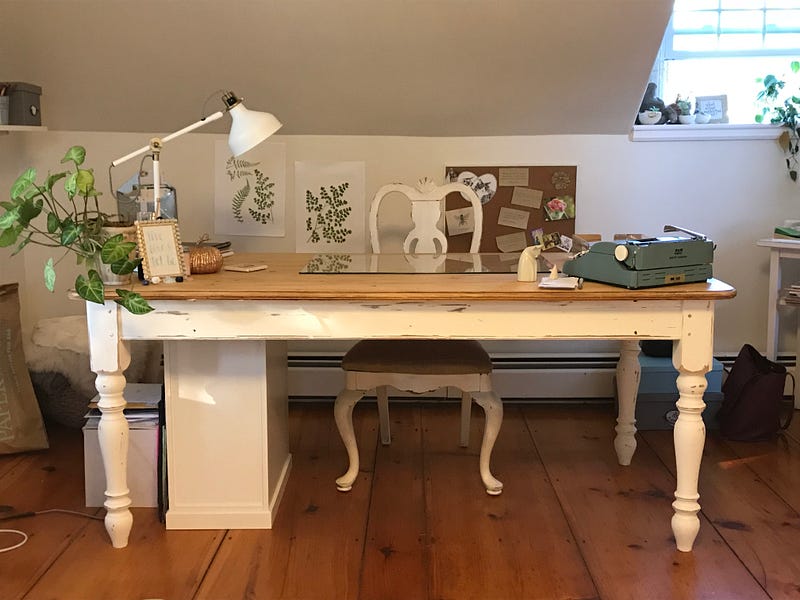
Better yet, designate a personal work area. Treat it like an office. Keep it holy.
Talk It Out
Don’t view writing as a solo activity.
If you’re stuck, find a friend — perhaps a fellow writer — and talk about your work. Engaging in thoughtful dialogue about what you’re trying to accomplish could be the very thing you need. You’ll return to your writing with a fresh attitude and a renewed sense of purpose.

You might even learn something new or come away with a different perspective you can use.
Mix It Up
Everyone gets tired.
This can impact your writing, resulting in writer’s block or low-quality work.
Change when you write if you feel like you’re wearing out too soon. For example, If writing late into the night is getting you nowhere, try waking early in the morning to get in an hour or two before breakfast time.
Or you could go for a change of scenery. If working from home isn’t proving fruitful, try the library (my favorite) or the local coffee shop.
Hey, writing in coffee shops is a cliche for a reason.
Keep the Faith
Writing can be frustrating even during the best of times.
I’ve been there. I still find myself there from time to time.
But there are ways out of it. Ways to get past writer’s block.
Just remember, if writer’s block was hopeless, we wouldn’t have novels, articles, movie scripts, or the like. Every writer suffers from writer’s block, but not all writers have to stay like that forever.
Try these simple tips to see where you end up.
And keep writing!
About John Teehan
John lives in Rhode Island with his wife, son, and dog. He specializes in tech, health, business, parenting, pop culture, and gaming. Visit wordsbyjohn.net for more info and rates. Twitter: @WordsByJohn2


