
How I Am Learning to Love Unconditionally One Pair of Sweatpants at a Time
Loving is a one-day-at-a-time sort of gig
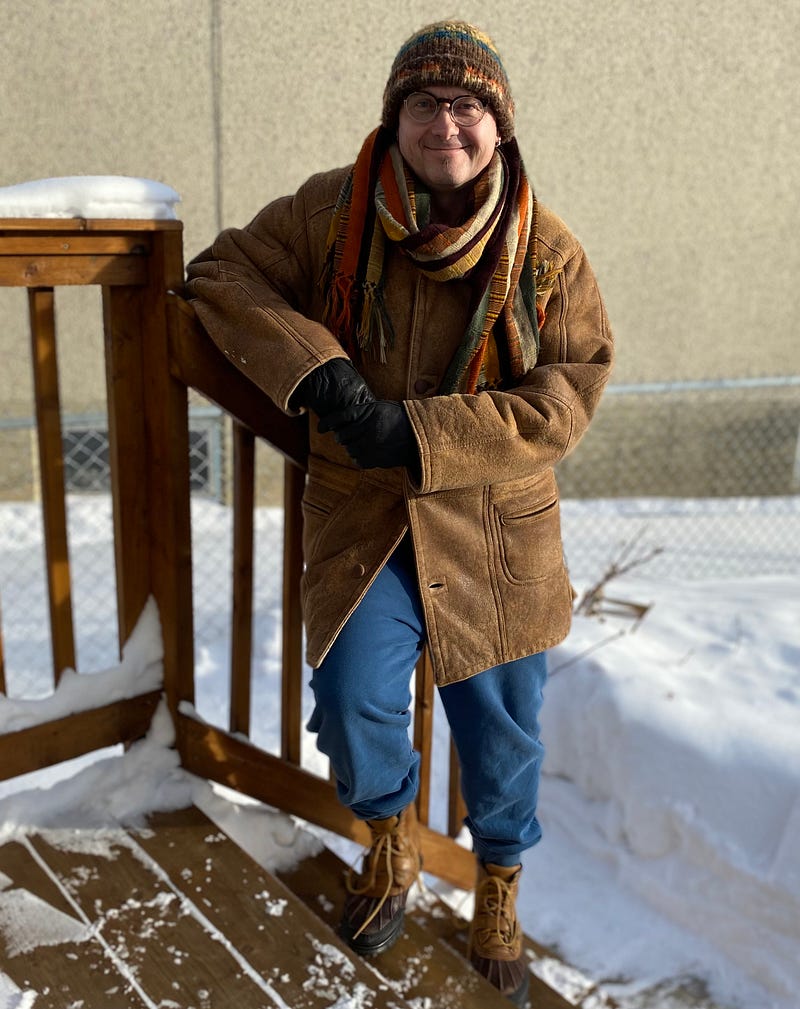
“Are you wearing those sweatpants out of the house?”
My partner stood in front of me wearing an ancient sheep-skin coat over baggy, baby blue sweatpants that bloomed out of brown Polo boots. A Nepalese woolen hat crowned his freshly shaved head and the whole package was wrapped with a Guatemalan scarf. He blinked a few times in reply to my question.
As soon as the words left my mouth, I wanted to shove them back in. I attempted damage control. “Of course, it’s none of my business what you wear,” I stammered. “What do I care? As long as you are comfortable. Right?” But the damage was done. I could see it on his face.
He let it go and I spent the rest of the day reflecting on what it was that triggered me. Why did my partner’s choice of clothes bother me? This was not the first time I had commented on his fashion sense. Did I unconsciously believe that others would judge me based on how he looked in public? Gawd! I hoped not. I needed to get to the bottom of this and fast.
If I have learned anything from my years in therapy and Codependents Anonymous, it’s that when I react out of proportion to a situation in the present, the cause of my reaction exists somewhere in my past. It could be a childhood wound coming up to be healed, or a belief that had been installed by someone long ago and no longer serves me today.
As I often do in my quest for healing and personal growth, I embarked on an archeological dig into my childhood.
The old belief (aka the Program)
Growing up, my mother chose my school clothes for the week; dresses, or skirts and blouses with white knee socks in the summer, or trousers and sweaters in the winter. They’d be waiting for me, draped over the back of the living room chair, on Sunday evening.
I’d wear the same outfit Monday to Friday. It never occurred to me to question her selections. The other rule was to change, as soon as I came home from school, into my play clothes — sweatpants and T-shirts — the good clothes returning to their place on the back of the living room chair.
For years, I watched my step-father change out of boxers and ribbed undershirts and into pressed jeans and crisp, button-down shirts (thanks to my mother’s ever-busy iron), even if it was just for a quick trip to the supermarket. He would not leave the house without checking his visage in the mirror.
My mother swished around the kitchen in polyester house dresses and when it was time to leave the apartment, dipped into her wardrobe that housed fashionable skirts, suits, and dresses, some of them even custom-tailored. With her feet inside high-heeled pumps and her legs in sheer stockings, she’d meet the outside world, chin high, feeling proud of how she presented.
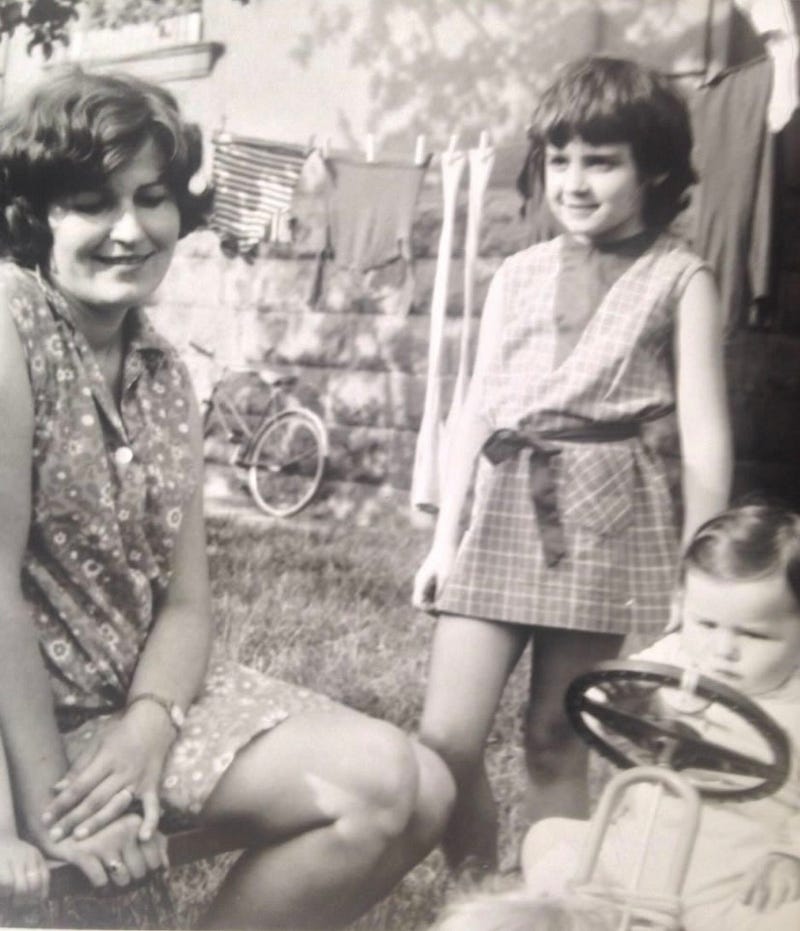
We were a typical Eastern European family until we immigrated to western Canada in the early ’80s. Much to my parents’ horror, in this speck of a town, no one seemed to blink twice or looked you up and down if you wore pajama pants to the corner store, or the pattern of your shirt and shorts clashed; or gasp, there was a gap between the hem of your T-shirt and the waistband of your pants, your bare belly playing peek-a-boo.
There it was. The program installed in me by my parents that demanded I look acceptable to others to avoid being judged schleppy, sloppy, or unkempt and by default, spare them the hurtful gossip from neighbors.
The childhood wound
When my family and I first immigrated to Canada, my wardrobe consisted of a pair of second-hand slacks that resembled denim but were not denim. A pair of real denim overalls, that was all the rage in Vienna, but not so much in the tiny town of Edson. Add to that a few blouses, their long sleeves barely reaching my wrists, T-shirts, and sweats that I had outgrown months ago, courtesy of the nice people at the refugee camp, who had donated clothes to families with children.
In Canada, I was not one of the popular kids in Junior High. I became the butt of frequent jokes that focused on my clothes. I didn’t know then, that I was being bullied. I do today.
We were barely surviving the first couple of months in Canada. My parents were desperately searching for work and my pleas for a new pair of jeans were not a priority.
The aha moment
I could see the dots connecting me from my childhood, to my triggered reaction, to my partner’s sweatpants. Even though it is my wish to be completely accepting of my partner, regardless of how he shows up, I am working against some stubborn familial programming as well as childhood wounding, that until now, has not come up for healing.
Let me also say, that simply wanting to behave differently is no match for a belief that has been running a lifetime. It’s a little like facing a hurricane in a yellow slicker. It takes patience, practice, and perseverance to reprogram it.
Rewriting old beliefs and healing childhood wounds
Armed with awareness of where my belief and wound took root, I was able to return to the present moment.
I love it when my partner dresses up in stone-washed jeans and a sweater that features his broad shoulders and chest. I love it when he spritzes on cologne and smells of musk and vanilla. I am a woman who likes beauty and style.
I also love it when I bury my nose into the crook of his neck and inhale his own, particular scent. I love it when he pulls on an old pair of sweatpants and from my chair on the patio, I watch him split wood that has fed our fires during this arctic winter.
I love the Viking ring he wears on a leather cord around his neck and his silver hoop earrings. I love his goatee and the fact that he uses sandpaper to smooth his hands, rough from hard work, before touching my bare skin. I love his eyes that take me in whole and convey love poems without his lips ever uttering a word. I love his laugh, its sound like a call to prayer in my ears.
I am dismantling the old belief that insists we all have to dress up to be out in public. I’ve accepted that it is not my partner’s responsibility to change how he dresses to spare me uncomfortable feelings.
I intend to celebrate my partner in his pure authenticity, to learn how to love unconditionally, his unique way of showing up human.
As of today, I say NO to curating my man. It is not who I want to be. I release this old belief that I’ve carried with me like an old penny lodged in the hem of my coat and sing, “I want you Just the Way You Are.”
If you enjoy reading stories like these and want to support me as a writer, consider signing up to become a Medium member. It’s $5 a month, giving you unlimited access to stories on Medium. If you sign up using my link, I’ll earn a small commission.