
How “Homeland” Raised the Bar for Television Drama
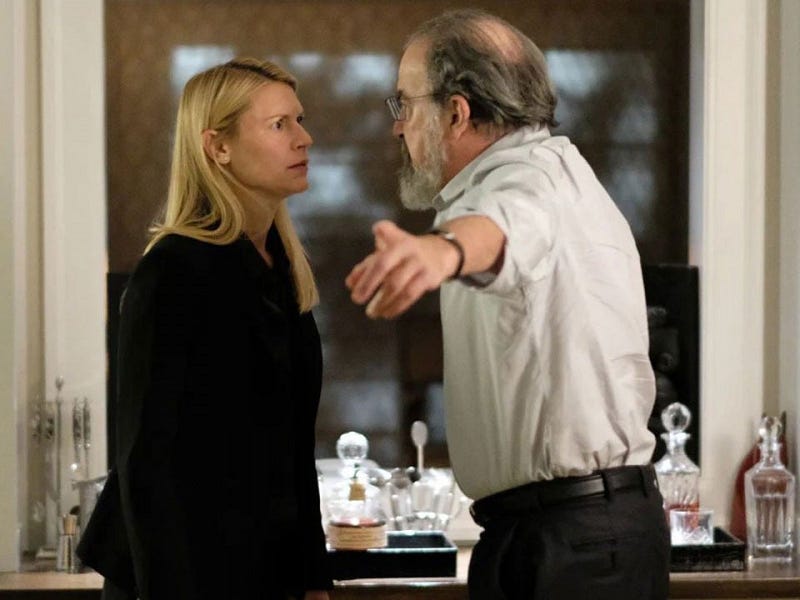
Showtime’s Homeland aired its breathtaking series finale last Sunday night, concluding its 8 seasons, 96 episode run. Here, I take a look inside the show’s evolution, review the series finale, and reflect on five ways in which the show made a lasting impact on the television landscape.
The Evolution of Homeland
The Emmy-winning espionage thriller Homeland premiered on October 2, 2011. For context, its premiere occurred 10 years and a few weeks after the historic events of 9/11 that in many ways serve the catalyst for the show and 16 months after the series finale of the Fox juggernaut 24, an espionage thriller that mined similar narrative territory but with a decidedly more network TV spin. Created by Howard Gordon and Alex Gansa (both of whom had worked on 24), the series was an adaptation of an Israeli series called Prisoners of War, which had premiered a year prior to great acclaim.

The show centered on CIA agent Carrie Mathison (Claire Danes), a brilliant, brave, and determined woman battling some internal demons, including a longstanding struggle with bipolar disorder. In the pilot episode, she became convinced that a U.S. Marine Corps Scout Sniper named Nicolas Brody (Damian Lewis), who was being touted as an American hero after being held as a prisoner of war by Al-Qaeda, had actually been turned by the enemy and was a threat to national security. One of the only people who believed her — or was at least open to what she has to say — was her mentor Saul Berenson (Mandy Patinkin), who was at that time the CIA’s Middle-East Division Chief.
Homeland was a breakout hit in many ways. It instantly won over critics, as evidenced by its first season’s stunning 100% approval rating on Rotten Tomatoes and average rating of 92 out of 100 on Metacritic. Its ratings were solid by the pay cable network’s standards and steadily grew over the course of the season. The show generated enormous buzz both for its quality and its tantalizing premise, not to mention the fact that it featured highly praised turns by a pair of actors quite familiar to American audiences (Claire Danes had starred on the cult favorite TV drama My So-Called Life as a teenager and in hit films like Romeo + Juliet, whereas Mandy Patinkin had a long career on Broadway, won an Emmy for his work on the medical drama Chicago Hope, and is well known to film fans for his role in The Princess Bride.) Its breakout status was cemented at the 64th Annual Primetime Emmy Awards where it almost made a clean sweep of the main categories, winning Outstanding Drama Series, Outstanding Lead Actress (Danes), Outstanding Lead Actor (Lewis), and Outstanding Writing.
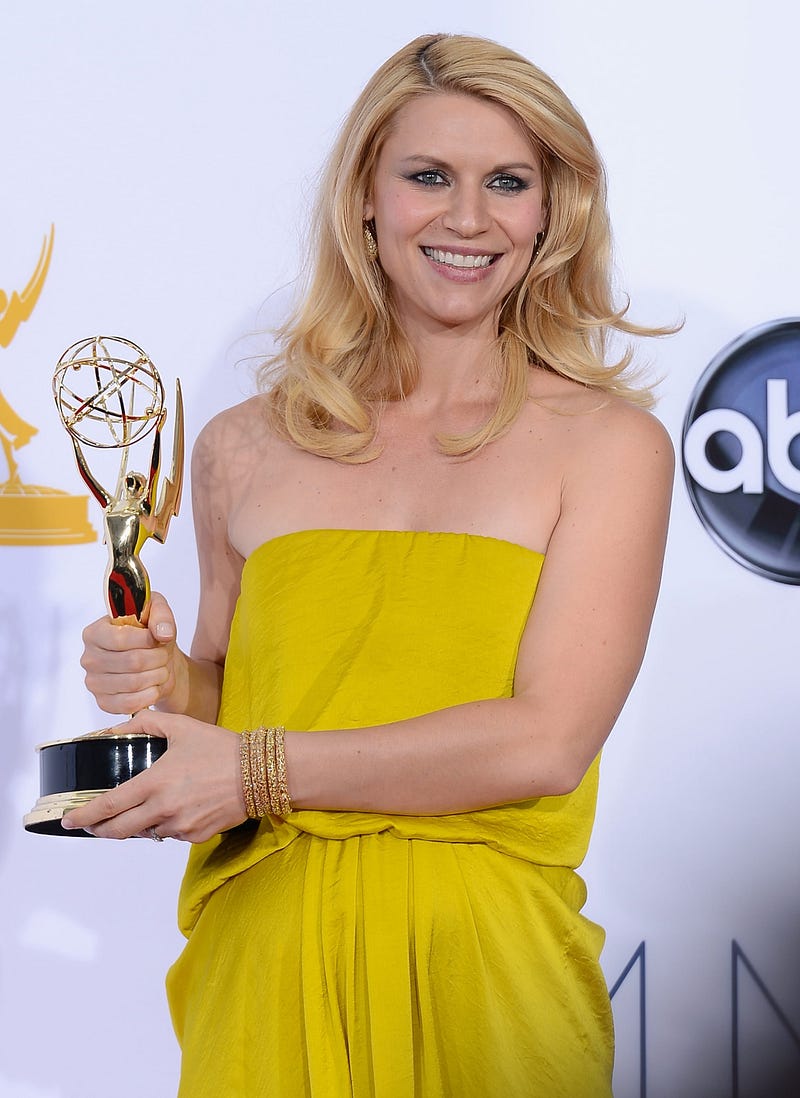
Its second season, in which it was firmly established that Carrie was right about Brody all along and their fates became intertwined, grew even bigger in the ratings and scored even more Emmy nominations than the first. (This time around it didn’t sweep the Emmys, but it did score repeat wins for Danes and its writing.) Even by its second season, however, the show was becoming an uneven. This was largely due to too much focus on the meandering domestic drama of Brody’s wife and children and the provocative dynamic between Carrie and Brody that frequently threatened to stretch believability too far. Nevertheless, it produced some truly masterful episodes and rallied for a jaw dropping season finale that was one of the most electrifying television episodes of the decade.
Everything that was starting to falter during the second season came to a head in the third. The writers were simply unable to generate interesting and believable content for the Brody family. The season was all over the place, a mish-mash of tepid domestic drama, explosive espionage, and logic-defying soap opera antics. Many critics and fans wrote off the show as a two-season wonder. The Emmys followed suit, giving it only two major nominations (for Danes and Patinkin, who admittedly continued to turn in brilliant work even when the narrative lost its way).

What most people assumed was a flameout, however, turned out actually to be just a bump in the road. The show returned the following fall with its best season yet. The fourth season rebooted the series by dropping the Brodys entirely, giving Carrie and Saul new jobs, moving the action to Afghanistan and Pakistan, and introducing a host of compelling characters. The show clawed its way back into key Emmy categories like Outstanding Drama Series and Outstanding Directing, which is highly unusual. (More often than not, once the Emmys drop a show, it rarely gets back in their good graces.) Season Five rebooted the series again, relocating Carrie to Germany and introducing one of its most brilliant (albeit short-lived) characters in Russian double agent Allison Carr (played by Miranda Otto). That season, too, gained Emmy nominations in several major categories, including Outstanding Drama Series.
The sixth season premiered in the final weeks of the tragic 2016 Presidential election campaign. Sensing the shift in American viewers’ interests and the global political and military conversations, the series redirected its focus to domestic affairs. The sixth and seventh season both largely focused on Carrie’s strained relationship with Saul, her complicated relationship with motherhood, and the tumultuous presidency of Elizabeth Keane (played brilliantly by Elizabeth Marvel). Although frequently compelling, the seasons were a bit uneven, particularly the seventh. The show delved into subplots like a custody battle for Carrie, an epic relapse of her bipolar disorder, and her complex relationship with former colleague Quinn (Rupert Friend, who rose to the occasion with a brilliant performance in Season Six after his character became physically, emotionally, and cognitively scarred by exposure to a chemical weapon). There was brilliant acting, strong production values, and compelling sociopolitical commentary, but the show had lost some of the spark it had in its early seasons with the central Brody dynamic and the previous two seasons that benefitted enormously from the change of scenery.

Thankfully, the writers recognized this and moved the action back to the Middle East for the reinvigorated final season, which wrapped last Sunday. The season began with Saul enlisting Carrie’s help as he tries to end the war in Afghanistan in his new capacity as National Security Advisor. Unfortunately, he is just about the only person who trusts Carrie, given that she was recently released from seven months as a political prisoner in Russia. It’s a brilliant reversal of the dynamic that kicked the show off — this time Carrie is the returning prisoner of war who no one trusts. It is also an infuriating, but fitting and realistic, journey for her character given that Carrie Mathison has spent the show’s whole run breaking rules, taking enormous and reckless risks, and refusing to play nice. The fact that it all plays out against the backdrop of an imminent political crisis involving Afghanistan, Pakistan, and Russia makes it all the richer. It’s not as consistently brilliant as its best season (that would be Season Four), but it came tantalizingly close. And, thankfully, it spent its final episodes focused on Carrie and Saul, the show’s most fascinating and enduring relationship.
Review of the Series Finale
Although the 12th and final episode of the season “Prisoners of War” (the show’s 96th episode overall) was billed as the series finale, it was in many ways a two-part series finale also comprising the 11th episode (“The English Teacher.”) The episodes find Carrie hell-bent on retrieving the black box from the helicopter crash that killed the presidents of the United States and Afghanistan earlier in the season. The Taliban claimed responsibility, but Carrie knows that this is not true. Unfortunately, the Russian agent that she reluctantly decided to trust absconded with the black box and announced that his government would only hand it over in exchange for the identity of the double agent Saul installed in the upper echelon of the Kremlin decades earlier. Carrie thinks that compromising the identity of the agent (leading to certain death for the agent) is an acceptable risk for averting war in the Middle East. Saul disagrees. It is arguably a perfect final conflict for the series. It is at once tantalizing and nuanced; character-driven and enormously high-stakes.
Even the directors and writers were chosen perfectly for the final two episodes. They were directed by Michael Cuesta and Lelsi Linka Glatter, respectively. Cuesta helmed the pilot of the series and many key episodes of its early seasons. Glatter has received a slew of awards for her helming of the best episodes of the later years and is often credited as a key force in the show’s longevity. The episodes were written by Patrick Harbinson and Chip Johannsen (who wrote the bulk of the final seasons) and series co-creators Gansa and Gordon, respectively.
The twists and turns of the final two episodes may stretch believability for some viewers, but it largely worked for me (especially compared to the usual suspension of disbelief required by dramas centering on espionage). And although some have called the epilogue ludicrous, I found it to be remarkably bold and impactful. After Carrie averts the war by outing the double agent (who opts for suicide over extradition and torture) the Russian agent she has been dealing with helps her to escape to Syria. The show then flashes forward two years later. Carrie is living in Russia with the agent and has published a book about why she betrayed her country to work for a foreign adversary. But, as we quickly learn, what she has really done is taken over for the asset she outed and is reporting back to Saul. The show ends with their dynamic intact but under extraordinarily unexpected circumstances. And although many will undoubtedly feel like those circumstances stretch believability, I believe that they were set up by multiple seasons of groundwork, are a fitting end to the dangerous and rebellious career of Carrie Mathison, and bring the show full circle to its original dynamic in an almost impossibly poetic way.
As I have written about a lot recently, making a good series finale is a remarkably difficult task. When show runners get it wrong, it can be a crushing disappointment that makes you wonder why you bothered sticking it out. But when they get it right, like they did with Homeland, it makes you pity the fools who didn’t stick it out.
Five Ways that Homeland Raised the Bar for Television Drama
When discussing the legacy of Homeland, many focus on facts like how Homeland became the first — and to date only — major award-winning hit to hail from Showtime, how it turned teen star Claire Danes into an acclaimed adult actress, and the many controversies over its portrayals of international relations, terrorism, and the Middle East. Although all of these are valid discussion points, I think of its legacy in terms of the following five ways that I believe it transformed the television landscape.
- It explored issues of national security and international relations with a moral complexity rarely seen on television. 24 was a cultural phenomenon not just because of its risky but shockingly successful premise and its compulsive watchability, but also because it was the first show to truly delve into the world of terrorism after 9/11. (Interestingly, it went into production before 9/11 and premiered a few weeks after that tragic day.) But while 24 may have been first, Homeland was better. It might not necessarily have been better as entertainment value (damn 24 was a thrilling ride), but it was certainly a much more morally complex and intellectually stimulating exploration of national security and international relations in the post-9/11 world. Although it did not always tackle these issues perfectly, it remains to this day one of the only major television shows that has committed to doing so. It proved that delving deep into international politics, including having whole seasons set in foreign countries, episodes that were majority subtitles, informed debates about topics like the Israeli-Palestine conflict, and twists in which the Americans were actually the enemies were all doable on a popular small screen drama.
- It dropped its central dynamic and successfully rebooted. As described above, Homeland began as a series about the fascinating dynamic between CIA agent Carrie Mathison and recently repatriated prisoner of war Nicholas Brody. When this dynamic had completely run out of steam by the third season (resulting in the execution of Brody and the actor’s exit from the series), many didn’t see how the show could go on or why it would even bother. But it rebooted spectacularly the following fall with its best season and ran for several more largely successful seasons. It is hard to identify a high profile, long-running series that successfully rebooted its central dynamic midstream. For that alone, Homeland will always be a benchmark.
- It centered on a deeply flawed hero that also happened to be a woman. With the proliferation of gritty cable dramas, antiheroes became all the rage. Tony Soprano (HBO’s The Sorpanos), Dexter Morgan (Showtime’s Dexter), Vic Mackey (Fx’s The Shield), and Walter White (AMC’s Breaking Bad) are among the many iconic examples. They are also all men. With the possible exception of Glenn Close’s double Emmy winning turn as Patty Hewes on Fx’s Damages (although she was less of an antihero and more of a villain; an antagonist of co-lead Rose Byrne), Carrie Mathison marked the first time that a major show featured a female protagonist that was often unlikable, morally suspect, sometimes criminal, and tough-as-nails. Carrie is a perplexing and often maddening character that in many ways set a new bar for complexity in female protagonists. (Of course, she was also unfathomably brilliant, willing to risk everything for the safety of the United Sates, and fiercely loyal to those who deserved it — making her a gigantic step up from many of the complicated male protagonists listed earlier).
- It provided one of the most accurate (and harrowing) depictions of mental illness ever seen on the small screen. As a clinical psychologist by day and culture blogger by night, I am in a somewhat unique position to judge the quality of portrayals of mental health issues in media. And since it premiered in 2011, I have frequently cited Homeland’s portrayal of bipolar disorder as one of the most accurate depictions of mental illness ever seen on the small screen (or any size screen, really). Of course, what Carrie has is a particularly severe form of bipolar disorder that hardly reflects the majority of patients’ experience. Nevertheless, it gets nearly every aspect of it right. It brilliantly and accurately depicts the cyclical nature of the disorder (electrifying mania followed by crushing depressive episodes), the mounting paranoia and grandiosity, the complex and ineffective responses to the symptoms by families and colleagues, and the often cruel nature of its effective treatments (the memory wiping side effects of ECT and the blunting effects of mood stabilizers). It also captures the surge of motivation, ingenuity, and clarity that can accompany the illness and lead some people to resist treatment.
- It featured two utterly extraordinary and singular acting performances. Homeland featured a number of terrific supporting performances during its run. I noted the award-worthy work of Damian Lewis, Miranda Otto, Rupert Friend, and Elizabeth Marvel above, but have yet to even mention the work of F. Murray Abraham (the Oscar winning star of Amadeus who commanded the screen in his recurring role as an intelligence officer), Morena Baccarin (who consistently overcame weak material with a strong performance as Brody’s wife in the show’s early episodes), and Amy Hargreaves (who brought sanity, heart, and restraint to all of her appearances as Carrie’s long suffering sister). But as good as the ensemble always was, at the end of the day the show was always a showcase for Claire Danes and Mandy Patinkin. And did they ever make the most of it. Danes was constantly provided with material that she could have chewed the scenery with, but she always knew exactly when to be loud and commanding and when to hold back with a quivering lip or a heart-chilling glare instead. It is a performance that fascinatingly mixed theatrics and restraint and almost never rang false across the 96 episodes. Even when the scripts let her down occasionally, she consistently delivered one of the finest performances on television. Patinkin had a smaller and quieter role, but one that was no less powerful or masterfully performed. He was the show’s emotional and moral center for the majority of the run, a stabilizing force without whom the show would never have worked. On the rare occasion that he got a big moment to grandstand, he knocked it out of the park. But the vast majority of the time he embodied steadfast loyalty, fortitude, patience, compassion, reason, and heartbreak. In contrast to Danes, Patinkin never won an Emmy for Homeland despite four nominations. He does have one more chance this year, but my hopes aren’t high. His is the type of subtle, nuanced performance that rarely wins the gold but tends to stay with viewers much longer than those that do. In this era of peak TV, countless shows feature sterling, award-worthy acting. But even in that crowded field of all-stars, Danes and Patinkin set a new bar.
Check out recent articles by this author about the series finales of Schitt’s Creek, Modern Family, and Will & Grace, as well as articles about the latest seasons of the streaming hits Dead to Me and Homecoming.


