
India
How Hindus Won The Oldest & Longest Running Court Case In The World!
The world will know us for our patience, for we reclaimed what always belonged to us after 490 years of struggle.
No, I’m not talking about the current nationalist government that has been ruling the country for the last 10 years, because that is everyone’s individual narrative. I am talking about a moment that the Hindu community of the country has been waiting for, for generations!
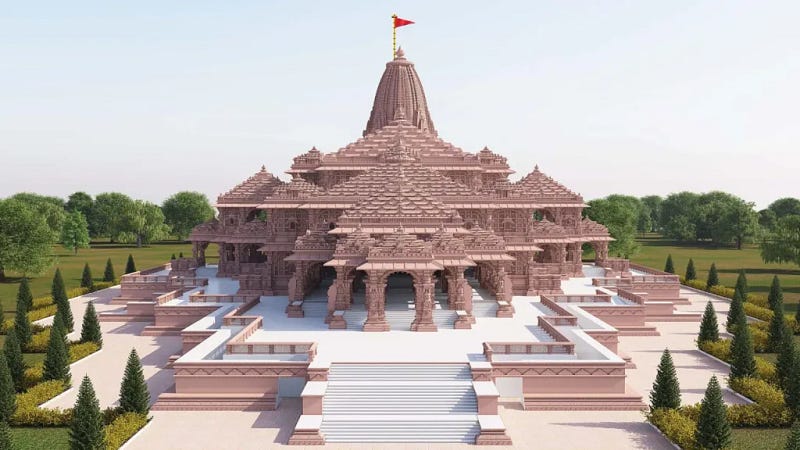
Ayodhya’s Temple Dedicated To Lord Rama (The Ram Janmabhoomi Mandir)
Uttar Pradesh is not only the fourth largest geographical state of the country but also the most densely populated one. The population of Uttar Pradesh alone is around 240 million, which makes it the most populous state of India right now.
Uttar Pradesh was infamous for its hooliganism, corruption, and bad governance because of which murders, crime, and theft were common occurrences, as a result of which unemployment and poverty ruled the state.
It was only in 2017 that a new chief minister was given the power to run the state, and he transformed it completely from a place where no one wanted to live, to a state which is now attracting tourism and businesses alike.
I have written more about it in another story titled ‘The Monk Who Transformed The Most Dangerous Indian State, Into The Second Largest Economy Of India’.
Among all such issues, stood another mammoth issue of a temple. A Hindu temple that boasted of the legacy and rule of Lord Rama. His reign is known as ‘Rama-Rajya’ or ‘Reign of Rama’, which is described as the most ideal time for the population and the kingdom alike.
Everyone was happy during the Rama-Rajya, and there was not one sick person, not one poor person, and not one unhappy person who had complaints with the king or the government.
The city of Ayodhya is the birthplace of Lord Rama.
As per almost all Hindu texts that talk about the story of Ramayana or Lord Rama, it has been evident that God was born in a city named Ayodhya, in the state of ‘Uttar Pradesh’.
The city of Ayodhya has been clearly described as a populous city, located at the bank of the Saryu river, which still flows through the state. Even though the city was later named ‘Faizabad’ during the Mughal rule in India, the name was again changed to Ayodhya, the moment the state came under the governance of the current Chief Minister, the Monk — Yogi Adityanath.
There are no doubts about the fact that the city of Ayodhya is indeed the birthplace of Lord Rama if ancient scriptures are to be consulted.
The History That No One Knows About
The year was 5 BCE, when the ruler of Ujjain, King Vikramaditya reconstructed the temple that existed at the place of the birthplace of Lord Rama. The exact date of construction of the very first temple was unknown because it was reconstructed and modified by many kings over time.
If the Hindu scriptures are to be believed, the original temple was constructed by Kush, the son of Lord Rama. The temple was a prominent place of worship for the following 44 generations of Lord Rama, and it existed well until 5 BCE.
Now, many people will demand evidence for every fact stated here, but the thing is, during Mughal and British rule in India, a lot of documents and evidence were either destroyed, lost, or burned.
The Mughal ruler Bakhtiyar Khilji is known to have destroyed and razed the then-popular Nalanda University to the ground. It is documented that the library of the university burned for over 90 days, and as per experts, there must have been millions of books (not just thousands) that it took so long to burn the university.
Who knows what kind of knowledge was lost with it?
Another fact is that it is a matter of faith for billions of Hindus across the world, that should not be questioned.
Questioning the faith of Hindus is equal to questioning and demanding evidence for other prominent events such as — What is the proof that Jesus rose from the dead? Where is the evidence that Mohammed had an encounter with Gabriel? How can you say that God or Allah exists?
If these events are strongly held by the faith of the people who follow that religion, the same goes with Hindus.
It is nothing, but a matter of faith, and faith cannot (should not!) be proven to anyone.
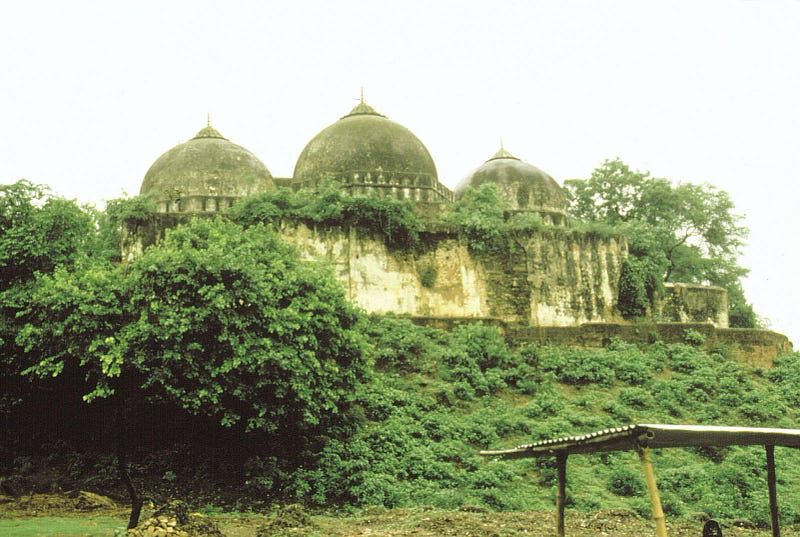
Some of the evidences from the years 1528–1900s
1526 was the year when Mughal ruler Babur had recently entered the country.
The Year 1528
He arrived in the city of Ayodhya in the year 1528 and demolished the Ram temple, reconstructed by King Vikramaditya, and on top of the ruins of that temple, he built Babri Masjid (Babri Mosque).
The agenda of the Mughal rulers of that time was to conduct forced conversions of the local population and to spread Islam.
The Year 1611
Once British rule started in the country, another British merchant named ‘William Finch’, who visited India between 1608–11, stated that there was indeed a temple or a fort in the city of Ayodhya, where Hindus believed that their Lord Rama was born.
In a travelogue that was published in the book written by the merchant (Early Travels in India), it has been mentioned that the author talked about the said place being the birthplace of Lord Rama, as per the locals.
The Year 1776
Later, in the year 1776, Joseph Tiefenthaler who was a Jesuit priest, extensively toured the area around the disputed Rama Temple, which was also known as ‘Babri Masjid’ now, and this is what he had to say about the site —
The emperor Aurangzeb destroyed the fortress called Ram kot, and built at the same place a Mohammedan temple with three domes. Others say that it has been built by Babar. One can see fourteen columns made of black stone five spans in height which occupy the site of the fortress, twelve of these columns now support the inner arcades of the mosques, two of the twelve are placed at the tomb of a Moor.
It is said that these columns rather the pieces of columns which have engravings by craftsmen, have been brought from Lanka or Selendip island which Europeans call Ceylon, by Hanuman the king of monkeys.
The Year 1838
In the year 1838, Montgomery Martin’s survey report was published, titled ‘History, antiquities, topography and statistics of Eastern India’, in this report, the author talks about the existence of Lord Rama’s temple in Ayodhya, as mentioned by the locals.
He elaborates on how the locals describe the temple that was reconstructed in the 1st century BC by a king whose genealogy was linked to Lord Rama himself. They further describe how the temple was demolished by the Mughal invader Babur.
He further adds that black stones have been discovered at the disputed site, with traces of broken images that are believed to be of Hindu Gods.
Year 1862–65
Archaeological Survey of India reports by Alexander Cunningham, dating back to the years 1862, 1863, 1864, and 1865, also state the ancient evidence of religious pilgrimage to Ayodhya. The discovery of currency coins with religious inscriptions with the mentions of King Dasaratha, the father of Lord Rama.
The Year 1869
Carnegie's report on Eastern India from 1869, talks about a historical sketch of Faizabad (or Ayodhya). He describes the Rama temple as a devotional site made with a strong close-grained dark slate-colored touchstones, carved with different devices. He adds that both Hindus and Muslims used to pray alike in the mosque-temple site, until the year 1855.
The Year 1886
In a court verdict by a district judge in Faizabad appointed by the East India Company that ruled India at the time, the judge made the following statement —
In Civil Appeal number 27 of 1885, the Judge, after visiting the Babri mosque site for personal inspection, observed:
“It is most unfortunate that a Masjid should have been built on land specially held sacred by the Hindus, but as that event occurred 356 years ago, it is too late now to remedy the grievance.” — the judge.
The Year 1920
In the translation of Babur Nama (The Account of Babur’s Life), by Annette Beveridge in the year 1920, the following statement was found —
After analyzing the inscriptions on the Babri mosque and studying the archaeological features, she says that Babur was impressed with the dignity and sanctity of the ancient Hindu shrine it displaced, and that as an obedient follower of Mohammed, Babar regarded the substitution of the temple by a mosque as dutiful and worthy.
The Year 1976
Years after India attained independence from the British, a chief archaeologist KK Muhammed (Regional Director of the Archaeological Survey of India), a Muslim man, was given the responsibility of conducting a survey at the site and presenting his findings to the court.
After the excavation and research were done at the site, Muhammed concluded that there was indeed a grand temple beneath the mosque, and he even made some explosive statements such as —
‘Muslims should willingly hand over the entire land to Hindus as a gesture of goodwill’.
These are just fragments of the shreds of evidence that were presented to the Supreme Court of India during the hearing of the case.
More than 1 million documents have been provided so far by the Hindu side to prove the existence of a temple that everyone just knew was always there.
And because the official language of the Indian courts is English, around 150,000 documents were translated from 30+ different languages, only in a matter of 6 months, so they could appear on time for the hearing.
Key Moments
There were the following key moments that happened before the Hindu side won the case —
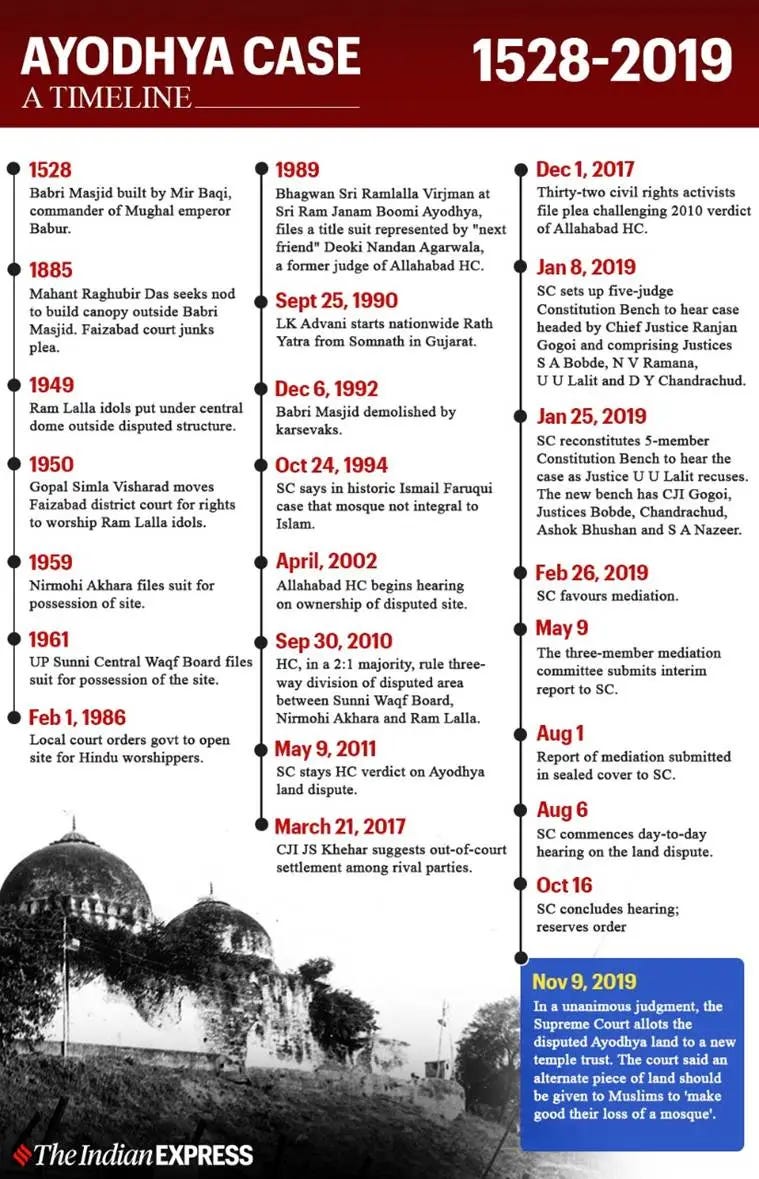
2 years after the country gained independence from the British Empire, in the year 1949 a statue of Lord Rama mysteriously appeared right outside the disputed site under a central dome, where the Hindus could start worshipping again.
The Year 1950
A man named ‘Gopal Simla Visharad’ moved the Faizabad district court to grant the right to worship Lord Rama idol in the central dome.
The Year 1955
Nirmohi Akhara, an independent organization filed suit for possession of the site for Hindu worship.
The Year 1961
The Muslim side’s Sunni Waqf board filed suit for possession of the site for Muslim worship.
The Year 1986
Local court orders the government to open the site for Hindu worshippers.
The Year 1990
LK Advani, a key member of the political party that is ruling India right now (as of 2024), started a procession (a rath yatra), from Gujarat to Ayodhya, to unite Hindus for the Rama Temple movement.
The Year 1992
On 06 December 1992, the structure of Babri Masjid was destroyed and demolished by the Hindu karsevaks, or the Hindu worshippers, further led to state-wide riots in Uttar Pradesh, and many people lost their lives.
The Year 1994
Supreme Court of India passed a historic judgment that the Babri mosque is not integral to Islam.
The Year 2010
Allahabad High Court suggested a three-way division of the land between — the Sunni Waqf board (for the Muslim side), Nirmohi Akhara, and Rama Temple.
The Year 2017
32 civil rights activists file a plea challenging the judgment of the Allahabad High Court in the year 2010.
The Year 2019
Supreme Court sets up a five-judge constitution bench to hear the case and deliver a final judgment.
November 9, 2019
In a historic judgment, and a day that Hindus had been waiting for, for over 490 years, the Supreme Court of India finally allocated the disputed land to the Hindu side for the reconstruction of the Rama Temple, and in return, it provided the Muslim side with a new piece of land elsewhere for the construction of another mosque.
The Ram Mandir Janmabhoomi Trust
After the verdict was passed, a new trust was established solely for the temple construction and caretaking facilities.
The moment this judgment came, Hindus from all over the world started donating to the construction, and so far around half a billion dollars have been donated, which is more than three times the initial requirement for the temple construction.
Many other stories are emerging from Ayodhya, that workers working there, who are devotional and sentimental, are refusing to accept their wages because they want to donate them to the temple. This is the faith that Hindus have in that place and the temple.
This is exactly why it was so important for us to win this case because it is not just about the locals of Ayodhya, but it is about the whole Hindu community, residing everywhere in the world.
Babri Masjid might be important for the local Muslims, but it is not a historical Islamic site.
It is nowhere related to Prophet Mohammed, for he never visited India in his lifetime!
A mosque is only a place of worship, and so are other religions’ places. Islam does not permit destroying another community’s place of worship to construct a mosque there. Rather, it is the duty of Muslims to ensure that people following other religions are free to pray and worship in their designated areas.
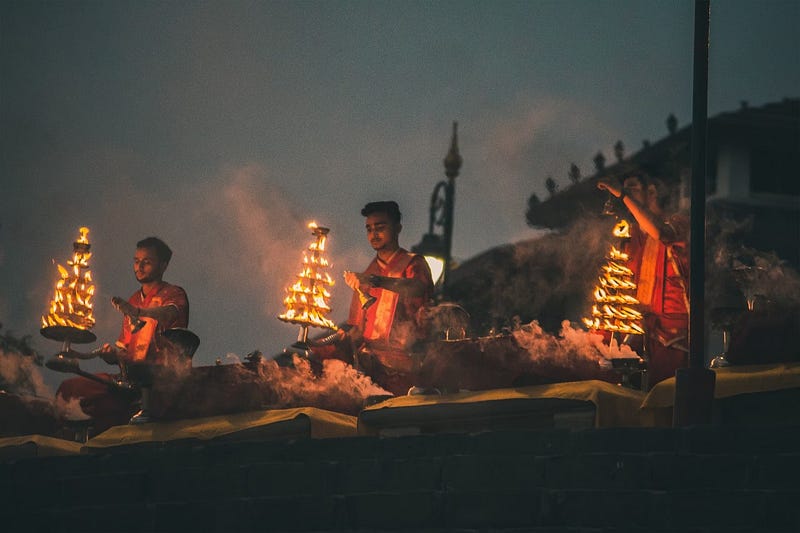
22 January 2024
This is the date that generations and generations of Hindus have been waiting for, in their own country, and their land. This is the moment that our ancestors died for, and the moment that many people could only imagine in their dreams.
22nd January 2024 is the official date of the inauguration of the Rama Temple in Ayodhya, and I’m sure every practicing Hindu is eagerly waiting for the day to arrive, for it will be like another Diwali for us.
Do you think there could be any other peaceful way to claim back, what always belonged to us?
What do you think? Share your opinion in the comments below.

If you enjoy reading stories like this and want to support me as a writer, follow me on Medium. You can also subscribe to my Substack for accessing unfiltered stories, and some raw experiences from my life.