
How Hiking the Grand Canyon Reset My Perspectives One Step at a Time
A strenuous hike taught me adaptability, good decision-making, and humbleness
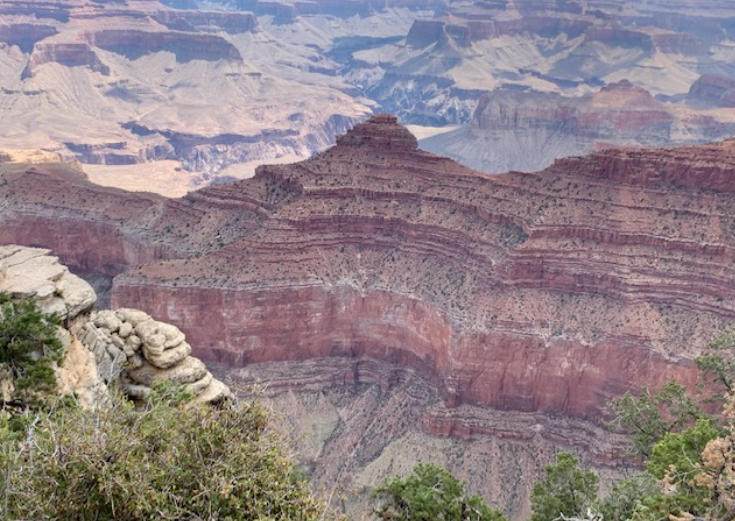
It was 4 am at the end of June. I was sleeping lightly at Mathers Campground at the Grand Canyon, anticipating what was to come. My friend, an experienced hiker, called my name and alerted me it was time to eat breakfast and pack up our tents.
I accepted my friend’s invitation 2 weeks before hiking the Grand Canyon with her. It would be such a nice change from sitting at home during the Pandemic.
This was my first camping and long hiking trip, ever. Never set up a tent or took down one before. But I did both.
By 5:30 am, we were ready to hike down the South Kaibab Trail at the South Rim — a change of 4,700 feet covering 7.1 miles at a temperature ranging from 85°F (top) to 108°F (bottom).
We took a cheerful photo at the trailhead.
I was a little worried, not so much about the height, but the temperature. I have been spoiled living in cool, airy San Francisco and a plunge into desert weather is not something I experience often.
My friend had hiked up and down the Grand Canyon six times already. No worries, I thought. All I needed to do was to follow her lead and get down, stay one night at the bottom, and come back up.
It was Nice From the Top
An unexpected hailstorm the day before cooled down the temperature. We descended with clouds over our heads. There was a 30% chance of a rain storm. Great! The temperature wouldn’t hit 108°F at the bottom. I worried too much about the heat, and so lesson one:
Learn to love the clouds and especially (light) rain when you are hiking in the heat.
This leads to lesson two:
“A storm can appear from a clear sky; bad or good tidings can suddenly bestow upon you.”— Chinese idiom
We should not fixate on the good or bad times or just one outcome. Be open to other possibilities in life. Respect nature.
“When the weather is hot, keep a cool mind. When the weather is cold, keep a warm heart. “— Ajahn Brahm
Trekking Down
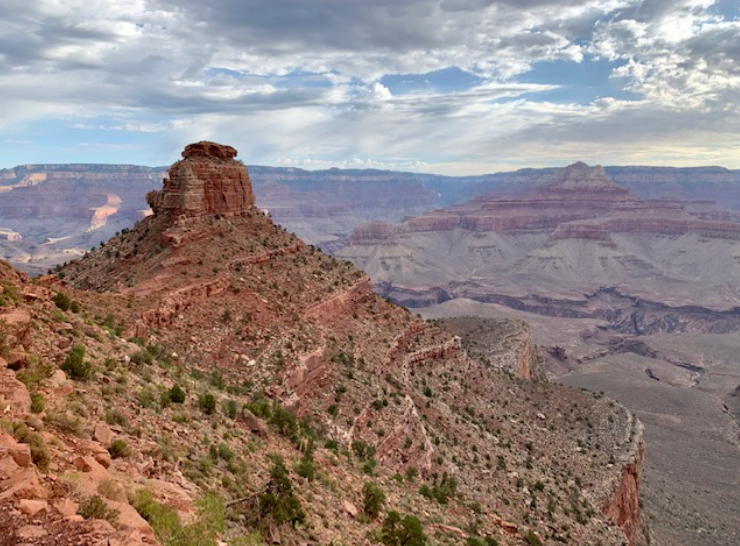
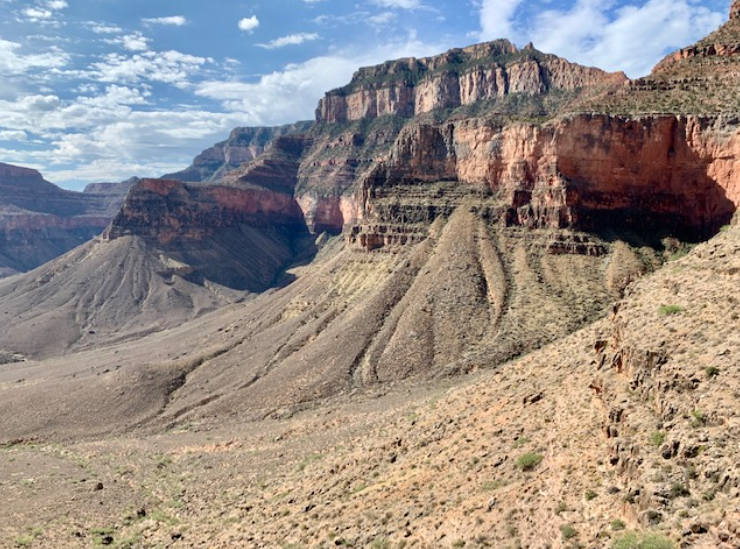
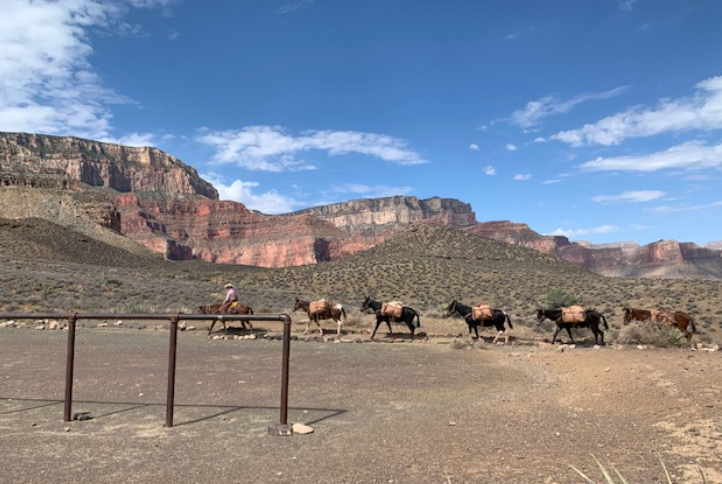
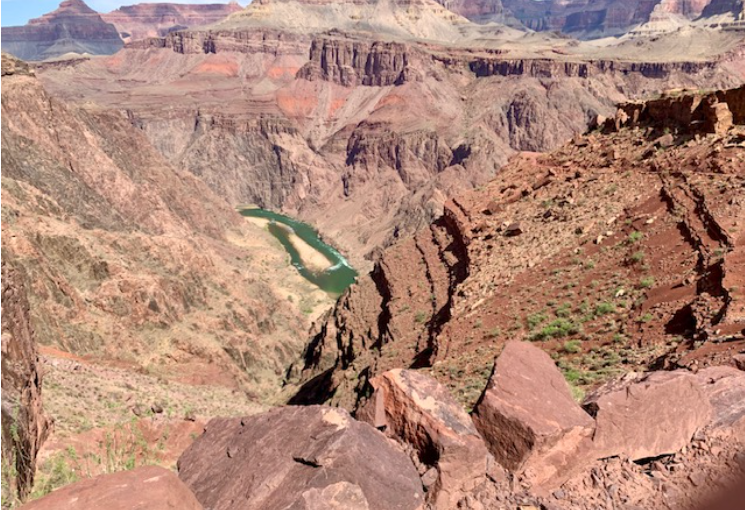
Our hike down was pleasant, punctuated by rests, snacking, and drinks as well as greetings from fellow hikers, cheering one another on. I was captivated by the majestic mountains and the colour changes of the landscape due to the soil, alternating between brown, green, and red. There were wildflowers, and yes, the smelly droppings of the mules which carry tourists and food up and down the Canyon. The mules have perfected this operation for over a hundred years.
We met a Ranger who looked a bit red in the face; we rejoiced we seemed to be performing better (and so I thought, more about that later!)
When we were 2 miles from our destination, the sun was directly over our heads, and everything heated up. To survive the heat, we poured water into our hats, wet our bandanas and wrists, got hydrated, and ate salty and sugary snacks to replenish our water, energy, and electrolytes. I was red in the face already although I hardly felt it. Dry heat can trick you.
In less than 6 hours, we made it to our destination at the historic Phantom Ranch to chill in our air-conditioned cabin. My friend congratulated me. Less than 1% of the visitors to the Grand Canyon make it to the bottom, and I was the 1%!
Finding Camaraderie
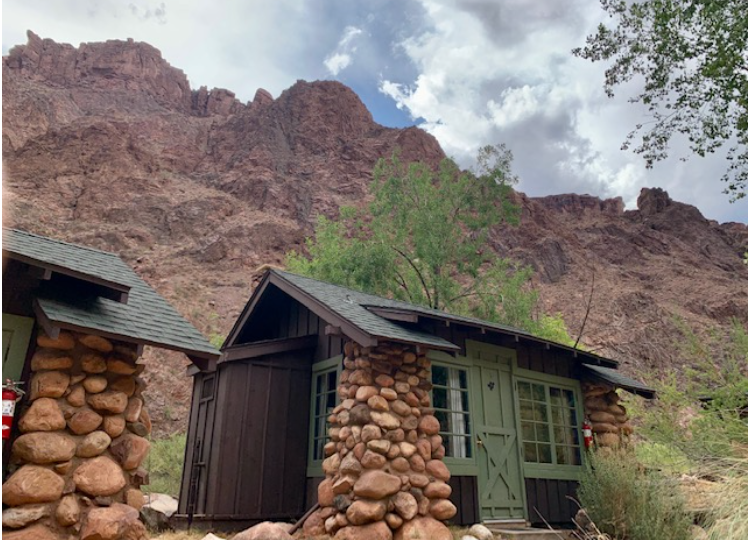
We took a cool shower. We gathered at the community table chatting with fellow hikers, sharing how we got the cabin (via a lottery system), muscle ointment to relieve our soreness, where we came from, etc. The people, the cafe operators, and the Rangers were all sweet because they knew the people who ventured down have something special in common.
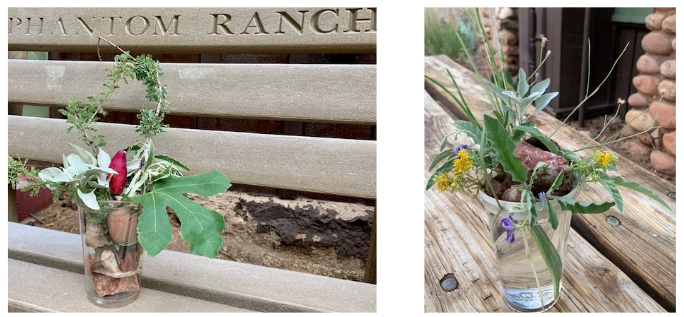
My friend soon took a nap in the air-conditioned cabin — her usual ritual. I sat down, making some travel notes, not feeling sleepy. I ventured out and explored the rustic lodging, the wilderness, and the Colorado River banks — they remain the same as hundreds of years ago. When my friend woke up, we collected wildflowers and made wildflower Ikebana and discussed Haiku!
Heat Wave and Panic at the Bottom
After we returned to the cabin, we had beef stew and lots of butter to get protein and fat into our system to prepare for our next day’s hike. As we planned for an early night, I felt myself heating up — first my face, neck, arms, and then thighs.
Another cool shower did not help either. And I had to hike back up at 5 am the following day!
My body seemed foreign to me, out of my control.
“Am I having a fever? Covid?? High blood pressure problem???”
My thoughts raced yet my mind slowed down. There was no cell phone service. I could not call for help. I felt something churning in my gut. What? I now had an upset tummy! Even worse, the toilet stopped flushing. The staff at the Range helped us flush it — I was deeply embarrassed.
Then my friend comforted me, “I think you’re panicking; we don’t have to hike up tomorrow; let me check on the cabin availability and get some medical advice. Wear lighter clothes and just get a good night’s rest.”
While the words were comforting, my body was still hot and my heart beating fast. I thought, would a helicopter be necessary to get me up? Our brains are wired for the worst-case scenario.
My friend said, “No helicopter. We will surely be able to hike back up.” Her confidence in me calmed me down. (Later I found out that very rarely people are rescued by helicopters. They just have to rest until they feel better, then hike back.)
I practiced slow breathing. My body cooled off and then the heat reappeared. I got up 6 times for the bathroom! I felt bad as I was sure I had awakened my friend who wanted a good night’s sleep. Luckily, sleep was her superpower, and she slept like a baby!
The Next Day
After a lot of tossing and turning for me, the next morning came, and sure enough, we decided to rest another day. I cooled off but still did not know what had happened to me.
The Ranger with the red face whom we met earlier in our hike visited me to check I was OK. He listened to my symptoms and suggested I had heat exhaustion. Sometimes the body catches up late with reality, especially after strenuous exercise in hot weather for an unacclimatized person. My digestive system suffered as all my energy was diverted to my head, arms, and legs.
This Harvard Health Study rings true: Pay attention to your gut-brain connection — it may contribute to your anxiety and digestive problems.
[Later, I also found out that at air temperatures above 95°F, evaporation is the only physiological mechanism by which humans can rid themselves of heat (The Physiology of Man in the Desert). But as the hours wear on at those high temperatures, most people just cannot sweat fast enough to cool themselves down. This was probably what happened to me.]
Lesson three:
“A person’s stomach or intestinal distress can be the cause or the product of anxiety, stress, or depression. That’s because the brain and the gastrointestinal (GI) system are intimately connected.” — Harvard Health
Calm your mind, heal your body.
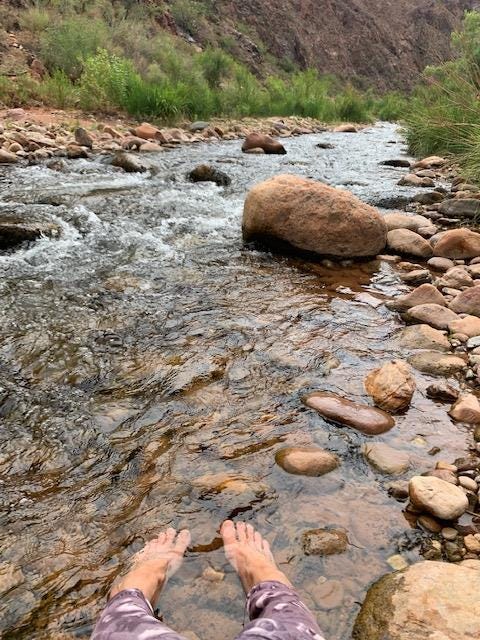
After lunch, we heard a thunderstorm above our cabin. Yay! The weather cooled down again! We had a relaxing stroll along the Colorado River, did some Yoga, and chatted. We packed our bags to get ready for the next day. It was a worry-free day.
Ready, Go!
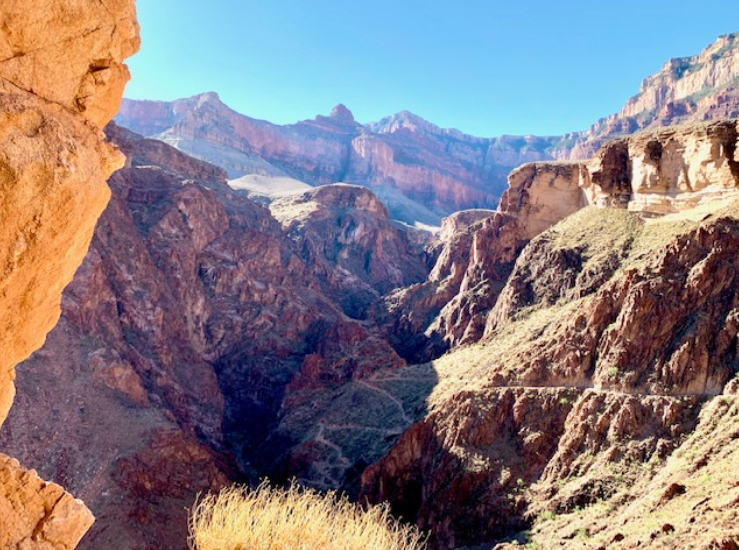
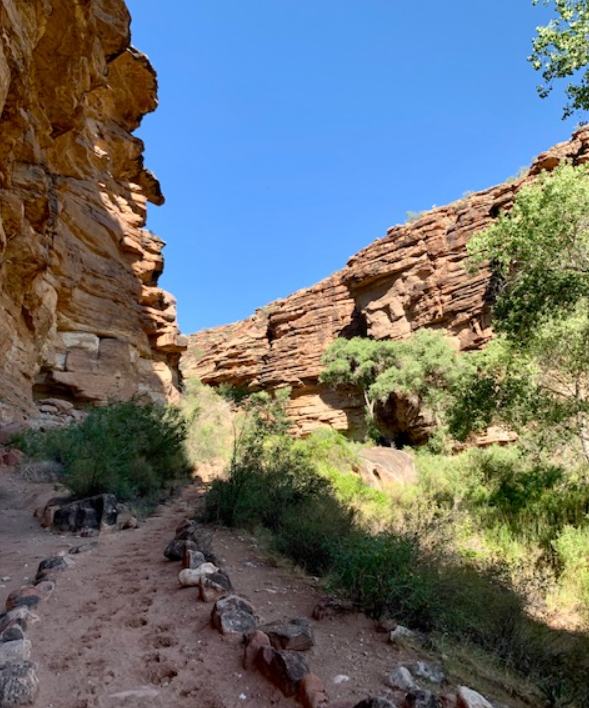
When the alarm clock rang at 4:30 am, we got up, finished our pre-ordered breakfast, drank at least 2 cups of water, and filled up our water bottles. We were on our way by 5:30 am up the Bright Angel Trail, a 9.5-mile hike (a longer hike but less steep.) I was determined to get back up in one piece, taking one step at a time, helped by my trekking poles.
In the heat, hiking up was more strenuous. I remained energetic and determined, always listening to my friend who sprinkled water all over me regularly to keep me cool.
At the rest stop halfway from the top at the beautiful Indian Garden, we met another Ranger while we paused and snacked some more. She took a look at us and said: “I know you two will have no trouble getting back up.” That was what I needed to hear!
Along the trail, we occasionally saw people puffing and showing red on the face, signs of heat exhaustion. My friend offered them tips and her electrolytes to help them get back to equilibrium but people always said they were fine and refused her help. (Salty snacks and sweets are both important when hiking under heat. Our body loses salt when we sweat, so we need to keep eating salty snacks to replenish the sodium. Sweets give us the energy to hike up.)
Back to the red-faced hiker: even though I know my friend is an experienced hiker, the other person does not. So, why should they trust and take something to eat from a stranger? Trust comes over time.
Lesson four:
To complete a long hike, you need to be prepared and sustain yourself and not overdo it. Don’t just do anything; take advice from experienced hikers and be humble!
Back at the Top
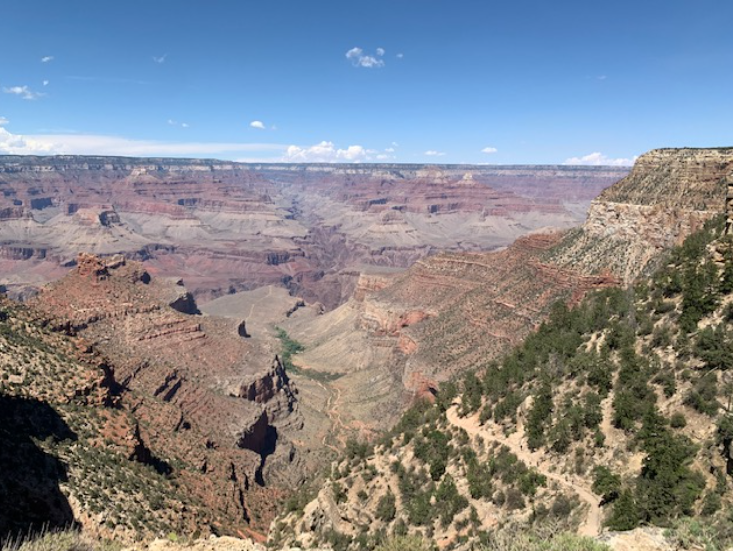
After almost 9 hours of hiking, we made it back to the trailhead. “We did it as a team!”, said my friend.
While my body slowly heated up again, I did not panic this time and put a wet bandana on my neck and sprayed myself with cool water. The night back at the campground was serene. It was a perfect way to decompress.
Takeaways
Grand Canyon is a spiritual place. I went down without knowing much about summer hiking but came back up more confident and prepared, gaining new perspectives. I have learned:
- Embrace changes in nature and your life with open arms. Nothing is 100% certain or 100% good or bad.
- Beware of the body-mind connection. The feedback loop between your brain and your gut is real. Calm your mind, and your body also relaxes.
- Be humble in front of nature and be ready to learn and unlearn.
- Solve problems one step at a time.
- Go for the opportunity presented to you; get out of your comfort zone.
- While challenging yourself, always strive to make the best decisions and be safe.
A bonus for summer hikers: here is what our gear list for car camping looks like. For a detailed explanation of healthy hiking foods and drinks, visit here.
Thank you for reading and wishing you memorable and safe hikes!
If you like this story, please consider joining Medium to read/listen to the stories here. Your membership supports me and other writers you read at no extra cost.


