
How healthy is turmeric?
The secret of turmeric
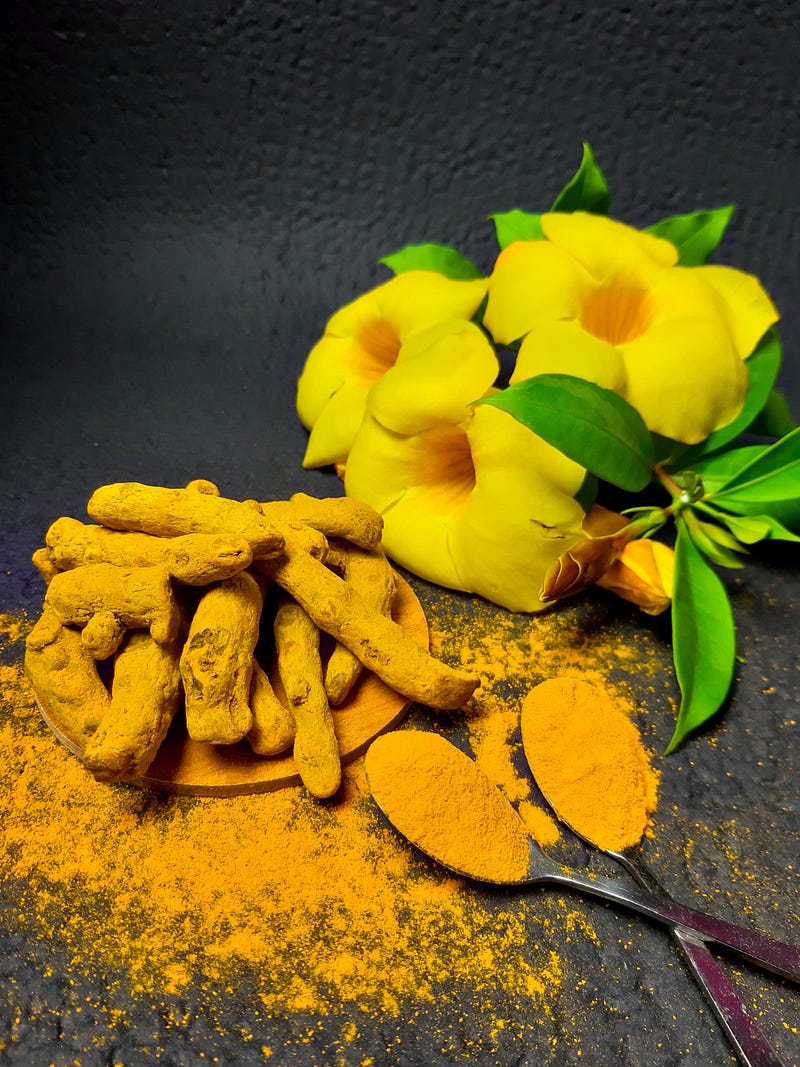
We know turmeric from Indian curry blends and like to use the spice in cooking. However, turmeric is not only delicious, it also has a number of health-promoting properties.
Turmeric originates from South Asia and has been used as a spice and remedy in India for several thousand years. The yellow root belongs to the ginger family, but does not taste as hot as ginger, but rather mildly spicy and slightly bitter.
Turmeric contains various essential oils and the polyphenol curcumin. Both ingredients contribute significantly to the health-promoting and healing effects of turmeric. Curcumin, for example, has an anti-inflammatory and antioxidant effect — and is said to be able to relieve pain in osteoarthritis.
Turmeric is available from us as a powder, in the form of capsules as micelle turmeric with maximum bioavailability or as natural and holistic turmeric in organic quality. Turmeric gives most Indian curry mixtures their yellow color. The spice is suitable for coloring and seasoning rice dishes, ragouts or chicken, for example. The root also tastes good in smoothies or as a turmeric latte.
Turmeric belongs to the ginger family and tastes mildly spicy and slightly bitter. The root contains essential oils and the active ingredient curcumin, which play a key role in making turmeric so healthy.
1. Turmeric has an anti-inflammatory effect
Acute, short-term inflammation helps the body to repair damage and protect against dangerous bacteria. However, if inflammation becomes chronic, it can harm the body. Studies show that chronic inflammation can promote or cause diseases such as metabolic syndrome, cancer, Alzheimer’s and heart disease.
The curcumin contained in turmeric has a strong anti-inflammatory effect and is therefore used to prevent and treat diseases. Some studies have even compared the effectiveness of curcumin with anti-inflammatory drugs.
However, pure turmeric powder contains just three percent curcumin. The powerful substance is also poorly absorbed through the intestines and quickly excreted by the body. For this reason, some manufacturers add an extract of black pepper (piperine) to their products.
Piperine is often added so that the body can absorb curcumin better. However, black pepper hardly increases the bioavailability of turmeric/curcumin, but can even pose health risks if taken in quantities of over 2 milligrams.
2. Turmeric has an antioxidant effect
Oxidative damage is caused by free radicals, which are highly reactive molecules with unpaired electrons. Free radicals react with organic substances such as fatty acids, proteins or DNA and can thus cause diseases and accelerate ageing processes. Antioxidants protect the body from free radicals.
Curcumin not only has an anti-inflammatory effect, but also has a strong antioxidant effect. Due to its chemical structure, curcuminoids can neutralize free radicals and thus render them harmless. Curcumin also promotes the activity of the body’s own antioxidants. Free radicals are thus combated particularly effectively.
Curcumin has a strong antioxidant effect. The active ingredient contained in turmeric can neutralize free radicals and promotes the activity of the body’s own antioxidants.
3. Turmeric reduces the risk of brain diseases
Nerve cells are able to reconnect with each other. In some regions of the brain, nerve cells can even multiply. The growth factor BDNF (brain-derived neutrotrophic factor), the so-called neurotrophic factor, is crucial for this proliferation. BDNF is a type of growth hormone that is active in the brain. Some functional disorders in the brain, such as depression or Alzheimer’s disease, have been linked in scientific studies to a reduced level of BDNF.
Studies show that the curcumin contained in curcuma increases the concentration of the growth factor BDNF. Curcumin thus effectively helps to delay or even prevent brain diseases and age-related limitations in brain function.
In Alzheimer’s disease, insoluble plaques form between the neurons in the brain. Current research shows that curcumin helps to influence the composition of the plaques and could therefore be used to treat Alzheimer’s disease.
Nutrition expert Professor Dr. Heiner Greten explains what plaque actually is and how existing deposits can be influenced: “Plaque consists of different substances: soft — the fats — and hard, the calcium. Plaque that is already calcified can no longer be broken down. It rests like an iceberg in the ocean current and obstructs it. It is not possible to remove it or at least reduce its size, but it is possible to influence its composition: ‘Desirable’ is a plaque that is as hard as possible and does not break open — because a soft plaque that breaks open can lead to a blood clot.”
However, further studies on the effect of curcuminoids in the brain are necessary to scientifically confirm their healing effect in Alzheimer’s disease.
Curcumin boosts the concentration of the growth factor BDNF in the brain. This promotes the proliferation of nerve cells and reduces diseases and impairments of the brain.
4. Turmeric reduces the risk of heart disease
Heart disease is one of the most common causes of death worldwide. Heart disease is very complex and is influenced by many different factors. It has been shown that the polyphenol curcumin can reduce the risk of heart disease (and cholesterol levels) due to its anti-inflammatory, antioxidant, anti-thrombotic and cardiovascular strengthening effects.
Curcumin also strengthens the functionality of the endothelium in the heart. The endothelium is a vascular coating that regulates the exchange of substances between the blood and the vessels. Reduced endothelial function affects the regulation of blood pressure and blood clotting and is a major cause of heart disease. Due to its endothelium-strengthening effect, the curcumin contained in turmeric reduces the risk of heart disease.
Curcumin has a positive effect on heart health. The polyphenol has an antioxidant and anti-inflammatory effect and strengthens the functionality of the endothelium.
5. Turmeric to protect against cancer
Research is currently being carried out into the extent to which turmeric can be used effectively to prevent and treat cancer. The curcumin contained in turmeric can influence the development, growth and spread of cancer cells.
Studies show that curcumin can inhibit the growth of blood vessels and metastases and contribute to the death of cancer cells.
Some laboratory studies with animals show that curcumin inhibits the development of cancer cells. Although the studies to date are promising, further research is needed to confirm the effectiveness and medical applicability of curcumin against cancer.
Curcumin is able to influence changes at the molecular level. It is possible that curcumin with this ability can also protect against cancer or even be used to treat cancer.
6. Turmeric soothes the stomach
Turmeric, especially the polyphenol curcumin it contains, helps with digestive problems and soothes the stomach. Turmeric promotes the digestion of fat in the stomach and intestines and thus prevents bloating and flatulence after a high-fat meal. The effectiveness of turmeric in treating inflammation of the digestive system has been scientifically confirmed.
It has been scientifically proven that turmeric helps with digestive problems and calms the stomach.
Knowledge to go!
Turmeric belongs to the ginger family and tastes mildly spicy and slightly bitter. The root contains essential oils and the active ingredient curcumin, which is what makes turmeric so healthy. Curcumin has a strong anti-inflammatory effect and is therefore used to prevent and treat diseases such as metabolic syndrome and cancer.
Curcumin also has a strong antioxidant effect. The active ingredient contained in turmeric can neutralize free radicals and promotes the activity of the body’s own antioxidants.
Turmeric, or curcumin, boosts the concentration of the growth factor BDNF (brain-derived neurotrophic factor) in the brain. This promotes the proliferation of nerve cells and reduces diseases and impairments of the brain.
Curcumin also has a positive effect on heart health, as it has an antioxidant and anti-inflammatory effect and strengthens the functionality of the endothelium. It has been scientifically proven that turmeric helps with digestive problems and soothes the stomach.


