
How does diversity of opinion drive innovation and dissemination of knowledge?
How Has The US Forest Service’s Mission Expanded?
You and the Forest Service: serving the greatest good of the greatest number in the long run
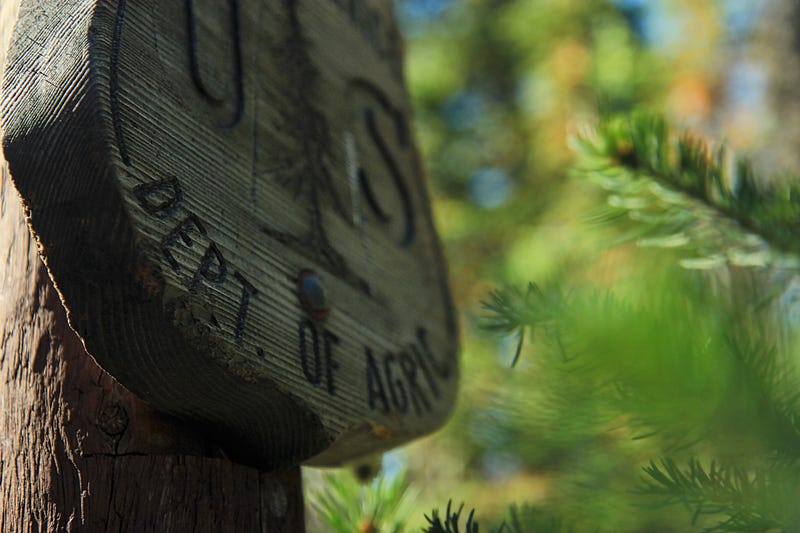
The expansion of the Forest Service’s mission
The US Forest Service (USFS) was established in 1905 to protect and manage natural resources — especially water and timber, due to their importance not only for national security but because of the benefits they provided to the public.
Because of socioeconomic changes, in conjunction with congressional legislation passed in the 1960s through the 1980s, the Forest Service mission was broadened to include outdoor recreation, range, timber, watershed, wildlife and fish “…purposes with a sustained yield of the several products and services obtained therefrom”. (Multiple-Use Sustained Yield Act of 1960)
These changes, in turn, also expanded the mission of the agency’s work beyond National Forest management, as described below.
The 2012 planning rules recognize that ecosystem services benefit people outside of national forests. Over time, the Forest Service’s mission expanded to include a scientific understanding of forests and grasslands.
The quality of National Forest System (NFS) land management

Specifically, National Forest System (NFS) land management has improved and now includes a wider range of values, including outdoor recreation, reservoir hydrology, timber production, livestock grazing, Fish and Wildlife Habitat, Wildlife and Aesthetic Resources. [Sources: 5, 8]
By prioritizing a revision of the 2012 plan to reflect current values and scientific knowledge, the Forest Service has been able to improve the management of its 154 national forests, and 20 grasslands. When properly managed, the NFS area can be used for a wide variety of uses and activities, such as outdoor recreation.
However, it has been pointed out that the US Forest Service still manages many of the divisions in the NFS using outdated science and outdated methods, an approach that could have negative consequences for these ecosystems, and the people and wildlife that depend on them, far into the future. Critics feel that the agency disappointed them, but not the national forests themselves! [Sources: 5, 6]
The role of the Forest Service
The idea that the Forest Service serves “…the greatest good of the greatest number in the long run” (letter signed by Secretary of Agriculture James Wilson on February 1, 1905) originated with the original head of the forest service, Gifford Pinchot, a close friend of Theodore Roosevelt. In 2005, the award-winning film “The Greatest Good” was released for the centenary of the forest services. [9]
For years, the US Forest Service has been considered one of the best federal agencies to work with. Today, Pinchot’s iconic philosophy continues to influence the mission of federal agencies such as the Forest Service and the US Bureau of Land Management of the Interior. Mount St. Helens National Volcanic Monument in Gifford Pinchot National Forest is one of two public lands named after Gifford Pinchot. [Sources: 6, 7]
Pennsylvania’s Gifford Pinchot State Park is also named for his contribution to the nation’s public lands. Learn more about his legacy, or take the time to experience the outdoor wonder that Pinchot has devoted his life to.
Although Pinchot served two terms as Pennsylvania governor and worked for the federal government for more than a decade, he always considered himself more of a ranger than anyone. [Sources: 1, 7]
Dr. Lindsey Campbell of the US Forest Service spoke about the important role of urban field stations as research bases for studying cities as socio-ecological systems (integrating social and biophysical). [Sources: 1, 6]
The Takeaway — diversity of opinion drives innovation and the dissemination of knowledge
A new era is on the horizon, full of promise and testimonies, in which the greats of the Forest Service family will rise to the challenge. The Forest Service strives to build teams of people with diverse backgrounds.
This is because the diversity of opinion drives innovation and the dissemination of knowledge that creates value for the agency’s customers, employees, and society.
Indeed, the Forest Service is a people-oriented agency where every person is not only valued according to merit but because the Forest Service recognizes that people and nature are inseparable and highly interdependent. [Sources: 1, 3, 6]
Thank you for reading! My thanks to @DrMehmetYildiz for kindly publishing my blog post concerning how the US Forest Service’s mission has expanded, in Illumination! Please share your sentiment in the comments section. Thank you!
Full Disclosure: This link will take you offsite — outside of Medium:
Like my awesomeness? Please — would you buy me a Ko-fi
Thanks for reading! If you liked my article, subscribe to Medium to get more articles that I publish regularly:
Get an email whenever Patrick OConnell publishes:
You can find me on LinkedIn (ID: azpat0)
If you like my article, check out my other stories on my Medium Profile page!
I am a freelance writer- available to write YOUR blog posts or articles -
Samples of my work are on my Medium Profile page:
And also on my website -
Full Disclosure — This link will take you offsite outside of Medium:
I also publish a weekly newsletter on Substack: The Market Algo Newsletter — It forecasts the direction of the S&P 500 market — index for the upcoming week -
Full Disclosure — This link will take you offsite outside of Medium:
Sources
[0]: https://counseling.online.wfu.edu/blog/10-diversity-questions-counselors-ask/
[2]: https://www.amnesty.org/en/what-we-do/indigenous-peoples/
[3]: https://spa.uccs.edu/aggregator?page=8
[4]: https://www.adventure-life.com/amazon/articles/indigenous-people
[6]: https://mountainjournal.org/morale-plummets-in-forest-service
[7]: https://www.doi.gov/blog/gifford-pinchot-legacy-conservation
[8]: https://nespguidebook.com/ecosystem-services-and-federal-agencies/us-forest-service/
[9]: https://www.fs.fed.us/greatestgood/press/mediakit/facts/pinchot.shtml