
How Grey’s Anatomy Character Cristina Yang was the On-Screen Representation I Missed Out On All My Life
On redefining Eurocentric beauty and mental health
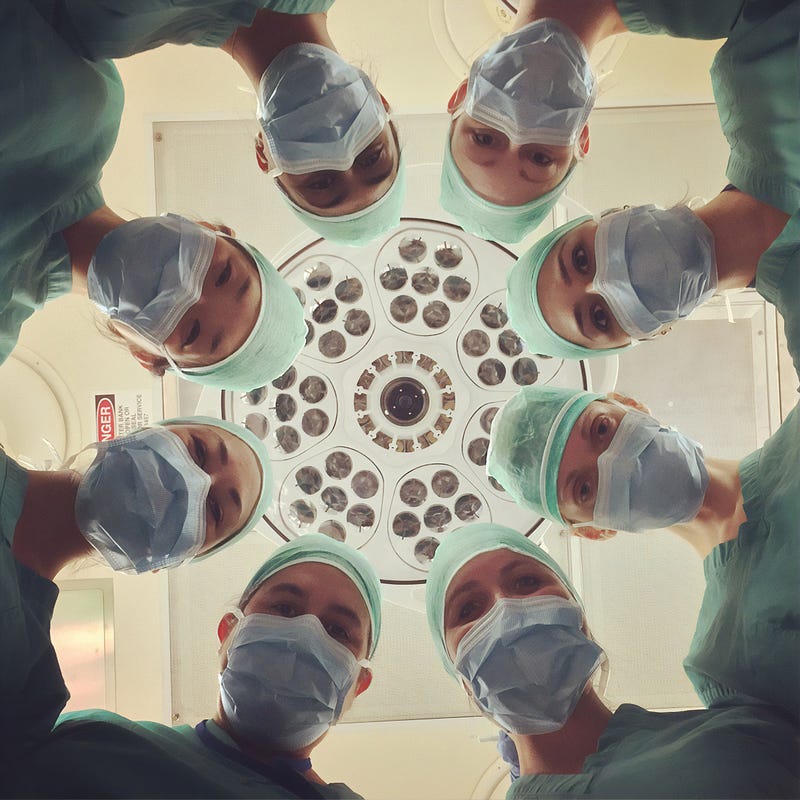
Disclaimer: This post contains major spoilers for Grey’s Anatomy.
I’m Asian. As someone who has always watched TV shows across several languages and cultures, there were specific places where I saw different aspects of myself.
In North American TV shows, I saw the narrative of my childhood as someone who grew up in Canada.
In Hong Kong and Korean dramas, I saw aspects of my Asian heritage represented. I learned the customs, rules, body language, slang of my culture so that if I ever visited Hong Kong, I could fit in with the rest of my cousins.
I thought I had all the representation I needed, when in reality, my identity was being split into two. These sources of stories split my beliefs into two.
In English, the stories and beliefs from North American TV shows came most quickly, without translation. If I had to communicate something in Cantonese, lessons and characters in Hong Kong dramas (and Korean dramas, dubbed in Cantonese) came most quickly to me.
In English, I could talk for days about the importance of loving my body. In Cantonese, I most quickly accessed the narrative of “ugly” being associated with single-eyelid eyes and “beauty” being associated with Eurocentric double-eyelid eyes.
In English, I could talk for days about mental health and the harm of mental health stigma. In Cantonese, I only had the words to describe mental health in a derogatory way — I had to specifically Google how to say “mental health” in a professional way.
So, in Cristina Yang, I saw me. I saw that an Asian character could be an integral part of the show without being someone’s “sidekick”.
“Your Eyes Are Beautiful”
Through Cristina’s character, I heard for the first time that eyes like mine were called beautiful.
It is the only time in my life that I’ve seen someone on TV with eyes like mine be complimented for her eyes.
Think about that. Think about the number of writers who write about the beauty of blue eyes. Even brown eyes get love. My eyes? Nope.
There are certainly numerous other famous actresses with eyes that are similar to mine, but not many. There’s Lucy Liu. There’s Kim Go Eun. But even Kim Go Eun in The King: Eternal Monarch had to endure saying this line:
I told you I wanted to get the double eyelid surgery.
In a sense, it’s not my place to judge a Korean drama and how they depict their own culture in a Korean drama, as in this example. In another sense, those fashion, makeup and plastic surgery trends influence trends across Asia and have formed the narrative of what “beauty” looks like. And those trends are typically to evoke a more Eurocentric look, with higher nose bridges and larger eyes.
The unspoken assumption about having single-lidded small eyes like mine is that other features (e.g., cheekbones, slim body) “make up” for this feature and your eyes are not inherently beautiful. Or, they’re seen as “exotic” and enhanced in a way to exaggerate those features to highlight how different they are, but never as a usual metric of beauty.
I think about all the time I spent on Youtube as a teen learning how to apply makeup. It seems like a normal teen girl hobby, until you realize how much of that time I spent specifically to “enhance” my eyes. The most insidious technique focussed on applying glue, tape or string to my eyes to give the false pretense of double-eyelids. That was the step before watching 18237192387 videos of double-eyelid plastic surgeries and recovery vlogs.
There’s a difference between using makeup to artistically express yourself and using makeup and even surgery because you have repeatedly been told that it is shameful to look the way you do.
And to think that the first time I’d ever seen eyes like mine be complimented as “beautiful” on TV as at the ripe old age of 27, that’s certainly something.
Recovery Isn’t Linear and Definitely Isn’t A Race
Second Spoiler Disclaimer: If you skipped the first spoiler disclaimer because “that compliment seemed like a minor spoiler”, know that up ahead, there is a major spoiler.
The end of Season 6 of Grey’s Anatomy involves a mass shooting in Seattle Grace Hospital, the central setting of this show. Numerous key characters get hurt, and Cristina is placed in a situation where she has to operate on someone at gunpoint.
As this story unfolds, we learn that the PTSD symptoms post-shooting hit Cristina for the longest period of time. As other characters recovered over several episodes, Cristina did not, eventually quitting her job as a doctor.
Numerous other characters said things along the lines of being shocked that Cristina, of all people, would be the one hit the hardest by a traumatic event. This expectation of others expecting her to be “stronger than that” was what contributed to her quitting, and it was important to see that myth of “strength = fast healing” debunked in this narrative.
Sometimes, we impose this narrative that recovering or moving on from a traumatic event is based on how strong or resilient you are in a way that is damaging. Cristina was expected by so many to simply “be better” by showing up and working based on who she’s been in the past.
Though that pressure comes from characters with good intentions, that pressure to heal and “show up” to work placed Cristina in a dangerous position in the operating room. It contributed to her snapping.
Instead, giving her space and room to heal was crucial in her story. Cristina does get better, but she could not be rushed. And that was so key to see. I needed to see that.
We can be supportive to others in their healing journey, but we should never set goalposts on their behalf of where they should be. It’s not up to outsiders, even if they’re your loved ones, even if you have good intentions, to decide the pace of your recovery.
In many ways, in Cristina, I saw me. She says a famous line:
Oh, screw beautiful, I’m brilliant. If you want to appease me, compliment my brain.
I deeply relate to this and value my brain a lot. But I think my adolescent would have been an ounce easier if I saw people like me being complimented for beauty rather than holding shame that I needed to undergo surgery for looking the way I do.
I saw that the relationship between strength and healing is not linear, that even the strongest people crack under pressure, and that no one gets to dictate our healing journey.
I missed out on this.
In a way, I could have not missed out on this — Sandra Oh played Cristina Yang between season 1 (2005) to season 10 (2014). That exactly frames my tween to teen years, so temporarily, this character existed alongside my childhood.
But, in simply not watching one show meant I was left in a void with no other replacement — think about that. My friends had a myriad of role models to choose from who looked like them, and I had only one chance. Missing out on watching one specific show meant I lost out on that only chance.
That’s why representation matters across shows. It’s not just a checklist. You don’t satisfy some decade quota just because Cristina Yang shows up in the late 2000s and deem that we no longer need similar characters.
Representation matters, and I missed out on the stories that looked like me. By chance.
Let’s no longer leave it up to chance.
One last thing
In a way, I struggle with the way that I’ve set up the introduction, with English concepts set up to be positive whereas Cantonese concepts are set to be damaging.
I’m scared that what people take away from this is that “Cantonese speaking people” are just conservative in views and need more education on how to a) be less Eurocentric and b) and honour mental health. That’s not what I’m saying.
To dig deeper, you need to start acknowledging how Eurocentric beauty standards were introduced across Asia and how they were introduced via colonialism. Pieces to consider on this topic:
- Beauty is pain: Eurocentric beauty standards in Asia
- Occidentalisation of Beauty Standards: Eurocentrism in Asia
- Yes, modern Asian beauty ideals ARE eurocentric and colonialist
To dig deeper, you need to examine how being a model minority has impacted how mental health is seen against an expected hustle culture. It’s a different hustle culture than “mainstream” hustle culture — it’s the expectation that to survive as an immigrant, you need to outperform some invisible set of heightened expectations. Survival is the first priority. Our parents and their parents were still very much fixated on filling basic survival needs in Maslow’s hierarchy of needs. They never had the time or luxury to address mental health. Some of them even sacrificed their mental health and/or physical health to bring us safety.
That’s where this common “you have a roof over your head and food on your table, how are depressed” comes from. It sounds heartless to outsiders who don’t understand the history of sacrifice, painting our parents as ignorant and backwards.
- Why Asian Americans Don’t Seek Help for Mental Illness
- Cultural factors influencing the mental health of Asian Americans
It’s not an “English” → good, “Cantonese” → bad dichotomy, but rather a complex history of how colonialism shifted an era of priorities. Some of those priorities involved promoting Eurocentric beauty standards. Some of those priorities involve simply surviving the impacts of colonialism and not having the luxury or privilege to discuss mental health the way that we do, nowadays.
Hi I’m Lucy Dan 蛋小姐 (she/her/她) and I haven’t reached season 10 when Sandra leaves the series yet, so there might be more to add! Stay tuned to additional thoughts. I definitely have another article’s worth of essay regarding the depiction of Calliope Torres as a bisexual BIPOC character.
Hop down the rabbit hole? 🐰🕳


