
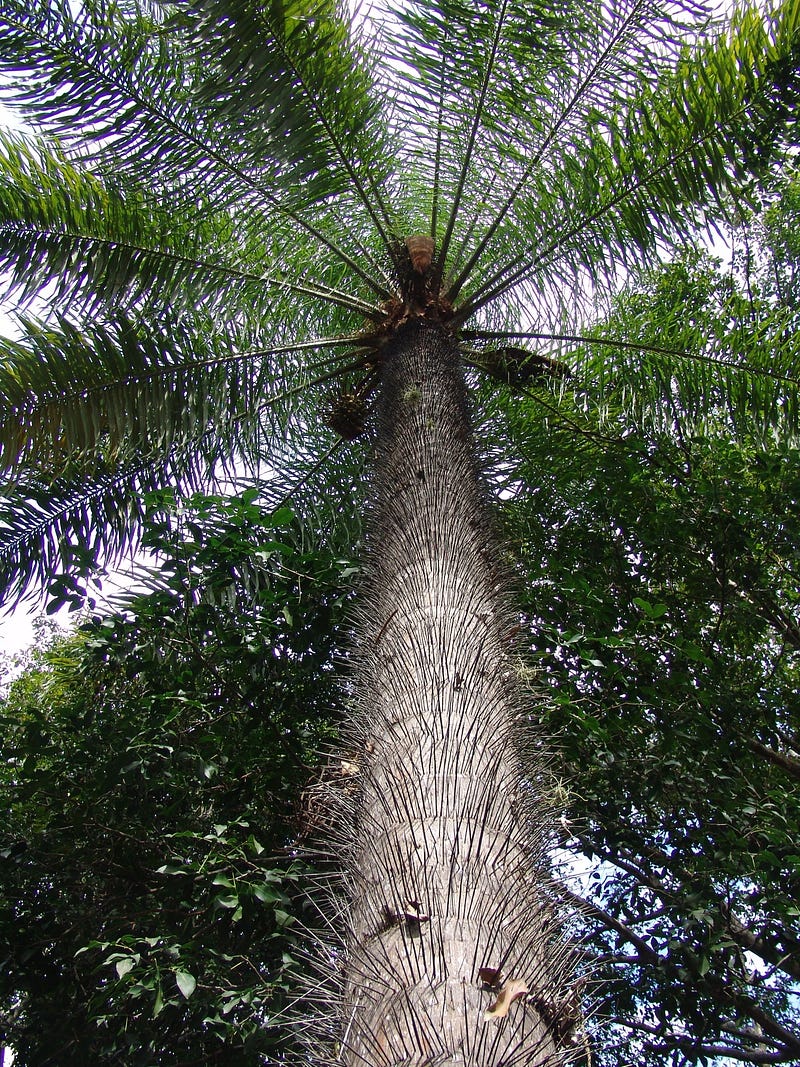
How Green is My Garden
It is nothing like Wales
Forgive me for the obscure literary allusion in the headline, but the prickly palm tree in my photo — for some strange reason — brought to mind the novel How Green Was My Valley. It was one of the first I ever read, probably in the early 1950s, and it may have influenced my lifelong passion for dark stories and bright places.
There is nothing green in the novel (it is grimly grey, pockmarked by coal mine fires, accidents, explosions, illicit sex, and grisly death — perfect fodder for a prepubescent kid’s nascent tragic view of life. I read it because at first I was deceived by the wonderful title, then intrigued by the relentless misfortunes of a Welsh boy’s life.
My own life — fortunately — has differed: my novel could be called, How Green Is My Mountain. I have lived most of my life on a tropical island with all the perks of year-round summer, peppered by an occasional hurricane or drought, but mostly by beautiful balmy weather and an endless, aggressive growing season. There are a few spiny trees, of course, but they are as scarce as a weedless garden bed.
All photos ©2021 Ronald C. Flores-Gunkle, commercial rights reserved.
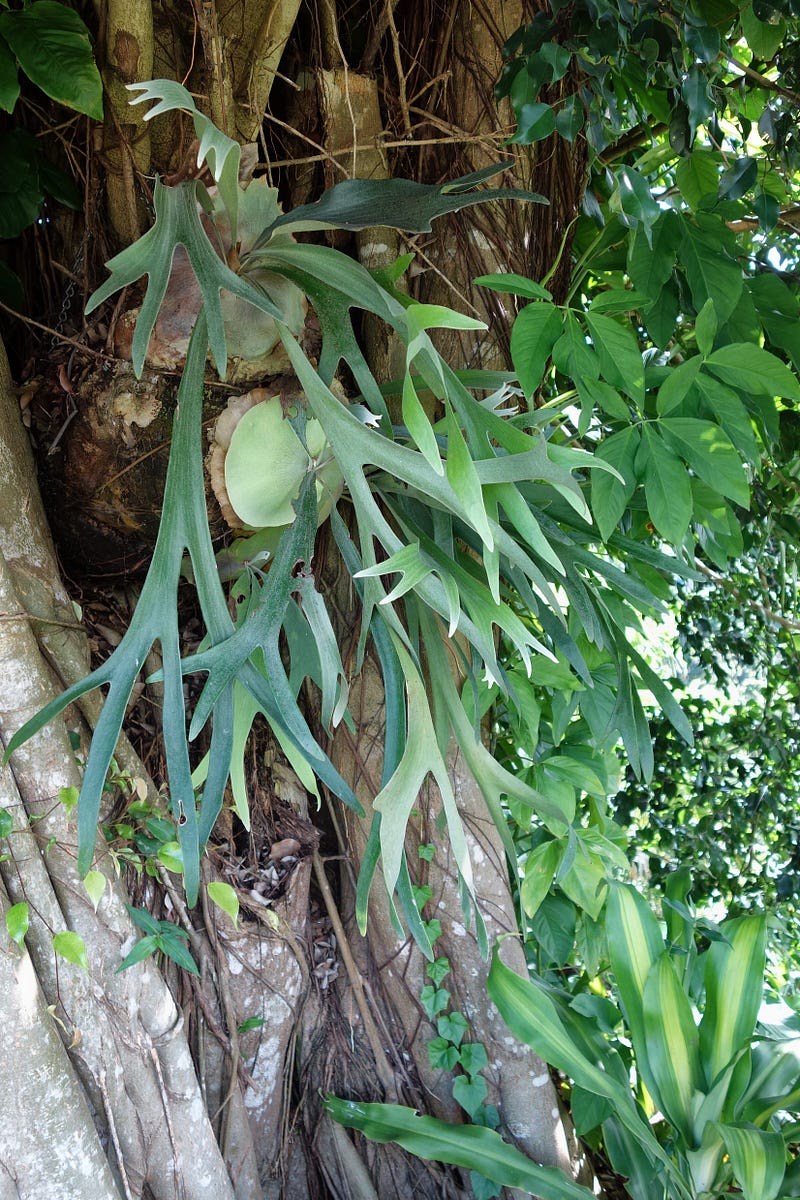
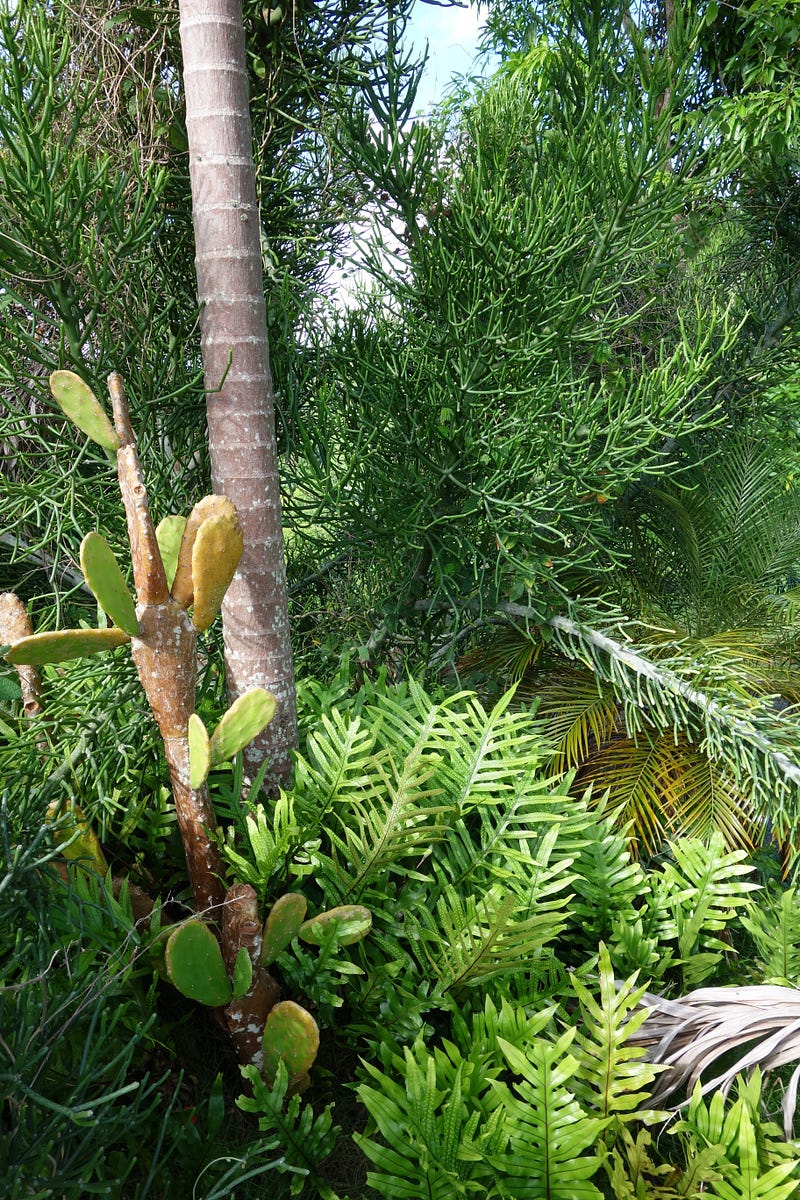
This is a place you can almost watch garden plants (and weeds) grow! This huge staghorn fern started as a calf and quickly spread its broad span of antlers along an Indian Laurel Tree. The monarch fern on the right began as a single plant and soon filled a large bed under a Flamboyán tree, then spilled over a bank and down a hillside. I have to keep it from invading the lawn with my power mower! The cacti descended from plants found on hikes or from cuttings from friends. They all seem to live happily crowded together.
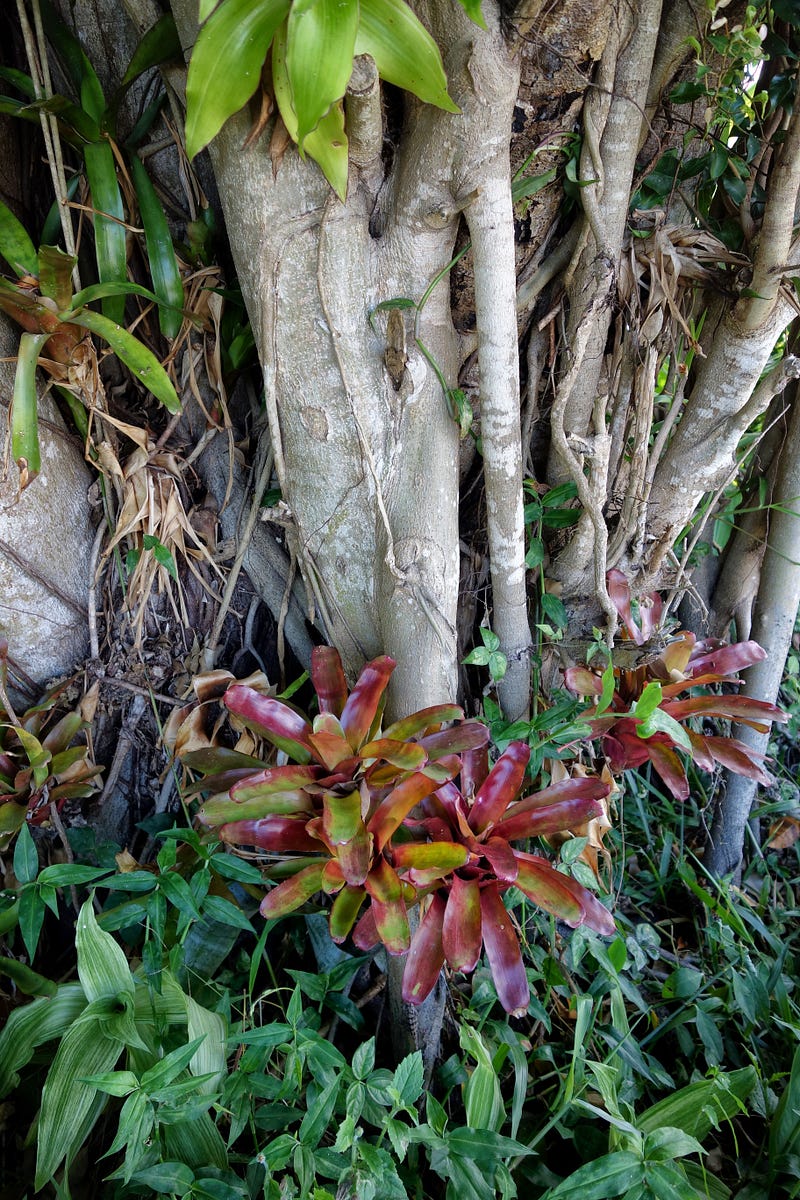
The equally prolific bromelias keep their own water supply cuddled in their core. They can grow on trees, on rough ground — just about anywhere there is some shade. Tiny frogs often treat them as their bed and breakfasts, feeding on mosquito larvae and bathing in their pools. In total shade they are green; in partial sunlight they turn red. In total sunlight they turn brown…and may die. As you can see, the weeds in the bed are overdue for human intervention.
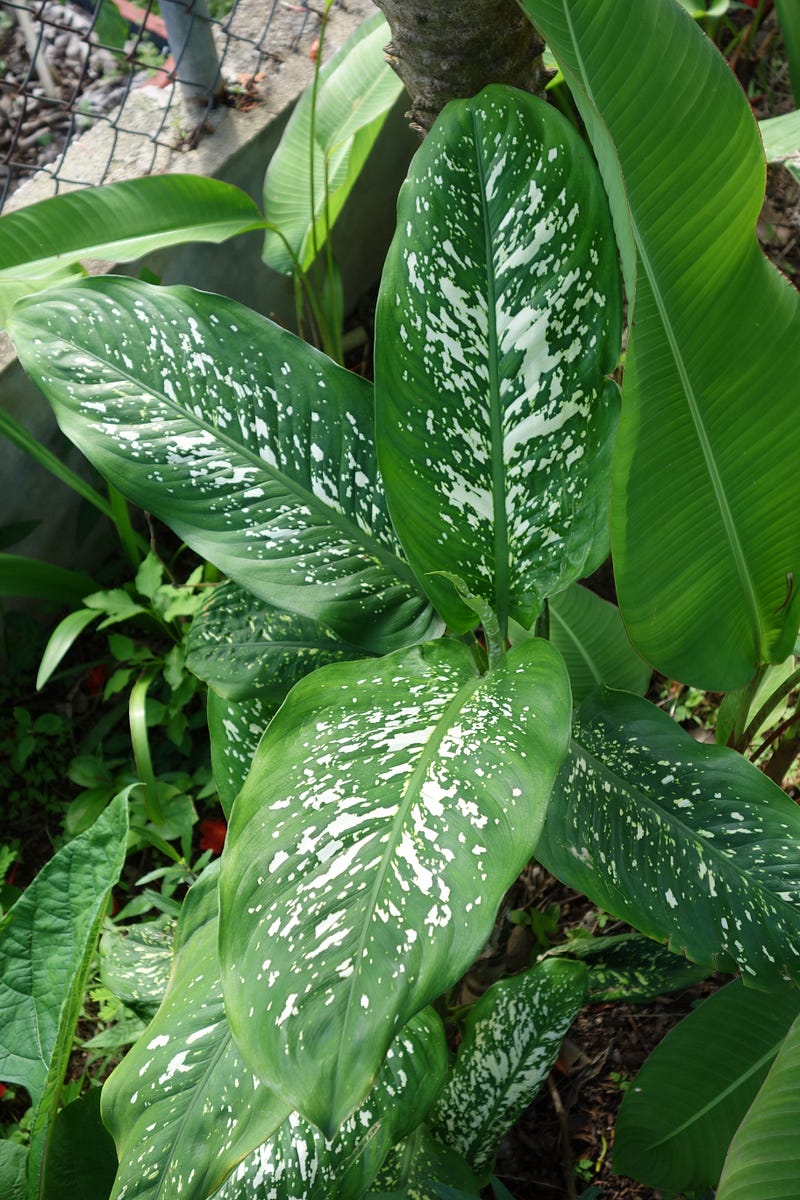
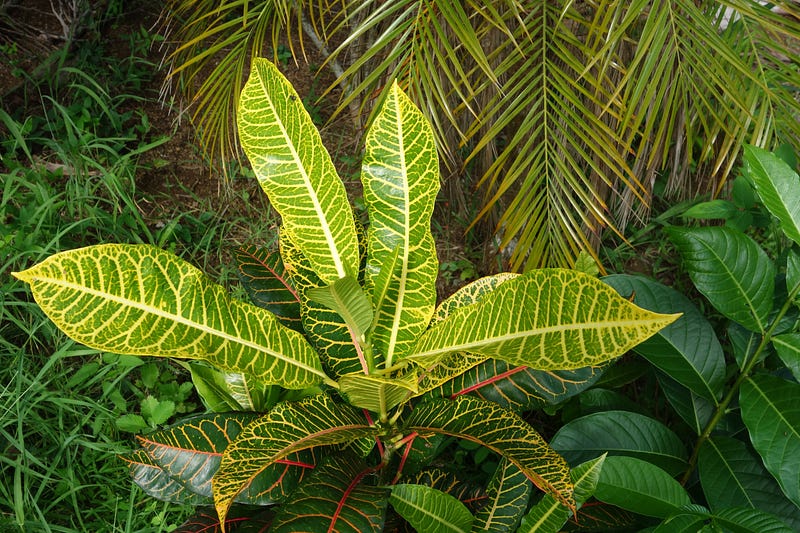
Both of these plants and their relatives are often grown indoors in pots in cooler climates. Indeed I had a potted croton on my kitchen table in the very first apartment I rented more than half a century ago in Pennsylvania. Both are really easy to grow here —I just cut off a piece and stick it in the ground! The Dieffenbachia is called rábano (radish!) in Puerto Rico. I have thinned it with a machete, tossed the cuttings down the mountain, and found it there later sprouted and growing enthusiastically. Radish, indeed!
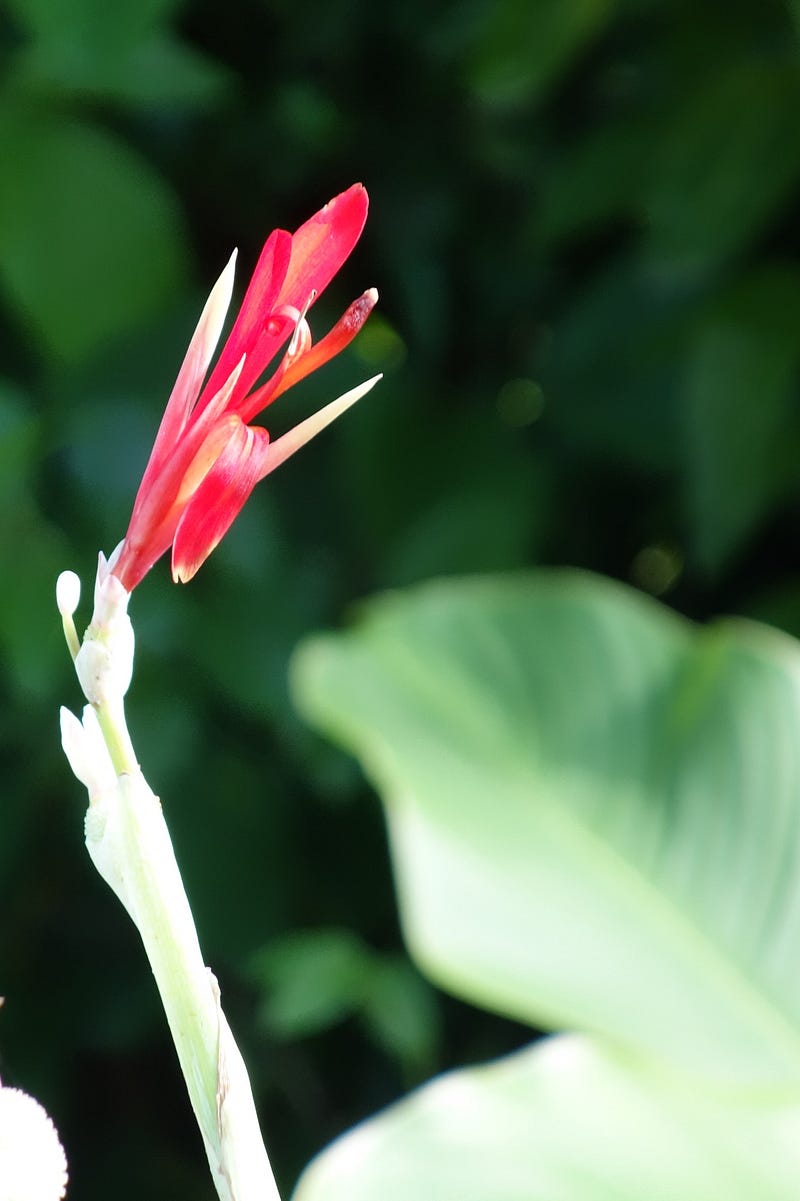
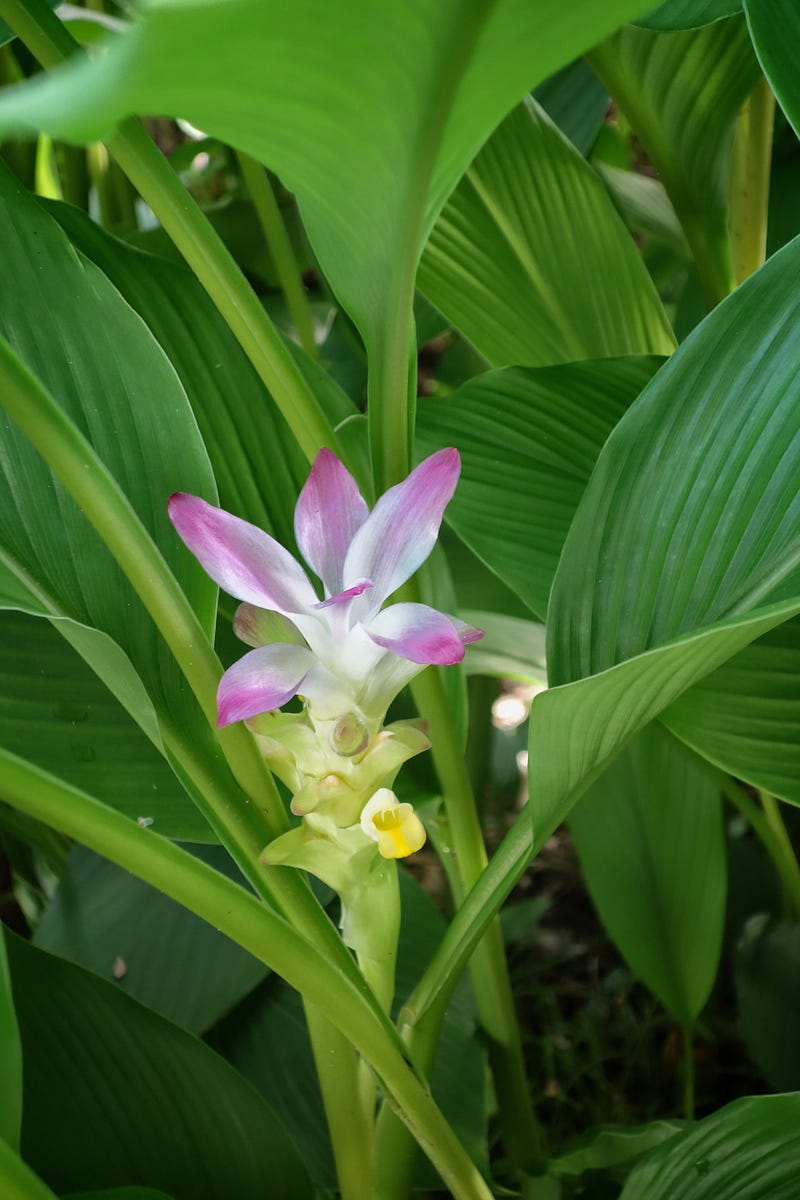
Every plant in the garden is another character with its own story. The little red canna, a wild variety native to Puerto Rico, provides the seeds for the maraca, the ubiquitous Latin percussion instrument. The wild curcuma — with its gorgeous blossoms, is a close cousin of culinary ginger and turmeric. It appeared spontaneously next to my garden house a few years ago, probably brought by birds. It disappears for a time, then emerges from the ground in an ever widening circle — and in a burst of glory. Right now it is truly glorious!
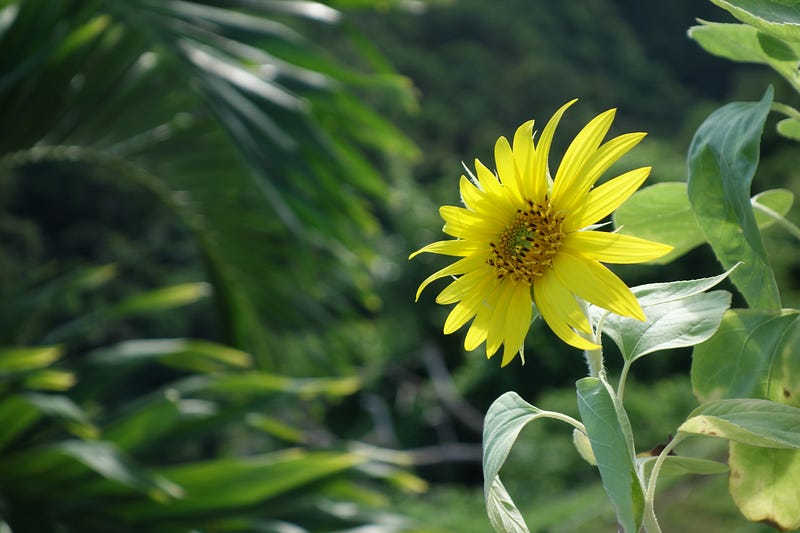
Not everything is serendipity, of course. This small sunflower arrived by jet in a seed packet! Unlike some varieties of young Helianthus, it deigns to follow the sun and it actually turns its back on it!
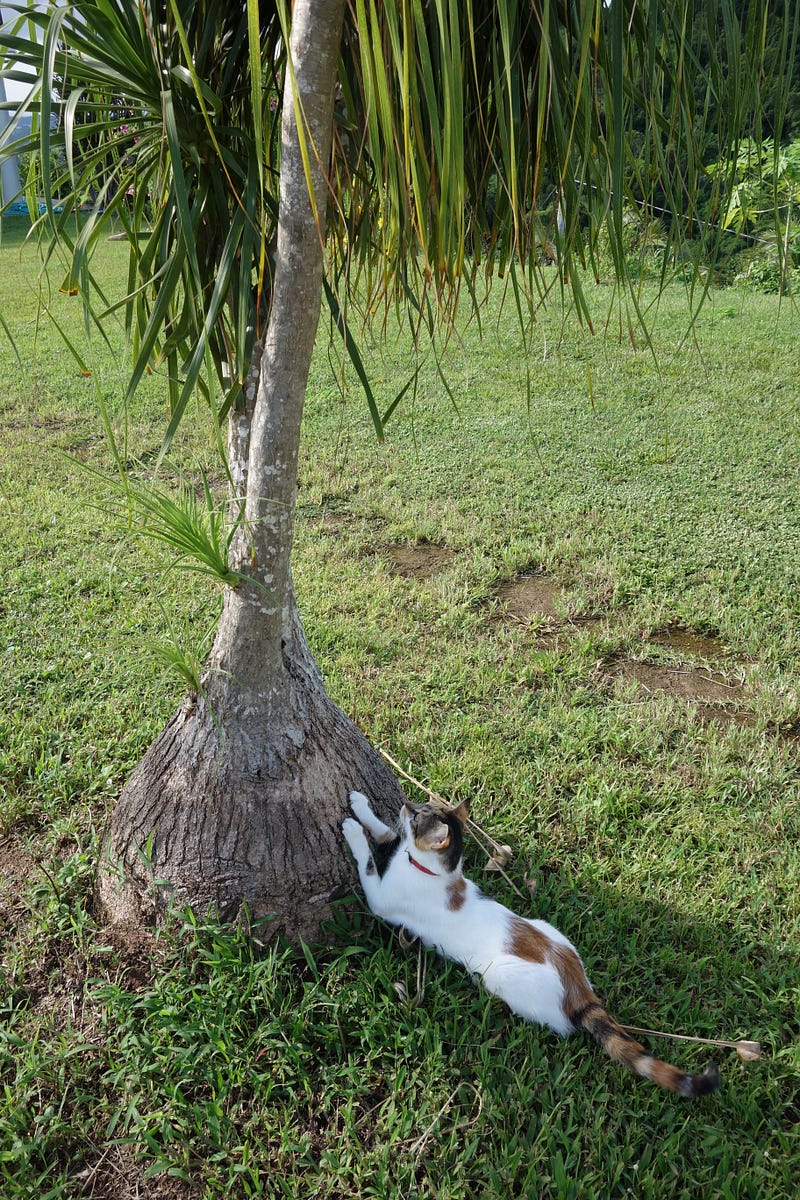
There are many more shades of green in my garden, but I will close with a shot of our cat Gamby at her favorite scratching post. The bottom of the ponytail palm also serves as a water reservoir for this tropical desert tree. In spite of its common names (especially the graphic ‘elephant’s foot palm’ moniker) it is not a true palm, but a member of the Asparagaceae family that includes edible asparagus. What a wonder nature is!
Author’s note: How Green Was My Valley was published in 1939 and the Wales it describes — if it ever existed — is long gone, replaced by truly green valleys and spectacular landscapes. It is on my bucket list if I live to see safe travel in a post-Covid world.