
Course Correction: Anti-Asian Violence and What We Can Do About It
Ex-President Donald Trump’s weaponizing of Covid-19 and his dismissive attitude towards white supremacists continue to harm Asians in record numbers.
Introduction
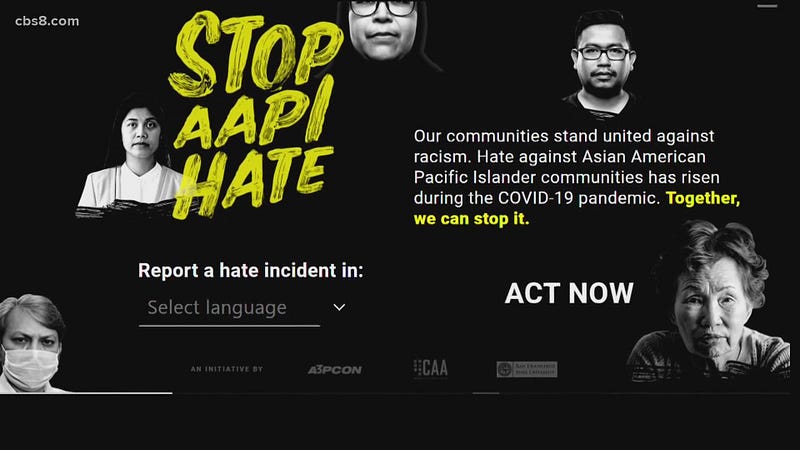
According to Stop AAPI Hate, over 3000 Asian hate incidents have been reported in the past year throughout the United States, with nearly 10% of those incidents counting the elderly as victims.
The words that follow are a direct result of the most recent spate of violence against Asian Americans, predominantly in, though not relegated to, the San Francisco Bay area.
Donald Trump, whose passivity in the wake of racially-motivated domestic crimes led to a reawakening of white pride in various sympathetic U.S. territories, was unmoved. Through it all, he did little to mask his ire and fears against anyone who did not share either his (natural) skin color, his gender, and/or his sexuality. The term “China Virus,” as a pejorative for Covid-19 and its alleged origins, entered the global vernacular, which immediately incited further violence against Asians worldwide.
Part One: The Trump Era
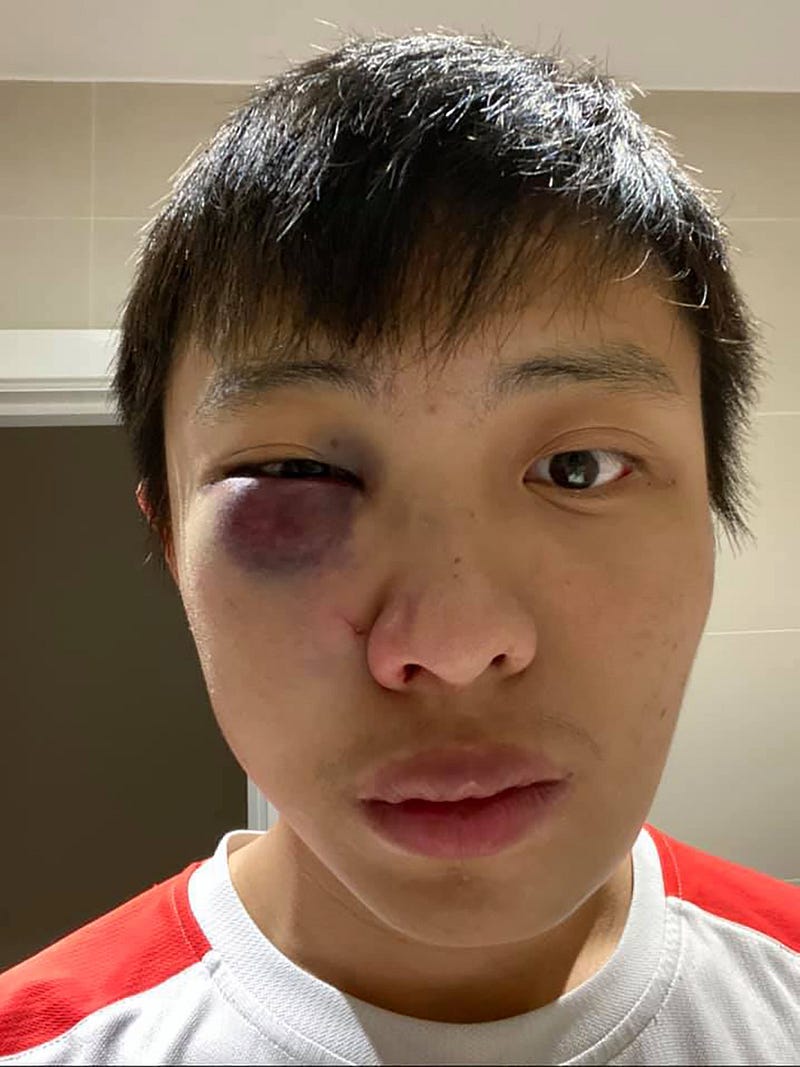
To the image above, the simplenews.co.uk website description of the February 24, 2020 incident read: A Singaporean pupil has stated he was beaten up by a bunch of males in central London who informed him: “I don’t want your coronavirus in my nation.”
We’ll come back to this.
For now, I have a question: What is the difference between those who cannot curb their violent tendencies, or the tendency to suddenly and without warning snap and violently lash out … and those who process the term “China Virus” and use it to blame and beat members of the Asian community?
My answer: Nothing.
Allow me to explore this idea a bit further by bringing into this dialogue another hot-button issue: gun ownership.
Do you own a gun? No judgement; I’m asking. Do you justify your gun ownership over a fear of being attacked and/or your right to due protection under the Second Amendment?
We all know there is an immense amount of bad out there that has nothing to do with personal politics. We all hear about the shootings of innocents, and also the usually partisan arguments that follow, such as “good people with guns would stop bad people with guns” and the like, arguments that too frequently and unfairly devolve into simplistic battles of right vs. left.
So, to those on the right — and the left — who own guns and do not shoot innocent people, I assume we can agree that those who do either have no control over the actions, or are mentally ill or simply evil? Surely those people will not be controlled or convinced with any logic.
Years of therapy? Perhaps.
And that’s where those who continue to perpetuate the “PC“ argument as it regards former President Trump’s “China Virus” verbiage — who do not consider themselves racist — miss the point. Needlessly placing innocent people in harm’s way is the true transgression, not a simple matter of censorship. By perpetuating the argument that any outcry against this President referring to Covid-19 as the “China Virus” remains entirely and solely PC-inclined, one has inadvertently (or otherwise) enabled and encouraged those with no control to take their fears and frustrations out on their fellow man, in this case innocent Asians who have been blamed for the pandemic.
If it is neither you nor I who is the problem, then we have a mutual responsibility to not casually encourage those who are.
This is no different than those who shoot innocents over their own fears and later claim they were protecting themselves over some nonsense the newly-dead had nothing to do with. You didn’t do it. You didn’t take a life. They did, but a little research will show that many, including minors, consider themselves emboldened by our recent dialog on the matter and saying as much to authorities.
We cannot remain the root of the problem, and that’s exactly what has happened with this ongoing “China Virus” pejorative. And yes, all of us are responsible for those prone to adapting the old narrative and taking matters into their own hands.
I’ll use a word that’s been overused of late: fight.
Together, we need to fight the scourge of today’s violence against Asians. Not solely Asian Americans, but Asians worldwide.
I was infuriated this past March, over one year ago.
Articles such as these added fuel to the flame:
Once the then-President of the United States began calling the “coronavirus” the “China Virus,” he incited considerably more than impressionable derelicts on the fringes.
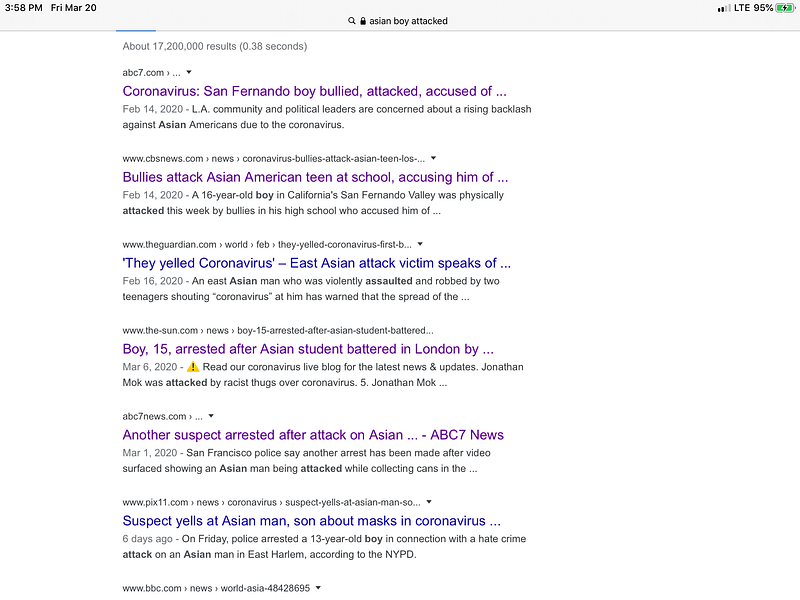
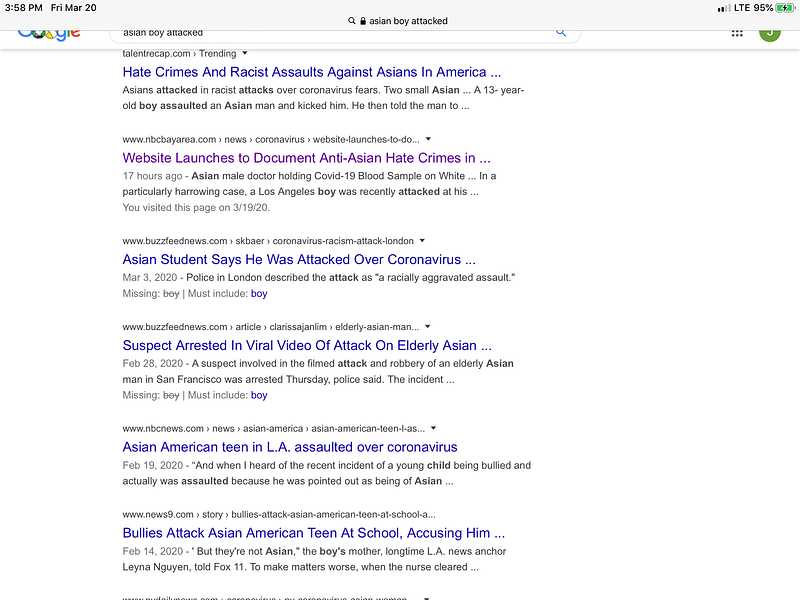
I loathe Donald Trump, and of that I’ve made no secret. To be clear, however, I am not blaming him for the onset of these attacks, nor am I blaming him for the onset of the virus. The truth is many of the above incidents occurred prior to Trump jumping on the bandwagon, and were international in nature. What I am blaming this president for is exploiting “China Virus” as a catch-all, despite the advice of both his advisers and the World Health Organization, which has directly led to further attacks of the past year.
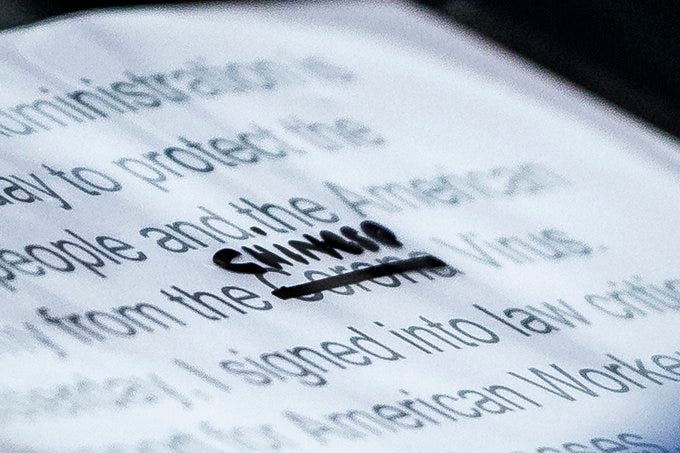
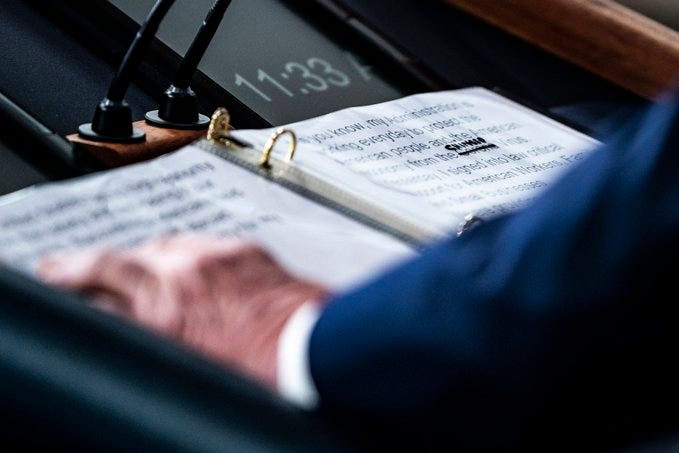
Once Trump did unapologetically and consistently exploit the new verbiage, matters only got worse.
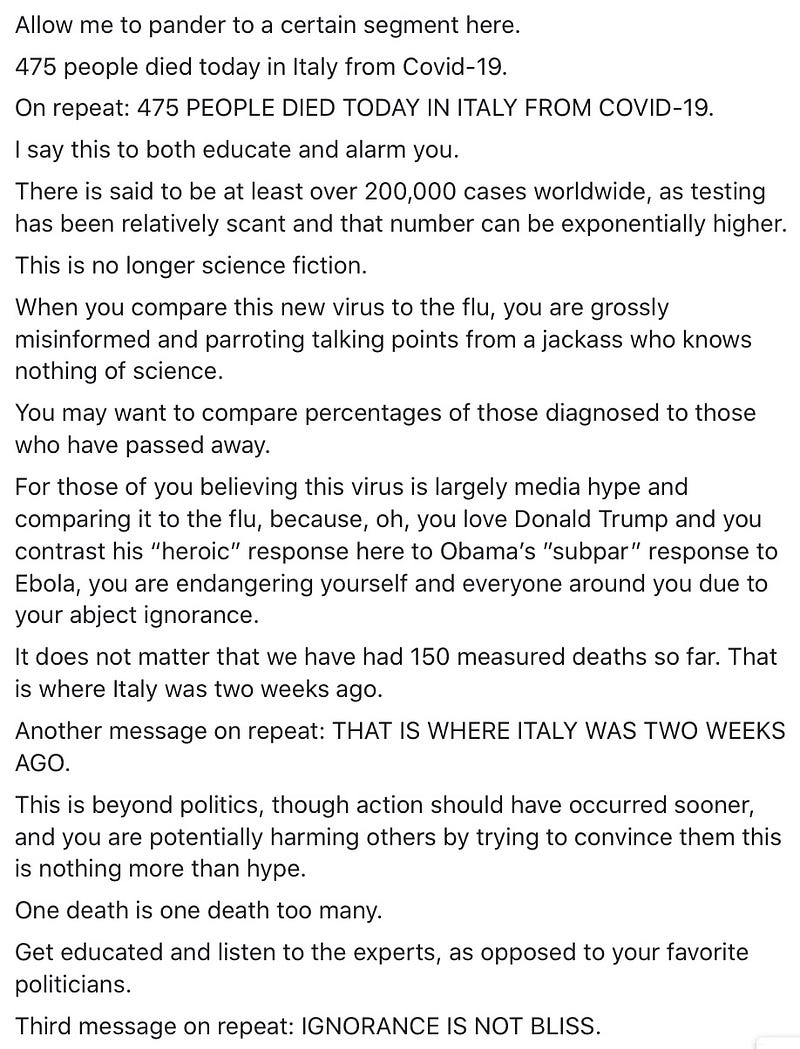
On social media, amidst images and articles of Asian-Americans being physically bullied and attacked, posts like this became de rigueur:

I blocked this person, but big deal. She will go on and share her provocative posts elsewhere.
I certainly, though, had my say:
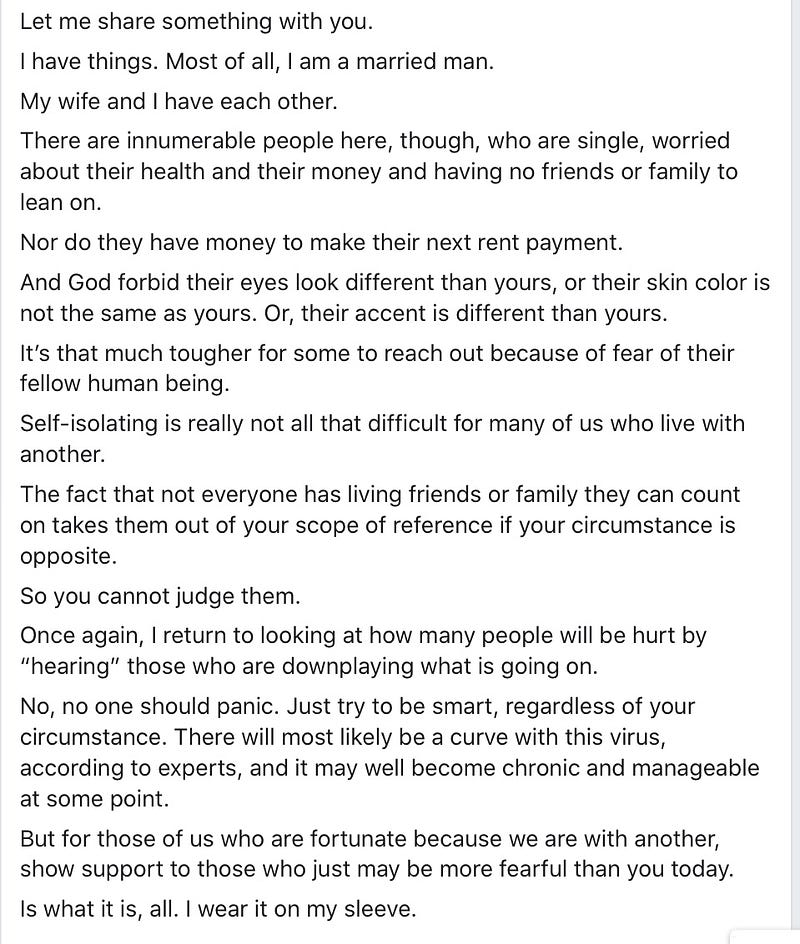
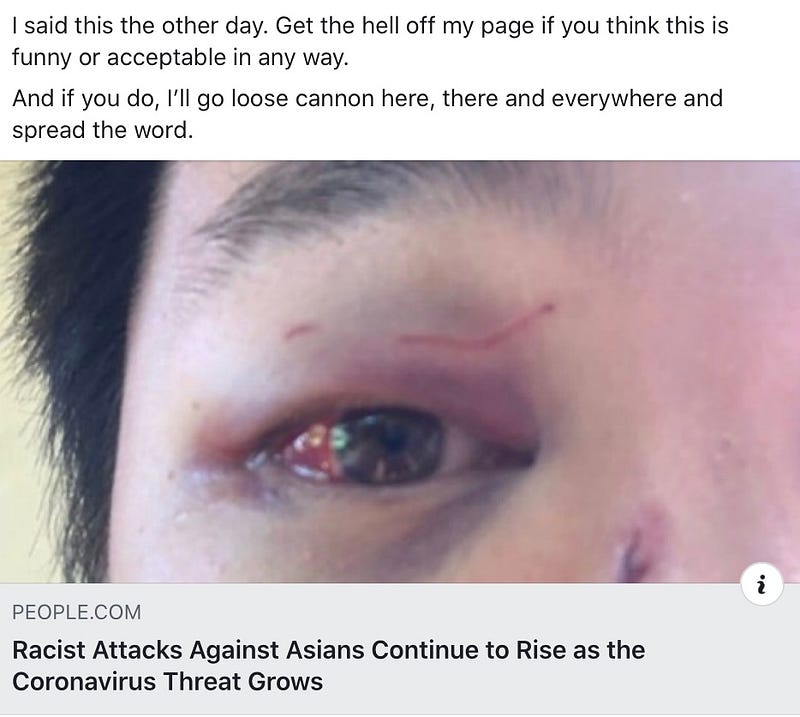
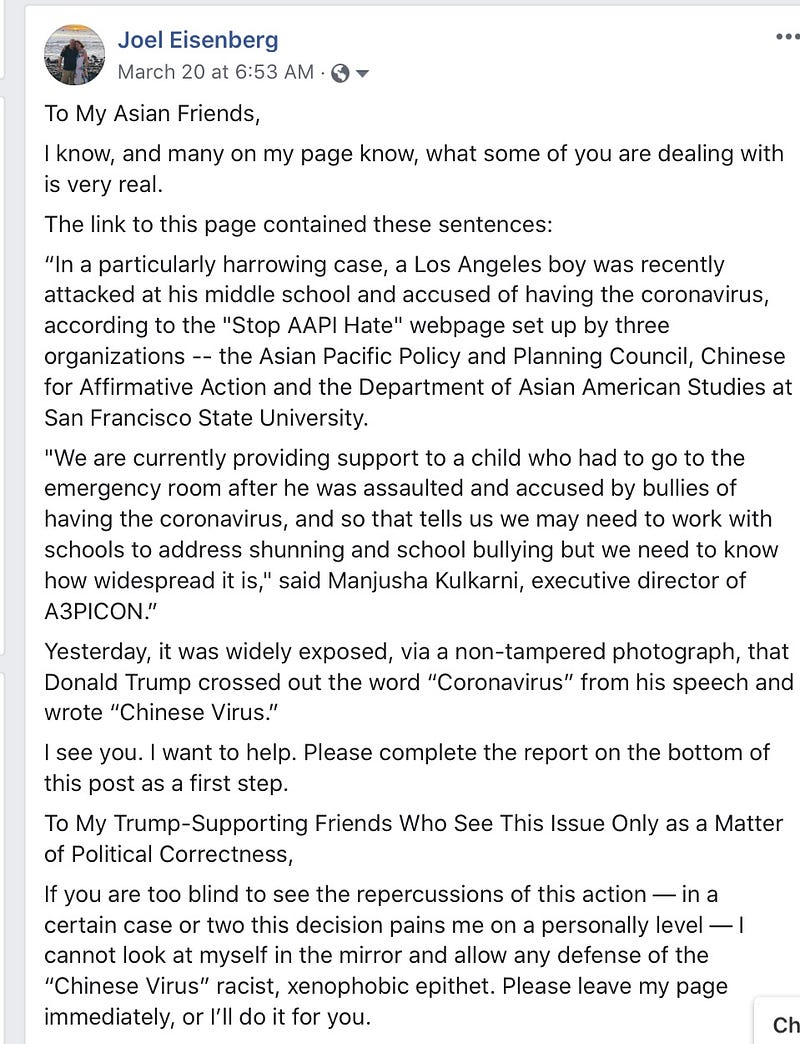
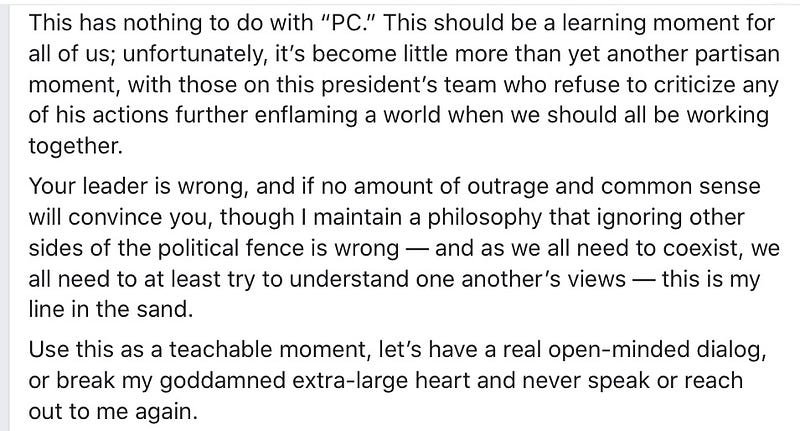
Several other emotional Facebook posts followed from me, which in their wake caused notable consternation — and several friendship blocks — from those who had considered this president to be beyond reproach.
However, more positively, the anger my words elicited also triggered a real dialogue on the “China Virus” controversy.
Some told me they were reconsidering the matter. That was a win.
But it was not enough.
I maintain a fairly large social media following and I appreciate that I may have some influence in those circles. I’ve toned down my own anti-Trump rhetoric since Biden took office, but damn if he gets a pass for consistently downplaying the greatest global pandemic of the last 100-plus years, then diverting his complicity for racist attacks by spewing simplistic nomenclature that does no one any good and only threatens to harm more innocents.
The issue is ongoing. If you are unaware, open your damn eyes.
Part Two: The Early Biden Era
The newspaper headlines on the matter of Asian violence did not abate once Biden entered office.
In fact, his predecessor’s influence remained and may have even grown. These recent photos, taken from the San Francisco Bay area, illustrate the point ...



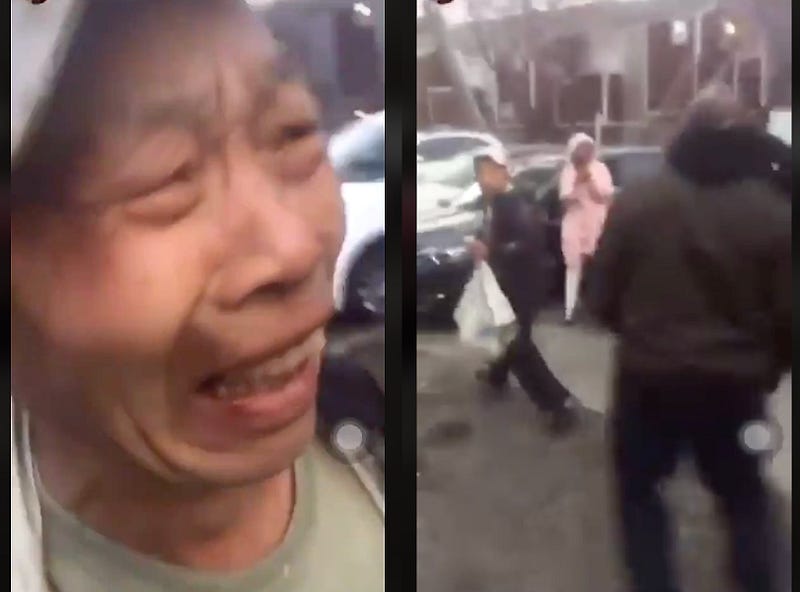
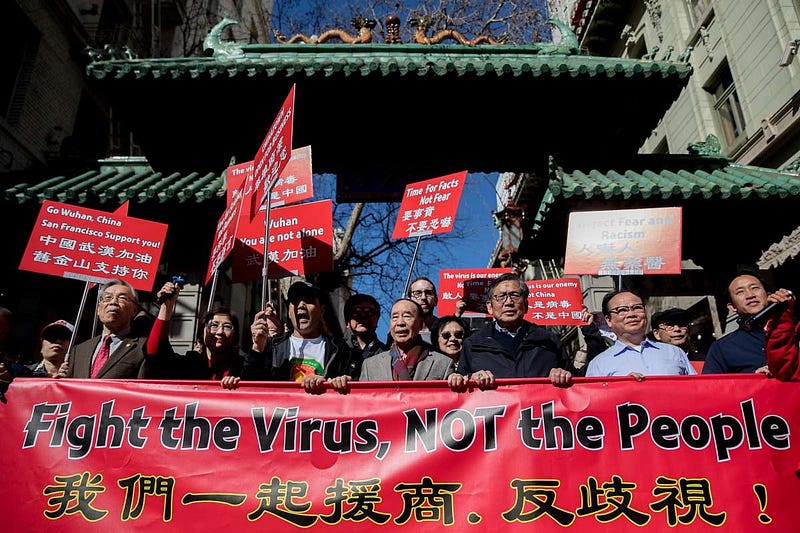

The last image of the above six portrays a woman in a Bay-area Chinese effort promoting gun ownership for protection.
In other counties across California, including Los Angeles and San Diego, Asian Americans are being targeted in numbers not seen since the outbreak of the pandemic.
But what can we do today to quell these crimes?
To help stem the current tide of anti-Asian violence, several actions can be taken …
- Immediately call the authorities if you witness an escalating event or an act of violence, as opposed to filming it on your cell phone. If you are not in imminent danger and can snap a photo of the perpetrator(s), do so after you contact the police as every moment matters on the part of the attacked.
- To reiterate, visit StopAAPIHate.org, and report the incident directly on their website, which can also be accessed here:
- If you witness an anti-Asian incident in San Francisco, visit the website of the San Francisco Human Rights Commission at www.standtogetherSF.org. Sign up for their newsletter, which contains news and community opportunities to get involved.
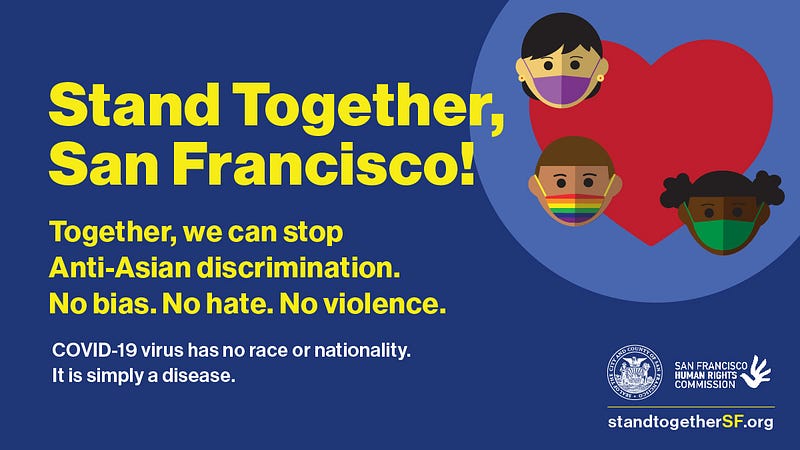
- Take time to educate. Speak to others. Volunteer. Visit websites such as Advancing Justice, which contains an extensive list of signatories, with which you can get involved, that are dedicated to preventing the violence.
- Review this “Rolling Stone” article, which includes other important community resources.
- Visit the Stand Against Hatred website, an anti-hate initiative co-founded by Asian Americans Advancing Justice (AAJC), and also forward your reports there.
Donald J. Trump is out of office. Invective on the part of leadership is over. The time to heal is now.
Never turn your back on any incident of Asian violence, or racial violence in general. There is help, and that help begins with our involvement.
The preceding was a largely revised and amended version of an article I posted on the Medium platform in March of 2020. If you have found this article of value, feel free share it.


