
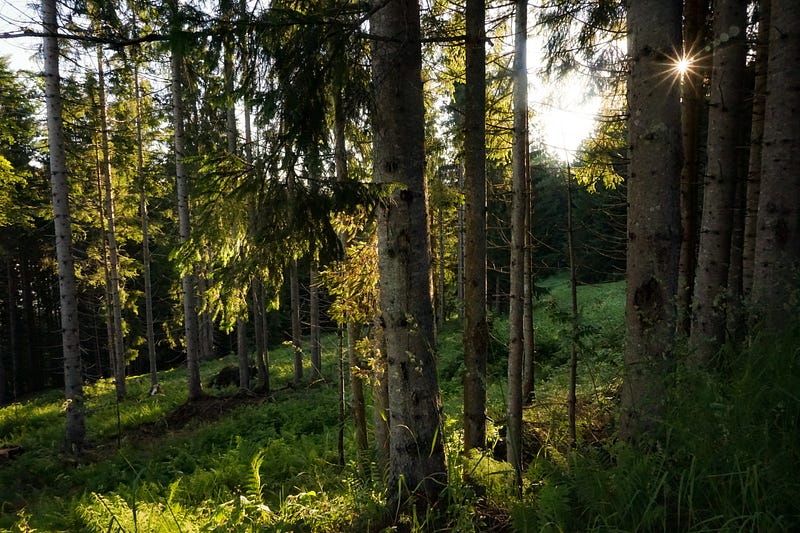
How Forest Bathing Helps You Reduce Stress, Boost Immunity and Improve Well-Being
An introduction to forest bathing and its numerous physiological benefits
Whether hiking along a mountain trail or laying outside on a warm summer’s day, we’ve all felt the wave of relaxation that nature brings. That pleasant sense of rejuvenation and refreshment goes beyond just lifting our spirits. Science now confirms what many of us intuitively know: reconnecting with nature brings numerous benefits to our overall well-being.
The positive effects of nature are evident across our physical, mental, and emotional health.
Spending time in the forest is a great way to compensate the effect of our modern stressful lifestyles, strengthen our immunity, calm our brains, and balance our nervous system activity. Ever heard of forest bathing? If not, read on to learn more about what it is, how it started, how to do it — and most importantly — how it can benefit you!
WHAT IS FOREST BATHING AND HOW DID IT START?
Shinrin-yoku is a Japanese term that literally translates to “forest bathing.” It refers to the practice of mindfully immersing yourself in a forest environment. The term was first coined in 1982 by Akiyama Tomohide, director of the Japanese Forestry Agency, when the agency wanted to attract more people to Japan’s forests.
In addition to helping stimulate relaxation and improve well-being for the visitors, they also hoped this reconnection with nature would encourage a greater sense of protection and conservation of the forests. The first forest bathing event was held in the Akasawa Forest. Boasting some 1,800 acres, this coniferous forest abounds with tall Kiso Hinoki cypress trees.
It wasn’t until 1990 that the first studies of the physiological benefits of Shinrin-yoku began thanks to Dr. Yoshifumi Miyazaki.
After years of medical research in this area, Dr. Miyazaki had accumulated vast amounts of scientific data showing the positive effects of Shinrin-yoku on the human body.
Based on his findings on the multiple therapeutic effects of Shinrin-yoku, he coined the term “forest therapy” in 2003. Since then, the Japanese have adopted spending time mindfully in the forest as an official method of preventative medicine.
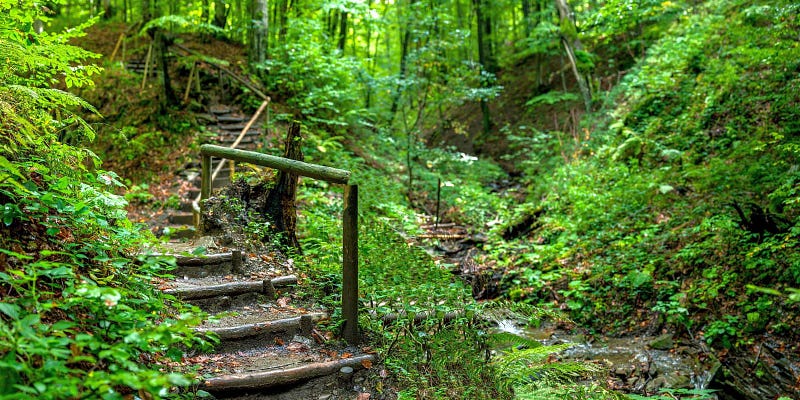
FOREST BATHING VERSUS YOUR TYPICAL HIKE
So, how is forest bathing different from simply going out for a hike? The main — and most important — difference is that Shinrin-yoku does not involve strenuous physical exercise.
Rather, the focus is on allowing a deeper connection with the surrounding environment. Walking very slowly and with frequent pauses along the trail, we can more fully appreciate and connect with the environment through our senses.
A minimum of two hours has been shown as an effective length of time to spend in the forest to gain lasting physiological benefits.
The positive impact of being in nature is enhanced through bringing in a component of mindfulness. In today’s stressful world, many people find it hard to put their minds at ease — even when strolling through a peaceful natural setting.
Mindfulness is a mental technique that helps us be more aware of ourselves and our environment. It grounds us in the present moment and provides many stress-reduction benefits. These are enhanced even further when combined with the natural healing properties of the forest.
Mindfully immersing ourselves in the forest helps us reconnect with ourselves and with nature.
As we open up all our senses and bring our full attention to the moment, we remember that we have always been part of nature’s magnificence, and experience our natural connection to it.
THE HEALING BENEFITS OF THE FOREST
Spending time in the forest brings a host of physical, mental, and emotional benefits. The mind becomes calmer and less stressed while the body experiences physiological relaxation which helps our systems function better.
Nature is a form of preventative medicine because it reduces the effects of stress — the one thing that plays a large role in most diseases. When Dr. Yoshifumi Miyazaki pioneered the first research on this topic, the technique for measuring the stress hormone cortisol in saliva had just been developed. This was one of the first ways to start measuring the forest’s relaxation effects on the body.
Studies have found that the greater levels of stress that an individual experiences, the greater positive effects forest bathing can have on their health.
Over the years, research has revealed forest therapy’s many health benefits. Some of the main ones are listed below. See the resources section at the end of this article for books that explain these in more detail.
PHYSICAL
- Regulates blood pressure (Depending on whether is high or low to begin with)
- Lowers heart rate
- Lowers stress hormones (cortisol, adrenaline, noradrenaline)
- Decreases activity in the sympathetic nervous system which is associated with the stress response (fight-or-flight) and increases activity in the parasympathetic nervous system which is associated with relaxation and restoration
- Strengthens immune system and enhances human natural killer (NK) cell activity
- Lowers blood sugar and improves insulin sensitivity
- Improves cardiovascular health
- Improves sleep, both quantitatively and qualitatively
- And much more…
EMOTIONAL & MENTAL
- Decreases sentiments of stress and anxiety
- Reduces emotions of depression, confusion, anger, and hostility
- Increases a sense of relaxation and vigor
- Improves the capacity of concentration (comparable to the effects of Ritalin that is used to treat ADHD)
- Increases energy and the ability to focus
- And much more…
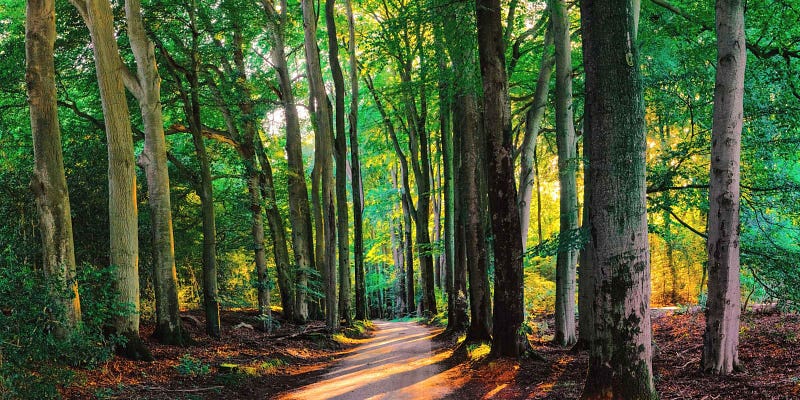
WHERE DO THESE HEALING POWERS COME FROM?
Forests provide benefits through a higher concentration of oxygen than in urban settings and through the presence of phytoncides. Phytoncides are a type of terpene, a natural compound produced by plants and trees. Phytoncides are responsible for that enchanting coniferous smell that forests release.
Plant essential oils that contain terpenes have been used as a natural means to treat various ailments for centuries.
Plants emit these phytoncides as a form of self-protection against pests and harmful organisms. Not only do phytoncides protect trees from disease — they help us do the same.
Studies have shown that phytoncides have anti-inflammatory effects and boost our own immunity by increasing the activity of our natural killer (NK) cells and intracellular anti-cancer proteins. The benefits of increased activity of NK cells last for more than 30 days after a forest bathing trip of at least two hours.
‘”Watch a tree, a flower, a plant, let your awareness rest on them, how still they are, deeply rooted in Being. Allow nature to teach you stillness.” — Eckart Tolle
Alongside the physical benefits, spending time in nature also allows us to enhance our own abilities to be more mindful, present, and compassionate. Nature welcomes everyone. Nature does not judge. Nature is always present, growing, and generous with its gifts. As we open up to noticing and receiving these qualities from nature, we strengthen them in ourselves.
BRINGING NATURE’S BENEFITS INTO DAILY LIFE
We can all benefit from bringing more nature into our lives. Forest bathing can be done anywhere in the world where there are trees. You don’t have to wait for a sunny day either; feel free to “bathe” in any weather conditions.
But what if you live in a city without a forest nearby?
The beauty of nature’s healing properties is that they are not just limited to physically being in the forest — although that’s where the greatest benefits have been found so far.
There are some simple ways to bring the therapeutic effects of nature to your life even if you’re a city-dweller.
These include:
- City parks and nature preserves
- House plants
- Essential oils
- Nature music and sounds
- Photos of nature scenes and landscapes
1) TAKE A STROLL THROUGH THE PARK
Even in the city, you can enhance your well-being and reduce stress by taking a stroll through a park. Rather than mindlessly walking with your headphones in or thinking about the next work project, bring your full awareness to every step you take.
- Notice how the leaves gentle sway in the wind.
- Listen to the sounds of the chirping birds or the laughter of the kids nearby.
- Take off your shoes and feel the grass under your feet.
2) BRING IN SOME HOUSE PLANTS
Having plants in your home or office can also bring benefits. Pick a plant that you feel most attracted to. Take in the joy of looking at it, smelling it, and caring for it.
If you find that plants regularly die under your care, this is a great opportunity to reestablish the connection with nature in your own home. You will automatically care for your plants in a much more mindful way. Their life expectancy will increase exponentially — and so will your well-being.
3) ESSENTIAL OILS
Natural essential oils (especially ones from coniferous trees) boost your immunity because they release phytoncides — the very same chemical that provides health benefits when you’re walking through the forest.
4) GET SOME NATURE ART AND LISTEN TO NATURE’S SOUNDS
One study has found that viewing nature scenes and listening to nature sounds can ease stress and even decrease the perception of pain during medical procedures. So just having photos of landscapes that you love or listening to background nature-inspired music can ease your mind and activate the relaxation response!
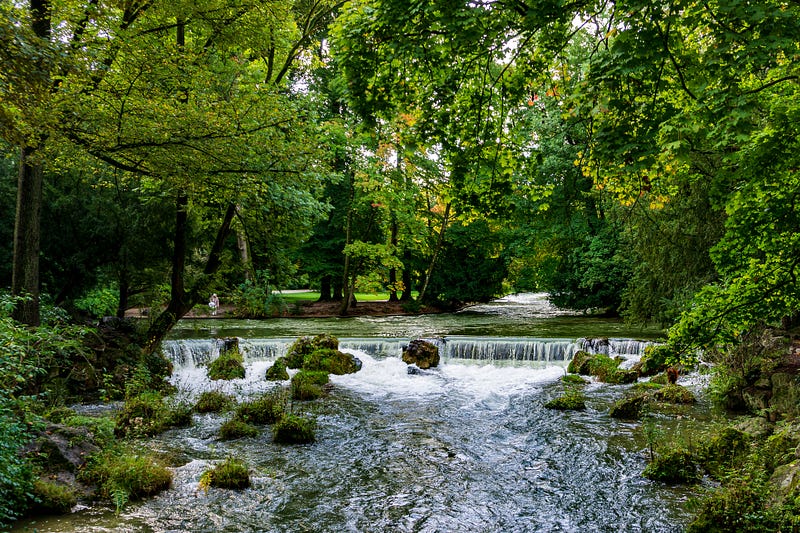
HOW TO DO FOREST BATHING
Next time you’re ready to unwind and release stress, head for the forest. Here are some tips you can use to do your own forest bathing practice.
“And into the forest I go, to lose my mind and find my soul.” — John Muir
Even a small amount of time spent in nature can help you relax and reduce stress. But if you can be in the forest for at least two hours with your mind’s full attention — not just your body — you will experience the greatest benefits as you truly unwind.
5 STEPS TO FOREST BATHING:
1. FIND AN IDEAL SPOT
Pick a spot that you like for the walk. The more you enjoy a certain natural environment, the more powerful the experience will be. Don’t worry about getting anywhere in particular. The experience is about savoring the sounds, smells, and sights of nature.
Go in the forest and walk as you normally would. When you find a spot that feels inviting, prepare your mind to enter into a powerful and welcoming space.
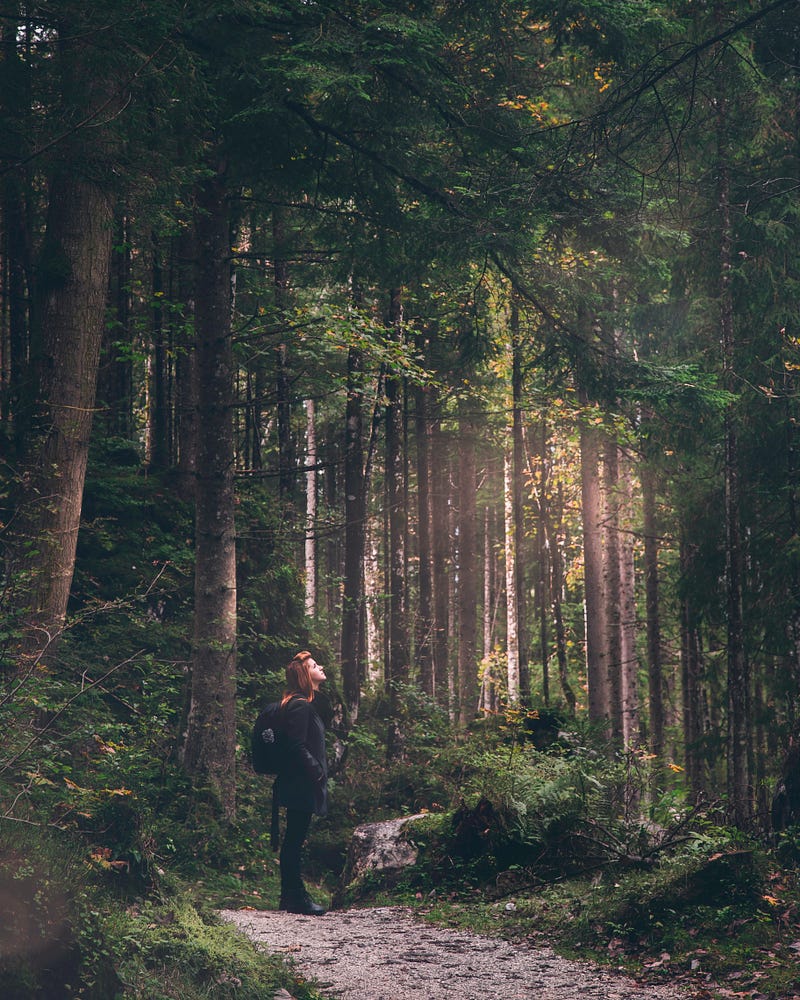
2. LET GO OF YOUR WORRIES
Inhale and exhale deeply several times. Notice any negativity that is present in your mind.
Recognize the worries, problems, and fears that you may have been facing. Notice that you are the one who is seeing them in your mind — you are not them. Give yourself permission to leave them behind as you enter the forest.
Remember: nature always welcomes you with open arms. It does not judge you. It simply provides its healing benefits to all who are willing to receive.
3. AWAKEN THE SENSES
Re-synch your senses back with nature. Many of us who live in an urban environment, experience sounds, smells, and sights, daily that are very foreign to the natural environment our body knows and craves.
These, man-made or “alien”, sensory inputs become the norm and our bodies feel the absence of nature.
When we come back to nature after a while, this initial exercise wakes up the senses and re-synchs them with the natural environment.
- First, close your eyes and use all your other senses to connect to the forest. Take a deep breath and notice the connection of your feet to the earth.
- Feel the temperature of the air and its gentleness on your skin. Delight in the crisp freshness of the air as you breathe.
- Hear all the sounds around you. Try to determine what they are.
- Take in all the scents that are present. Smell the pine sap and take in the natural benefits of phytoncides. Smell the fresh damp soil of the earth or the flowers that you pass by.
- Take off your shoes and feel the soil on your feet if you wish. Hug a tree and feel the grooves of its bark gently rubbing up against your skin.
- Open your eyes and see the forest as if it were for the first time. Notice the dozens of shades of green amidst the trees, the way the sunlight hits each branch.
4. IMMERSE YOURSELF IN THE FOREST
Walk slowly and let your inner senses take you where they may. Be curious and begin paying attention to the smallest details all around.
After a few minutes, stand still for a moment and see if you can notice some things around you that are in motion.
- Find something small nearby and give it your full attention, noticing even the most subtle details. Pay attention to the sounds of the forest.
- Find something you can safely smell and take in its aroma fully. Spend some time just walking with no goal in mind but to be present with the forest.
- To anchor yourself in your body, you could even do some breathing exercises, yoga, qi gong or tai-chi.
5. THANK THE FOREST — AND YOURSELF
As you get ready to leave the forest, you may want to find a spot to sit down and just allow yourself to be for a moment. Look around and absorb what the forest is offering you.
Thank the forest for welcoming you and providing you with healing. Thank yourself for taking the time out of your busy schedule to rejuvenate your mind and body.
This article was written for and with the collaboration of Carlos Ponte and Emma Wisser, founders of Universe Mindfulness. You can learn more about their forest bathing experiences and holiday retreats in nature on their website.
RECOMMENDED READING
Shinrin-yoku: The Japanese Way of Forest Bathing for Health and Relaxation, Yoshifumi Miyazaki, 2018 Forest Bathing: How Trees Can Help You Find Health and Happiness, Dr. Qing Lee, 2018
SOURCES
https://www.ncbi.nlm.nih.gov/pmc/articles/PMC2793346/
https://pubmed.ncbi.nlm.nih.gov/20074458/
http://forest-therapy.net/healthbenefits.html
https://time.com/5259602/japanese-forest-bathing/
https://greatergood.berkeley.edu/article/item/why_forest_bathing_is_good_for_your_health