
How Footballers Changes Our Society
A story about Beckenbauer, Beckham and Héctor Bellerín
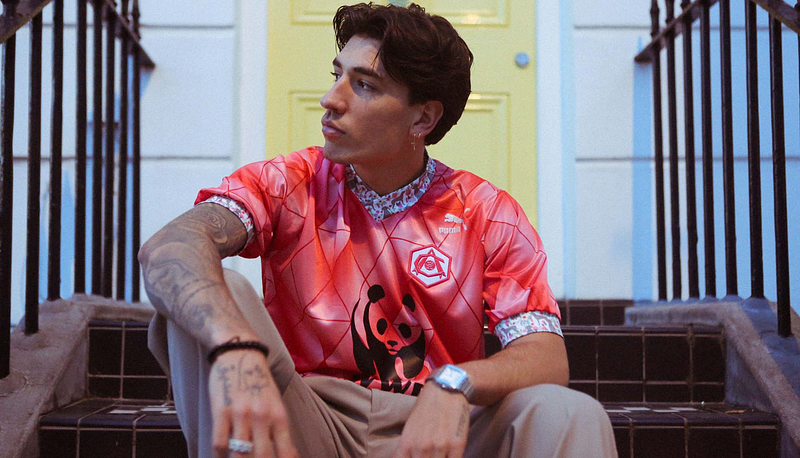
What do a German, English, and Spanish Footballer have in common? Besides the fact of kicking a ball for a living…
Well, they’re all right-footed? Correct.
National players? Correct.
If you ponder, this isn’t what this article is about. Trust your instincts. There’s more to it.
This is a story ranging from Beckenbauer and Beckham to Héctor Bellerín. The role of footballers, especially off the pitch, has changed over the last decades. In this article, I claim that Footballers are a leading indicator of our society. More bluntly, the most celebrated sport in the world is a mirror to our society.
The 1960s — 1980s
Beckenbauer — where do I start? He was nicknamed ‘Der Kaiser’ because of his elegant style, dominance, and leadership on the field in his playing career. Besides, his first name, “Franz,” is reminiscent of the Austrian emperors.
Back then, footballers were viewed as leaders on and off the pitch. Masculinity, authority, dominance, and leadership were the features we searched for in Footballers. The more of it, the better. However, the leader’s dominance must be balanced with a sort of cleverness and elegance. Der Kaiser was extraordinary, leading Germany to a World Cup. He was also elegant, pinging the ball with the outside of his foot - revolutionary at the time.
How was he a leading indicator in our society? Well, we searched for powerful, masculine yet elegant personalities in society, too. Hence, Sean Connery stars in his first Bond movie, “Dr. No,” On May 8, 1963. The “Superman” airs in 1978. ‘Der Kaiser’ is perfectly portraying the image of a Footballer from 1960–1980, displaying leadership & dominance in the post-war era.
The 1990s -2010s
We have skipped the 80s and its magic combination of economic success, laid-back tunes, mullets, and shoulder pads. Let’s move straight into the 90s and into planetary celebrity culture. Time is a strange illusion, but to narrow down the time frame, think of this as pre-social media hysteria.
The 90s and the first decade of the 2000s saw players like (the old) Ronaldo, Beckham, and Totti at the height of visibility and sporting iconicity. But being global icons at the time meant something else: mixing personal and professional life. Footballers became symbols of their countries. Or icons of sports brands like Nike and Adidas.
No one embodied the footballer as a global celebrity status better than David Beckham. After marrying a ‘Spice Girl,’ Beckham’s private life became a media focus. He was an excellent Footballer, no doubt, but his personal life was more interesting — at least to some.
The Beckhams were trendsetters. And while they married away, so did the sport of football. From now on, football and industries like fashion and luxury are inseparable. More even, this bond created a new power dynamic.
The perception of a once masculine leader, who must predominately show his skills on the field, footballers moved to a 24/7 profession. ‘Der Kaiser’ was substituted. The media forced footballers to be always on. Each and every move will be tracked.
More available information about footballers ultimately changed our society. Or perhaps the correlation flows the other way around, and our society demands more information and thus changed the Footballers? Nonetheless, our Football idols moved from a German masculine leader to an English gentleman. Following David Beckham, it’s acceptable for men to be the face of a perfume bottle. It’s also acceptable for men to wear freaky clothes and color their hair. And when social media was added to the mix, there was no stopping this trend.
Society didn’t merely imitate Footballer’s skills on the pitch but looked up to their lifestyles. We (me included) admired their custom cleats, extravagant hairstyles, and fancy cars. Beckham was a leader and front-runner to all of it. He was an idol for a generation — maybe even a god for others.
Nowadays, the role of Footballers has changed again. Lately, Footballers have started to move away from commercialization and into a new era.
The 2000s — Now
Enough of the history lesson. Here comes the climax of the storyline. David Beckham and Héctor Bellerín are two global fashion icons, but they lived through different historical moments. This makes them part of the same process but distant in terms of results and interests.
Allow me to explain why I throw the humble Arsenal London full-back into the mix with two of the greatest.
First, there’s an obvious bias. I am an Arsenal supporter. But actually, for me, Héctor Bellerín is a sapient leader. I came across this definition in a Harvard Business Review article, which coined sapient leadership, inspired by conversations held at Stanford in 2020. In short, such a leader is characterized by being clever and sensitive in navigating change. “Such a leader is humane in the face of things that can often feel alien.”
This kind of leadership emphasizes — counterintuitively — an anti-heroic leader. Sapient leaders show not only authenticity but humility and vulnerability.
Our perception of footballers has changed from (sex) icons to ‘humans.’ — from Beckham to Bellerin. It is okay to show weaknesses and vulnerability — even with the ever-present media.
Athletes around the world mobilize to speak about justice. The voices of LeBron James, Rashford, or Megan Rapinoe couldn’t be more important. But I am talking about the subtle heroes. The heroes we have an unconscious admiration for. In fact, they influence us more than we think. I am optimistic that footballers will inspire us more than ever. The days of “leader as hero” — the solo, individualistic, macho way forward — are over. This evolution of how we perceive footballers has only accelerated in the past years.
Anticipation is a powerful tool, and I cannot wait for the subtle shift in our Football heroes. Ultimately, they change our society, or will they just mirror it?


