How ‘Fight Club’ Changed My Perception of Society and Art
Revisiting the cult classic that was released to harsh criticism.
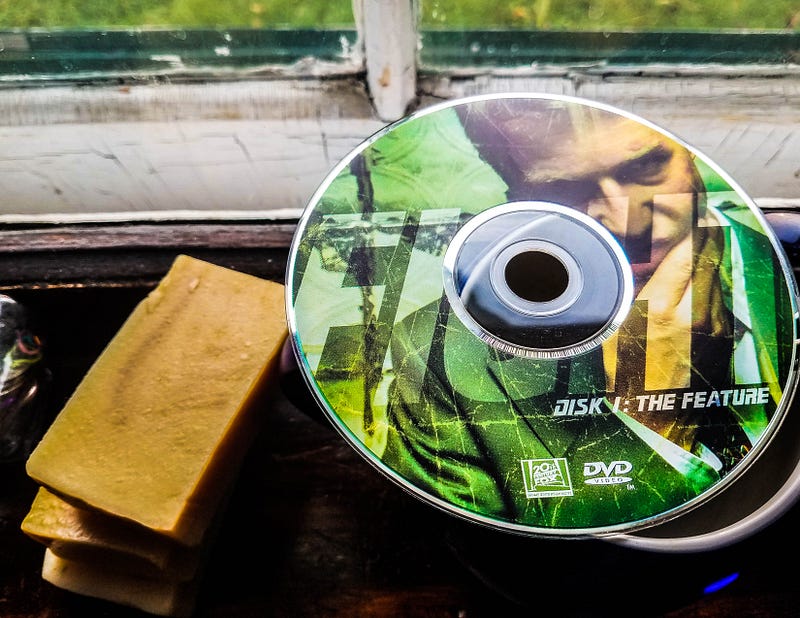
The film that’s had the greatest impact on my life is probably Fight Club, but not for the reasons that you might think.
I’ve never been involved in an underground boxing ring. To be honest, I’ve never even hit anyone. I feel no need to know what it’s like to hit anyone because I don’t like hurting people. I was drawn to it for a different reason.
The scene that stands out for me in Fight Club is one of those “blink and you’ll miss it” moments. Edward Norton is down in the basement the dilapidated house where he lives. He’s standing knee-deep in the water trying to fix the fuse box. Watching that moment changed my life completely.
Hostile response
Fight Club came out in 1999 and I’ll always remember how it was treated by critics and the media. I was finishing up my English degree, and I immediately recognized that Fight Club had managed to illustrate a simmering frustration and dissatisfaction that existed at the foundation of our whole society.
There was plenty to talk about in the film, but it was instantly dismissed by all the critics and scholars that should have known better. They called it sophomoric and some even went so far as to label it an endorsement of fascism. That statement is almost as ridiculous as saying Schindler’s List celebrates Germany during World War II.
I was appalled by the intellectual laziness that Fight Club seemed to stimulate in the academic community. I guess they thought a film that featured Brad Pitt and Edward Norton just wasn’t worthy of engagement. Throughout the years, I’ve only grown more and more irritated with how quick academics are to dismiss certain works as “unworthy of study.” Outright dismissal is more than just arrogant, it verges on the obscene.
American Beauty
To make matters worse, that year the film that won Best Picture was none other than “Fight Club-light”. American Beauty took home the trophy, and it has aged so poorly it’s comical to watch the two films today and consider that critics and academics once considered Beauty to be the better film.
If Fight Club is aimed at Generation X, then American Beauty takes the same themes and packages them for Baby Boomers. I witnessed this happening, and the disparagement heaped upon Fight Club reflected the same disparagement that my whole generation had to endure in the media daily.
We were just supposed to sit there and take it and smile. When we spoke, we were supposed to babble about how grateful we were. We had to be polite, but every time they spoke they called us “entitled… slackers… lackadaisical… hopeless… an embarrassment…”
We were required to nod, be happy, and say, “Thank you.”
Kevin Spacey as a pedophile
Fight Club had a techno soundtrack by the Dust Brothers and featured a song by the Pixies. American Beauty featured The Who, Bobby Darin, and Free. It was the kind of music that made Boomers feel safe because everybody’s heard the songs ad nauseum.
To make matters worse, American Beauty stars Kevin Spacey as a discontented Boomer who lusts after the under-aged friend of his teenage daughter. It’s kind of hard to watch that film now and not view him as a pedophile. Yet, there was not a whisper of that criticism back in ‘99.
Boomers are willing to overlook a lot of transgressions when you pander to them.
Fight Club’s brutality
I understand the need for the film to have scenes of sweaty men beating on each other. It’s sort of like how Rambo’s hair is perfect, his body is tanned, and his muscles are waxed as he dives away from a fiery explosion. That sort of thing adds a certain baseline to a film that helps to reassure producers that they stand more than a snowball’s chance of making their money back.
There is street boxing in Fight Club, but it’s not a movie about street boxing. I couldn’t figure out how my professors couldn’t see that. After all, it was exactly the type of thing they harped on in class every single day.
Observing the academic response to Fight Club made me realize that academics were just as much frauds, hypocrites, and phonies (to quote Mr. Caulfield), as anyone else. The first consequence of watching Fight Club was that, in along with my English degree, I elected to pick up a minor in Physics.
I felt a need to learn something that was actually true, not just listen to bloviating English professors delighted by their own delusion of grandeur.
The fuse box moment
In the film, Edward Norton’s nameless narrator takes up residence in an abandoned house. There are a variety of scenes that show water pouring in through holes in the ceiling which lead to the accumulation in the basement.
As I watched him trot down to the basement in his bathrobe to poke at the fuse box, I felt a strong call of freedom. For months, I’d been wondering why I was spending $500 a month on an apartment. I didn’t want to live there. I wanted to live in a tent. I was young, I was strong. What the heck was I doing?
Then I saw it on film! “Oh yeah, you don’t have to chase after a bunch of expensive BS! You can be minimalist!”
I moved to Peru
Fight Club inspired me to finish up my degree as fast as possible and move to Lima, Peru. I took summer classes, sold everything I owned, and left the country. Soon I had rented a small room for $100 a month as a place to leave my laptop and take an occasional shower.
I stopped paying bills. When you up and leave the country, the bills just disappear. When you don’t have a car, there’s no car insurance. When you don’t have an apartment, there’s no heat and electricity. I cut all my expenses down to almost zero and I seized the opportunity to live.
Unfair dismissal
The whole reason that we interact with art is to find something that speaks to us. In academic study, we sometimes talk too much about the enduring quality of work, but that approach is disingenuous. Rarely do we recognize that we cannot even perceive quality until it applies to our own experience. Therefore, our personal experience is what drives our fundamental concept of quality.
Baby Boomers instantly dismissed Fight Club, but the film has persisted and achieved cult status. However, the hateful initial response permanently derailed the career of director David Fincher. Fight Club is such a slick and technologically stunning movie, and it’s a shame it wasn’t recognized.
Fincher’s film is a resounding success. In fact, Fincher’s film is so successful that it surpassed the ability of the gatekeepers to fairly evaluate it. They were so caught up in their mythology of self, that they refused to examine the questions posed by the film, and defaulted to hostile dismissal.
Fincher went on to choose a bunch of safe projects like Panic Room which, although still technically stunning, is a major departure from the philosophical thrust of Fight Club. I feel Fincher was robbed of an honest assessment of his work, and, as a result, the viewing public was robbed of the works Fincher might have created if he’d been encouraged rather than attacked. It wasn’t until 2007’s Zodiac that Fincher really seemed to get back on track.
In sync
Fight Club’s release in 1999 offered me a lot of insights both through the film itself and through the public’s reaction. It had a message that resonated, unlike any other movie I’ve ever seen. I anticipated the twist ending, and whispered it to my date who looked at me like I was nuts. At the reveal, she gave me a stunned look that I remember to this day.
I used to watch a lot of movies at the discount theater when I was in college. Normally there would be only a handful of people in attendance and I wondered how the place stayed open. But when Fight Club came to the budget, there was not an empty chair in the auditorium.
By that time, I’d seen the movie four or five times, and I’d taken to watching the audience rather than the movie itself. The packed crowd was in defiance of the media reports that insisted the film was a dismal failure. You could feel the energy in the room, a bunch of college kids, seeing a frustration expressed that they didn’t even know they were harboring. Fight Club’s release was a great reassurance because it revealed that other people did indeed recognize the stunning, ubiquitous, and malicious contradictions hidden in plain sight.
The right time and the right place
If you read Shakespeare when you are 10 you will probably hate it. That doesn’t mean that Shakespeare is bad, it just means that it’s not speaking to you at that point in your life. We often overlook the importance of timing when we’re evaluating art.
Fight Club isn’t a movie that I watch regularly. I revisited it once about 10 years ago and enjoyed it, but that viewing was more about nostalgia than further insight. However, nothing can change the fact that in 1999, Fight Club hit me like a right cross. It was the message I needed to hear when I most needed to hear it and the impact on my life was overwhelmingly positive.
The biggest thing I take from Fight Club is how important it is to engage works of art, especially the ones that make you uncomfortable. I hope I never get to a point where my delusions about myself make me respond with hostility when a brave artist steps forward and has the courage to speak an enduring truth.