
Educators Can (and should) Integrate Civic Responsibility into Curriculum
by Merary Flores Galindo and Dr. Benjamin M. Drury

We felt compelled to write this article and explore the indispensability of civic responsibility in education. It is, of course, the tacit goal of education to create an educated society. Unfortunately, the aspiration of aiming to cultivate informed, responsible citizens ready to actively contribute to their communities is something has always been at risk for removal…and today the dark is closing.
Civic duty or responsibility or civility…whatever you want to call it…is a requirement for a safe and stable society. When people living within a society care enough about their community to give their time and energy to improvement, positive things start to happen in that community. Civility and civic responsibility transcends emerges from the scraps of “The Core” as a critical pillar in shaping the future of education. From the early years of elementary education to the higher levels of college, instilling civic responsibility is not an option — it’s an educational imperative.
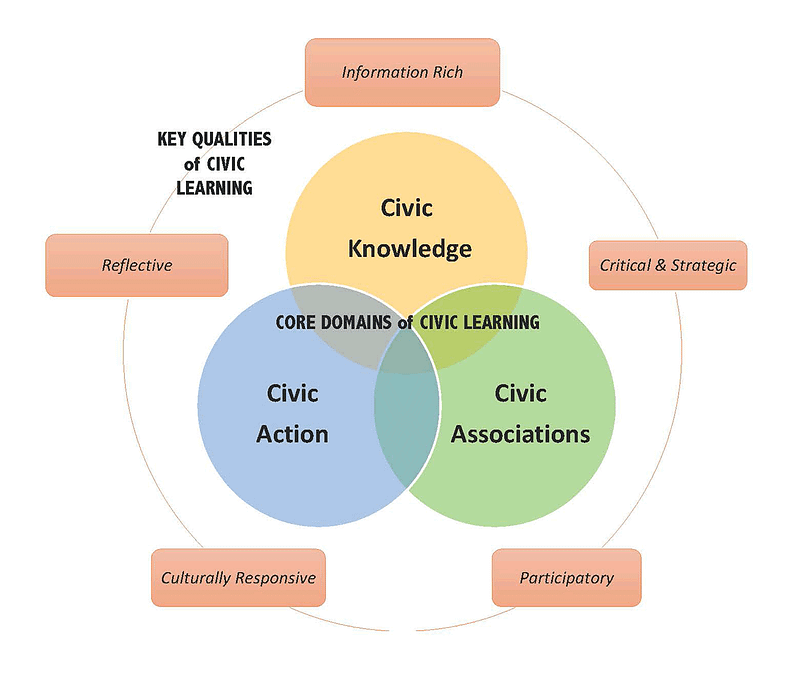
What we are talking about here is something that is far more than an understanding of governmental mechanisms. We are talking about an immersive and scaffolded learning experience that embodies active participation in society, the promotion of justice, and a commitment to the common good.
When seamlessly woven into the educational fabric, civic responsibility transforms students into holistic citizens, creating a sense of duty towards societal issues and an appreciation for diversity.
Beyond local communities, this responsibility extends globally, encouraging students to consider the broader impact of their actions and embrace their role as global citizens. In my experience, civic responsibility empowers students to be agents of positive social change, offering education as a transformative force that not only imparts knowledge but also inspires a sense of agency in shaping a just and equitable society.
As educators, we should aspire to create a society of people who will be smarter than we are, more powerful than we are, and more prosperous than we are. In this moment in history, it appears that this could not be further from the truth of certain candidates seeking (re)election to the highest rankings of politics in the United States. Given this reality, we wanted to share a few practical ways educators — from any discipline — can integrate civic responsibility into their curriculum.
Elementary School
In the foundational years of elementary education, cultivating civic responsibility sets the stage for a lifetime of active citizenship. Here are a few ways we’ve found successful when exploring practical ways to instill these values in young minds.
Community Projects: Encouraging small-scale community projects, such as neighborhood clean-ups or charity drives, provides elementary students with tangible experiences of responsibility.
Storytelling and Literature: Incorporating narratives featuring characters demonstrating civic responsibility offers a creative and relatable approach to instilling these values. Through storytelling, educators can weave lessons of empathy, cooperation, and social justice, facilitating an early understanding of the importance of responsible citizenship.
Class Meetings and Discussions: Creating a space for open dialogue during regular class meetings empowers elementary students to voice their opinions, discuss current events, and suggest initiatives for positive change.
MIDDLE SCHOOL
As students transition to middle school, the focus shifts to deeper application and understanding of civic responsibility. A greater need for educators to utilize civic values into the middle school curriculum begins to build as students begin to explore their social world with more breadth.
Project-Based Learning: Implementing projects addressing real-world issues serves as a cornerstone for critical thinking and problem-solving skills. Middle school students can delve into societal challenges, applying theoretical knowledge in practical scenarios and developing a keen sense of responsibility.
Service-Learning Programs: Connecting classroom learning with community service enhances middle school students’ understanding of civic responsibility.
Model Democratic Processes: Simulating democratic processes, such as student government elections, provides middle school students with hands-on experiences in decision-making and leadership.
HIGH SCHOOL (and beyond)
In higher education, the focus shifts to preparing students for a complex and interconnected world. Civic duty becomes more important as we age, and as such, learning experiences related to civility should continue throughout the life cycle.
Service-Learning Courses: Developing courses that combine academic content with community service offers college students real-world applications of their theoretical knowledge. Engaging in service-learning courses allows students to contribute meaningfully to societal advancement while honing their professional skills.
Interdisciplinary Perspectives: Encouraging exploration of intersections between fields of study and societal issues fosters a holistic understanding of civic responsibility. By embracing interdisciplinary perspectives, college students can appreciate the multifaceted nature of societal challenges and contribute to innovative solutions.
Civic Engagement in Research: Motivating college students to conduct research on societal challenges aligns academic pursuits with civic responsibility. Engaging in research projects encourages students to develop evidence-based solutions to complex issues, preparing them for impactful roles in society.
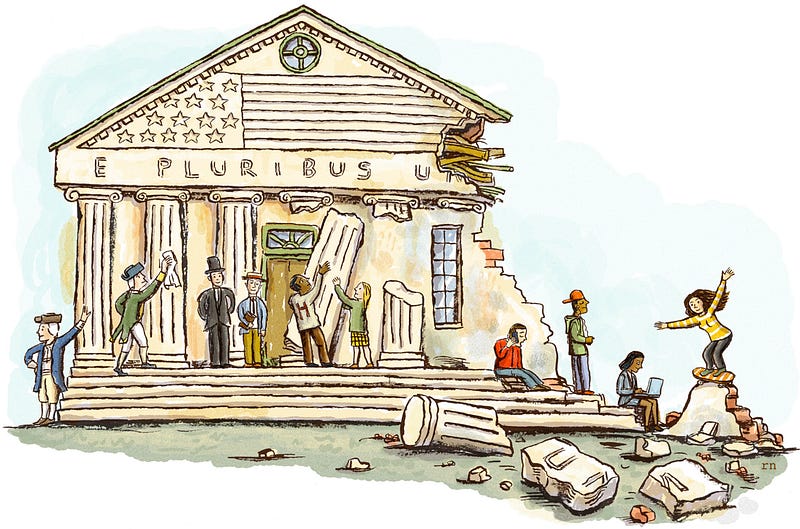
By incorporating these practices across disciplines, educators can effectively nurture civic responsibility, preparing students for a life guided by principles of fairness, integrity, and a commitment to positive social change.
Encouraging interdisciplinary perspectives emphasizes the interconnected nature of societal issues and promotes a holistic approach to problem-solving.
In elementary education, civic responsibility is instilled through a combination of community projects, storytelling, and open dialogues during class meetings. As students transition to middle school, educators deepen their understanding of civic responsibility through project-based learning, service-learning programs, and simulations of democratic processes. Then, as students enter into secondary and higher education, educators can begin to guide students towards a nuanced understanding of civic responsibility through service-learning courses that elevate the inclusion of academic content with community service. Civic engagement in research projects takes education beyond theoretical discourse, challenging students to confront real-world challenges with evidence-based solutions. College educators play a pivotal role in contributing to the development of socially conscious leaders, equipped with the skills and commitment needed to enact positive social change.


