
How climate change can affect the growth and productivity of forests
How Does The Forest Service Use Environmental Science?
The use of environmental science to address threats to natural resources
The benefits of ecosystem services
Ecosystem services are the diverse benefits that the natural environment and healthy ecosystems provide to people. Environmentalists and foresters are responsible for managing the overall quality of woodlands, parks, rangelands, and other natural resources.
Environmental scientists advise farmers, ranchers, and other agricultural managers how to improve their land for agricultural purposes and control erosion. [Sources: 5, 11]
Pasture managers can take inventory of soils, plants, and animals; develop resource management plans; help restore degraded ecosystems, or help manage the ranch.
They also maintain soil and vegetation stability for use as wildlife habitat and outdoor recreation. In addition, they carry out activities such as putting out fires and planting seedlings. [Sources: 11]
Environmental scientists and foresters use their skills to determine the impact of fires on a region’s environment. Conservationists and foresters evaluate forest and soil quality data by assessing damage to trees and forest land from fires and logging.
The Office of Sustainability and Climate is supporting the national forests and rangelands with the tools, training, and resources they need to make their landscapes more resilient in the face of a changing climate. [Sources: 6, 11]
Links to other relevant databases and policy and management tools include websites operated by the National Invasive Species Council, the National Bioinformatics Infrastructure, the Plant Conservation Union, the Nature Conservancy, the USDA Natural Resources Conservation Service, the Environmental Law Institute, and the Invasive Species Program.
University of Maine researchers have explained how to quantify the benefits and costs of various natural climate solutions that can be applied to forestry in the Northeast, opportunities, and barriers to implementation, and how forests can help achieve climate change mitigation goals. in Maine. To uncover the triangular relationship between scientific evidence, policy, and impact at the global, national and local levels, it focuses on international targets in support of natural resources and the tools used to achieve them and assess the impact of research.
Climate change and its impact upon forest ecosystems
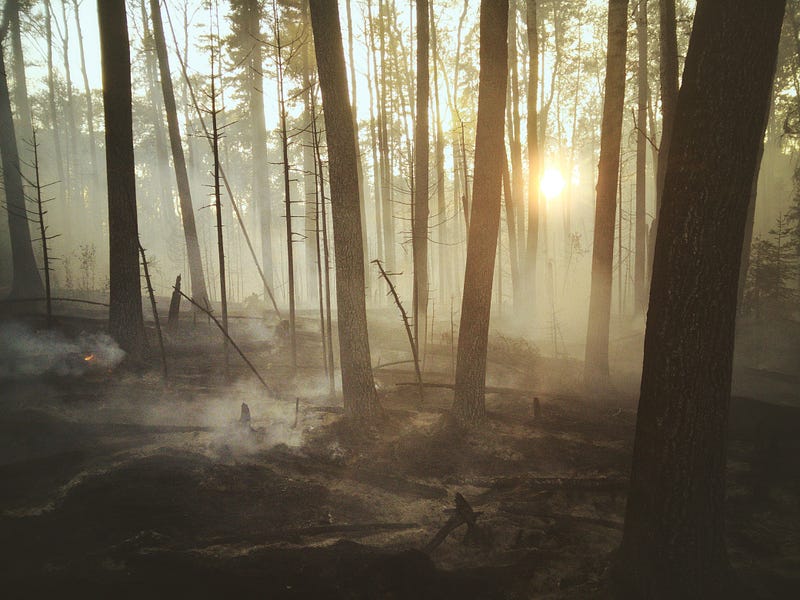
Important questions arose about how managers should set appropriate and realistic targets to support the social, economic, and environmental values of changing forest ecosystems, especially since the possible baselines for achieving these three outcomes could change significantly. [Sources: 3, 4, 6]
As these changes are likely to continue for decades, some of the valuable goods and services provided by forests may be at risk. Climate change could exacerbate many of the threats to forests, such as pest infestations, fires, human development, and droughts.
Other threats faced by forest ecosystems

Combined with the expected impacts of climate change, forests face the impacts of land development, suppression of periodic wildfires, and air pollution. While it is difficult to separate the impacts of these various factors, the cumulative impacts are already leading to changes in our forests. [Sources: 0]
Many aspects of climate change can affect the growth and productivity of forests. The productivity and distribution of forests can be affected by changes in temperature, precipitation, and the amount of carbon dioxide in the air.
Climate change is likely to exacerbate the problems forests already face due to land development and air pollution. Key Points Climate change is likely to change the frequency and intensity of forest disturbance, including fires, storms, insect infestations, and the presence of invasive species. [Sources: 0]
For example, the area of a forest’s soil, its debris, the micro-organisms in the soil, and the characteristics of the soil itself will contribute to that forest’s ability to provide ecosystem services such as carbon sequestration, water purification, and erosion prevention to other parts of the watershed. [Sources: 5]
Provisioning services are ecosystem goods

Procurement Services include forest products, seafood, fresh water, raw materials, biochemical and genetic resources. Our mission is to protect the nation’s forests and grasslands for a variety of uses such as water, wildlife, and recreation, as well as sustainable timber, fodder, and other products.
The Forest Service and its use of environmental science
The Forest Service manages public and private forestry programs across the country and hosts the world’s largest natural resource management research organization. The agency and the Jewish National Fund (JNF) have established a collaborative relationship around their shared responsibility for the management of arid and semi-arid wilderness. [Sources: 5, 8]
The partnership of the Forest Service with the Jewish National Fund (JNF)
Dale Bosworth, the 15th Chief of the Forest Service (2001–2007) on February 10, 2004, on a visit to the Volcani Center in Israel, wrote that the four main threats that the United States faces are:
* Fire and fuels
* invasive species
* Loss of open space
* Unmanaged outdoor recreation [Source: 8]
Time for change
In source 8 he outlined what the Forest Service is doing about addressing these threats, in partnership with the JNF. The details are detailed at this source, if you desire to learn more about how the Forest Service, in partnering with the JNF is finding solutions to these four threats.
He also laments how the debate about how the agency manages the land has not changed enough. Yes, he says, the agency has changed the way it manages the and. Moreover, he added, the Forest Service now focuses on delivering the full spectrum of the values which Americans desire for quality of life: clean air and water, habitat for wildlife, and more! JH added that:
“Too often, we’re still debating issues from 20 to 30 years ago — issues like timber harvesting and roads. But we’ve started to change the debate. I think we’re getting people focused on the real threats we face today — fire and fuels, invasive species, loss of open space, and unmanaged outdoor recreation.” [Source: 8]
The Takeaway — The Forest Service: then and now- The use of environmental science to address threats to natural resources
About a hundred years ago, Bosworth explained, the agency leaders established the forest reserve system to protect watersheds and forest resources for future generations.
Today, he added, by the use of environmental science, among other interventions to address threats to natural resources, the Forest Service has been able to successfully manage the approximately 77 million hectares of national forest land or approximately 8–9 percent of America’s land base. [Source: 8]
In this way, the agency has been able to meet the expectation of the public to provide quality recreational areas and related benefits to the public! The Forest Service also sponsors conservation easements so that landowners can conserve their forests, and mentioned that the agency had recently received significantly increased funding for that program! [Sources: 8]
Thank you for reading! My thanks to @DrMehmetYildiz for kindly publishing my blog post concerning how the Forest Service uses environmental science! Please share your sentiment in the comments section. Thank you!
Full Disclosure: This link will take you offsite — outside of Medium:
Like my awesomeness? Please — would you buy me a Ko-fi
Thanks for reading! If you liked my article, subscribe to Medium to get more articles that I publish regularly:
Get an email whenever Patrick OConnell publishes:
You can find me on LinkedIn (ID: azpat0)
If you like my article, check out my other stories on my Medium Profile page!
I am a freelance writer- available to write YOUR blog posts or articles -
Samples of my work are on my Medium Profile page:
And also on my website -
Full Disclosure — This link will take you offsite outside of Medium:
I also publish a weekly newsletter on Substack: The Market Algo Newsletter — It forecasts the direction of the S&P 500 market — index for the upcoming week -
Full Disclosure — This link will take you offsite outside of Medium:
Sources
[0]: https://19january2017snapshot.epa.gov/climate-impacts/climate-impacts-forests
[1]: https://arc.losrios.edu/academics/programs-and-majors/natural-resources
[2]: https://www.sciencedirect.com/topics/earth-and-planetary-sciences/natural-resource-management
[3]: https://academic.oup.com/bioscience/article/55/4/335/270541
[4]: https://www.tandfonline.com/doi/full/10.1080/21582041.2017.1418903
[5]: https://en.wikipedia.org/wiki/Ecosystem_service
[6]: https://forestrywebinars.net/webinars
[7]: https://www.fs.fed.us/research/resource-management/
[8]: https://www.fs.usda.gov/speeches/delivering-natural-resource-values-four-threats-our-mission
[9]: https://www.worldwildlife.org/threats/deforestation-and-forest-degradation
[11]: https://www.bls.gov/ooh/life-physical-and-social-science/conservation-scientists.htm