How does Lockdown compare to a Real War?
State of emergency declared due to Covid-19 coincided with the Spring break holidays in many parts of Canada. Amidst canceling playdates and turning to online retail, I finally got round to clearing up around the house. My kids asked me who that person was in the photos, surrounded by malnourished children.
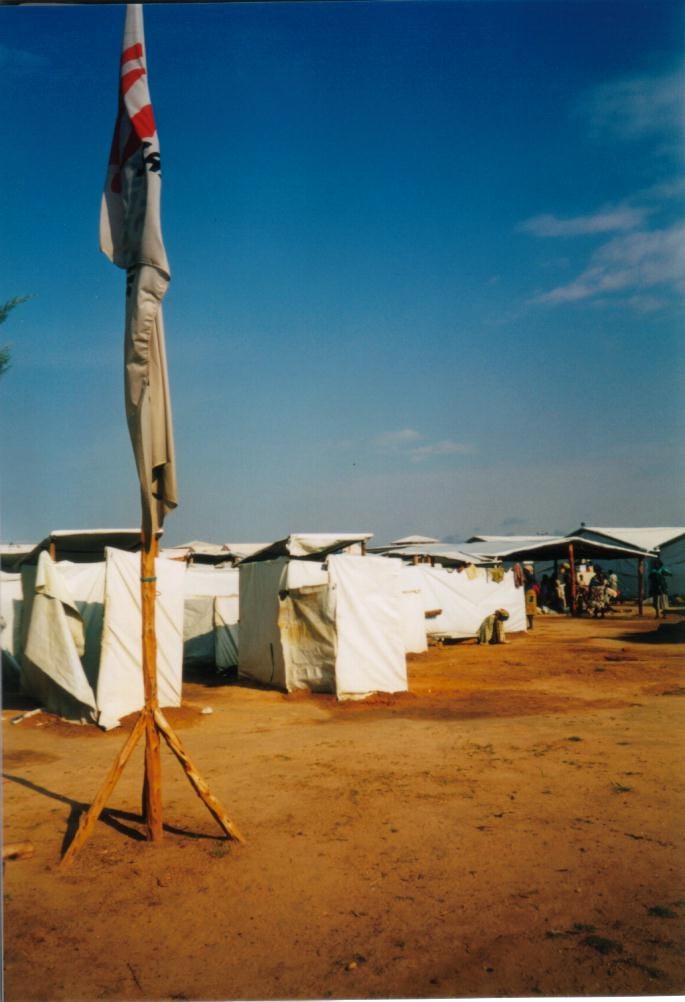
In another lifetime, before motherhood and settling down, I worked with Doctors Without Borders in Angola in 2001, towards the end of its 40-year Civil War. With all the “war” metaphors going on around us, how does “State of emergency”, Canadian-style, compare to working in a real warzone?
In Angola, there was curfew — the only movement after-dark was of emergency vehicles (we could get called back to the hospital), and of the “official” humanitarian vehicles (United Nations, International Red Cross, Doctors Without Borders, etc). There were times when I was called back to hospital, and could hear shelling on my way in or out of the hospital. Fortunately, so far, I don’t hear any shelling, at least not where we live in Canada. Neighbors are out walking their dogs, and waving (from a distance).
Going on to some rich-world problems (I like dark chocolate, my kids and husband prefer milk chocolate): my husband and I were arguing about whether using chocolate to make brownies constituted justifiable use of limited resources. In Angola, chocolate occasionally arrived through the post, either from concerned friends and family, or sometimes from the loving Doctors Without Borders human resources department (the Asian office sent me instant noodles — much to the envy of my European colleagues — and I did cook them for our office party). We ate the chocolate no matter what shape it arrived in — often it was melted into the packaging by the time it survived the journey (we were in Kuito, isolated and surrounded by landmines, so a lot of goods arrived by plane after many stops, and chocolate came only after medical supplies did).
Once every 6 weeks, we were allowed a trip to the capital, partly to discuss what was happening in our projects with the management at “headquarters”, partly to stock up on our supplies of toothpaste and soap (both of which were not easily found in shops where we were). On my first trip, I spent way too much time in the aisles, muttering to my amused (and more experienced, battle-weary colleague), “look, Sophie… jam!”. I bought biscuits for my colleagues back at the hospital, and they would be carefully rationed out, one biscuit at a time, over several weeks.
Bread was a luxury in Kuito that we take for granted. It wasn’t easy to get hold of the yeast required to make the bread, even though the other ingredients (flour was part of the World Food Programme daily rations) were readily available. When our bread went mouldy, we just plucked off the mould and ate it. Free penicillin! We’d joke to each other.
The images of supermarket queues and toilet paper runs reminded me a little of World Food Programme food distribution days, when food was distributed to the residents of internally displaced people’s camps, and extra rations given to vulnerable people. There were “beneficiary cheats” e.g. people who had extra ration cards, or who pretended to be caring for vulnerable people (malnourished children, pregnant women) in order to get extra rations.
Once, I saw a trail of yellow powder in the sand, on my way home from work. After calling out unsuccessfully to the lady in Portuguese, I asked the guards to tell the lady carrying the leaking bag of maize grain, that she had a hole in the bag. She was probably a single mother, balancing the 20-pound bag of grain on her head, steadying it with one hand, one child on her back, another holding her hand. She stopped, turned the bag the other way so the hole faced up, saw the trail of yellow, and tried to scoop it up, but was scooping sand as well, and had no way of carrying the dirty sand.
“Deixa-o (leave it),” said the guards, at first, a little condescendingly in Portuguese, then softly in the local language, as the mother continued to scoop up the yellow dust and put it into her pockets, which again leaked out onto the ground.
My children have to sweep the floor after breakfast.
Occasionally, I tell them what a luxury it is that they don’t have to eat the crumbs they sweep up.
They do not get it, and I hope that is a good thing.