
How Does a Giraffe Drink Without Passing Out?
Imagine having to drink upside down!
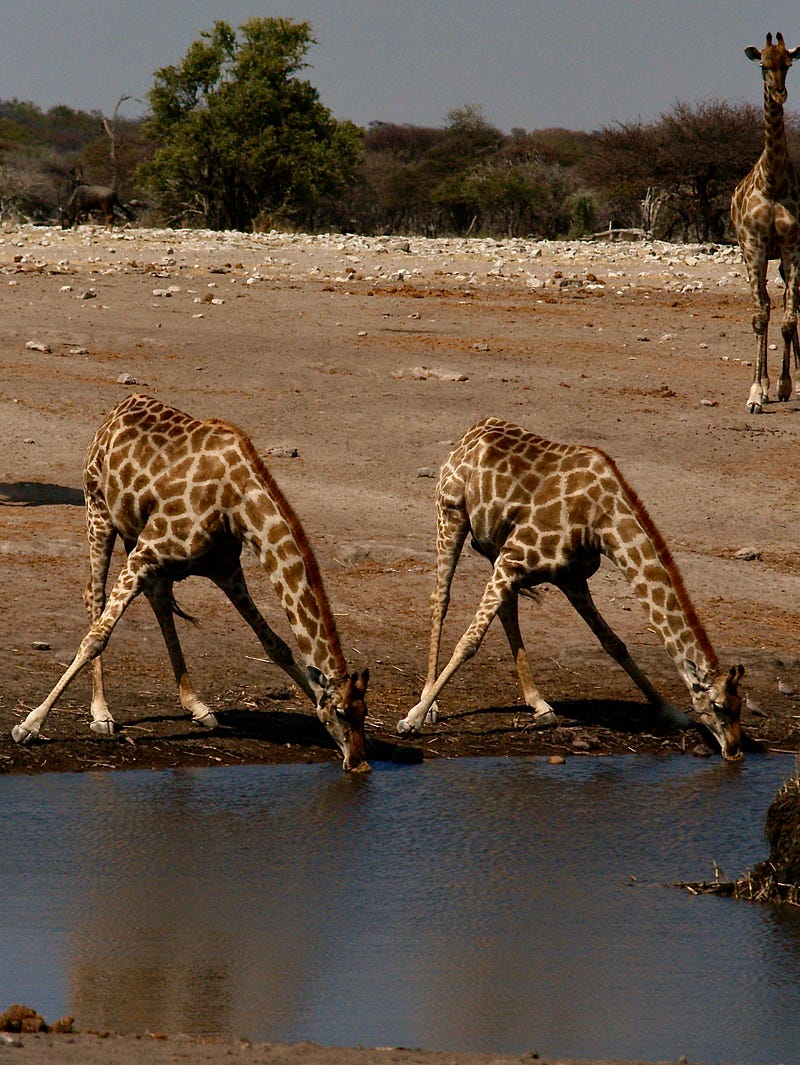
A giraffe drinking has to be the most ungainly sight in the animal kingdom. Aside from the weird pose, there is a lot happening under the surface for these lanky mammals when they drink. Some of it still remains a mystery, but scientists have figured out that evolution has equipped the giraffe with some surprising tools to give them helping hand.
Remember hanging upside down on the ‘monkey bars’ as a child and the blood rushing to your head? Now, imagine being 17 feet tall with a 25-pound heart — lowering your head would make it feel like it was going to explode!
This presents a problem for the giraffe — a drinking problem.
Basics of anatomy
The giraffe’s drinking problem, and the solution, is all explained by understanding some basic cardiovascular anatomy.
Like humans, giraffes have a pump (heart) and pipes (arteries, veins and capillaries) that circulate blood around the body. Together the pump and pipes are known as the cardiovascular system.
Our pump is located at our core with the pipes fanning out from there. Within this system we have a special set of pipes that send blood to the brain and then circulate it back to the heart. The carotid and vertebral arteries carry blood to the brain and the jugular vein brings it back to the heart.
This cardiovascular structure is essentially the same for the giraffe. It has a pump and pipes just like us. If not, it’d be dead as a dodo.
So what happens when you hang upside down? Thinking logically, gravity causes more blood than normal to rush to your head. There is an increase in overall blood pressure and this pressure is greatest in the head.
For humans, hanging upside down for short periods doesn’t cause too many major issues. Aside from the feeling of pressure in our head and a potential headache we are generally fine. But if you stayed hanging on those monkey bars for many hours, you could die.
For the giraffe, being ‘upside down’, presents potentially far bigger problems than it does for humans and without a little help their lives would be unbearable.
Giraffe’s drinking problem
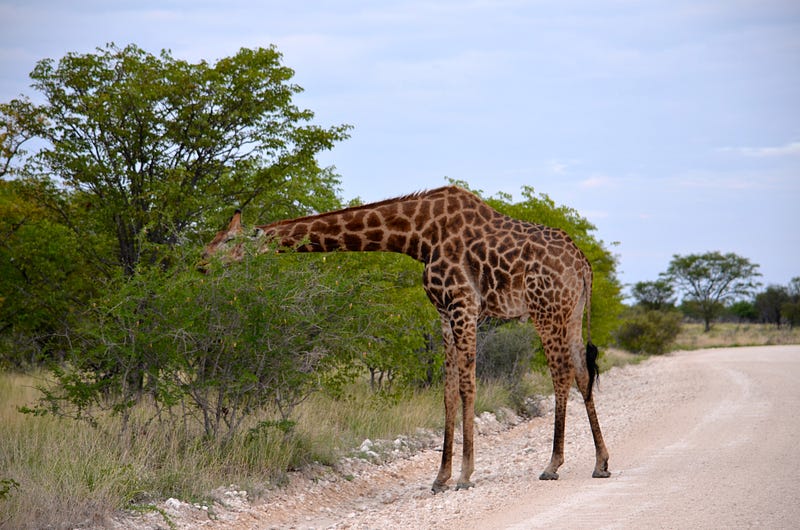
To fight gravity the giraffe’s heart has to pump blood at a very high pressure to get it all the way up to their head. Their blood pressure is typically around 220/180, which is double a healthy human at 120/80. So if we get a pounding head when hanging upside down, imagine what it would be like for the giraffe when they drink.
Of course, a giraffe doesn’t hang upside down like a kid at the playground. But they also can’t lift a glass of water to their mouth to drink. They must lower their head below their heart and so are effectively ‘upside down’ a lot.
The mere act of being upside down probably wouldn’t kill the giraffe but they have a bigger issue. When they lift their head back up after drinking it causes a drop in blood pressure to the head that could make them pass out. Ever felt lightheaded when standing back up after hanging on those ‘monkey bars’?
Evolution’s solution
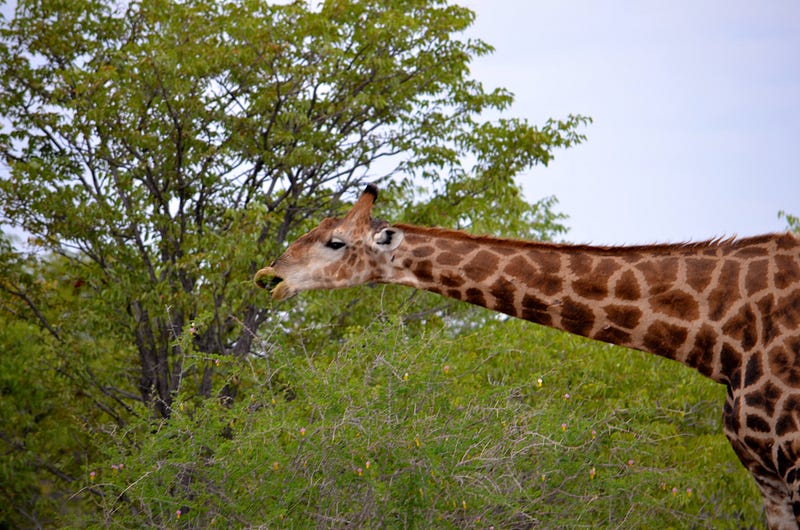
Luckily for the giraffe, evolution came up with solutions to the myriad of complications. I mean it’s the least evolution could do considering it was evolution that made the giraffe so bloody big and tall in the first place.
The reason a giraffe gets into that ungainly looking position to drink by splaying its legs is not because it’s trying to impersonate a drunk. Scientists from Aarhus University, Denmark surmise that this posture lowers the height of the heart and reduces the relative height difference between head and heart. They believe that this posture aids in reducing the head rush effects.
And here comes the really cool bit: Giraffes don’t just have valves in their hearts, they have valves in their veins too. Scientists from the University of Pretoria, South Africa found that giraffes have, on average, six valves in each of their jugular veins. They understand that these valves are closed in the head-down position to help prevent backflow of blood into the jugular vein. This limits pooling of blood in the brain and helps to reduce pressure in their heads when drinking.
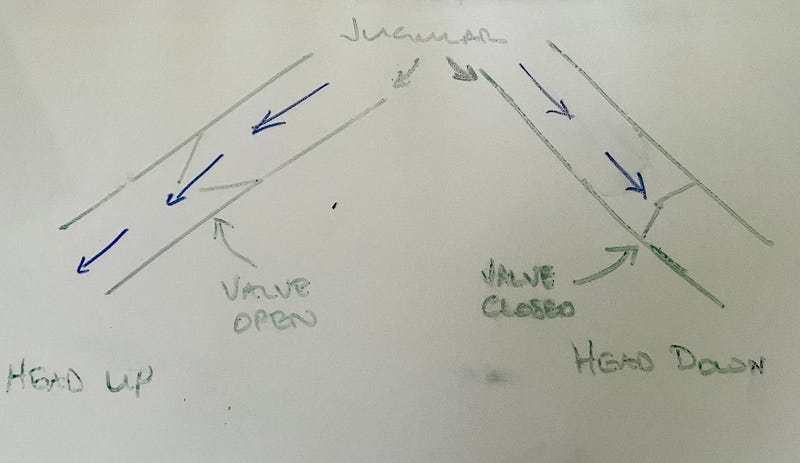
The valves help combat blood pressure issues when the head is lifted again after drinking, the scientists from Aarhus University also suggest.
Although significant research has been done on the cardiovascular system of giraffes, many mysteries still remain. The solutions described here are the best current scientific understanding. Maybe in time more research will reveal an even more surprising answer to Giraffe’s drinking problem.
Thank you for reading and be sure to subscribe to Aha and/or my profile for more interesting science questions and answers.


