
Relationships
How Do You See Others?
A life-changing way to view others
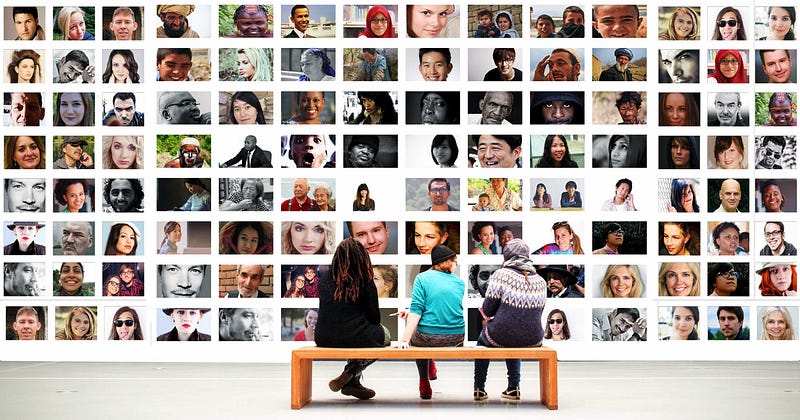
Did you know there are several ways you can choose to see other people? Depending on how you see them determines the course of your relationships. This is true for every relationship in your life. As your relationships go, so goes your life!
The way you see other people affects your life powerfully, yet few seem aware of this fact. It not only affects the life of every human being but is especially important if you hold a leadership position.
A person or an object
Two basic ways to see a person when you interact with them are either as a person (a human being with value and significance) or as an object. To see another human being as an object (to objectify them) is to make them something less than, or other than a human being.
According to the Oxford dictionary, the first definition of “objectify” is to “degrade to the status of a mere object.” We have heard this term used for some men’s view of women for many years. Did you know that objectification of others is a common problem in today’s society, not just for men towards women, but for all people regardless of their sex?
Objectification
When you view another person as an object, you tend to see them in one of three ways — as an obstacle, a vehicle, or irrelevant.
When you view others as an obstacle, you see them as getting in your way, as a barrier to getting what you want. You see them as holding you back from making progress, as a challenger, a hindrance, and so forth.
When you view another person as a vehicle, you are essentially using them to accomplish something you want.
When you view them as irrelevant, you devalue them as being worth your time or worthwhile as a person.
Let’s take a closer look at each of these three ways of objectifying others.
Seeing another person as an obstacle
We can see another person as an obstacle anytime they interfere or get in the way of something we want. Such people are always in our lives, but how we choose to view them determines the outcome of the relationship.
For example, I recently saw a man cut off another car in traffic. The person cut off became overly aggressive in his driving. He started riding the other man’s bumper, opened his window, and yelled some choice words while flipping his finger. How do you think he was viewing the man that cut him off? As an object or as a human being? He likely saw the other man as an obstacle or threat to what he wanted.
The relationship between the one cut-off and the other was contention for the angry man. It is hard to say how the other man felt. He may not have cared or thought the man was crazy. He also could have felt embarrassed, humiliated, or angry. It all depends on how he viewed the angry man.
How often do you view another person as an obstacle? Do you consider your spouse an obstacle because they don’t want to do something you want to do or buy something you like? Do you view your boss as an obstacle because he refuses to promote you or give you that raise? In either case, you are objectifying them. How would you feel if the shoe was on the other foot, and they saw you as an obstacle? Not a good feeling, is it?
Seeing another person as a vehicle
A common occurrence of seeing people as a vehicle is when you see someone as just another tool in your belt. You may consider them useful but not significant as a person. Have you ever seen someone speak down to another in a demeaning, condescending, or belittling manner?
Some bosses will do this, even humiliating a person in front of others. How do you think the person speaking down to the other sees them? For most, it is likely as a vehicle. They view the person as having little value other than satisfying their needs. They see them as a means to get what they want and not much more.
Do you ever only want someone to be that vehicle in your life? Do you see the server in a restaurant as a vehicle to get you what you want when you want it? Do you see your subordinate as nothing more than someone who needs to do their job, which in part serves you, seeing them as a worker rather than a human being? Put yourself in their position and see how you like being used purely as a vehicle to get them what they want. Not a good feeling, is it?
Seeing another person as irrelevant
While each of these three ways of objectifying others is bad, this could well be the worst of the bunch. Take a situation I witnessed recently. I overheard a woman speaking to her husband in a terse tone, scolding him where others could hear. It was apparent she had little regard for him. It made everyone around uncomfortable as she berated him. Nothing that indicated this was anything other than normal behavior for her. How do you think she saw him? If you guessed irrelevant, that was the feeling I had during and after the incident.
Do you know someone who offhandedly dismisses what someone else says, treating what they say as having no value whatsoever? They may ignore, pay no attention, or not acknowledge someone at all. Have you ever known someone who looks down on a person as though they are an idiot, a lowlife, unworthy, or otherwise irrelevant? I hope you or I would never demean another human being in such a horrible and disrespectful way.
Seeing another person as a human being
There is only one way to treat another person. Do you know what that one way is? It is to treat them as a person who has worth, as a valued member of the human race. It is impossible to treat a person as an object and a human being at the same time.
How would you prefer to be treated by others? As an object or as a person? There is only one choice, yet far too often, we treat others as objects. How can we change this?
First, we must come to appreciate life: our life and others’ lives. What we appreciate, appreciates in our eyes. When you appreciate other people, it is more difficult to treat them as objects.
Next, we must learn to respect others. When we respect someone, we must view them in their humanness and not as objects of any sort. Think about this, when you see another person as a fellow human being, how can you wish to hurt or harm them in any way?
To eliminate confusion about who I am speaking of, I am talking about ordinary, everyday people, not those who harm others or hardened criminals.
Do your best to catch yourself anytime you interact with someone and treat them as an object. When you view a person as a mere object, they become almost meaningless to you as a human being and therefore expendable to a large degree.
Finally, remember, anytime you objectify someone, you view them in a negative light, and they will most likely respond negatively in return. Seeing them as a person casts a positive light and can only enhance the relationship.
The next time you meet someone, do your best to appreciate and respect something about them. By seeing them as a person of value, they will most likely value you in return. As the old proverb goes:
“Respect Begets Respect”
Final thoughts
Take some time to think about how you interact with other people and if you are treating anyone as an object — STOP IT! You are not only devaluing them, but you are devaluing yourself as a human being.
To create the best relationships in your life, why not work on yourself and how you view other people? It will pay huge dividends and lead to a more fruitful, fulfilled, purposeful and joyful life.
To take this work further in your life, pick up a copy of The Arbinger Institute’s book, The Anatomy of Peace. Arbinger’s books are some of the most impactful books I have ever read. In fact, every book Arbinger publishes contains life-changing information for you personally and for your leadership skills!
LinkedIn |Twitter| Medium| UncommonSense| AmazonAuthorPage
Bill Abbate Leadership Writer and Editor in ILLUMINATION
Thank you for reading this article! If you enjoyed it, I’m sure you will like the others below.


