
How Do You Pick and Arrange the Poems for a Poetry Collection?
It’s not as hard as you think.
If you are having trouble viewing this content here’s how to fix that.
You want to publish a poetry collection. You dig through the journals, the file boxes, the Word files, the zip files, the scribbled verse on napkins — how will this all come together?
It is daunting.
But it does not have to be. If you’re anything like me at all, you need to back up and take a deep breath. It is a daunting task to select the poems for a collection, but I can help to clear away the mystery, push the overthinking to the side, and narrow your purpose. Why? Because I’ve done it, for one. But also because I am an umbrella thinker (Top-Down) — and we revel in tasks like this.
FIRST
Breathe. This thing won’t come together overnight so sit with your intention for a moment and just take a deep breath.
Now, read through this bit of “what to do next” and remember, you can do this.
Define your vision: Plan your theme.
A successful poetry collection is cohesive. When I say plan a theme — I do not mean that each poem needs to be about one topic, but the book as a whole needs to have a definable “purpose” or “theme” or “feel.” Think of it as the vision of this collection. Spend some time with this because it is likely you will have multiple ideas.
Jot down each idea and spend some time deciding if you have multiple potential book ideas or if there is one theme of several parts that fit together.
If it helps, write each “idea” on an index card. You can then put them in varying orders and see if something does not fit in with the others. Set that one aside for a different book.
When the vision for your book takes shape you are ready to move to the next phase.
For example: My collection organic would be a collection of poems with nature themes that tell a story of personal growth and maturation.
Title your work.
Another “sit with it” step is to mull over a title for your book. The title should be the manifestation of your overall vision for your book. Sometimes the title comes to you first and defines the vision of your book for you. This is a very nice thing when it happens. (For example I have the vision for a book called Child of the Firefly Forest and I have a file on my computer to collect the poems for it. Another book organic developed and was published first.)
When you have the title or at least a strong tentative title, you are ready to develop the plot arc for your book.
For example: organic was the perfect title for a book about personal growth rooted in a deep spiritual connection with nature.
Plan your “plot arc.”
Yes, just like for a novel your book will have some kind of plot arc. But you can’t be a “pantser” on a poetry collection. Poetry collections require a lot of planning and construction because you do not have the filler sentences and paragraphs to carry the story from plot point to plot point.
Each poem will be its own plot point in your book.
The overall collection will carry a story from the beginning of your book to the end. Even if the plot arc is something more like this:
- an overall growth or learning of the narrator
- the poems fit on a timeline
- the poems tell a story
- the poems carry the reader through a growth or learning experience
- the idea of the book develops as it unfolds
Decide what growth arc or plot arc you want your book to show and plan this out on paper or on a vision board.
For example: organic would begin with lessons from my childhood about nature, proceed through my life, and end in a place of internal strength.
Plan and title the sections of the book.
When you know how the book will develop you can section it off into the main sections — if you want the book to have sections.
For example: organic looks like this:
Title: organic Section one: seeds Section two: soils Section three: vines Section four: skies
seeds: — poems that depict my childhood messages about nature soils: — poems that depict my digging deep into a spiritual connection with nature vines: — poems that depict the difficulties of life (the “vines) skies: — poems that depict how my connection with nature have strengthened me to overcome with resolve, inspiration, and hope
As you can see, each section serves the vision and fits the plot arc.
Visualize.
Now is the fun part.
ALL of those poems you have — some of these will fit into the narrative you have defined. Visualize each section of your book and begin collecting the poems you feel will fit the book well. It helps to make copies of the ones you feel will suit it the best or create an index card for those poems.
I suggest “tagging” the cards for “mood,” “topic,” and “style.”
Visualize the mental pictures each of these poems represent. If each were a picture — what would that picture look like?
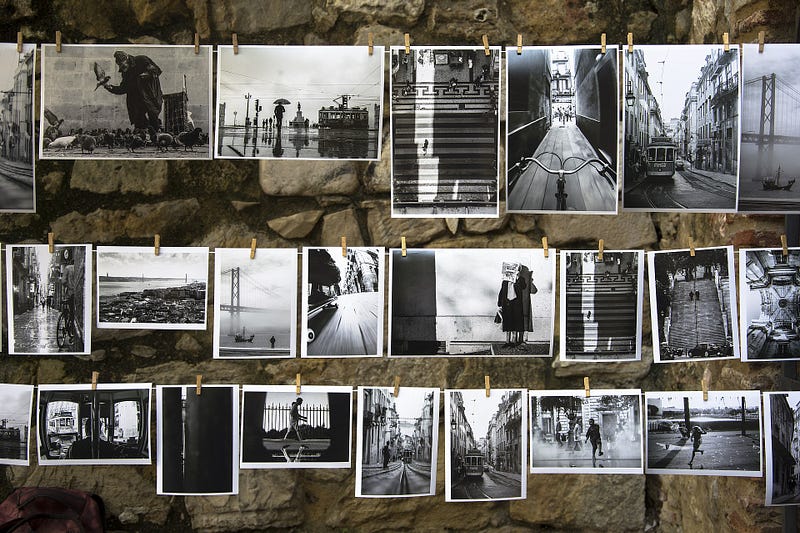
Scroll up and look at the picture at the top of this post. Note that each of these photographs have things in common — all relating to a styistic “feel”: urban, socially distant, curiosity, everyday life, etc.
If each poem in your collection is a snapshot, how could they be arranged to tell the story of your book? Which ones belong in each section and in what order? Are there outliers that do not fit the narrative even if they might be your best work or your favorites? (Remove those and save them for another project.)
Select the poems that fit your narrative.
Make your final selections and final ordering of the book. It helps to repeat the “visualization” process once you have your selections in order. Make sure there are no “mood,” “topic,” or “style” poems that simply do not fit in with the other poems. Remember, the poems must be cohesive in some way.
If you have dozens of poems and all are free style and short and then you put an epic poem in the middle written in rhyming couplets— even if the topic is perfect for the book, the form is not. Similarly, if you have a collection of whimsical poems and put a poem about a suicide right in the middle, your reader will not understand why it is included.
One last thought. I often instruct my poetry clients to envision their poem is a clothesline with photographs hanging on it. Each image in the poem is a photograph. As you “read” the photographs from beginning to end there should be an experience or a story. The same is true for a poetry collection book or chapbook. Pluck out the pictures that do not fit and allow the poems that truly belong carry the reader through an experience.
The correct poems in a well-planned collection will find a greater strength as a part of the collection. Best of luck with your poetry book!
UPDATE: Mentoring services and editing services are now available. For more information:
Christina M. Ward 💗 is a writer, poet, novelist, and poetry editor. Her first poetry collection organic has reached best seller status on Amazon in at least 2 categories for nature poetry books in its first few months. You can follow her poetic works at Fiddleheads & Floss Poetry or join her Author Newsletter.


