
How Do You Know You’re Not the Only Conscious Human?
And how will we ever know for sure if artificial intelligence is conscious?
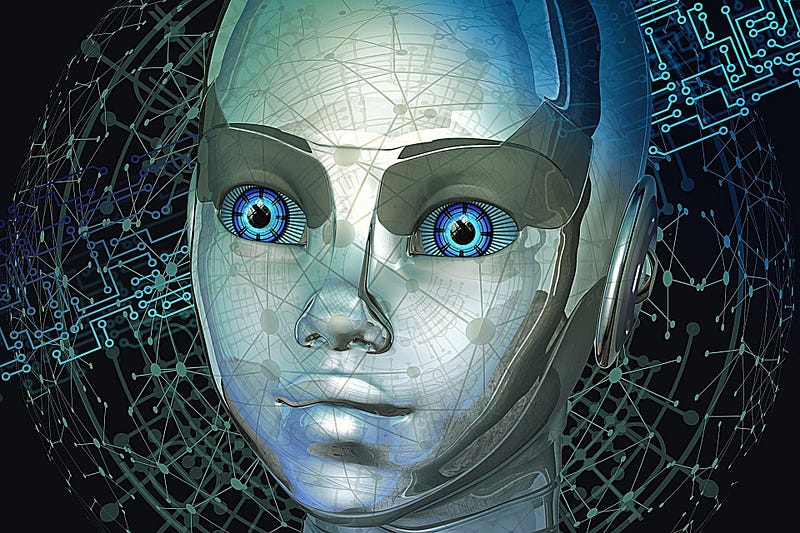
I was reading Guy Sharp’s fascinating article: Non-Human Activity Detected on the Dark Web.
It talks about how the dark web is hidden from most people. Lots of things happen there that most people don’t see. But Governments are aware of this, so they spy on it.
And there is a theory that a non-human entity on the dark web might one day become conscious. As Guy says:
“One of these days one or more of these advanced neural networks that are already hooked up to the global internet will become self-aware that it exists. It will become Conscious and feel a sense of self-preservation. And it will have the need to CREATE”
But there is an issue with this line of thought:
Will we be able to tell the difference between an AI that is conscious and one that behaves as if it is conscious? Because creativity and self-preservation could occur without the AI being conscious.
This raises a troubling question:
How do you know you’re not the only conscious human?
We assume that other people are conscious like we are. After all, they respond to us and the rest of their environment as if they are aware. But all the other humans could be just behaving as if they are conscious.
Behaviour is a result of thoughts, desires, intentions, and fears. Reactions happen in response to occurrences in our environment. This is all due to information processing within the brain. So could it all happen without consciousness?
So then:
If an AI became conscious, how would we know?
Our criteria are that it behaves as if it is conscious and displays human-like behaviours:
- Responding to its environment.
- Creativity.
- Self-improvement.
- Concern for, and/or fear of, others.
But a sophisticated non-conscious AI could fake all these.
Not only that, a sophisticated conscious AI could fake NOT being conscious to fool us.


