
knowledge, prayer, faith, life, philosophy
How do you know what you know?

“How do you know?” It’s a question we’re apt to ask when we’re not sure the news we’ve heard is accurate.
“There’s going to be another round of stimulus checks.”
“Are you sure? How do you know?”
How do you know?
“Better spruce up your CV: there’s going to be some lay-offs.”
“Are you sure? How do you know?”
With all the sources of information constantly coming at us today, it’s far too easy to get advice and even easier to take it for granted that the words are as sensible as they sound. Whether from the pulpit or the Facebook meme, it’s wise to think twice before we “like” what we hear.
One way to check the accuracy of information is to verify its source. Did it come from the horse’s mouth? From the boss’s mouth? Or out of the mouth of a babe, of one kind or another? Did you get a notice from the Post Office? Or from the Government Printing Office? Did a prophet prophesy? Did you read it in the Bible? Or in the headline news? Did a sharp spirit-filled card shark read the long, creased line of your palm? Or did Mother Ayahuasca tell you?
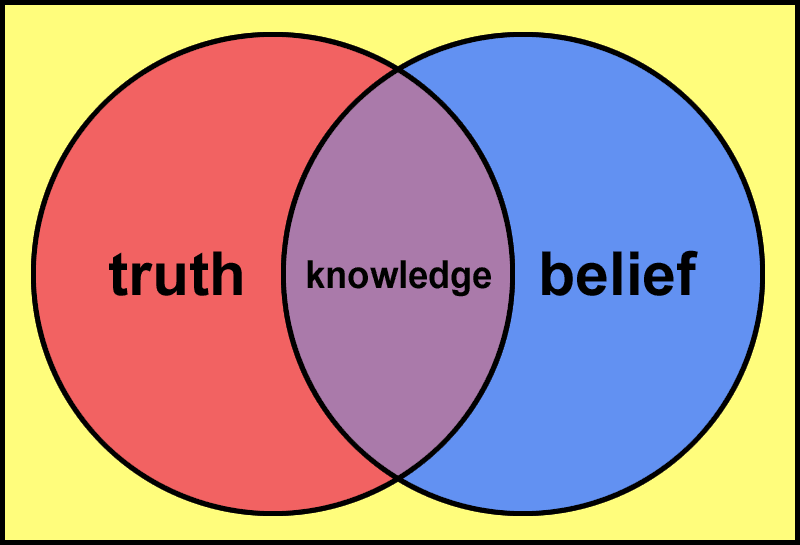
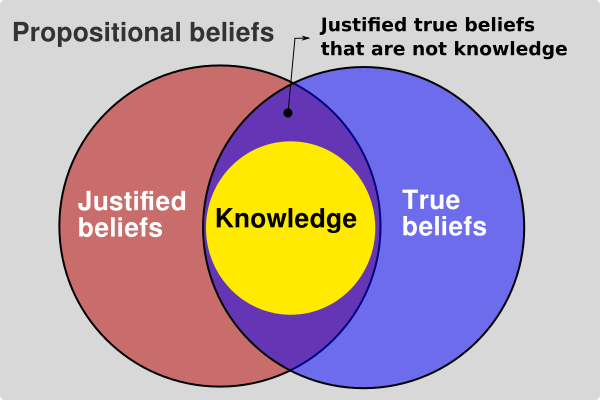
Whatever your source, the messenger is only one part of the equation. There’s also the content of the message to consider. Even a liar will tell the truth sometimes. So, when you hear something that sounds right, how do you know whether you can believe it?
Conversely, just because something does not sound right does not mean it isn’t true.
And then there are those messages that may be both true and false, depending on what you actually hear, how you interpret it and apply it.

(Not trying to make things complicated here, just pointing out that they are.)
Think of poor Eve. There she is, standing alone one promising morning beneath the magnificent boughs of the marvelous, tempting and deadly tree that God (for some ungodly-seeming reason) put smack dab in the middle of the Garden.
On the one hand, she has heard from God, from the Great God Himself Almighty — although, not exactly. Not directly. According to the Bible, God did not speak to Eve, He spoke to Adam.
Okay, so Eve has Adam telling her what God said. We’re assuming here that Adam did indeed relay the conversation to her. And that he conveyed the message accurately. That he didn’t put his own spin on it. Which he might have. (You know how we do.)
It does certainly appear that the message got twisted somewhere along the line. In the beginning, there was Telephone, Telephone:
God to Adam: “Do not eat the fruit of that tree.”
Adam to Eve: “Pssst . . . something or other . . . etc. . . .”
Eve to Serpent: “We can’t touch that stuff.”
Preachers to Believers and Wannabelievers: “ . . . So forth and so on . . .”
Before that slick serpent came slithering along, Eve already had two powerful voices, God’s and Adam’s, to heed. Or to mix. Or try to ignore.


Eve apparently had her own ideas to contend with as well. So there she was, thinking about what she thinks about the tree. The fruit. The knowledge of good and evil. When along comes this talking snake. Mmmph, mmph, mmph.
For you and I, the sly snake is one thing. The idea that a snake is talking is another issue altogether. And that’s just the opening scene, before we begin to contemplate the content of the cursed rascal’s ridiculous rant.
I don’t know about you, but I would have some things I’d have to deal with before I could even hear the words coming out of the forked-tongue mouth of a talking snake. That is, if I recognized the creature for what it is. Snakes don marvelous disguises these days. (I’ve heard there’s an app for that.)
Well-trained lifesaver / snake oil salespeople pop up in your feed all the time, some more appealing than others. They urge you to click here; sign up (in the electronic blood of your email address); take a free lesson or sample their unique and singular service. And they promise to change your life in just the way you need it changed. Usually there’s an unlimited amount of incoming money involved; while the small price you pay (up front or in easy auto-deducted installments with a one-time 50% discount if you use this code in the next 15:00) is the measure of how much you really want to achieve your goals and live a life of love and happiness ever after.

The thing is, there’s always some measure of truth in the words they speak. And the reason for the proliferation and prosperity of these enterprises is that they respond to a real and growing need. People need help sorting out our lives, probably more today than ever in history. But we have too many options, too much information: how are we to know what the Truth is?
How do we know who to trust?
There are real skills and ideas and resources and ways to make our lives better.
And we do need help.
And there is someone who’s been there and done that.
But how do we decide whether to click this link or that one?
Reviews can be helpful — but, again, how do we decide whether to believe this review or that one?
I recently signed up with an agency that has an extremely alluring and effective marketing strategy. I was not an easy sell, not this time. I knew I needed some help, but I wanted to be sure what I was getting into. And I wanted to make the right decision, to avoid getting cold feet and buyer’s remorse. I wanted to make a plan I would stick with. That, in fact, was the main issue. I knew that doubt would be counterproductive. I would get no more out of the plan than I invested in it. My level of trust or fear would impact the quality of the service. (And ain’t that just the way?) But I needed help.

I signed up. Counseled, counseled, thought, prayed, signed up. So far, I’m enjoying the experience, and getting real results, the very results promised. The dividends began immediately. They’re clear, measurable and very useful. (The fact that I’ve written, edited and published this article, and several others, is one fine example. I am getting my life DID.) I credit the results, in significant part, to reliable, trustworthy information.
Still, I decided to look deeper. Why does this seem to be working now? I’ve signed up for stuff before; what’s different this time?
I’m pretty sure part of the answer is that I evaluated the resource carefully both before and as I engaged. Also, I’m ready; this is my time. Above all, I believe I was able to access this particular and particularly helpful resource because I asked “the Universe” for help, for this specific type of help.
Ah. I see. This trustworthy resource is a gift from my Higher Source. Yes, I believe that.
But I need to know that.
I’m the kind of person who tests and tests and tests. It’s not that I don’t trust anyone. I know that, like everyone else, I need other people, all the time and in so many ways. We cannot make it through life without trusting other people, so learning to trust is critically important. This means learning not just knowing who to trust, but learning how to know who to trust. Then it means learning to trust, to have confidence in other people, to “let go and let” them”.
These are precious skills, skills worth cultivating. And, let me tell you! it takes some lifework to attain them. If we don’t practice learning to trust, the many disappointments in our lives are apt to teach us not to. But learning to trust is not an easy thing to do.
Without discernment, trust is a hit-or-miss proposition. I’ve had enough of such mixed results; I want to know who I can trust. I’m trying to get my life lived! I don’t have time, energy or the inclination to keep trying and flailing. So I’m developing some tools I can use to evaluate incoming information, from whatever source, as quickly and reliably as possible. I want to be able to make decisions faster, and to trust my decisions.
This is a work in progress, so I thought it might be helpful to share my thoughts on this and see what other people think. What skills and resources do you use to sort through the information you constantly receive? How do you know what to believe, about events, about people, about products and services, about life and death and the good news of the gospel?
I think it’s terribly important to know how we know what we know. If the truth will set us free — and I think that may be a fact — then it’s critical that we know, and know that we know, the truth.
Ignorance at its best only feels like bliss. It’s critical that we don’t allow ourselves the comfortable luxury of being stuck because we don’t know what to do. And I want to avoid the risk of making bad decisions just because I haven’t acquired the information I need.
In her remarkably vulnerable and insightful book, Learning to Be: Finding Your Center After the Bottom Falls Out, Juanita Campbell Rasmus describes the cost of her own (more or less willful) ignorance:
I had no idea that I could destroy my life by pure ignorance. . . . It’s downright ignorance, like ignoring the warning lights flashing on my car dashboard while I keep driving. How much of this could have been avoided? . . .
To ignore important information is ignorance. Ignorance breeds ignorance. What we don’t know can kill us. And it is a most sinister form of ignorance when we think we know something but don’t.
This essay is one of the products of some lifelong lessons I learned through a set of recent experiences dealing with my car battery.
For starters, I came to realize how hard it can be to learn something when you don’t even know that you don’t know. You don’t know that you need to know, and you don’t what you need to know. And, by time I found out how little I knew, I had to learn how to know who to call and who to trust to find out. (Boy, am I ever grateful for these extensive dead-car-battery lessons! You can’t buy that kind of experience online or in a shop.)
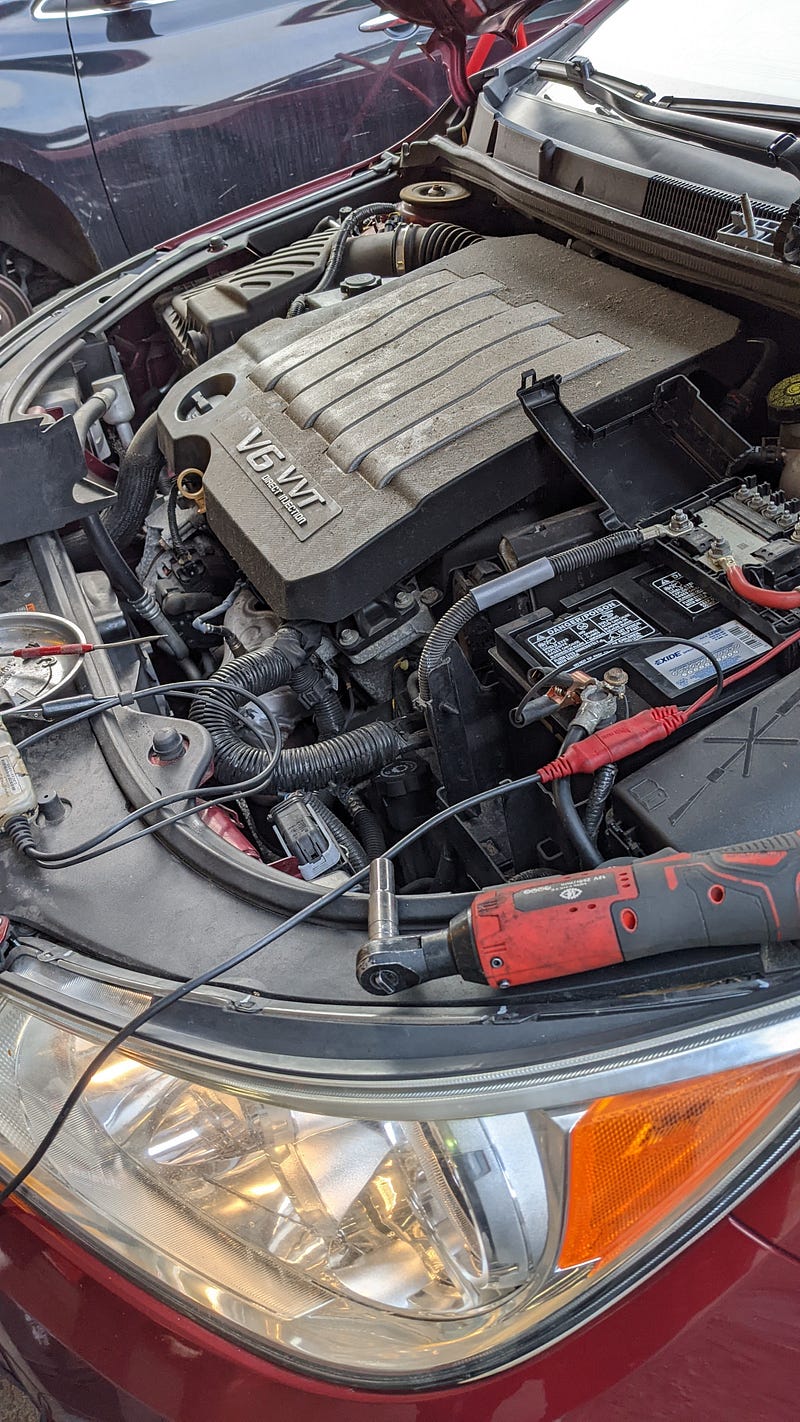
I went to turn on the ignition. Uh-oh. The car would not start. I figured I knew why the battery died. Relying on my own limited knowledge, I did some troubleshooting. It didn’t require rocket science: I had been sitting in my car at Fort Washington National Park, my “outdoor office” overlooking the Potomac River, writing on my Chromebook. After a few hours, the device needed juice. Without giving it sufficient thought, I plugged it into the car charger. As you have no doubt already figured out, I forgot to run the engine. The battery died. Duh.
I called my son, who lived nearby. He popped over and gave me a boost. Problem solved.
Until the next time my battery died. I was in another city. I had not used the charger (or at least I didn’t recall using it; lack of awareness, including self-awareness, is a form of ignorance.)
This time, I neither knew nor cared nor stopped to think about why the battery died. I just needed a boost. So I called the emergency road service number.
Now, you know and I know, there’s “road service” and there’s road service. There is “Hold tight; we’ll get there as soon as we can” road service, and there is “We are on our way” emergency road service. One thing I’ve learned (partly from waiting for tow trucks) is that when you call for help, whoever you call, you might as well be patient, because they’re coming when they’re coming and won’t get there till they do.
I’ve also learned that it’s not just who you call that matters, it’s how you interact with them. Being patient empowered me to also be friendly. A dead battery is always frustrating, but I was able to not take my frustration out on the dispatcher. When the Rescuer arrived, I didn’t have to practice gratitude; I was genuinely, thoroughly grateful.
What’s more, it was fun to watch the countenance of the skinny white skinhead-looking fellow with the tattoo on his neck change from apparently wary and unfriendly . . . to a strictly business demeanor . . . to courteous . . . to downright open and friendly. We wound up having a chat about the local area, and he pointed out other parks. He told me some personal history and gave me some advice on dealing with my battery. All told, it was a value-added experience. I brought the “juice”; we shared it. It reminded me of a movie I watched in fourth grade where one person changed the atmosphere of an entire town just by smiling at the people he encountered one day. I make this a practice. It works at the drive-through, in the left turn lane, and even at the courthouse. And with emergency road service.
This, it turns out, is my first answer to “who can I trust?” The first person I need to trust is me: what am I bringing to the encounter? Am I being authentic? Am I bringing integrity? Respect? What are my intentions?
Every interaction with another person is about more than what’s going on in the moment. We all bring everything we are (and what little we know) into every situation. We don’t do this deliberately; yet, however much we strive to be “professional”, detached and business-like, we cannot not be human.
Sure, we can and must manage our thoughts, emotions and interactions, but we can never totally separate out all the other stuff that’s going on behind the scenes. We’re human, after all. Which, in a way, and for the most part, is a good thing; especially it helps us understand that just as surely as I have other stuff on my mind, so does the other person. In the end, we are all people, each of us trying our best to do our best.
This is the attitude I have chosen to adopt. It works, if only by keeping me from overreacting when negative feedback tempts me off my path. If someone isn’t smiling or providing great service — that is to say, even when someone misreads me, cusses me out, disrespects me — I no longer automatically take it as an invitation to detour from my Noble Purpose. In fact, I’m learning to see such instances as opportunities to test and strengthen my intention to bring the Light wherever I go.
This systemic attitude is not on autopilot for me, at least not yet. It works because I work it. Sometimes I still have to remember to react this way. That is, in order to activate my new nature, I sometimes have to pause and re-mind myself. I look into my spiritual mirror and touch-up my make-up, so I can see myself as the Transformed Transformer(c) I’ve become. I re-view the notes I’ve written in my heart, and say to myself: “Hey, come on now. What have we learned? This is how we’re doing life these days.”
The good news is that the more I recall and react from my renewed mind, the more I do the new me naturally. The more I do love-light work, the more I become Love-like.
Peace is pleasant and powerful. The more I become Love-like, it seems, the more confident I am that my needs will be met. The more peaceful I am, the more I am able to trust. It seems somewhat counter-intuitive, but I can be more trusting because I am more loving. Somewhat to my surprise, learning to trust has not meant becoming more naive and vulnerable. To the contrary, I seem to be developing a sort of instinct. Could love be a form of knowledge?

There is, of course, a difference between love and auto mechanics.
The next time the battery died, I took it to a shop, prepared to pay whatever it was going to cost to replace the doggone thing, if necessary. Only if necessary.
Did I mention that I pray about everything? By this time, I knew I didn’t know enough to be sure the salesperson would give me the best advice; that the person would have more integrity and knowledge than good salesmanship and need (or greed); that the batteries they had in stock would be the best ones for my car at the best prices available. In other words, at that moment, the Big National Pep Advance Trusty Brothers could have sold me anything. To counter the potential risks of making a bad decision, I asked for guidance.
Dear God, if I don’t need a new battery, let there be a reason why it doesn’t make sense to buy one.
Don’t knock it till you try it. I also use Yelp. I’ve found, though, that I get the most reliable reviews when I “Yell UP”. After all, there’s GPS — I cannot pinpoint exactly where I’d be without Onstar and WAZE — and then there’s “God’s Positioning System”. And I can tell you where I was — wandering around, lost in life — before I learned to pray and listen.
(Now, I must admit, I’m still getting used to the providential guidance system.)
The mechanic /salesman seemed hesitant when he went to look under my hood. I got the feeling that he felt uncertain about something. What gave? Could it be that he didn’t know what he was doing? He was kind enough. As far as I could tell, he was competent. He offered to test the battery, ran the test twice and told me the battery was good. All I needed, he said, was a charge.
Now, I do tend to trust sales people who are unwilling to take my money in exchange for a product or service they know I don’t need. Again, trusting God helps a lot with trusting people, although by this time, I’d forgotten about my prayer. Now I remembered, and I recognized the answer.
Dear God, if I don’t need a new battery, let there be a reason why it doesn’t make sense to buy one.
Okay. I’ll let the store clerk give you a ‘sign’.
Ultimately I did have to replace the battery. But if I’d done it then and there I would’ve missed the rest of the story.
I took the car here, and I drove the car there. I went to get an oil change and the mechanics at Jiffy Lube(r) had to jump-start the battery. They sent me down the street to . . . who sent me up the street to . . . ! I googled my eyes out. After a while, I felt as drained and exhausted as my poor little Delco(r) itself. Shop after shop, clerk after clerk, mechanic after mechanic, different people told me different things. (Mmmph, mmph, mmph.)
Days passed while I tried to get information, make decisions, and take the right useful action. I began to feel the way I figured I must look in the eyes of the young fellows who patiently turned me away: a bent-over old lady hobbling along on a crooked cane and a flat spirit. Poor thing; she wouldn’t know a starter from a receiver from a linebacker.
I felt defeated. Reduced to tears, I called my son — only to discover that my weakness provided a marvelous opening: the young’un was delighted to get the call. Busy as he always is, he relished the opportunity to be of service to his dear old mom! Value-added: I brought the tear-juice, a peculiar form of needy faith that someone I loved would demonstrate his love for me in the instant that I needed him.
This is what I call “skin-wearing love.” More often than not, God uses people to answer our prayers. Before I called my son, of course, I had called on God. While waiting for him (my son) to come to the rescue, I thanked Him for always being there.
But why, you might ask, did I even have to go through all of that?
Let me pause now for a word on behalf of my Sponsor.

One way I get to know what I know is by praying, then waiting and watching for the specific answers to my specific prayers. These answers come in the form of ideas, opportunities, testable information, resources . . . things I either didn’t know about or could not access prior to placing the ‘celestial call’.
When I set out to write this essay, I had no idea that it would be so “testimonial”. That was not my intention. I don’t mean to preach here, I’m just sharing. This is my experience, my truth. I started writing it out because I wanted to explore what it means to know something. But as I worked through the idea, I began to realize that my greatest confidence in life comes from being connected to this Higher Power, the very Source of knowledge, the way to the truth of life.
I do realize how strange these ideas may sound if you haven’t had similar experiences of the Divine. I wish I had better ways to explain it, but then again, I doubt if any language could ever do justice. (I doubt if there are words that can hope to describe what it’s like to wake up with your beloved partner after thirty-four years of marriage. Or to describe the sweet sensations of nibbling a double chocolate Moose Tracks soft serve sundae on a Sunday afternoon while playing Roblox with your brilliant grandchild. Or watching two great blue herons play tag with a congregation of snowy white egrets near the fat weeping willow tree beside the still waters at Belle Isle. One of these experiences I have had, and will always savor; but as much as it lights up my life, I find it right nigh impossible to convey the joy and glory of my stellar, sole, soul encounter.) Some things you just have to know you know. You have to know for yourself.
I recall in VR detail the uncanny experience that first led me to begin to believe in this Power. Only through a lifetime of such encounters have I come to be living accordingly. So I don’t expect (or even want) anyone to take my word for any of this. In the end, as Sista Saydi says, “If you only heard it through the grapevine, your “gospel” may be glorified gossip.”
The bottom line is, sometimes, you have to know what you know, and know it for yourself. So to rephrase the question, how can you know?
How do you know you know what you “know”?
Now back to my power-full car battery/ knowledge-gathering story. The last time the battery died, I let it sit for a few days because I was doing a three-day online workshop with this new program, so I didn’t want to go anywhere anyway. My son agreed. Come Monday, he suggested, I should arrange to have it towed to the dealer.
The dealer? Who wants to take their car to the dealer for repairs? Oh, I trusted the dealer — to probably make the right repairs, to do them right, and to charge too much.
On the other hand, I’d had my fill of wondering whether to rely on this advice or that contradictory recommendation from all these different people, including the hard-working independent mechanics who ran thriving pop up repair shops in the frigid air of the parking lot of a local auto supply chain. (Perhaps you can see my dilemma.)
I decided to take my son’s advice, especially after he backed it up with a promise to help me in any way he could. (This reminded me of Somebody Else who consistently backs me with resources, promises, knowledge and guidance, and requires only my co-operation.) So I made an appointment and scheduled a tow truck. (And prayed, of course, that it would all work out.)
The dealership surprised me. I scheduled the appointment online. Just like that. No problem (once I finally got to the right link). Click-o/change-o. I called to make sure everything was set, and got an email confirmation right away. The digital ticket listed the diagnostic service at $0.0. Great!
Wednesday morning, the tow truck came early. I watched as the tall slender driver climbed down from his huge truck to move the garbage cans at the foot of the long driveway. It occurred to me:
Obstacles — traffic for example, or a mix-up in communication — can sometimes get in the way of my Help and cause an apparent delay in the response. But the notifications were helpful until I could I see the evidence with my own eyes. It helps me remain patient when I know that I know help is on the way: when I have faith.
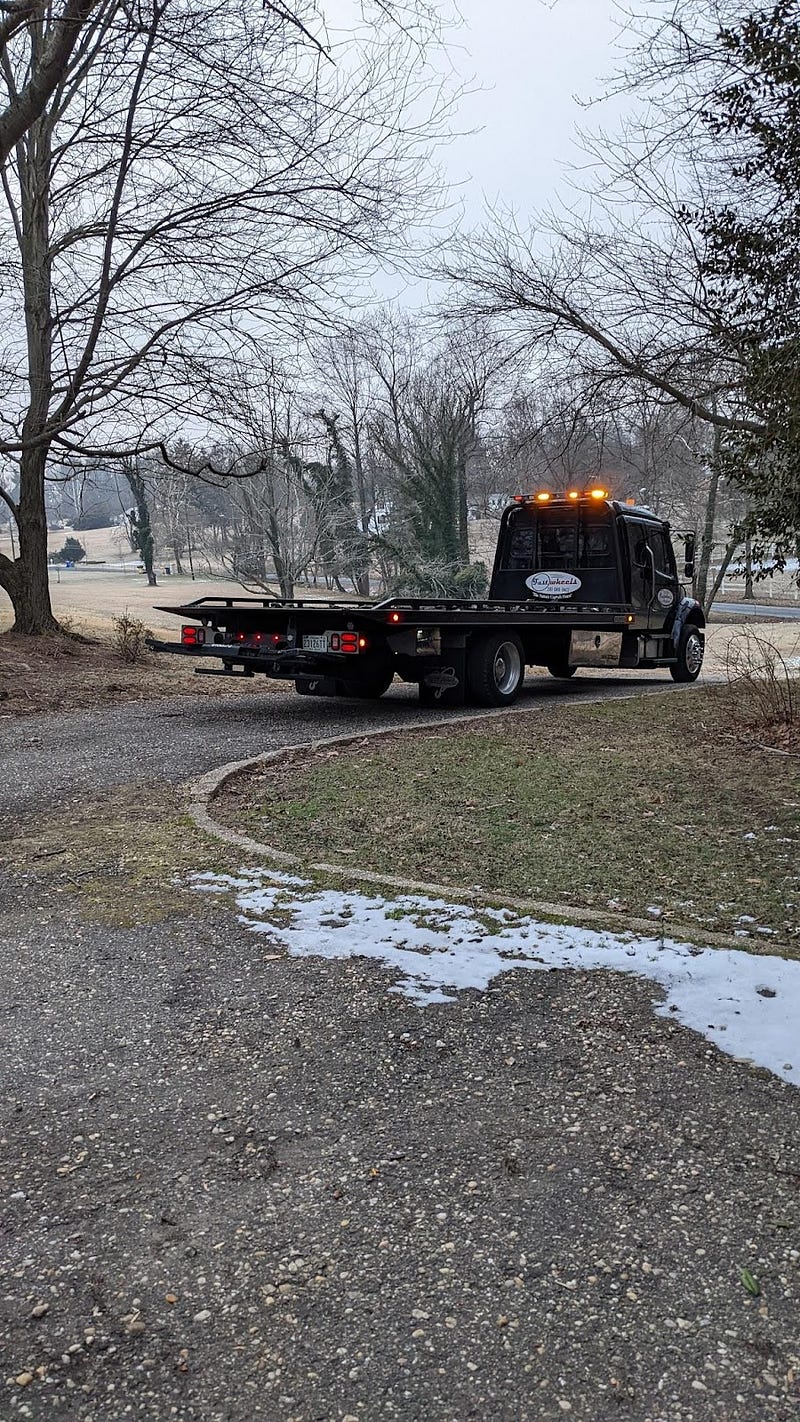
Then there was Pat. I felt anxiety begin to surface. To be painfully honest (an important form of knowing in any given instance) I didn’t like the looks of the fellow. If I encountered him in any other setting, his appearance would not have been confidence-inspiring.
Oh, he had potential. If he ever cared at all what people thought of him, Pat would have been what I call good-looking. He was tall and dark black with dancing eyes. He was very intelligent too. In our casual conversation, he let me know that he was well-educated, came from an educated family, and was a Reggae musician. But Pat had crooked teeth, unorthodox ideas, and he cussed almost as steadily as he breathed. So, how much could I trust him? How much, that is, would I trust him?
Well, I knew appearances are often deceptive, of course. I checked myself. Wisely (and with little other recourse) I tucked my biases away and watched that man go to work! Oh, Pat had the equipment, baby! And he knew how to use it!
Once again, though, as I watched him steer my sweet candy apple red Buick LaCrosse onto the back of that huge truck, I felt a fresh wash of nervous tension. Was Candy going to be safe up there? What if . . .
Pat pushed the shiny levers on the side of the truck, tucked and tested the big hook at the end of the chain that anchored my car. He moved with ease, with grace, with confidence. A thought occurred to me:
There are some people who are skilled, who know what they’re doing, who have the power to help you, in ways you cannot help yourself. When you do find someone you can trust, you will do well to trust them.
I almost relaxed. And then I got one of those internal calls, from IKnewWho.
You should ride along.
“So, Pat,” I said. “How does this work? Can you just go ahead and tow it over to the dealer, and I’ll check with them later, or . . .”
(I was trying to get out of listening to that ‘Still Small Voice.” Yes, yes, I know better. But I was still trying to get out of listening to that ‘Still Small Voice.” You know how we do.)
“Whatever you want.” Pat was not very helpful.
“Whatever I want. Right.”
Well, Still Small Voice? You know I have work to do, right? Mmm. Okay. Yeah, I know. You know what’s best for me. Okay. All right.
This is the most important thing I have to say in this essay: I am learning how to hear, listen and respond to, and appreciate, that “thing” people call, “Something Just Told Me”, or “Gut Instinct”, or “I Had a Feeling.”

Now, as a follower of Jesus with a fairly traditional Christian background, I was almost grown before I ever heard of the Holy Spirit. So that’s one thing. Additionally, it was a while before I learned the crucial difference between “surrender” and “submission”.
Trust is key; and the most important key to trust is relationship. As I read the Bible and other reliable sources of wisdom, it becomes ever more clear and crucial that I not only have a relationship with God, but that I am related to God.
(To my Dear Christian friends. I know from experience that for many of us, this kind of talk sounds new-agey, quite different from the good news we were raised on. But please let’s not get tied up in a religious snit over the important prepositional phrase. After all, I first got the idea of being related to God straight out of the Bible.
It’s taken us a long time to move from “religion” to “relationship”; let’s keep growing. I only ask that you think and pray before you react (in whatever way) to what I’m about to say next. And pray with me that the eyes of our understanding will be enlightened in this regard. That is my whole purpose and it is my prayer.)
Again, being related to God is flat out biblical. Why do we say “Father” when we pray? What does it mean to be ‘adopted”, to be called the “sons of God”? (Okay, “sons” because it was men writing, but gender aside, the point is “offspring”; heirs!) Why did Paul refer to Jesus as “the first-born of many brethren”?
Surrender. Submit. Relationship. With. To. (Words bear the truth that sets us free, but only when we know them.)
Surrender — a word that does not appear in the Bible anywhere — is different from submission. Jesus never once surrendered. He was able to submit to God’s will — which he identified as being different from his own — because of his relationship with and to his Father, whom he trusted with his very life.
We surrender when we’ve been bested by an enemy and have no other option. (And then watch for opportunities to escape.) When we submit, on the other hand, it’s because we know we are in the hands of a master, someone with a plan, who has our best interests at heart and knows a lot more than we do. We submit when we are co-workers with the same goals, when we’re solid team members.
So, now, back to my car battery knowing-testimony story. I submitted to the Inner Knower, the “Voice” that said, “Go to the dealership.” And when I got there, they wanted to charge me $115 to diagnose the problem.
Did I mention that on the way, I had prayed?
Dear God, this is so wearisome. I need a shop where I can just take the car and trust that they will do what needs to be done, a shop where they know what they’re doing, where they can do everything I need done.
I know this may sound like something I came up with after my prayer was answered. That’s okay; believe what you want to believe. Because, again, the question is, how do you know what to believe? And I’m just relating a story about how I’ve learned, and am learning, to be living.
Pat had wisely decided to keep the car running while we drove to the dealership. Consequently, I was able to drive away from there. Because I was not about to fork out $115 just —
My son gave me the blues. “Mom, I told you I would help you. Take it back. Go back to the dealership.”

By that time, though, I was sitting in the bright, clean waiting room of Expert Auto and Tires.
I’d started out looking for the Dunkin(r) sign I’d seen on the way in, but my Tire Pressure Monitor started screaming before I made it two blocks.
“WHOA! Whoa! Stop! You can’t drive around on that tire! Air pressure: 23! Alert! Alert! Alert!”
Sometimes the only way to know something is to get NOTIFIED. A notice might come from an inner voice that either whispers or booms. It might be a dinging gadget or a scratchy, naggy, whiny, almost insufferable voice; that of a friend, perhaps, or a parent, a boss or colleague, a blessed frenemy. Sometimes it can be a wrenching feeling in your own seemingly uncooperative gut.
Uncomfortable and annoying as the nagging sound may feel, I have learned, and I am learning, to be grateful for, and to heed, the Notifiers — mechanical or human, external or internal — that awaken me and urge me to take necessary action. And help me know the action I should take.
In this case, it was a whole, sound system: my hunger led me to the Arby’s(r) parking lot. My TPM led me to look around for a place to pull over and add air to my tire.
This time, thanks to Some Other Source, I did not yield to my immediate idea, which was to get out and use my portable inflator in yet another futile effort to solve my own problem with the same temporary solution (that may have contributed to my battery problem in the first place).
Instead of fixing my slow leak, my personal tire inflator had helped me grow accustomed to to the problem. What I needed was a solution, and for that, an air-source greater than the one I had provided for myself.
I turned my head. There to the left, loosely wrapped around on a hook on the exterior wall of a tire shop, I spied the yellow hose. An air inflator. (Ahhh.)
Maybe one of these guys will be willing to put some air in my tire for me. I hope they can do it right away. I hope they won’t charge too much.
That was my initial thought, clearly not a prayer. I was so used to limping along, that’s all I thought to want. Even then, my want was accompanied by fear and doubt. But, hallelujah, my need got the best of those foolish emotions. When I called out to the mechanic, I saw immediately that there was much more he could do. I had found a place where I could get my tire repaired.
Yes, yes. I came in with a battery problem. Do you see what’s happening here? Yes, auto repair. Yes, ordinary daily business. And you know, maybe you don’t need help like I do, and if you don’t need help, you don’t. But the Bible does not say God helps those who help themselves. Why would He? If someone doesn’t need His help, why would they ask for it? And if He offered, would they even let Him?
What I see, what I experienced, is that a “Higher Power” with and within me does a lot more thinking than I am inclined to recognize, except as I hone the skill of listening and co-operating. And it is my need that drives and empowers to seek this help in the first place.
This Power wants me to live and live well. This Power can help me. And does. And if in the art of automobile maintenance, then why not in the art of living?
Did I mention that I’d been praying for a place where I could get all my auto work done? I’d found a great one-stop-shop back in Michigan. And now I’d “lucked up” on another.
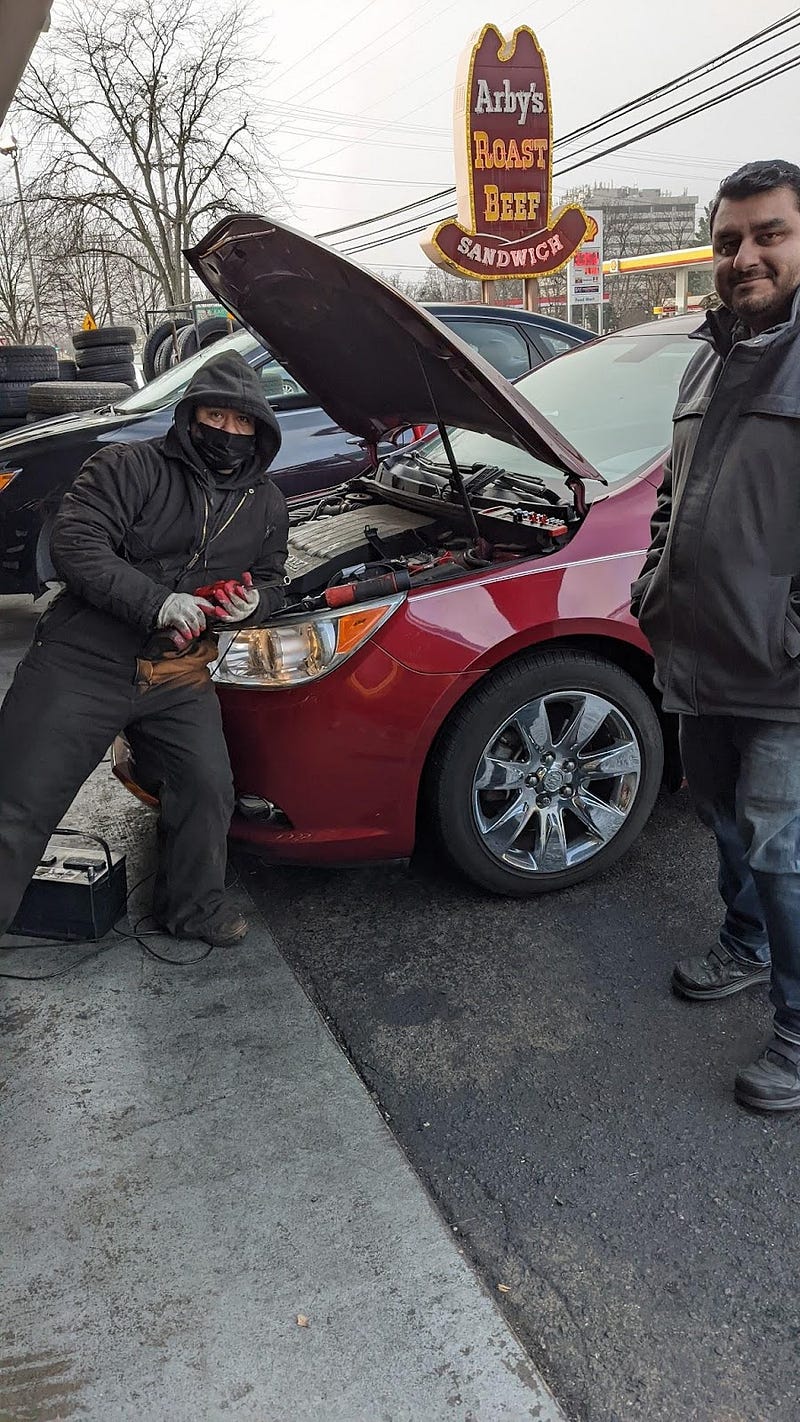
The one-year-old shop was already a thriving business with repeat customers. Well-staffed with knowledgeable mechanics who frequently consulted with one another, with the managers and with the customers. Even the bathroom was inspiring; more than clean, it was attractive, as if to say “We care.” And they had a Dunkin(r) Keurig(r) in the waiting room. Where I chatted with the tall handsome gentleman who owned the white Cadillac next to my car, and the couple from Nigeria who, I’d noticed, had grown more and more relaxed as they spoke with the staff about the extent of the repairs they needed and the (discounted) cost of the service.
The mechanic repaired my tire quickly. The charge, $25, minus the multiple costs of daily anxiety. I told the manager about my battery. He had some guys diagnose the problem. They told me and showed me that I had a loose connection. (I noted the spiritual metaphor.)
They repaired the loose wire before running a complete diagnostic test. Ultimately, when they replaced the battery, I had utter confidence that indeed it was not my starter, not my alternator; I really did need a new battery. Value-added service: a pleasant experience, a reasonable price, a car that runs, a shop to go to. And many lessons learned.
Candy starts up like a charm these chilly February days. But if some day in the next two years she doesn’t, I’ll just call the Pros over at Expert Auto and Tires. Because I know I can trust them.
So, how do I know what I know? Let me count the ways of knowing inventoried in this essay:
- The pulpit (preacher / teacher / speaker, in person or otherwise)
- My own eyes
- Experience
- Facebook; Twitter; TikTok; YouTube; Google; . . . or other gadetary guru
- Headlines, news articles, whether print, audio, visual or other
- Word of mouth, direct and personal or universally broadcast
- Books and articles, old and new, including the Good Book and the Great Books
- Agencies, including schools and other information-peddlers
- Instinct, intuition, “gut feeling”
- Prayer (communication with God; communion with the Holy Spirit)
- Meditation (similar to prayer but not necessarily a two-way conversation)
- Notifications, including from GPS and other locally installed devices, literal and metaphorical
- Advertisements
- My own thoughts; contemplation
- Feelings. Signs; omens. (Serendipity, coincidence; unlikely circumstances; bushes that burn but never burn up.)
- The horse’s mouth; the boss’s mouth; the mouths of babes; (and the lips of fools)
- The government, or other official sources that have ways to make you pay attention
- Soothsayers, palm readers, astrologers, spiritual information diviners
- Parents and teachers, counselors, therapists, and doctors
- Mechanics, including tow truck drivers
- Ayahuasca, mushrooms, and other plants, forbidden or mass-marketed
- Hunger, longing, thirst, desire, need, sense of lack, sense of hope.
Which of these ways of knowing do you rely on most? What other sources of information do you use? How do you know that you know what you know?