
How Do You Calm Down Loud Kids?
Great tip for noisy children.

Non-members can read for free here.
I held a voice and speech class for kids today.
The task given to them was to describe their voices.
Some children admitted that the voice was too loud and unpleasant, while others described it as shrill.
Many children find the voice too quiet and unremarkable, which makes it uninteresting, monotonous, and lacking in color.
Do you believe in that? Honestly speaking, I was not expecting those answers.
They didn’t come up with the characteristics of their voice on their own.
They received the information from someone — parents, teachers, relatives, etc.
It takes little effort to undermine the child’s confidence.
Comments from parents, friends, and teachers can lead to doubt, fear, and a gradual loss of trust.
“Please, lower your voice, stop yelling, remain calm, be peaceful, lower your voice, you can quiet down”- these phrases can instill in children the belief that their voice is too loud or unpleasant.
It may result in voice-breaking and emotional distress. Children believe what adults say.
The sound of a baby’s voice can easily carry without a microphone. The kid’s voice has a sense of freedom. The child uses his voice in harmony with nature.
It takes babies between three months and three years to become aware of the sound of their voices. At this age, they don’t know the breathing techniques or the aspects of using their vocal abilities. They unconsciously control their voices until adults arrive with their complaints.
The child’s environment causes the natural voice to fade.
Keep in mind, that your words hold great value.
Although the words may be short, the lasting effects of trauma can endure for a lifetime.
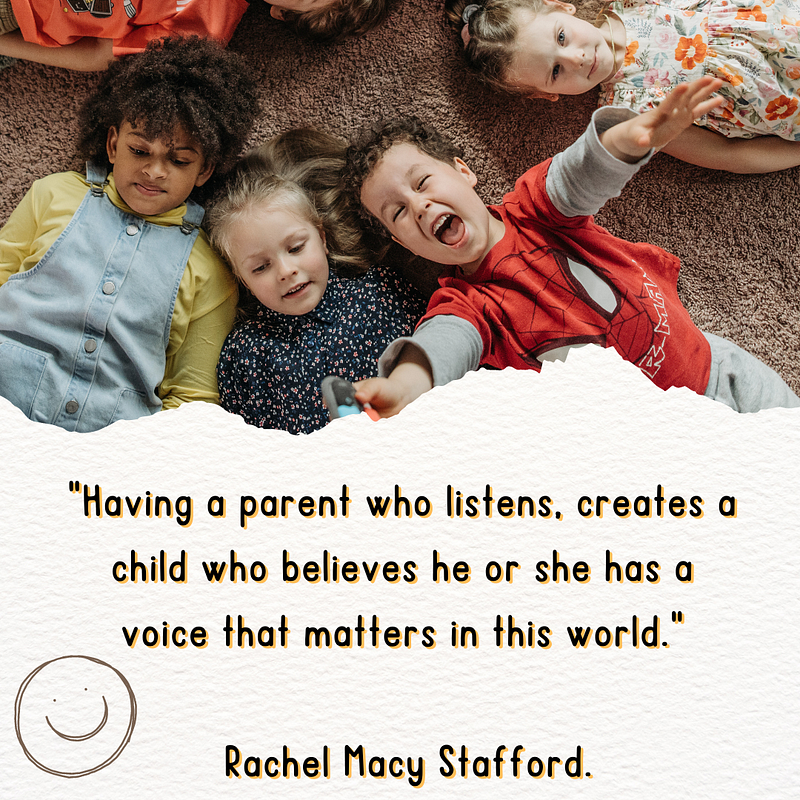
Dear parents, this also works for you. The days may have seemed never-ending. It goes without saying that parenting comes with its trials. Being flawless is not a requirement. Show your kids a little more love. Just like you, your kids are not perfect. Show them more kindness. Emphasize their wisdom and beauty.
When your child starts to display anger and shout, stop and keep yourself thinking about his/her voice.
Soothe your child without attaching negative labels.
Play a whispering game with your child and watch their listening skills improve. Speak softly and gradually turn down the volume until you can barely hear each other’s voices.
Whispering can effectively bring down the noise level. To help your kids return to their regular speaking voice, simply use your normal voice after whispering.
“Speak to your children as if they are the wisest, kindest, most beautiful, and magical humans on earth, for what they believe is what they will become.”
Brooke Hampton
Just do it. Request your kids to share how they perceive their voice. Prepare to explore a whole new realm you never knew existed.
What’s your view? Do you advise your kids to keep their voices down?
Thank you for reading!
Follow my Medium Account (To get valuable information)


