
How do you balance social eating with healthy eating?
When you want to eat well, but you also want to go to brunch/dinner/a party/etc.
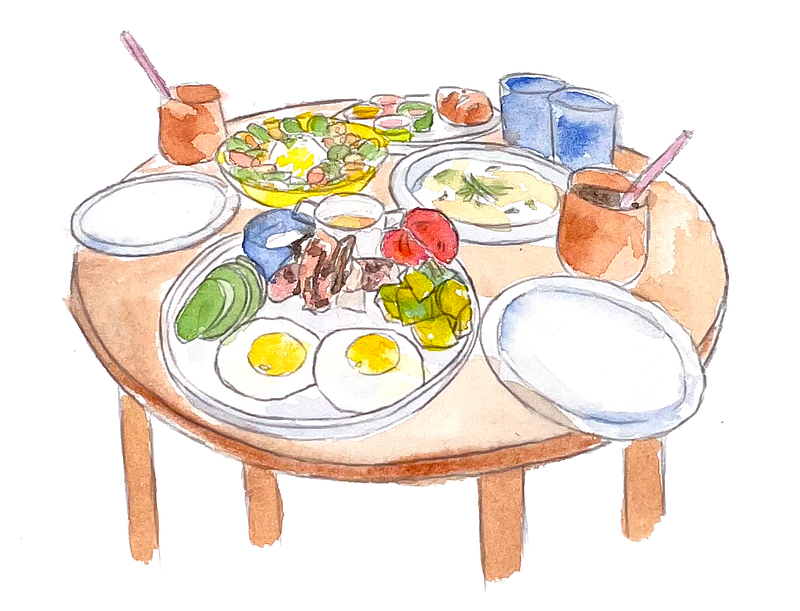
We go out to eat to meet friends, celebrate birthdays, or sometimes takeout on the couch with our partner is our idea of a fun and relaxing Sunday night.
While these moments are important for our social or mental health, if we are looking to improve our physical health, sometimes it can feel difficult to balance the two.
But do we need to give up fun to be healthy?
The short is no (phew!)
But of course, like all things balanced there is nuance to this response. Let me explain.
You may need to re-examine what it means to have a good time
When we go out to dinner, we tend to eat a lot, drink a lot, and indulge in all of our favorite foods.
If the occasion calls for it– like a holiday, anniversary, or celebration– let yourself eat to your heart’s content! In most cultures, celebration is often about going a bit over the top.
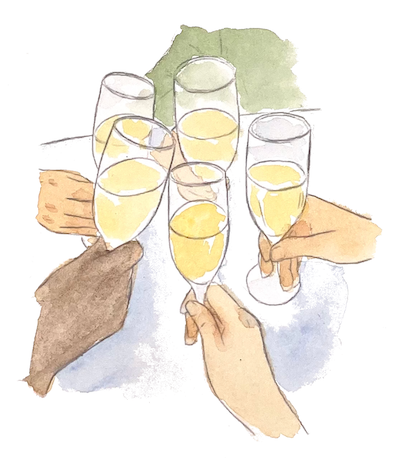
But I have found that compared to Japanese culture, American culture tends to lean into the excess a bit more often than what may be sustainable– we should keep in mind that a good time at brunch or dinner doesn’t necessarily need to be associated with that feeling of being stuffed.
It is not the feeling of fullness that brings us joy, but it is about the memories we make at the table.
If you find your social life leaning into the excess a bit more often than sustainable, perhaps re-examining what brings us joy can help.
You may need to establish some boundaries
With that in mind, we have a few simple and effective options to find balance with social eating and healthy eating:
- Choose healthier options
- Eat modest portions
Neither is the right answer, but the right answer will be what works for you.
Implementing either of these options sounds simple, but emotionally it can actually feel quite difficult– and a large part of that is because of the social pressure we feel to be accommodating.
The social pressure to be accommodating
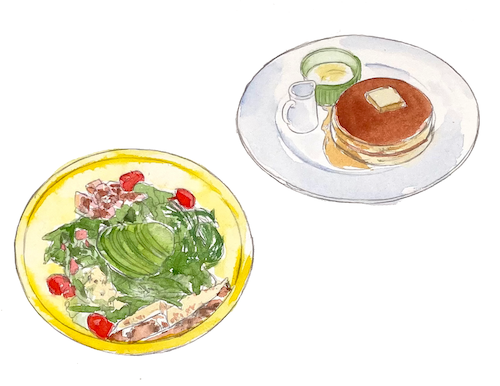
If you’re at dinner and your friends are all indulging in drinks, fried appetizers, large entrees, and desserts, you don’t want to be the only one ordering a salad. If your friend group doesn’t empathize with your desire to eat more modestly, they may even make you feel bad for not eating as much.
It’s not just friends, but it’s common within family as well– a parent may criticize a child’s weight and eating habits, but at the dinner table push them to have another serving, another bite. It’s confusing, frustrating, and often hurtful.
But ultimately, others don’t have the right to dictate what we should do, and especially not with our health — we need to do what is best for us, and sometimes that means setting strong boundaries.
If you’re not great at standing up for yourself, breathe easy, because Japanese culture has mastered the art of pleasantly saying no–
Standing up for your health choices
When a loved one challenges a choice you are making to better your health, I’ve found that it often doesn’t have to do with you, but the other person: maybe the change makes them anxious, reflects their own insecurities, or something else.
Recognizing that it’s not about us, allows us to respond with kindness.
“Hey sorry I’m not having drinks tonight, I’m trying to eat healthier because of XYZ and I’m finding that avoiding alcohol has been really helpful. I hope that doesn’t make me a bore, and that you can understand why I’m not drinking tonight.”
“I’m already full, sorry, and I really don’t need another serving. I’m trying to eat healthier because of XYZ and I’m finding that eating in moderation has been helpful. I still love and appreciate your cooking, but it’s for my own health, and I’m really grateful for your understanding.”
Responses like these are honest, kind, and overly formal, which allows our words to be taken seriously. While it may sound a bit apologetic, it’s a response that often puts the other person at ease because the focus is on you, not them (note how the statements begin with “I”).
Setting positive and peaceful boundaries is not always easy, especially when it involves our loved ones — but we have a right to say no, and it doesn’t need to be more dramatic than that.
Warm regards,
Kaki
Learn to be healthier, inspired by life in Japan:
I teach about health inspired by simple Japanese philosophies and lifestyle practices, so you can learn to find peace, fulfillment, strength, and health in your own body. Stay in the loop and get access to free resources: Sign up here!
