
How Do We Solve A Problem Like Review Sites?

Chances are, you’ve read an online review recently. Maybe you’re buying a new kettle or scoping out a restaurant for your next holiday. Reviews are omnipresent across the internet and one of the key ways we can navigate it — relying on our fellow web surfers to separate the wheat from the chaff.
As marketers, we should love review websites. We know that people trust other peoples’ recommendations many times more than anything coming directly from a brand. There’s no endorsement more powerful than “yeah, they were great, honestly”.
But often, the reverse is true! Marketers fear review websites because there’s no control. People might say, gasp, negative things about you! Or talk about your product/service in a way that is different from your exact well-strategised positioning. Shock horror!
I’ve been on a roller-coaster with review websites myself. So here’s how I learned to stop worrying and, well, not love them — but at least not worry about them so much.
Everything sucks, apparently.
As part of one of my early jobs, I was tasked with looking after online reviews. It came under the broad “people saying things online” remit that my job involved at the time.
And I found it very frustrating! Think about it: how often do you leave a positive review about something unprompted? Almost never, right? You get on with your life, satisfied with your experience.
But if you have a bad experience, you’re compelled to share it. As such, review websites tend towards the negative. If you took them at face value, every product is VERY BAD. Every restaurant in the world is patronised exclusively by people getting food poisoning. Everything sucks, apparently.
The Shed.
And then there are fake reviews. Who can forget The Shed At Dulwich, briefly London’s top-rated restaurant on TripAdvisor? (Despite being a shed in someone’s garden).
What does The Shed tell us about online reviews? The face-value answer is that they are easily manipulatable and untrustworthy. But the real takeaway should be this: people believed the reviews and used them to make a purchasing decision.
Like it or not: people look at reviews. And if they google “[your name] + review” and see lots of 1* reviews, that will inform their decisions. You can’t simply ignore reviews as much as you might like to.
“I never asked for this!”
Part of the frustration marketers might feel is that they never asked for these reviews. Review websites create pages for products and services without the companies’ permission. And then, because of their great SEO, they out-rank those same companies for people trying to find out about them. Something can feel off about that.
What about correcting the record? Good luck. Review sites pride themselves on being the champion of the customer, so even if a review is factually false, it’s tough to get them taken down. It often comes down to “your word against theirs” — and in cases where there might be extremely sensitive confidential information in the mix, it’s not as simple as reporting bad reviews. You have to live with them.
This gets even sorer when you realise that having a relationship with these sites will cost you. Most sites offer paid services of some kind. These don’t get you any better control over the negative reviews you’ll receive (annoyingly), but they get you in the door.
It would be extreme to describe this business model as a full-on protection racket, but paying to undo damage you never asked for stings a bit — especially for smaller companies. And especially when there are multiple review sites out there that you might need to establish such a relationship with.
But if you choose to pay up, you can at least start undoing some of the damage.
Drowning out the bad with good.
How do you solve the problem of negative reviews? The answer that review sites want you to believe is that you use the reviews as a valuable source of feedback, so you can improve your services and get better reviews over time.
Obviously, that does not work. Any company worth its salt should be soliciting feedback from its customers already, as much as possible, throughout the customer journey. If anything, the point of leaving a review is too late — whatever damage there is has already been done.
And we also know from, um, human psychology that there is a negativity bias. You can have the best product in the world, and people will give it one star if they have a minor issue with it. Or just because they hate you. The Bible has 4.6 stars on Amazon.
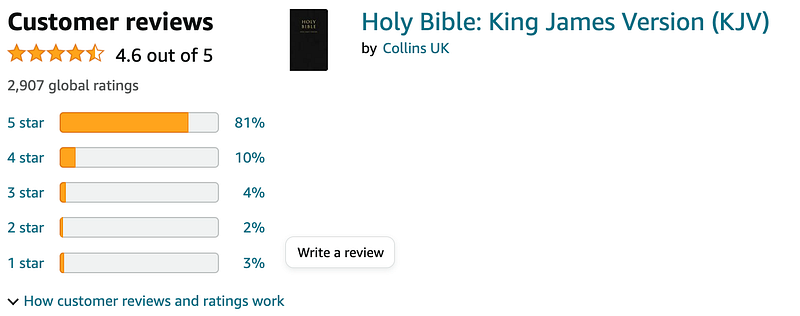
The best way to improve online review scores is to ask more people to review you. No, that doesn’t mean “cherry-picking” from people who’ve specifically had good experiences — most review sites are wise enough not to allow that. By simply asking the silent majority to leave a review, you get more positive reviews — because most people are satisfied customers.
It’s a depressing conclusion. I want to believe that review sites can be a democratic utopia where truth is spoken to power. But if you’re a marketer with marketing aims, you have to play the game. And it works.
What does this image show? (nb: screenshot taken in May 2021)
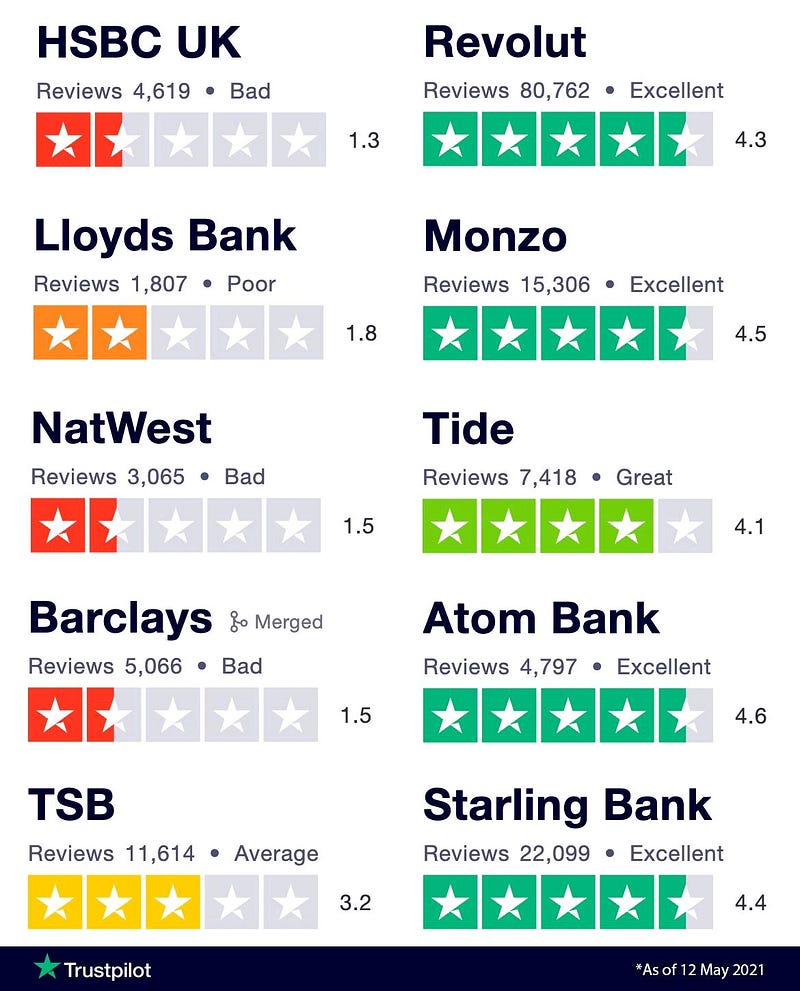
Are those banks on the left REALLY that much worse than the ones on the right? I won’t comment on that. But here’s the same list, with the ones who don’t ask their customers for reviews crossed out.
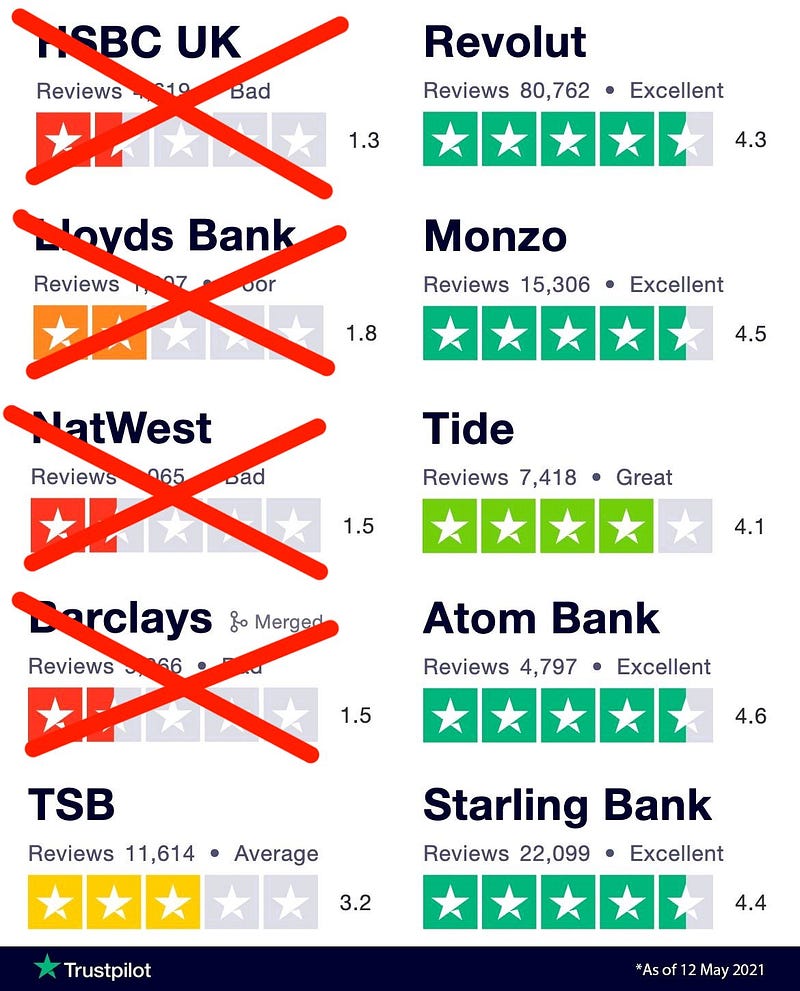
It could be that folks who ask their customers for reviews are generally more customer-centric, so they tend to have higher scores. But the truth is simpler: asking for reviews gives you a more favourable score overall.
It’s unlikely that review sites are going anywhere. If anything, we’re all getting more ways to review each other. So marketers have to make peace with this weird aspect of their world that’s always out of their control.
There’s a lot to be said about the power of using positive reviews in marketing. But that’s only sometimes something you have the luxury of time or people to prioritise. Instead, reviews can seem like a fire that needs fighting.
And the answer is that rather than spending your time fighting individual fires, you should… invite lots more fires in? I don’t know how to tie up that metaphor. But you get the idea.