
Overwintering water lilies | Gardening in Canada | Pond life
How Do Water Lilies Survive Extremely Cold Winters?
Winter can be hard on pond plants. Here’s how to overwinter water lilies and ensure that you’ll get to enjoy them year after year
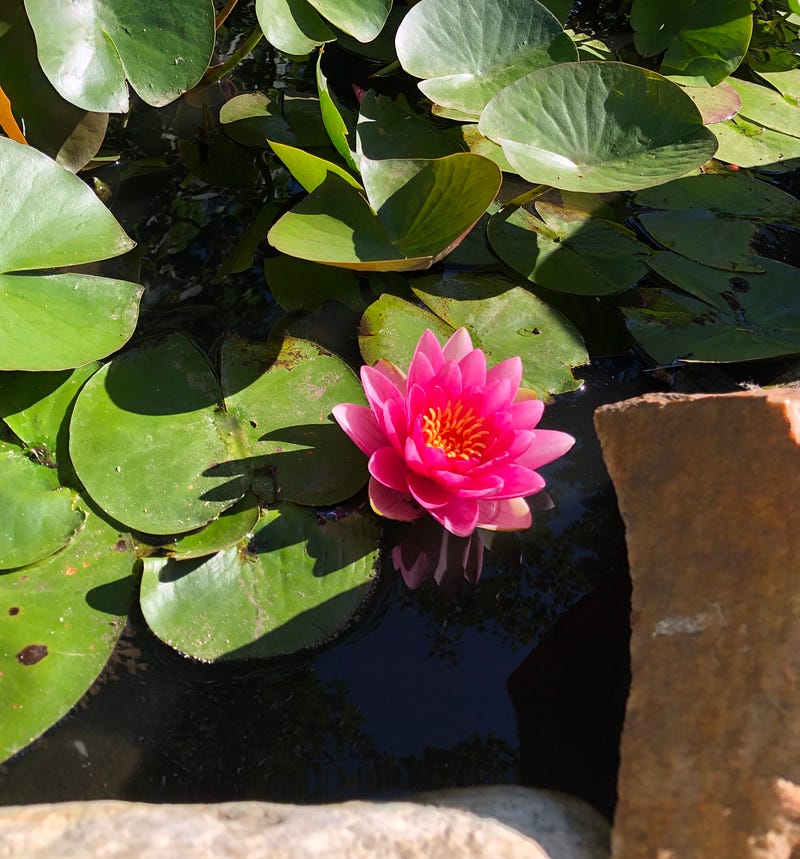
Winter can be hard on pond plants, especially when the pond freezes solid.
When we added water lilies to the pond twenty summers ago, all we knew about lilies was that they were beautiful.
We had no idea that lilies are beneficial to the wildlife that lives in the pond, for example, regulating water temperature and providing shade for fish. Water lilies also absorb toxins and filter excess nutrients, which helps control algae overgrowth.
Something we had not considered when we brought our first two plants home:
What would we do with our water lilies in winter?
Before getting to the process of overwintering, I’ll share a few fun side notes about our backyard pond.
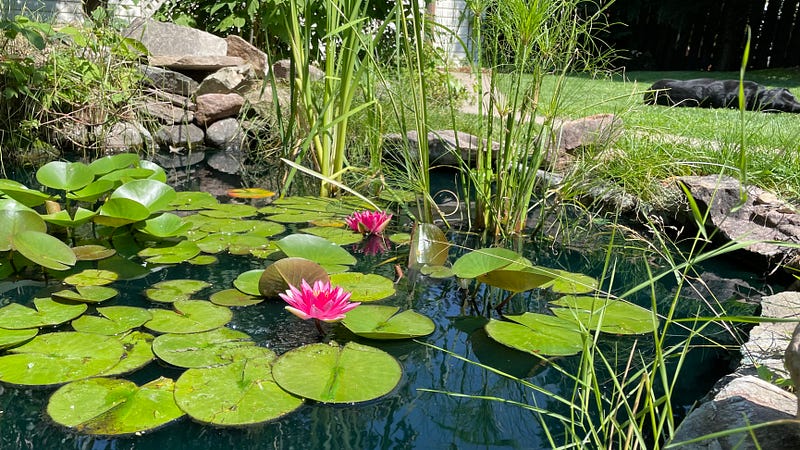
The pond is basically a water feature that adds interest and has become an ecosystem of its own.
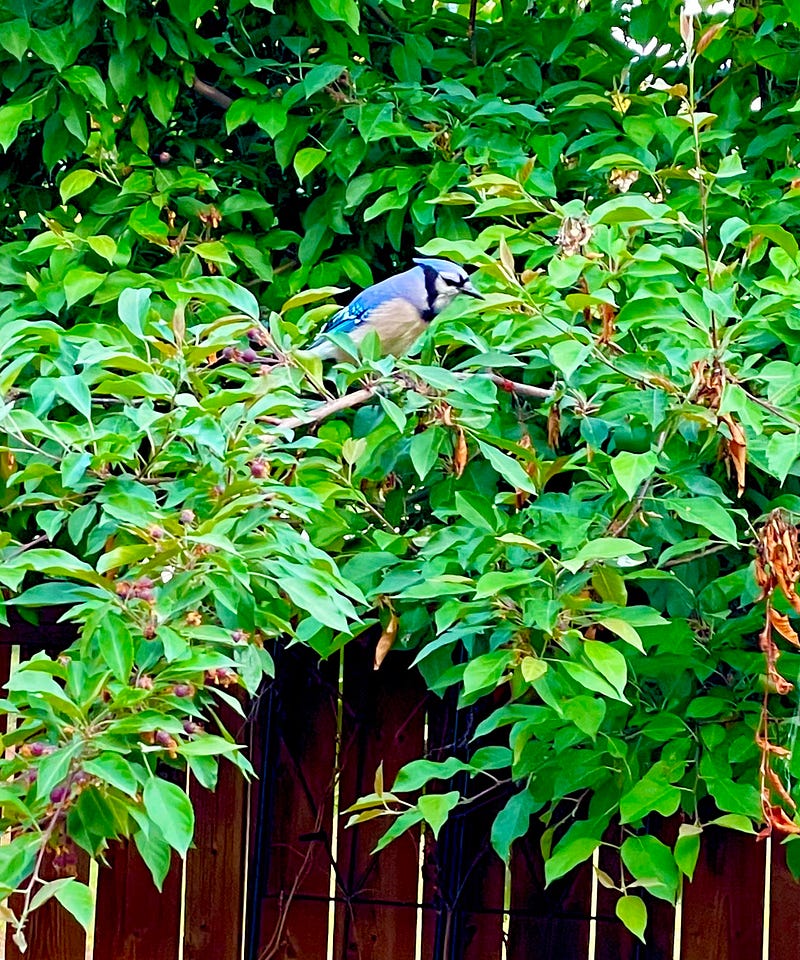
The plants in and around it attract all kinds of birds that stop for a drink and a splash on their way somewhere. In fall the finches will stop on their way south.
The little finches play in the waterfall and the bluebirds watch them, while Buddy the cat watches the bluebirds. The reality is the birds are stalking him.

We had goldfish for a while but heating the pond during six months of winter was too costly, and they grew too big for the indoor aquarium.
Aquarium life seemed like a grim existence for the fish anyway, so we found new homes for the tank and the fish, then focused on water plants.
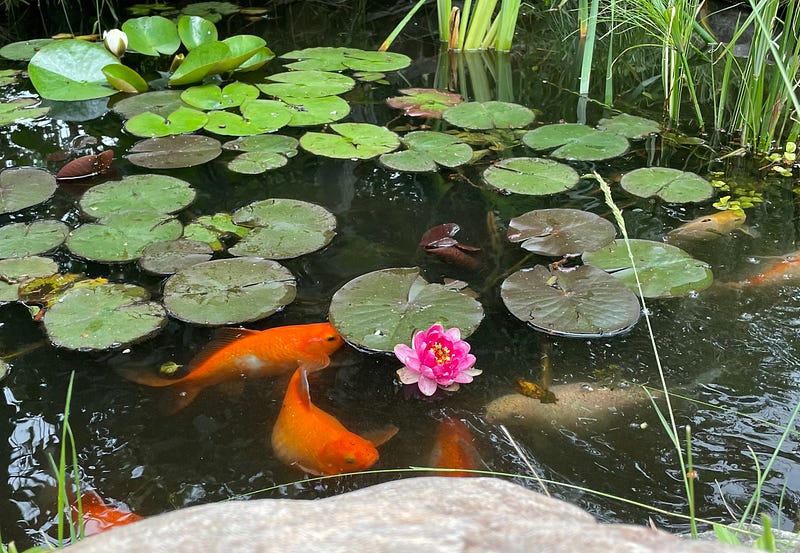
Even though the lily pads provided hiding places for the goldfish, our neighbor’s cat enjoyed fishing and caught a few over the years.
Nature can be cruel when you’re low on the food chain.
Back to lilies and the one thing we didn’t consider — they would surely not survive -30C when the pond freezes solid. So we did some reading and asked for advice at the garden center and this is how we overwinter water lilies.
In the fall after the first or second frost
- The leaves will turn yellow and the plants will start to go into dormancy.
- We remove the plants from the pond and trim back the leaves leaving the stems a couple of inches tall.
- Then we drop the whole thing into a large black plastic bag. The root is heavy so we’ll double bag it. (Some recommend cloth bags but that may allow the root to dry out and they need to retain some moisture while dormant).
- We place the bagged plant into a storage bin. Each plant gets its own bin, and we stack them in our cool storage room in the basement. The room stays at about 10C (50F), which allows the lilies to remain dormant all winter.
In May after the last frost
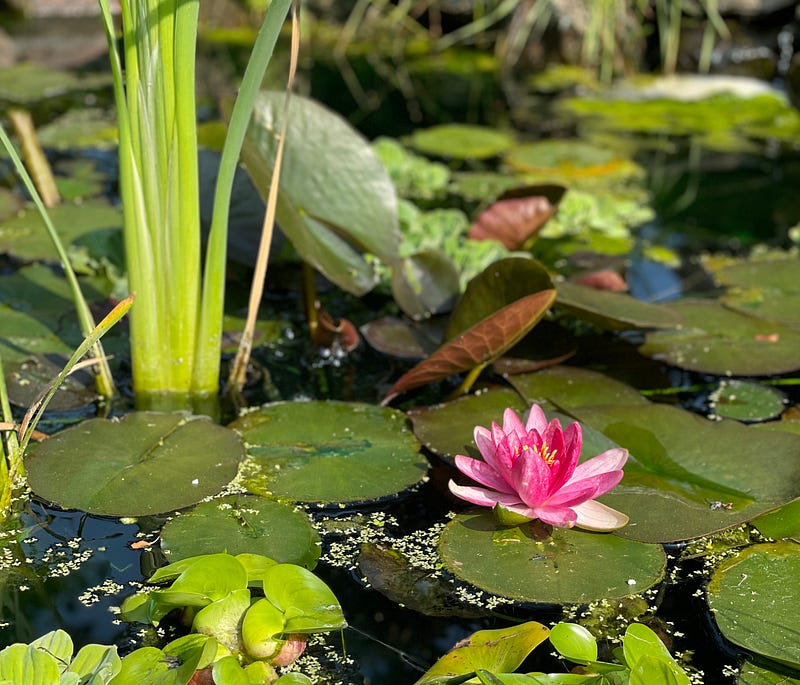
We open the black bags and find little shoots have begun to grow. The plant is coming out of dormancy and can be submerged in the pond.
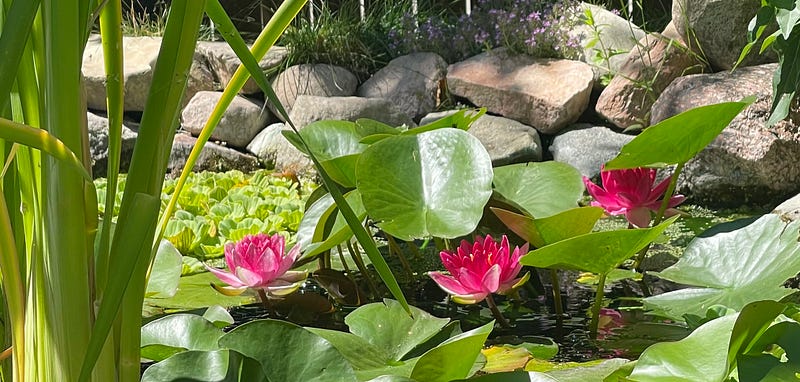
Placing the lilies into the pond marks the beginning of spring for me.
In a week or two the dark red leaves and stems will reach the surface of the pond, then slowly turn to shiny dark green lily pads.
After four to six weeks, the buds will follow.
The buds open and bloom fully in the bright morning and early afternoon sunshine, then close in the evening and bloom again the following day. Flowers will last about 3 – 5 days before they’re done blooming.
Depending upon the pond environment, maintenance, and sunlight, each plant can produce dozens of flowers during a growing season.
How long do water lilies live?
The water lily plant itself can live for many years or even decades in optimal freshwater conditions.
In spite of the long cold winter
Even though summer in many regions of Canada is short, the beauty of the water feature with its lilies, birds, and wildlife that it attracts, makes spring worth the wait.
Read more than just 3 stories a month. A Medium subscription is $5/mo. or $50 for the year, and you might be inspired to create your own blog. You may use my referral link below to sign up.


