
COPYRIGHT QUESTIONS ANSWERED
Can I Copyright My Sighting of Elvis?
And more questions for the U.S. Copyright Office
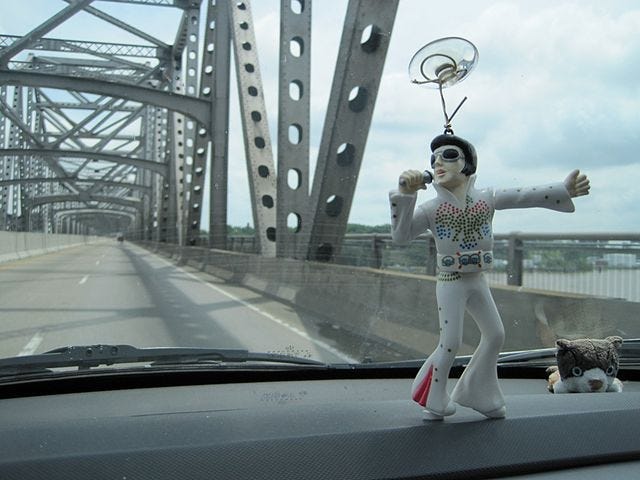
When someone made the inquiry to the U.S. Copyright Office about how to protect their Elvis sighting the agency responded to the individual’s question with seriousness and with a referral to codified copyright law.
Their response:
“Copyright law does not protect sightings. However, copyright law will protect your photo (or other depiction) of your sighting of Elvis. File your claim to copyright online by means of the electronic Copyright Office (eCO). Pay the fee online and attach a copy of your photo. Or go to the Copyright Office website, fill in Form CO, print it, and mail it together with your photo and fee.” https://www.copyright.gov/help/faq/faq-protect.html#elvis
It went on to share information on how to copyright a photo of that person’s Elvis sighting, adding the assurance that “No one can lawfully use the photo of your sighting, although someone else may file their own photo of their own sighting. Copyright law protects the original photograph, but not the subject of the photograph.”
Books, ideas and common facts
As explained on their website, copyright laws don’t protect ideas, short phrases, common facts, or book titles.
A short sample of books with identical titles written by different authors include: Joyland, Fire and Fury, Cloud Atlas, A Person of Interest, and Life After Life.
No one has written a second Gone With The Wind or The Lord of the Rings, but there is no law prohibiting someone from penning a book with those same titles.

But here’s a caveat. Anyone can write a book titled The Legend of Sleeping Bear, but only Kathy-Jo Wargin can write a book with this title about a mother bear fleeing a forest fire with her two cubs, crossing Lake Michigan, and becoming the legend known as Sleeping Bear Dune.
Can you copyright or trademark a person’s name?
Names of individuals can’t be copyrighted. But you can copyright a person’s written or artistic works.
However, trademark law is a bit different. Like the Copyright Office, the U.S. Patent and Trademark Office also gets its share of interesting questions, challenges and disputes.
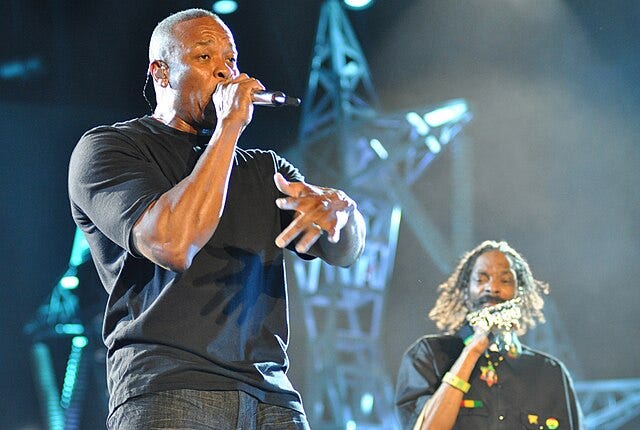
Dr Dre vs Dr. Drai
Gynecologist, writer and speaker Dr. Draion M Burch was attempting to trademark the name “Dr. Drai,” which was the name he used when hosting his popular podcast on women’s sexual heath.
Rap music mogul Dr Dre somehow came to believe people might accidentally confuse him with the OB/GYN. Same pronunciation, different spelling.
So, he sued the good doctor and the case went to court. There, the judge had to explain to the musician (and former member of NWA) there was little chance people would confuse him with the other Dr. Drai.
Would folks really think the musician had traded rap life for a career in gynecology?
Turns out the doctor was equally appalled by the lawsuit. As as long-time practicing OB/GYN physician, Dr. Drai was a frequent speaker on women’s sexual health and author of 20 Things You May Not Know About the Vagina.
The doctor’s response was: “Dr Dre is not a medical doctor nor is he qualified to provide any type of services in the medical or healthcare industry.”
The US Trademark Office agreed, characterizing Dre’s work as “containing harder-than-the-rest braggadocio to customary disses of ex-comrade Ice Cube and mind-boggling misogyny,” and finding Dr Dre had “failed to show that a connection would be presumed in the mind of the consuming public when Applicant’s Dr. Drai marks are used in connection with its applied-for goods and services.”
Copyrighting food
There was a time in recent history when it seemed everyone and their pet goat were compelled to photograph whatever it was they were eating and plaster it on Facebook or Instagram.
These same folks might not want to do this in Germany. No matter how appealing the meal the chef has the legal right to sue you — and he’ll win.
A German law, passed in 2013, states explicitly: “For carefully-arranged food in a famous restaurant, the cook is regarded as the creator of a work. Before it can be made public on Facebook & Co., permission must first be asked of the chef.”
In other words, photographing food can be considered copyright infringement.
While the law allows chefs to decide what constitutes their intellectual property, and under which conditions their “elaborately arranged” work can be reproduced, it’s hard to see how or if the law will be applied in practice.
Some restaurants have put up signs forbidding customers to take pictures of their meals without permission. If anyone does sue a customer for violating this request, chefs will have the law on their side.
There’s no copyright protection for A.I. generated images
A decision, published in March of this year by the U.S. Copyright Office, stated AI-Generated images don’t quality for copyright protection. The new rule has determined A.I. generated content is comprised of responses to prompts, rendering it ineligible.
“For example, when an AI technology receives solely a prompt from a human and produces complex written, visual, or musical works in response, the ‘traditional elements of authorship’ are determined and executed by the technology — not the human user,” the law states. https://www.copyright.gov/ai/docs/Federal-Register-Document-Artificial-Intelligence-and-Copyright-NOI.pdf
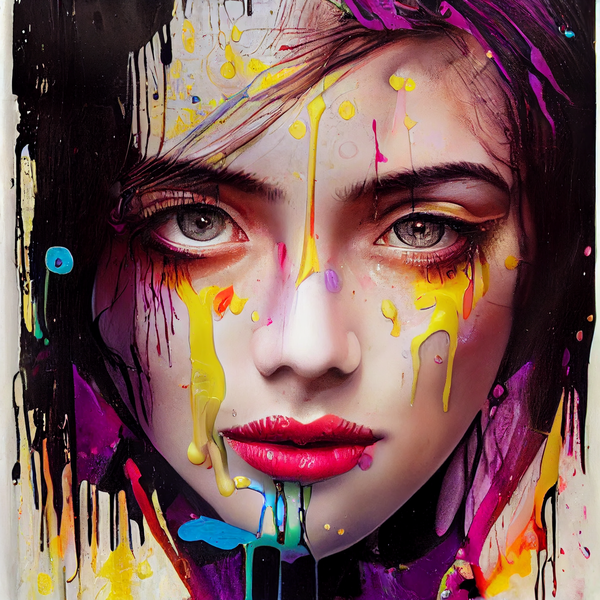
The law goes on to explain that users of generative A.I. don’t have creative control over how these systems interpret prompts, and that copyright can only protect material that’s the product of human creativity.
This law is already being challenged, and most likely will be tweaked in the future. Ultimately, the Copyright Office has left the door open to considering protections to work with some AI-generated elements on a “case-by-case” basis.
A few more things copyright law says “no” to
The name of your band — Pink Floyd, Aerosmith or the Eagles would not be protected by copyright law. Some names may be protected under trademark law, though.
What about my great mystery meatloaf recipe— This won’t be accepted because there is no copyrightable authorship in the mere listing of ingredients.

How about my internet domain name — Not protected by copyright, but can be registered by (ICANN), a nonprofit organization that’s taken on the responsibility for domain name system management.
I’ve got a great idea! — Good for you! But, copyright won’t protect your ideas, or your concepts or your method of doing something. Put it writing and then claim your copyright in your description, but remember, that copyright won’t protect the idea itself.
Conclusion
Copyright law is a legal framework designed to protect the intellectual property rights of creators by granting exclusive rights to one’s original works. This ensures creators — such as writers on Medium — have control over the reproduction, adaptation, and distribution of our works.
While it grants us exclusive rights, these rights are also balanced with some exceptions and certain limitations — which is why no one can copyright their Elvis sighting.
Right around the corner is Copyright Law Day. Each January 1st — much like New Year’s Day — Copyright Law Day is an international observance. It commemorates the laws protecting the works of creators and authors of every type of tangible medium — articles and books, online content, films, artwork, sound recordings, video games, and more.
Overall, it plays the leading role in safeguarding the interests of creators while incentivizing the creation of content in service of the greater public good.
So, here’s to an early celebration of copyright law, and remember to raise a glass on January first!
Thank you for your time and attention!


