
How do I know if the product I’m working on is on track to do well?
An approach to ensure your efforts are going into measuring the things that matter most based on YOUR unique context.

In my recent cohort of my 0 to 1 Group Coaching Program for product managers who are the PM #1 at their respective startups, several iterations of the following question were asked:
“How do I know if the product I’m working on is on track to do well?”
There are many different schools of thought on how to answer this. Most start with the end first and focus on the top metrics that great product teams track.
While there are certainly trends and areas of overlap when it comes to key performance indicators and what teams should be tracking, I’m going to flip this on its head and “product-manager-ize” the actual process I would go through to answer this question — start with more questions and make sure the things you’re putting effort into measuring are the things that matter the most based on your unique context.
Here are the 5 steps I would go through:
1) What does “do well” mean to the business and to the product team?
What does it mean to do well now? What will it mean in the future? Could this change? Think really critically about this. What goals are important to define this? Can progress towards these goals be tracked? Understanding and being aligned on this is crucial.
2) What is the WHY behind the product and does it make sense?
Is it solving the problem well for the particular users who have this problem? Does the team believe in it? Do I believe in it? How well is it solving this problem? If our why still isn’t clear, or if our problem isn’t clearly defined, or if we don’t understand who our users are, we should start there first.
3) What has been done so far to understand what “on track” even looks like?
What stage is the product at right now? Are we still in an early concept phase? Have we got significant user research to validate that our idea is good to begin with? Have we done any low fidelity prototype testing to assess the feasibility and impact of our solution? Have we done Internal Dogfooding, Alpha, and Beta testing? What “doing” has been done to get to a place where the team has learned enough to define what “on track” means accurately, given our context?
4) Are there any blockers?
Marty Cagan has a great article on this — The Four Big Risks — that was published 5 years ago now but still rings true. The four types of risks when endeavouring to build and launch a new product that Cagan calls out are:
- Value: Whether customers will buy it or users will choose to use it
- Viability: Whether this solution also works for the various aspects of our business
- Usability: Whether users can figure out how to use it
- Feasibility: Whether our engineers can build what we need with the time, skills and technology we have
Are any of these things blocking the team right now? Or, will they be likely to be blockers in the future? How many of these things are known vs. unknown? What can we do to better understand the unknowns?
5) How can we choose the right Product Health Metrics to monitor (pre- and post-launch)?
Here’s where everything comes together.
With the above context, rather than starting with a metrics-first approach, I would start by asking questions to really understand WHY we want to measure something, WHAT we want to measure specifically, and HOW we can do that with some sample metrics.
Some examples:
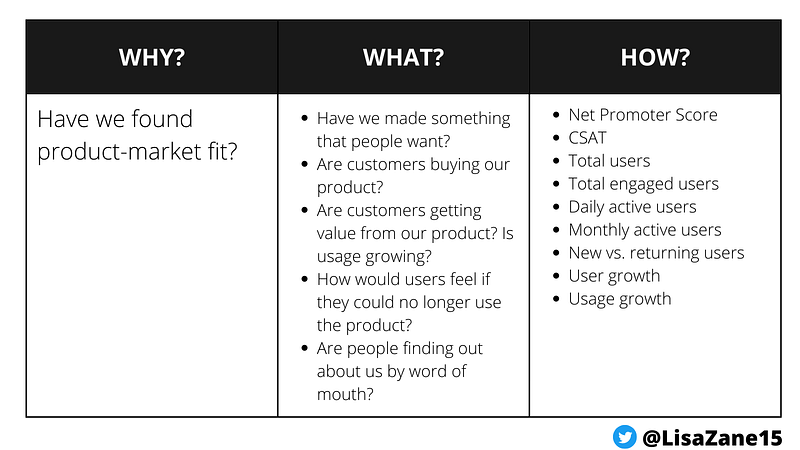
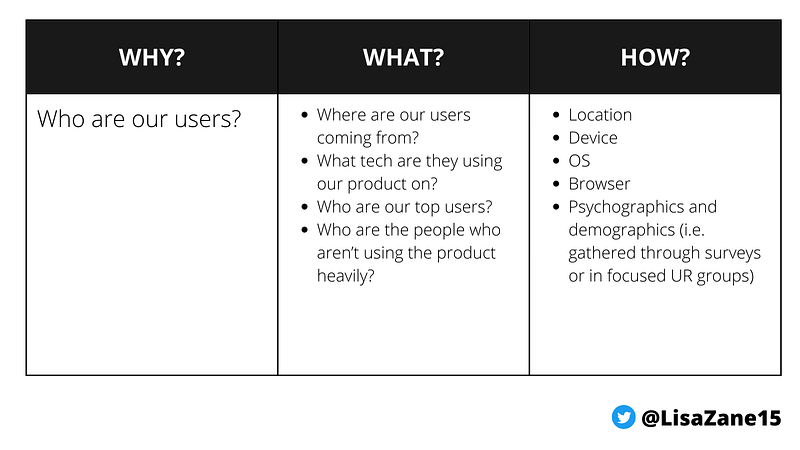
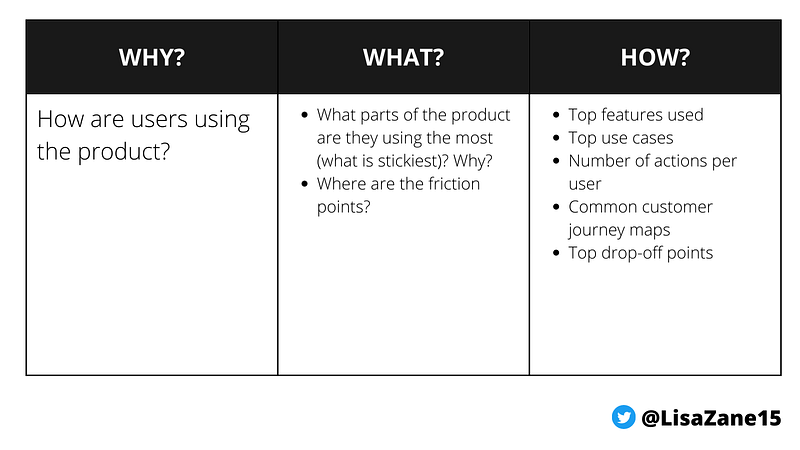
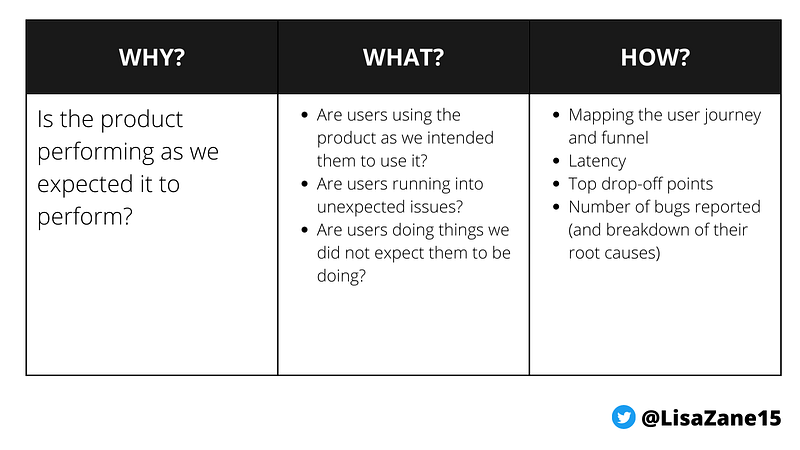
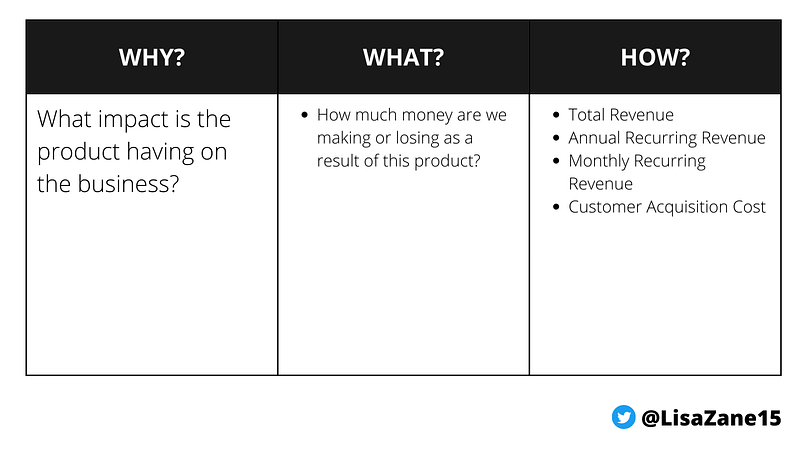
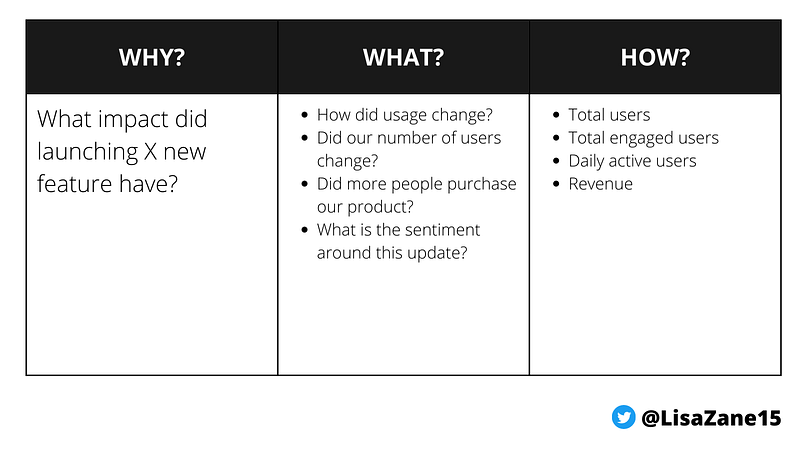
The takeaway: Start with asking the right questions both to understand context, and to make better decisions about the best ROI for the effort that you and your team put in to measuring anything instead of starting with a long list of metrics you’re going to measure.
There are tons of resources available for further upskilling in this area and gleaning insights from different perspectives. I’m a big fan of Shreyas Doshi’s breakdown of product metrics categories and Superhuman’s strategy of reverse-engineering product-market fit as a leading indicator and working backwards from there.
How do you approach product metrics on your team or in your organization? I would love to hear your thoughts — drop a comment below or connect with me on Twitter👇
-Lisa ✨
Follow me on Twitter: @lisazane15
🧠 Join 800+ people interested in building products and their product careers more consciously: https://www.consciousproductdevelopment.com/newsletter
🧭 If you’re ready for a role transition or just want to make more conscious career moves going forward, check out The Product Manager’s Career Guide that I just launched: https://www.consciousproductdevelopment.com/the-product-managers-career-guide
Related:
- What It Takes To Be An Exceptional Product Manager
- “How Can I Build Tech Knowledge In A Specific Domain as a PM?”
- What It Takes to Bring A New Product From 0 to 1
- What Product Teams Can Learn From The Mayo Clinic’s Care Model
- A Call for More Conscious Products
- “How Should I Approach Product Strategy?”
- A Few Thoughts on Conscious Time


