
How Do Georgia Voting Laws Compare to Jim Crow Restrictions?
President Biden described the voting changes as “an atrocity.”
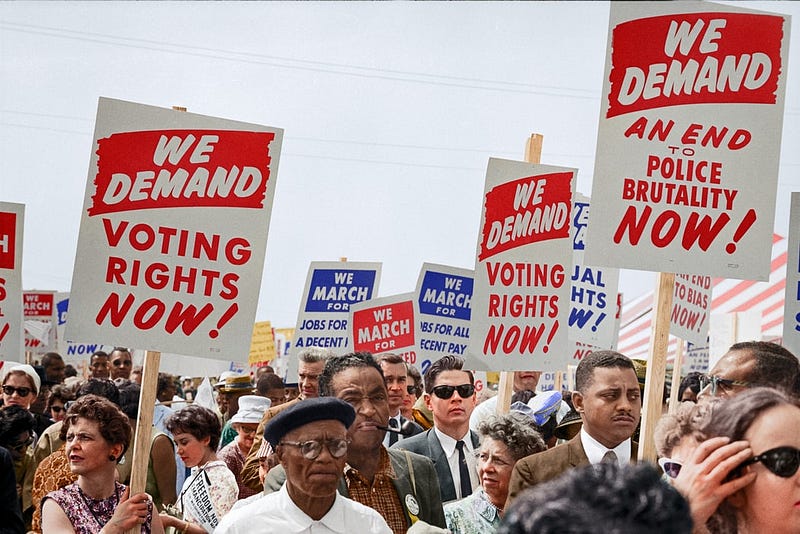
The new Georgia voting laws have elicited a national uproar, but is it warranted? Will the new laws return us to the era of Jim Crow restrictions designed to keep Blacks away from the polls?
“It’s backlash for Georgia electing its first Jewish and first Black senators,” according to U.S. Sens John Ossoff and Raphael Warnock.
President Biden described the voting changes as “an atrocity.” He told reporters, “They passed a law saying you can’t provide water for people standing in line while you’re waiting to vote. You need nothing else to know this is nothing but punitive, designed to keep people from voting.”
He also called the new law “Jim Crow in the 21st century.”
But how similar are Georgia’s new laws to Jim Crow restrictions that lasted through the first half of the 20th century?
Jim Crow and Voter Suppression
If you do the research, you’ll find out that voting regulations in the last century, especially in the South, were restrictive and meant to keep Blacks from the polls.
A hundred years ago, many states in the South only allowed property owners to vote, eliminating voters who had no property.
There was a Grandfather clause that said people who couldn’t read and owned no property were only allowed to vote if their fathers or grandfathers had voted before 1867, but of course Blacks, many of them slaves, couldn’t vote before 1867.
In the South from 1900 to 1960, Democrats usually won elections, and Republicans almost never won. But Blacks could not vote in the Democratic primary elections, which determined the winner.
From time to time, whites purged voting rolls, taking people’s names off the list of voters. If voters arrived at the polls and found they weren’t registered, they couldn’t vote. These purges affected more blacks than whites.
Former prisoners frequently could not vote.
One of the most prohibitive restrictions of the Jim Crow era was the poll tax. In Southern states, extremely low-income people couldn’t afford to pay the voting taxes.
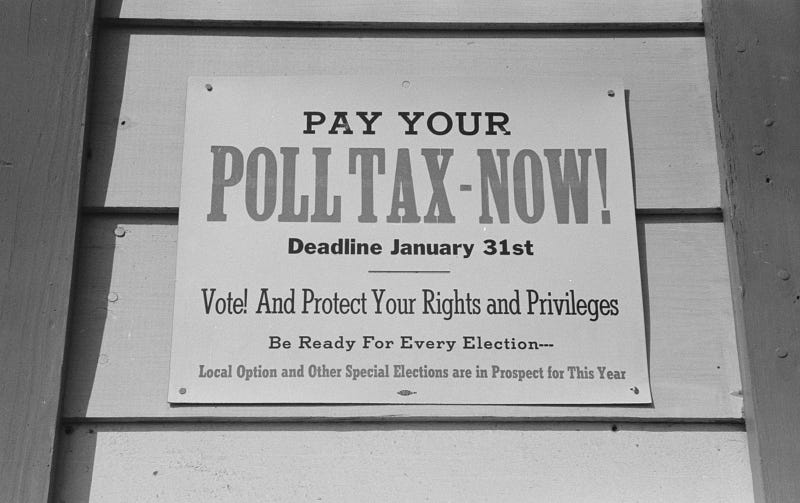
Jim Crow laws were finally abolished with the passage of the Civil Rights Act of 1964, which outlawed discrimination in any type of public accommodation.
And in 1965, the Voting Rights Act protected black people’s right to vote by barring discriminatory voting laws.
The Georgia Voting Law
Now let’s take a look at how the Georgia law compares.
In a nutshell, the new law says a voter will need an ID number to apply for an absentee ballot, and absentee ballot applications will be cut off 11 days before an election. The number of absentee ballot drop boxes will also be limited.
Additionally, it will be a misdemeanor to hand out food and water to voters in line.
To expand on these, voters who lack a driver’s license or state ID will have to submit other paperwork proving their identity when requesting an absentee ballot.
Drop boxes, used for the first time in 2020 under emergency rules approved by the State Election Board during the coronavirus pandemic, will not be used in the same widespread manner. The new law says they can only be placed inside early voting locations and can be accessible only during regular voting hours instead of 24 hours a day.
They also can’t be deployed in the four days before an election.
The law also limits the number of boxes in each county based on the number of early voting precincts or the number of registered voters.
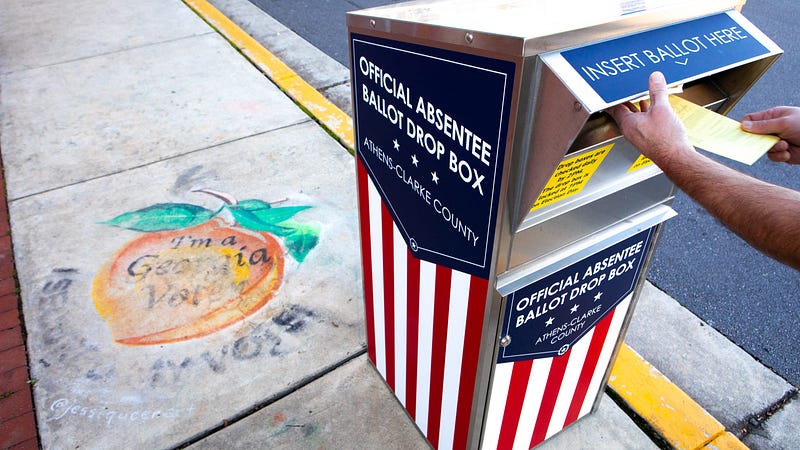
Supporters say it will ensure boxes are kept secure.
Under the previous law, voters could request a ballot up to 180 days before an election right up until election day. Under the new law, they can request a ballot up to 78 days before an election, but the deadline to apply is within 11 days of an election.
Supporters of this part of the bill say it will allow ballots to get to voters in a timely manner.
Under the new law, election officials must keep counting ballots until they’re done, even if they have to work at night. Counties must also certify election results within six days, instead of the 10 days previously allowed.
The new law allows counties to begin processing absentee ballots up to two weeks before election day. This was done on an emergency basis during the pandemic.
Opponents say these changes could lead to exhausted election workers, which could in turn lead to errors.
The new law increases voting access to residents in counties that don’t offer more than one weekend day of early voting before the general elections by mandating that early voting be available on both Saturdays of the state’s three-week early voting period.
Counties can also choose to offer early voting on two optional Sundays.
A hotline to report illegal election activities will be set up in an attorney general’s offices.
The Debate Escalates
Will Georgia’s new law stand up to legal challenges? As lawyers head for the courts, the rhetoric on both sides continues.
In a March 26 op ed piece, Perry Bacon Jr. wrote, “Republicans are trying to enact laws making it harder to vote across the country, and it’s not clear that Georgia’s will be among the most aggressive when all of them are finalized. But considering what happened in Georgia from November to January, the enactment of this law in that state is a particularly alarming sign that the Republican Party’s attacks on democratic norms and values are continuing and in some ways accelerating.”
But according to Massachusetts Institute of Technology professor Charles Stewart, most of the law’s provisions “are fairly mild as these sorts of changes go,” with Georgia election laws not outside the norm when compared with other Southern states.
Georgia Governor Brian Kemp said that contrary to the hyper-partisan rhetoric, the new law will expand rather than restrict voting access.
Republicans cite the increase in weekend early voting as an example of expanded voter access.
No Free Water?
One of the most controversial measures of the bill has been the limits placed on giving out free water to voters.
President Biden said, “They pass a law saying you can’t provide water for people standing in line, while they’re waiting to vote. You don’t need anything else to know that this is nothing but punitive, designed to keep people from voting. You can’t provide water for people about to vote? Give me a break.”
But Georgia Secretary of State Brad Raffensperger, a Republican, said the state would crack down on “line warming,” or handing out gifts to voters in line as a way to influence them before they cast their ballots.
The water issue has even escalated to a hot button one on our local neighborhood watch app. When I mentioned on the app that I didn’t care if people handed me water in line, someone shot back, “You’re just a privileged white woman who has probably never had to stand in a long line to vote.”
Actually I was thinking it would violate Covid-19 safety protocols, to be taking water from strangers.
But the main issue to me is not the water, since it’s hard to believe a bottle of water would influence the way a person decided to vote.
The primary issue is whether new voter ID laws prevent minorities from voting because they have problems obtaining a picture ID.
Arguments for and Against Voter ID’s
According to the Bill of Rights Institute, common arguments in favor of voter ID’s are that it’s a good idea to verify a voter’s identity to ensure a one-person on-vote system.
The ID advocates say there are cases in which people registered in multiple states vote multiple times, ballots are cast fraudulently by people claiming to be a voter who is deceased, and non-citizens can vote illegally.
But those who argue against producing a voter ID say some people lack the ability to obtain a photo ID. Voter requirements disproportionately affect disadvantage black and Latino voters, and voting fraud is so rare that voter identification is unnecessary.
The Supreme Court in 2008 rejected a legal challenge by Democrats to an Indiana law requiring voters to produce a photo ID.
The 6–3 opinion agreed with Republican supporters that the law was necessary to prevent voter fraud and safeguard public confidence in the integrity of elections.
The ACLU continues to maintain that “voter identification laws are a part of an ongoing strategy to roll back decades of progress on voting rights.”
However, other countries considered more voter-friendly than the United States have voter ID laws in place.
Norway mandates that voters present a photo ID, including a “passport, driving license, or bank card that includes a photo,” to vote. Voters in Northern Ireland must present an “acceptable photo identification” to cast an in-person ballot.
Germany requires that voters bring a state-issued voter identification card, but they can substitute another form of ID for that card if they fail to deliver it at the polls. France, Israel, Iceland and Mexico all require a voter ID.
The verdict is still out in whether Georgia’s new voter laws will survive legal challenges. In the meantime, state lawmakers across the country have introduced hundreds of bills aimed at election procedures and voter access. It seems Georgia is just the tip of the iceberg.