
How Do Asian Religions Explain Natural Disasters? (1)
Introducing Theodical Arguments in Asia — The Case of Shinto Religious Ideology in Japan.
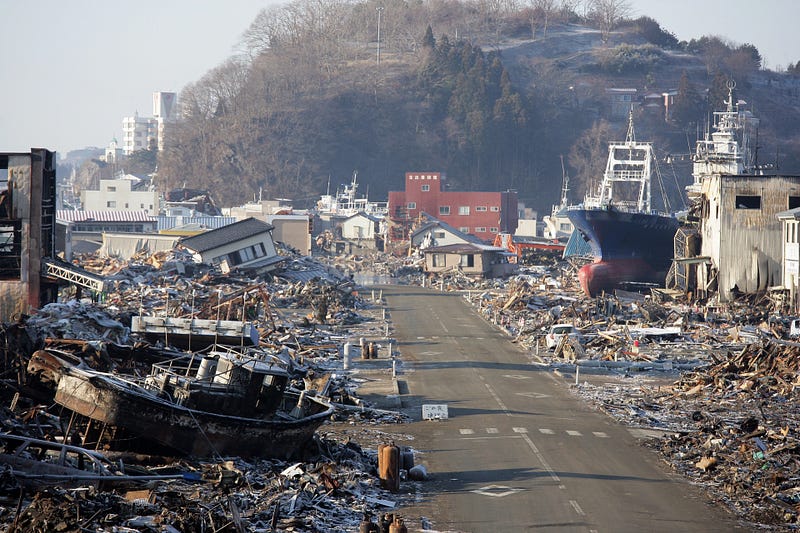
My Experience of the Triple Disaster in Japan
When the triple disaster (earthquake, tsunami, and nuclear plant accident) happened in northeast Japan about ten years ago, I was in Hawaii at an ABC convenience store after meeting my advisers at the University of Hawaii, in order to purchase a souvenir for my friends in Pittsburgh, PA.
One of the staff suddenly yelled at everybody in the store that there was a massive earthquake in Japan. However, nobody looked as if they were listening to her. Many of them were Japanese, who would have thought, “oh, it is happening again” — they have gotten used to having “ordinary” events they have often experienced since they were born and raised in the earthquake-ridden country, Japan.
I was one of them. I didn’t care about the news and looked busily for something to make my friends happy. It was about 30 minutes later, however, when there was an unusual situation that made me stop shopping. I heard warning sirens noisily ringing around Waikiki beach. People staying at the hotels were advised to go to upper floors and we were told to go to as high a place as possible. It was a tsunami warning in Hawaii, about 4,000 miles away from Japan.
Fortunately, I was staying at the guest house at the UH campus, which was just two miles away and located on a hill, so I was able to walk there and sleep safely. I was worried that my flight back to Pennsylvania in the morning on the following day would be canceled, so I stayed up until around 3 am and kept watching the news on TV.
However, the scenes I saw on the TV screen were unreal. Cars and houses were swept away by the tsunami. Honestly, I had never thought of myself as a patriot of my home country, but I was in shock and couldn’t sleep until the morning.
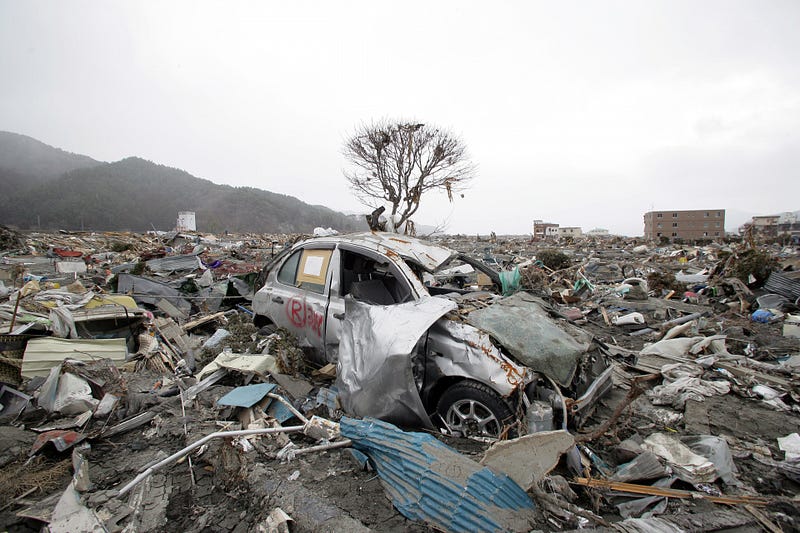
Fortunately, only a 10-inch high tsunami came to the coast of Hawaii and I was able to go back to Pennsylvania on schedule. However, I felt depressed for two weeks after the incident. It was mainly because of some self-centered reasons: worrying about my mom in Tokyo, which is only about 150 miles away from the Fukushima nuclear plant. I was planning to go to Japan two months later but I wasn’t sure if I could go in such a chaotic situation. I wasn’t sure if I could have a normal life even if I could be there.
Theodicy — Justification of God against the Existence of Evil
After a while, time healed me. When I felt better, I had the clarity of mind to think why this disastrous event happened on this earth and victimized many people, including innocent elementary school students.
As a researcher in religious studies, I was curious if I could study this topic from a humanistic angle. I started to teach a course entitled “Disaster, Philosophy, and Society in Japan” for about 40 undergraduate students.
While researching and teaching various topics related to disasters, I found some interesting discussions on how people try to explain unreasonable disastrous events by using religious ideology.
There are several reasons why people do this — just being curious, confirming one’s religious faith, aiming to cause some pragmatic effect, gaining psychological comfort, making the unreasonable reasonable, and so forth.
The attempt mentioned above, trying to find a rationale for disastrous events, is what theodicy does. What is theodicy? Briefly speaking, it is an academic or theological argument that tries to justify God against the existence of evil despite his/her almightiness and goodness. I am not introducing the general theory of theodicy in detail here since we can learn it from many other sources. This article is one of them.
https://readmedium.com/theodicy-what-if-god-is-not-all-powerful-b4ef0015c393
Shinto Theodicy — Kami, Catfish, and Disasters
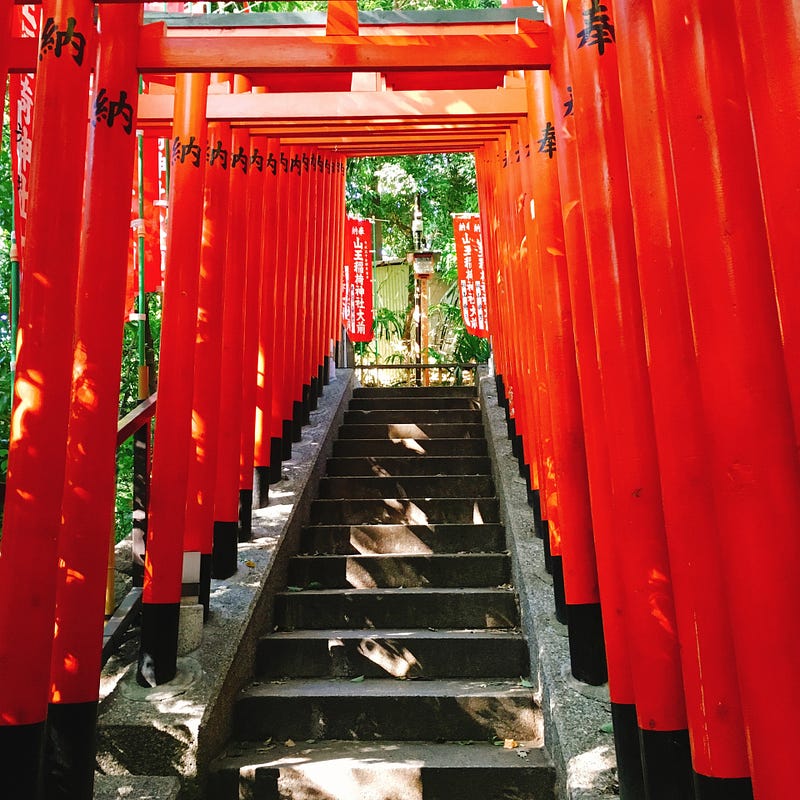
If we refer to Shinto rhetoric, it is kami, capricious human-like beings, who cause disasters for no reason. If you have watched Miyazaki movies such as Spirited Away, you would know what kami are like. They are animist beings which are considered “deities” who reside everywhere.
The pinnacle of the kami is Sun kami Amaterasu, who is regarded as the most important kami in agrarian Japan (I intentionally use the term “kami” instead of “Goddess,” a word often applied as an English translation, because they have totally different characteristics as I will mention in a moment). Another significant kami is Wadatsumi, the kami of the ocean.
We should be aware that these kami usually have two faces in their nature, “harmonizing spirit (nikitama)” and “raging spirit (aratama).” When they show us their good face, they provide us a blessing of crops, fish, and other resources.
However, when they are in raging mode, they can cause disastrous situations such as droughts, floods, tsunamis, and so on. The problem here is that human beings can’t prevent the kami from becoming enraged — they try to appease or please the kami by conducting various types of ritualistic activities including festivals (matsuri) where sake and food is served to them, and where people dance like crazy to communicate with the kami, but the kami often don’t listen to people and cause various types of disasters.
Furthermore, in Shinto tradition in general, there are many existent kami, around eight million of them. Therefore, kami represent almost everything, including the kami of disaster (magatsuhi no kami), the kami of earthquakes (nai no kami), and so on. Because of their nature, it is their job to cause disasters. There is no way we can stop them.
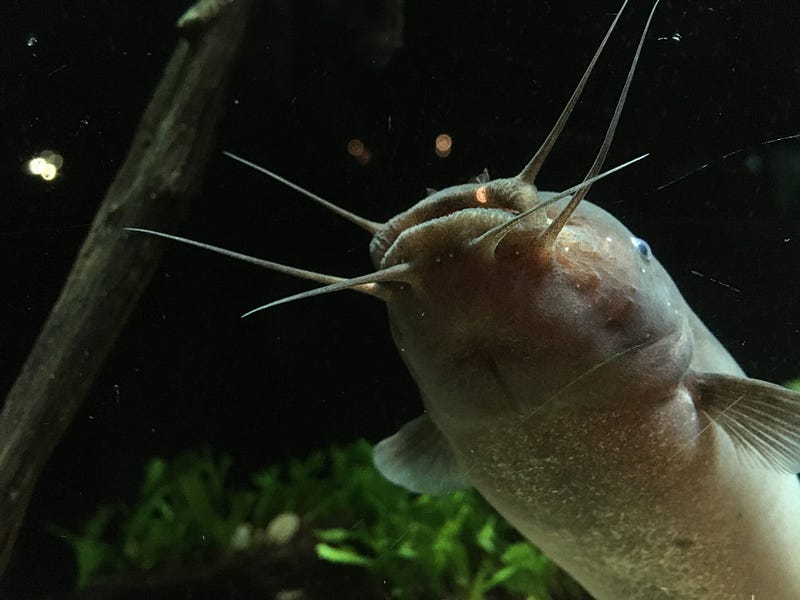
Additionally, some Japanese (intentionally) believe that it is catfish that give rise to earthquakes, as they have the unique ability to sense unusual natural phenomena. There is even some serious academic research to prove it from a scientific perspective as well.
Expanding on the idea of catfish, people created mythic stories of Shinto kami Takemikazuchi, the kami of thunder, who tries to suppress catfish in order to prevent them from causing earthquakes by putting a “pivotal stone (kanameishi)” on the body of a catfish underground. However, when Takemikazuchi takes his eyes off the catfish while preoccupied with something else, the catfish sneaks out from under Takemikazuchi’s gaze and causes an earthquake.
Of course, it is not the case that people take these explanations seriously. We are all aware that these kinds of religious discourses are metaphorical expressions that aren’t related to “reality.” Yet, as many other religious ideologies, rituals, practices, etc., do, the above Shinto theodical arguments can bring us several pragmatic effects.
For example, there are a series of ukiyo-e style paintings called “catfish paintings (namazu-e)” painted at the end of the Edo period in the middle of the 19th century. There are more than 250 of these, and each shows various scenes depicting the relationship between catfish, kami, and humans in the context of earthquakes.
Among these, there is a painting where people are gathering and attacking a giant catfish. When we see this painting, we can release the psychological stress caused by damage after an earthquake by projecting ourselves onto people who are seeking revenge on the catfish in the painting.
Japanese Attitude towards Disaster — Resignation
When we think of the kami’s aforementioned capricious characteristics, it feels like a wasteful effort to rationalize why kami do such evil things to human beings. No matter how we try to understand, communicate, ask, or persuade kami not to cause disasters, they just do it just because they want to do it, according to their mood.
Then, at a certain level, what we can do is have a sense of resignation towards disasters. We just need to listen to the voice of nature carefully and behave well in order to harmonize with it. Does this sound too passive? Of course, it doesn’t mean that we should maintain the status quo towards a disastrous situation and do nothing to resolve practical issues.
However, we can learn from the Shinto idea that we would do better to detach from realities once they have happened, and step forward, instead of finding a rationale and regretting the past event. Because Japanese people are familiar with this idea of resignation, they were able to make their best effort to reconstruct several devastating situations they had in history.
Now, as I mentioned above, the original nature of some kami are disastrous. They were born to cause disasters. We may want to argue that it is immoral, but moral values can be considered a mere anthropocentric idea created from a human standpoint.
From the kami’s viewpoint, there is no good or evil in this natural world. An earthquake may cause devastating results to human society; however, it may be understood as a necessary process to release the tension caused by the movement of geologic plates, seen from a seismological perspective.
At the same time, we should also pay attention to the ontological status of kami, which are not separate from human beings. There are various theories depending on the different schools and thinkers within Shinto belief, but the border between kami and humans is generally more ambiguous than that of God and humans in Judeo-Christian traditions. Shinto kami are not lawgivers to human society. Therefore, it is not the case that disasters happen because kami lower a hammer to punish humans due to their “bad” deeds.
Besides, with its animist idea, kami are closely related to nature, or nature itself, so that there is no clear distinction between kami, nature, and humans. It is a mistake to separate kami and ourselves from nature.
Therefore, it concerns nature acting naturally, and there is no reasoning by human beings that can interfere with such a natural process. It is our arrogant attitude to think that we can control everything about nature. We should have the self-reflection to realize that we shouldn’t focus only on utilitarian purposes, such as living near the coast to save time to fish for business.
In ancient times, when people were more sensitive to the dangerous forces of nature, they were afraid of it and would avoid living close to the ocean. People were humble and knew how to keep a proper relationship with nature, i.e., paying more respect towards nature.
Conclusion — Mindful Attitude towards Mother Nature
In addition, by surrendering to nature’s power, one can even generate a form of aesthetic feeling out of disastrous circumstances. William James, a Harvard professor regarded as the “father of modern psychology,” was appointed as a visiting professor at Stanford University in 1906. Never having experienced an earthquake before visiting California, James was excited to have his first experience of the power of nature:

Accordingly, when, lying awake at about half past five on the morning of April 18 in my little ‘flat’ on the campus of Stanford, I felt the bed begin to waggle, my first consciousness was one of gleeful recognition of the nature of the movement. ‘By Jove,’ I said to myself, ‘here’s B’s told earthquake, after all!’ And then, as it went crescendo, ‘And a jolly good one it is, too!’ I said . . . . I felt no trace whatever of fear; it was pure delight and welcome. “Go it!” I almost cried aloud, “and go it stronger!!” (On Some Mental Effects of the Earthquake)
Here, James’ statement may be somewhat immodest. Considering the victims of disasters who have experienced unimaginable damage, we shouldn’t beautify disastrous events. However, like James feeling the power of nature, and even a sense of awe, a disaster may awaken us and remind us of our sensitivity, i.e., mindful attitude towards our “mother nature.”
In order to communicate with nature = kami in the most appropriate way, we need to keep conducting ritualistic activities in our daily life. In other words, we need to think and act with a sincere mind (makoto), which is one of the soteriological goals of Shinto. These insights we can get from Shinto theodicy may provide a different perspective in contemplating the current issue of environmental ethics.