
How Digital Tech Helped Make the Stories on Karnak’s Massive Walls Understandable
Ancient Egypt Comes to Cyberspace and a Great Temple’s Hieroglyphics Are Now Uploaded
What’s the most difficult text you’ve ever read? Picture it in your mind for a second. For me, it was translating the diaries of Julius Caesar in high school for two reasons. First, I wasn’t interested. Second, it was in Latin, which might as well have been Martian to me at the time.
Whatever your punishing read was, I want you to multiply that by a thousand points of difficulty. To begin, let’s imagine it’s not in a book.
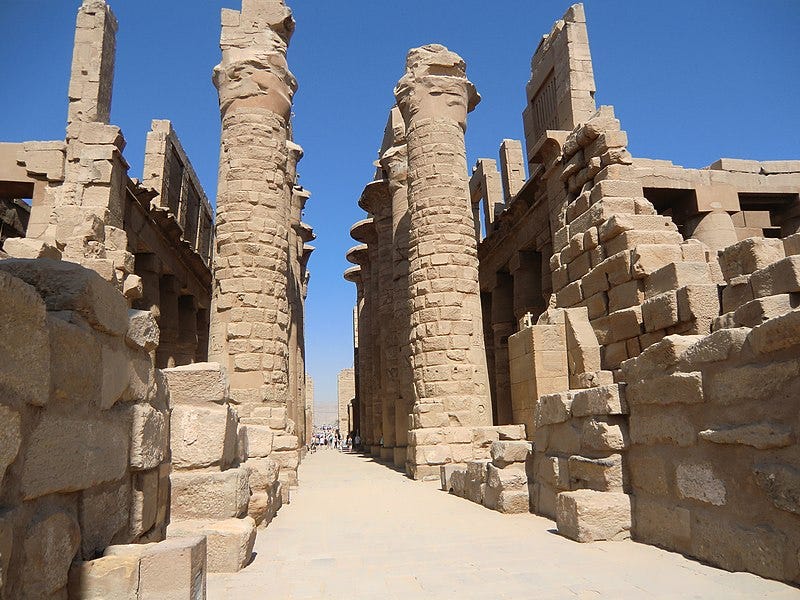
This text is written across a sprawling Egyptian temple complex’s pillars and walls: some of it almost two hundred feet long and fifty feet high. Dark shadows cover part of the writing too. But you’re not off the hook yet, I’m going to make it harder.
The text is in three languages that have been written over two thousand years. One of which is in pictograph form, which has innumerable variants to its pictures. By the way, it doesn’t use punctuation either, so you can’t effectively tell where it ends or begins. Sounds difficult, right?
Fortunately, someone already solved this problem for you. It’s called the Karnak Project, and since 2013, it’s taken the massive written records on one of Egypt’s greatest temples and digitized them. It all starts with pictures.
How To Catalog Something Absolutely Massive
“Here in the pillared hall of Karnak, we have one hundred and thirty-four columns that are very close to all the walls, and these walls are enormous. They’re almost one hundred fifty feet wide and fifty feet tall, so it’s not easy to get a very complete picture.”
— Antoine Chéné, Civilizations Legacy: Egypt Mother Of The World
In the documentary above, Antoine Chéné of the CFEETK (French-Egyptian Centre for the Study of the Temples of Karnak) lays out just one part of the difficulties in cataloging the Egyptian text in the temple complex of Karnak you’d never expect — shade.
The photographer points out the pillars cast shadows over the text they’re trying to capture with powerful digital cameras. So, each location must be photographed three times in different seasons. This way you can combine multiple pictures into one, neutralizing the issue.
He also doesn’t mention that he must climb up scaffolding — some of which can be multiple stories high — to take the pictures.
Egyptologists Sébastien Biston-Moulin and Christophe Thiers in The Karnak Project: A Comprehensive Edition of the Largest Ancient Egyptian Temple say this complex was an important location for the legitimacy of the pharaoh, connecting the ruler’s power to the god Amun.
In fact, Karnak has two thousand years’ worth of information about this on its walls. Yet Moulin and Thiers say, “No compilation, index or glossary had been produced to extract the content of these documents.” Well, until the Karnak Project.
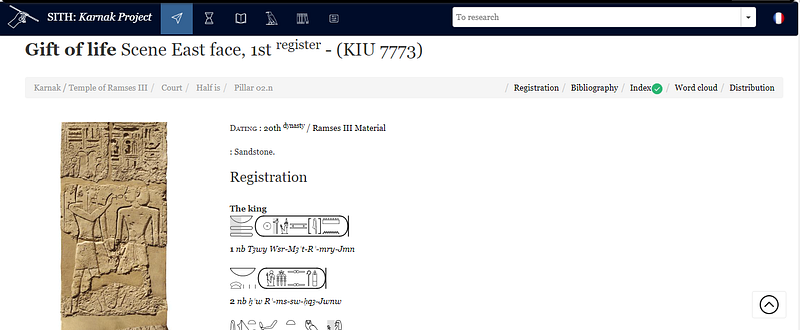
The Project went about cataloging thirty thousand photographs “illustrating the inscriptions,” and each was given a “unique identification number (KIU: Karnak Identifiant Unique) that works as a reference” point. However, there was also the issue of integrating the three languages: hieroglyphs (pictographs), hieratic (script), and demotic (script.)
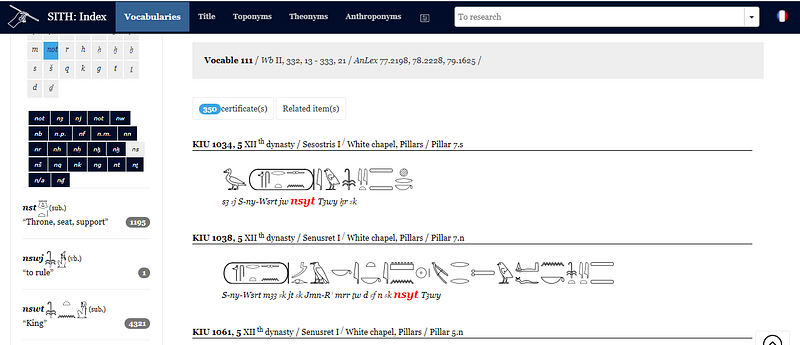
The team brought in experts from Oxford and the University of Lille for the hieratic and demotic scripts. Now, everything had to be indexed. A partner team at the University of Montpellier created the “Système d’Indexation des Textes Hiéroglyphiques (SITH).” According to Moulin and Theirs:
“This program is designed to create lists of words, theonyms, toponyms, ethnic names and cult places, anthroponyms and names of kings from the contents of the corpus. It then detects possible attestations and allows the creation of indexes, classified both chronologically and topographically in the temple. To date, thanks to the indexing work, several hundred thousand attestations of identified terms and contexts are proposed.”
So far, all this funneled information and corresponding technology hasn’t disappointed us. The texts give a good description of one of the greatest festivals in the Egyptian calendar, confirming its importance to the pharaohs.
The Festival Of Opet
According to the Civilizations Legacy documentary, Opet was the celebration of the divine birth of the pharaoh. In the festival, the god Amun, Mut, his consort, and Khons their child, travel from the temple of Karnak to Luxor. This procession was led by the pharaoh.
Each god was represented by a statue, which was placed on a small ceremonial boat. These boats were then loaded on a large ship covered in gold leaf that led a flotilla down the Nile from one temple to the other.
The gods (statues) remained in the Luxor temple for twenty-four days, during which time the festival was celebrated. Later, the procession reassembled, taking the deities back to Karnak. This time in Luxor represented a symbolic union between the god and mother of the pharaoh.
The festival confirmed the monarch was of divine lineage, and therefore, divine himself. Obviously, Egyptian rulers saw this as an important ritual. It also shows the power of religion in this society.
Historian Will Durant in Heroes of History notes there was a symbiotic relationship between the priests and the ruler. While the pharaoh gave the priestly class honor and status, the holy men in turn confirmed the divine nature of Egypt’s leader. So, the ceremony was paramount for both, which explains the lavishness of the festival.
Even the Egyptian boats were elaborate. Not just in decoration and majestic appearance, but in their construction itself. These ships weren’t nailed together.
In the documentary When the Egyptians Sailed on the Red Sea, a team of archeologists and shipbuilders recreated an Egyptian ship, based on temple images and examples of funeral boats. The existing frames discovered were pressed together.
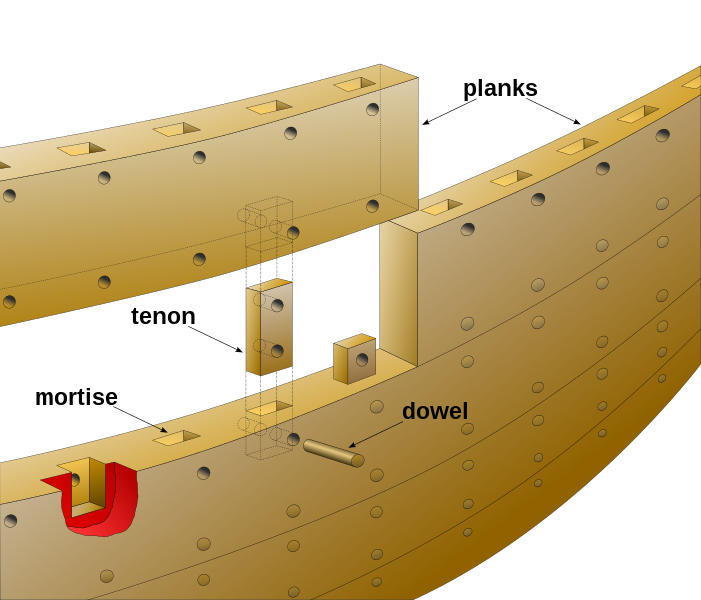
So, the builders cut openings in the planks, where a wooden slot fit in between, and then they were hammered together in a mortise and tenon joint style. The hull was likely coated in some kind of sealer as well. In the documentary they used linen and beeswax, then sailed the finished recreation on the sea.
Overall, the description, elaborate procession, power behind the event, and majesty of the ships give you an idea of the magnitude of the festival. Especially if you’re a simple Egyptian farmer. It was probably a highlight of their year, and the Egyptian ruling class made sure of this because it confirmed their status.
And as technology gets better, who knows what other secrets can be revealed by linking various inscriptions together, particularly in a society built on religion and tradition? So far, the Karnak Project has been impressive.
An Example Of What Can Be Done By Linking Tech And Archeology
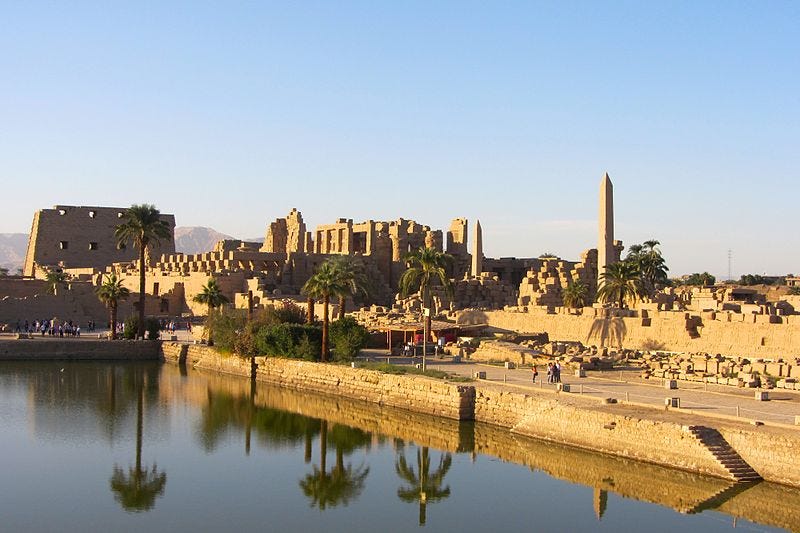
Moulin and Theirs reveal in their paper that five years after the Karnak Project was established it “collected, organized and edited” over ten thousand inscriptions in the three languages. Its online interface is now available in French, English, and Arabic, attracting over four million users.
Not only has it increased access to the texts at Karnak and treasures around the temple, but the technology has also preserved them. While these remnants have survived for thousands of years, they’re not invincible. As with any information, redundancy is critical.
The ability to index something larger than life so it can make better sense can be just as important too. While Karnak’s stories are spread over sixty acres, they can now fit into something as small as a computer screen. An archeological gem is also as close as your keyboard.
After thinking about all of this, it’s hard not to feel a little bit excited, like a farmer long ago before the festival of Opet.
If you’d like to read more stories like these, please sign up for my mailing list. Wanna get in touch, check out my profile page.


