
How Did the 12 Apostles Die and Does It Really Even Matter?
Part Five of the ‘Not Many Mighty’ series
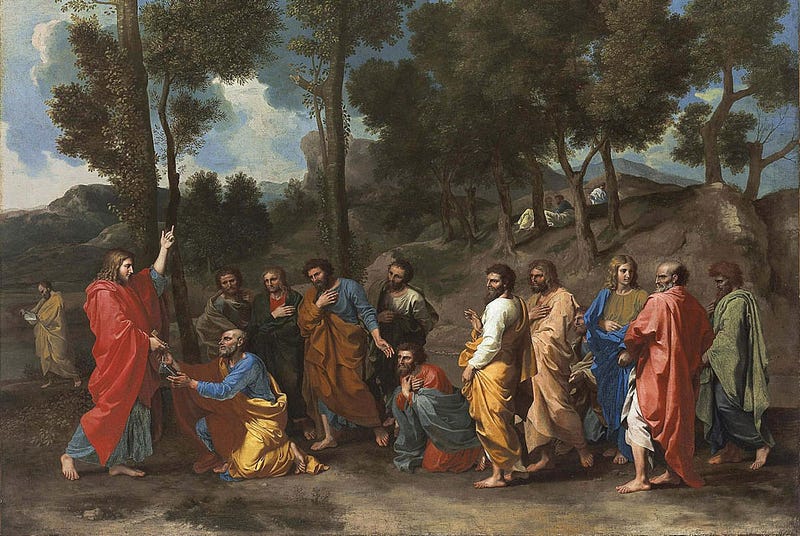

When I began the “Not Many Mighty” series several weeks ago, my premise was that the biblical heroes we’ve all come to know over the millennia were not perfect saints; just like us, they were all flawed human beings facing many of the same struggles and failings we do today. My intent is not to denigrate them in any way, but rather to encourage us. The idea that we have to achieve some unattainable level of flawlessness for God to use us is a lie that holds many back from accomplishing the very things God would have us do.
Over the first four installments I focused on individuals (and will focus on more in future articles). Today, however, I want to look at a group of those individuals, and rather than simply pointing out their failings, I will point to one of the most important things about their lives: how they ended. As any runner knows, how you run the race is critical, but how you finish it even more so.
The twelve men that Jesus called to be his apostles were about as motley a band as ever assembled. Some were fishermen, one was a hated tax collector, and several were so obscure that the Bible doesn’t even bother to tell us their occupation. During the three years they followed Jesus during his earthly ministry, they continually exhibited an inability to understand even the simplest of parables, fought among themselves over who was the greatest in the group, and ultimately abandoned him at his arrest and crucifixion. By all logic, their actions should have spelled the end of Christianity before it even began.
Then came the resurrection, Pentecost, and a complete change in all of them. They spread out across the known world proclaiming the gospel to everyone they encountered, often despite intense persecution. And their deaths stand as some of the strongest evidence that the resurrection is, in fact, true.
There have been many followers throughout history who died for the leader of a religious movement (in our time this has often happened, tragically, through mass suicide), but the deaths of the apostles fall into a different category altogether. Of the eleven original apostles present at Pentecost (Judas committed suicide after betraying Jesus) only John died of natural causes. The other ten died in the following ways:
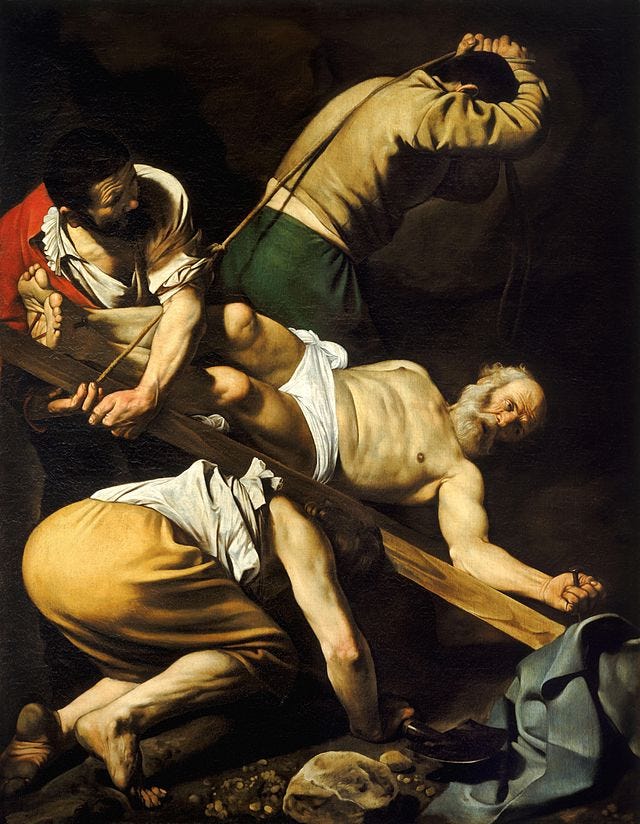
1. Peter was crucified in Rome in 67 or 68 AD during the persecution of Christians under Emperor Nero. Tradition holds that he asked to be crucified upside down because he was not worthy to die the same way his Lord had.

2. James, son of Zebedee and brother of John, is the only apostle (besides Judas Iscariot) whose death is recorded in the Bible. In Acts 12:1–2 we are told that King Herod Agrippa I “had James, the brother of John, put to death with the sword.” This most likely refers to beheading, but we cannot be certain. Whether beheaded or stabbed, he was a martyr either way.
3. Andrew preached in the region around the Black Sea that is now Ukraine before travelling to Greece. He was crucified in Patras, Greece around the year 60 AD on a cross in the shape of an X. It is from this cross that we get the “St. Andrew’s Cross,” the symbol that makes up both the flags of Scotland and the Russian Navy.
4. Matthew, who wrote the gospel that bears his name, was martyred in Ethiopia, killed by a sword thrust.
5. Thaddeus (also known as Jude) preached in Armenia before being martyred in Lebanon around 65 AD in Beirut. Tradition recounts that he was killed by arrows.
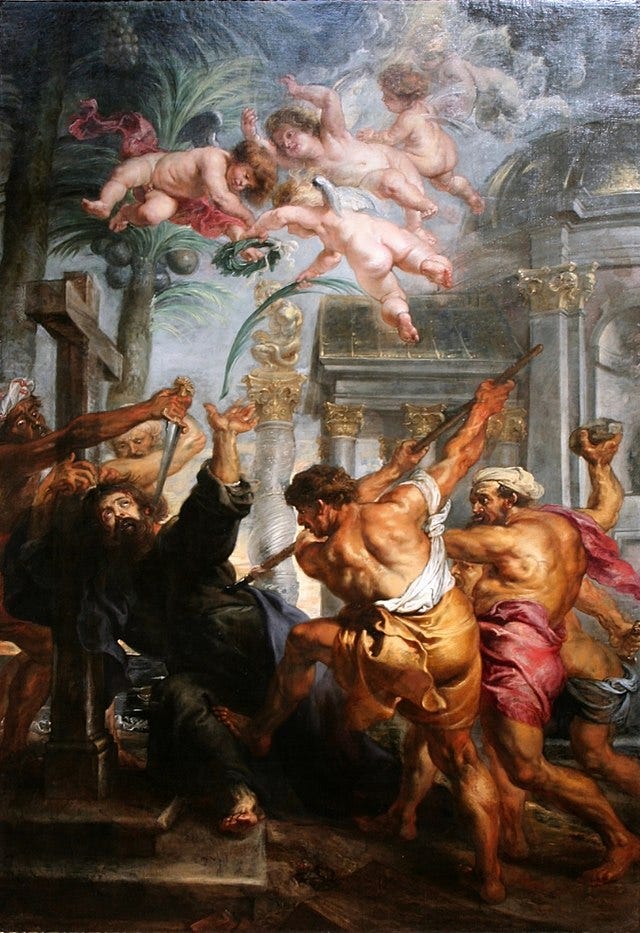
6. Thomas (sadly remembered mainly as “Doubting Thomas”) preached as far as India, where he was ultimately martyred in Madras (now the city of Chennai) by being speared to death.

7. Simon the Zealot was crucified in Edessa, in what is modern-day Turkey.
8. Philip preached in Carthage in North Africa and then in Phrygia (in modern-day Turkey). He was crucified at Hierapolis in Phrygia around 80 AD.
9. Bartholomew preached in the Caucasus and died there by crucifixion, possibly for converting the King of Armenia to Christianity.
10. James, son of Alpheus, preached in Syria and according to the Jewish historian Josephus was stoned to death there.
Both the violent nature of these men’s deaths and the fact that they died at different times and in different parts of the Roman Empire is important. If they knew that the resurrection was a lie, which they would have if they had either stolen Jesus’ body or not personally seen him after the resurrection, it is possible that one or two of them might have been deranged enough to die in order to keep the story going. There is no way, however, that ten of them would have endured excruciating deaths, completely separated from the others by years and hundreds or thousands of miles, for something they knew to be a lie.
What we see in the apostles is an amazing change from the terrified band of followers who fled at Jesus’ arrest to men who did not shrink from death in proclaiming his resurrection. Like many Christians who have faced persecution, from the 1st century to our present day, they could have recanted, denied Christ, stopped preaching, and gone on to live peaceful lives. They, like many after them, did not.
In his first letter to the church at Corinth, Paul wrote: “If Christ has not been raised, our preaching is useless and so is your faith. But Christ has indeed been raised from the dead.” (1 Corinthians 15:14, 20 NIV). Jesus’ first apostles clearly believed this, and in the end their faith proved to be mighty indeed.
I haven’t decided who we’ll be looking at next week, but I’m done saying it might be Peter. Work on that article continues and the word count refuses to be reduced, so I think we’ll save him for last. Thanks for reading.
You can find the rest of the series here:
If you enjoyed this story, you can support my writing directly by joining Medium here. You’ll get access to all of my articles (including my weekly rants and numerous Springsteen stories) as well as those of all the other great writers here. You can also get my articles in your inbox by subscribing here.