How Did Japan Become Infested with Raccoons?
You don’t associate raccoons with Japan, but they have become a serious problem
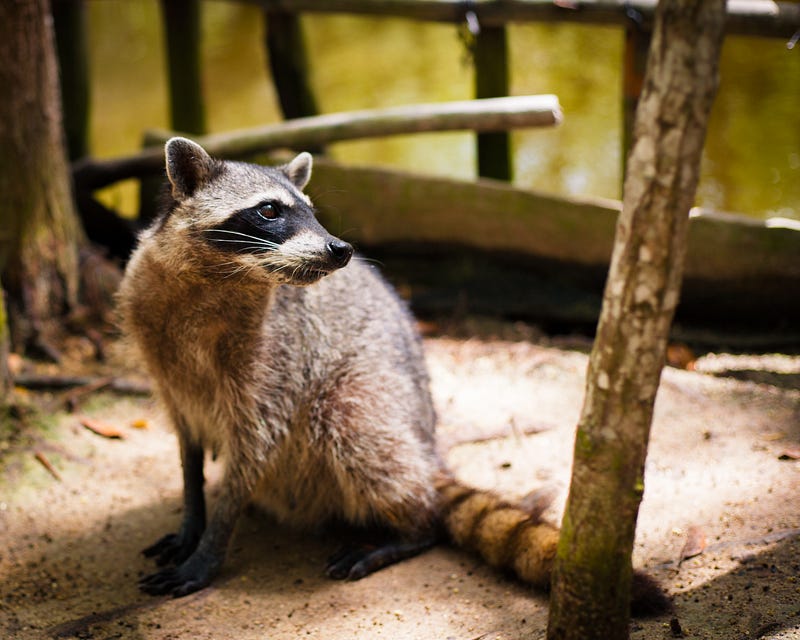
Raccoons are cute as hell. They also have a reputation for rascally behaviour. It was precisely these qualities that gave rise to their popularity in Japan, prompted by a 70s TV show.
Unfortunately, Japan now has something of raccoon problem. And it is spreading. They have already become naturalized in 44 of Japan’s 47 prefectures. They are proving to be major pests, eating crops and indigenous species such as the Japanese crayfish and the Ezo salamander. The raccoons have even damaged 80% of Japan’s temples.
Given that raccoons aren’t native to Japan, how did so many get there?
The raccoons first arrive in Japan after the success of a TV series
In 1963, a book was released called Rascal: A Memoir of a Better Era, by author Sterling North. It was based on the writer’s real childhood experiences when he had adopted a baby raccoon for a year. It was a huge hit, and Disney even made a live-action movie.
However, it was the release of Rascal the Raccoon (Araiguma Rasakaru) in 1977 that changed everything in Japan. Rascal the Raccoon was a 52-episode anime cartoon series released by the Nippon Animation Company based on the American book. It ran for a year and featured a young boy called Sterling who went on adventures with his animal sidekick Rascal. The show was a huge hit.
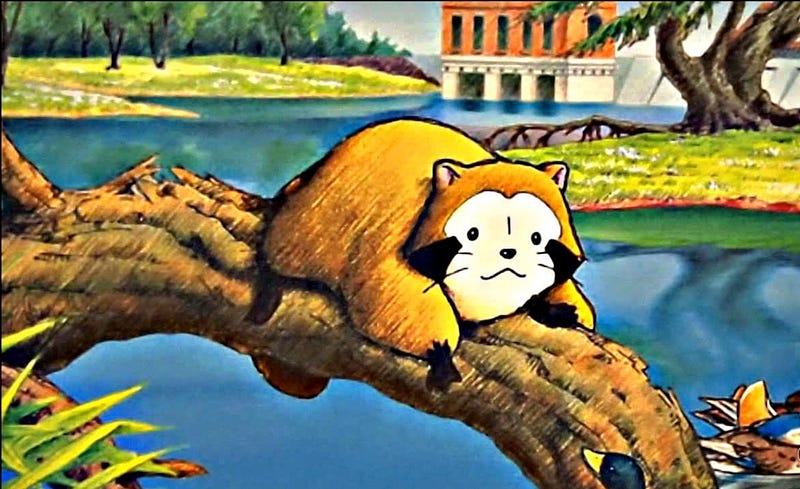
In fact, it was so popular that the Japanese almost immediately started to import raccoons from North America at a rate of 1500 a month.
What went wrong?
Ironically, if people had read the book or finished show, they would have learned the lesson young Sterling did — raccoons are wild animals and do not make good pets.
At the end of the story, (spoiler alert,) Sterling finds out that as raccoons reach adulthood, their behaviour goes beyond cheeky and starts to become destructive. Reluctantly, he has to release his companion back into the wild.
By the time thousands of Japanese families were similarly learning that their previously cute pets were nightmares as adults, it was too late. There were already tens of thousands of raccoons in the country.
Adult raccoons can get quite large and aggressive. It isn’t their fault, that is just their nature. Owners were faced with a dilemma — euthanize their cute but angry pet or release it into the wild.
Even though the raccoons grew increasingly wild as they matured, people had still bonded with them. In the show, Rascal is released back into nature. And that is the option most Japanese chose.
The problems then arose from the fact that Sterling lived in America where the ecosystem had evolved with the charming critters. Unfortunately Japan’s habitats had not.
Forty years on and they have become a significant problem in Japan
Even though the Japanese government was quick to ban imports, they were too late.
Thousands had already been released into the wild, and they are a very adaptive species. As many Americans will know, raccoons are omnivorous and really aren’t fussy about what they eat. They also have a “polygamous or promiscuous mating system”, which means they can breed quickly.
Raccoons are on the Japanese Environment Ministry’s list of invasive species that cause trouble for Japanese flora and fauna. Haruka Yamaguchi, part of the ministry’s Task Force for Countermeasures Against Invasive Species, recently said in an interview with DW:
“Our research shows that raccoons have expanded their habitats threefold in the last decade.”
With no natural predators, abundant food and high reproductive rate, raccoons are an ever-increasing problem.
How much damage are they causing?
In cities, raccoons are pests that rip open bins, damage gardens, property, and are a general nuisance. They steal fish, fruit and anything else they can get their tiny hands on and have even been known to attack people and pets.
In the countryside, things are even worse.
Raccoons cause an estimated $300,000 (USD) of damage to Japanese agriculture per year due to crop destruction. They’re also one of the leading causes of damage done to historic temples and many of the older wooden houses still common outside cities.
As their numbers grow, the raccoons are starting to push out some of the native species. They are particularly fond of bird eggs.
Ironically, one of those suffering the most is the tanuki, also known as the Japanese raccoon dog. This is a tanuki:
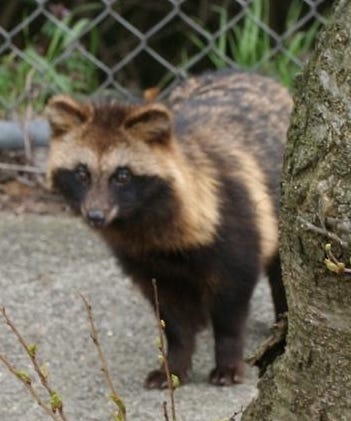
Tanuki not only look like raccoons but are a similar size and compete for the same resources. They are a completely different species but sadly, are not as agile or adaptive as a raccoon, and their turf is being encroached.
What is being done?
In the same interview with DW (see above), Haruka Yamaguchi of the Environment Ministry said:
“We are providing funds to prefectures so they can produce booklets and other literature to educate people about stopping raccoons spreading into more areas, while the farm ministry is providing funds for electric fences and other deterrents.
It is a constant battle.”
Some prefectures have been trying to cull the raccoons, killing thousands every year. At best, they are just trying to control the numbers. But it has proven difficult and surprisingly controversial.
As is similar with, for example, foxes in many countries, the issue is divisive. Some are firmly in favor of culling the pests — especially in the countryside. But there is strong opposition from animal rights advocates and those who are still enamored with the creatures.
Rascal the Raccoon remains incredibly popular
Despite all the issues mentioned above, people in Japan still love Rascal. He still appears on lots of merchandise, including mobile phones, stickers, stuffed dolls and more.
In 2017, the 40th anniversary of the anime series premiere, Nippon Animation opened a pop-up shop devoted to Rascal. As part of the celebration, the Tokyo Anime Center held an exhibition of art and artefacts relating to the show. Rascal even appears in other anime, including the highly popular Attack on Titan.
Over four decades after it aired, Rascal the Raccoon has left an indelible mark on Japan. And its influence is, sadly, likely to remain for decades more.