
How Did Abraham Prove His Faith in God? How Do You Prove Yours?
Abraham’s faith is gravely misinterpreted leading many Christians, may God forbid, to their eternal grave
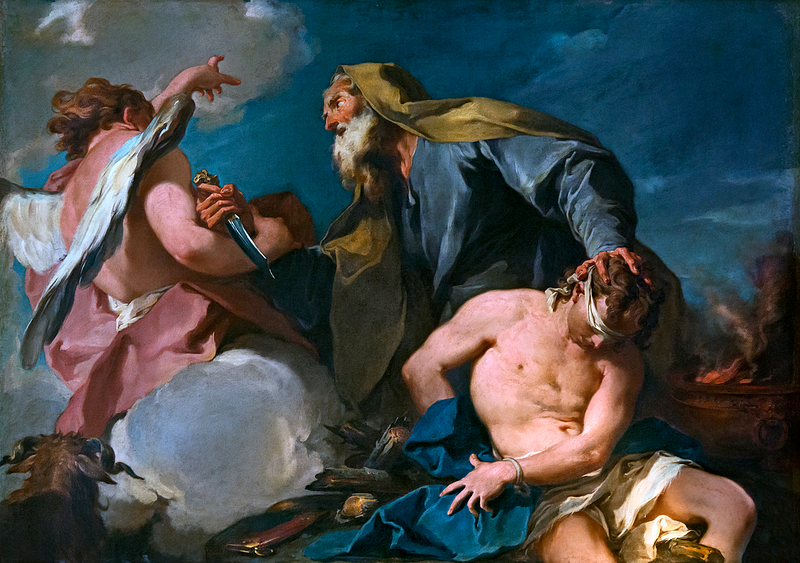
_par_Giambattista_Pittoni.jpg)
Abraham is considered the father of faith by the three main religions on earth: Judaism, Christianity, and Islam. Yet, many misunderstand the kind of faith Abraham had toward God. Mainly by Christians who depend on the misconstrued epistles of the Apostle Paul.
The majority of Christian denominations believe Apostle Paul’s teachings as the doctrine of the New Testament church. Therefore, they make light of the Old Testament commandments referring to it as the Law that was ended by the coming of Jesus Christ.
This is primarily due to a passage in Romans 10:4 which says, “For Christ is the end of the law for righteousness to everyone that believeth.”
Then there’s another which says, “For sin shall not have dominion over you: for ye are not under the law, but under grace.” (Romans 6:14)
Under the Law or under Grace? This is a crucial but controversial topic that I must address in another post.
Apostle Paul’s teachings are not easily understood
Apostle Paul’s epistles require thorough study, especially Romans and Galatians for as the Apostle Peter cautions the believers regarding Paul’s epistles:
As also in all his epistles, speaking in them of these things; in which are some things hard to be understood, which they that are unlearned and unstable wrest, as they do also the other scriptures, unto their own destruction. (2 Peter 3:16, KJV)
Sadly, it seems (to me), that many Theologians and Pastors rely mainly on the Bible commentaries on Paul’s epistles. Instead of diligently studying and comparing them against the Scriptures (from where it was quoted) with a fresh mind (child-like, if you will), they study the commentaries, some of which are visions from the imaginations of the writer’s own heart and not from the word of God.
God warned us about them in Jeremiah 23:16–26 and in Ezekiel 13:1–3. Consequently, what we get today are the same misinterpretations of those in the past that are just passed along from generation to generation which became the basis of the Christian faith.
Mistranslation by mis-pronoun resulted in misinterpretation
In my article Why Did Noah Curse His Grandson Canaan? I stated that most confusions, questions, and misunderstandings of the Scriptures arise from trans-linguistic mistranslations. Many of which come from what I term “mis-pronoun.” This led to grave erroneous teachings and doctrines causing many to make light of God’s commands.
Mis-pronoun, this I mean ascribing a pronoun to the wrong person or thing thus misleading the reader away from the context of what the Scripture is really saying.
Unscrolling the Scriptures
In this study, let me “unscroll” one crucial verse in the Bible that is the fundamental basis of our salvation in God but is gravely misunderstood due to mis-pronouns. I’ll refer to the English translation. It is Genesis 15:6.
He believed in the LORD, and he counted it to him for righteousness. (Gen. 15:6, KJV)
This verse 6 is quoted by two New Testament apostles in their epistles when they defined faith.
Apostle Paul in writing first to the Galatians (Gal. 3:6), and then to the Romans (Rom. 4:3) quoted only Genesis 15:6 without including verse 5. By Paul or by the translators, note the warning in 2 Peter 3:16.
Even as Abraham believed God, and it was accounted to him for righteousness. (Galatians 3:6)
For what saith the scripture? Abraham believed God, and it was counted unto him for righteousness. (Romans 4:3)
James, the apostle, and brother of Jesus quoted it in the only epistle ascribed to him, fully explaining with examples (read James chapter 2) that faith is proven or justified by obedience to what God commanded.
And the Scripture was fulfilled which says, “Abraham believed God, and it was accounted to him for righteousness.” And he was called the friend of God. (James 2:23)
Moses explained in Deuteronomy 6:25 what righteousness means.
And it shall be our righteousness, if we observe to do all these commandments before the Lord our God, as he hath commanded us. (Deut. 6:25, KJV)
Remember also why Jesus asked John the Baptist to baptize Him to fulfill all righteousness.
Now, in order to fully understand what Gen. 15:6 tells us, we have to take the preceding verse 5 as well for the action commanded is there given.
So let’s unscroll this passage carefully, rightly dividing the word of truth. Let’s take first from the King James Version, then we’ll compare it with other popular contemporary versions.
Verse 5: And he brought him forth abroad, and said, Look now toward heaven, and tell the stars, if thou be able to number them: and he said unto him, So shall thy seed be.
First question: What did God command Abram to do?
“Look toward heaven, and tell the stars, number, or count (as other versions stated) them.”
Second question: How did Abram respond to God’s command for righteousness?
Take note that in the old English translations like the KJV, NASB, etc. the pronouns he and him are written with small first letters even if it refers to God as you see in verse 6.
So, here is Abram’s response — Verse 6: “And he believed in the LORD, and he counted it to him for righteousness.”
In the contemporary versions, when it refers to God they capitalize the first letter as in He or Him. This is where the mis-pronoun occurs resulting in misinterpretation. The translators wrongly attribute a pronoun to God or vice versa.
Here’s verse 6 in the New Living Translation: “And Abram believed the LORD, and the LORD counted him as righteous because of his faith.” In this translation, it was God who counted, when the command in verse 5 was for Abram to count.
Remember Moses, righteousness means obedience to God’s command (cf. Deut. 6:25).
Now, let’s break down how Abram responded (with my remarks in italics).
“And he (Abram) believed in the LORD,”
“And he (still Abram, not the LORD) counted it (the stars) to Him (referring to God for it is God who asked Abram to number or count the stars) for righteousness.”
Replacing the pronouns with their names, verse 6 would correctly read this way:
“And Abram believed in the LORD, and Abram counted the stars to the LORD for righteousness.”
Comparing Popular Bible Versions
The Evangelical Christian Publishers Association releases monthly and annual statistics regarding the popularity of different English Bibles sold by their members in the United States. In June 2023, their top five best-selling translations are as follows:
- New International Version (NIV), first published in 1978
- English Standard Version (ESV), first published in 2001
- Christian Standard Bible (CSB), first published in 2017
- New Living Translation (NLT), first published in 1996
- King James Version (KJV), first published in 1611
From these five popular translations let us compare Gen. 15:5-6 and note the error in the NIV, CSB, and NLT versions of verse 6.
- NIV: Gen. 15:5–6 He took him outside and said, “Look up at the sky and count the stars — if indeed you can count them.” Then he said to him, “So shall your offspring be.” 6 Abram believed the LORD, and he credited it to him as righteousness.
- ESV: Gen. 15:5-6 And he brought him outside and said, “Look toward heaven, and number the stars if you are able to number them.” Then he said to him, “So shall your offspring be.” 6 And he believed the LORD, and he counted it to him as righteousness.
- CSB: Gen. 15:5–6 He took him outside and said, “Look at the sky and count the stars, if you are able to count them.” Then he said to him, “Your offspring will be that numerous.” 6 Abram believed the LORD, and he credited it to him as righteousness.
- NLT: Gen. 15:5-6 Then the Lord took Abram outside and said to him, “Look up into the sky and count the stars if you can. That’s how many descendants you will have!” 6 And Abram believed the LORD, and the LORD counted him as righteous because of his faith.
- KJV: Gen. 15:5-6 And he brought him forth abroad, and said, Look now toward heaven, and tell the stars, if thou be able to number them: and he said unto him, So shall thy seed be. 6 And he believed in the LORD, and he counted it to him for righteousness.
Comparing the Scriptures with the Scriptures
I arrived at my understanding of Gen. 15:5–6 by comparing Abram’s earlier encounter with God before this one.
After Lot had separated from Abram, God gave him a similar promise with an “IF” command and a “THEN” fulfillment just like in Gen. 15:5–6. Here is what Gen. 13:16–18 tells us:
16 And I will make thy seed as the dust of the earth: so that IF a man can number the dust of the earth, THEN shall thy seed also be numbered.
How can Abram number the dust of the earth? God showed him how in the next verse.
17 Arise, walk through the land in the length of it and in the breadth of it; for I will give it unto thee.
Abram believed in the LORD by doing what the LORD told him to do.
18 Then Abram removed his tent, and came and dwelt in the plain of Mamre, which is in Hebron, and built there an altar unto the Lord.
That is the faith of Abraham
He believed the LORD by doing exactly what God commanded him. That is, numbering the dust by walking in the land through its length and its width.
In Gen. 15:5–6, numbering or counting the stars as in: “Lift your eyes now and look from the place where you are — northward, southward, eastward, and westward.” (cf. Gen. 13:14, NKJV)
Abraham proved his faith in God through his obedience to God’s commands.
That is the faith of Abraham.
That is the same faith Jesus Christ practiced. He did exactly what His father commanded Him to do, “even as I have kept My Father’s commandments, and abide in His love.” (John 15:10)
“But that the world may know that I love the Father; and as the Father gave me commandment, even so I do. Arise, let us go hence.” (John 14:31, KJV)
In His humanity, the Son of God proved His faith in the Father through His absolute obedience to the Father’s commandments.
That is the faith of the Son of God.
What about you? How do you prove yours? Do you do what God commanded you to do?
What is your faith?