
WRITING|CREATIVE WRITING|DIARY
How Diary-writing Saved Me From Going Mad
The 90s were a tough period in Cuba. Luckily, help was available at the stroke of a pen
Primo Levi writes in The Drowned and the Saved:
We also tend to simplify history; but the pattern within which events are ordered is not always identifiable in a single unequivocal fashion
Part of this simplification is that we can sometimes see the past in black and white. Especially as we get older, distant and almost long-forgotten memories can creep up on us in ways we never thought possible, let alone imagined.
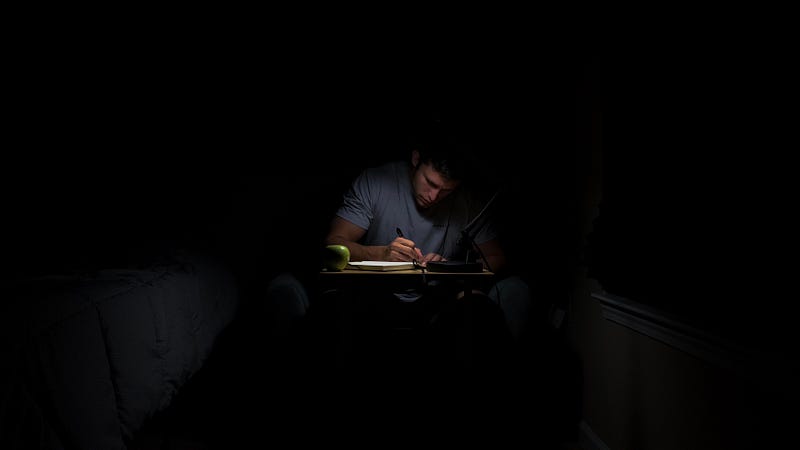
Keeping a diary helps us see the greys in our past, the cracks in foolproof accounts of our earlier selves. Above all, writing a journal can keep us sane.
I started my first diary between 1990 and 1991, in my second year in university. My confidant was my writing and reading tutor, a young woman who had graduated only a few years before. She was encouraging, supportive, and trustworthy.
My first few entries were mainly relationship-related. At the time, my forays into the world of intimate connections were intense and short-lived. Having this outlet to give vent to my late adolescence frustrations (I was nineteen when I started my sophomore year) became an important ritual.
It’s easy to forget how troubling our teenage years are. It was only when my children reached that age that the penny dropped. All of a sudden the smallest of issues became a catastrophe for them. Everything was hyperbolised. I cast my mind back to my own “disaster-heavy” time. That brought things into perspective.
Adolescence and early adulthood are periods of transition. They’re also periods of emotional turmoil. Hormones jumping up and down frantically like salmon leaping upstream. How many times did I fly off the handle at a friend without a second thought? How many times did I take my anger out on a classmate? Far too many.
Yet, by the time I sat down to update my journal later in the day, I’d already begun to cool down. By the time I finished writing, I was in a much better place. Putting my thoughts down on paper gave me the headspace (not that I used that term back then) I needed. In addition, writing in a language in which I hadn’t been brought up (English), but which I was studying at a higher education institute, created a sort of distance. Journaling became my life saviour.
In the autumn of 2019 I went back to Havana to visit my family. Whilst at my mum’s (she still lived in the same flat where I’d grown up) I decided to go through a lot of the papers I’d left behind. These ranged from school reports to the aforementioned diaries. One entry in particular brought back memories.
On this particular day my then girlfriend and I had broken up. It was an acrimonious split. Reading my words again after more than thirty years I realised I’d been deeply affected. What I had forgotten was what I’d done after leaving my ex’s house. I’d decided to hit the Charles Chaplin cinema where they were screening María Luisa Bemberg’s classic film, Yo, la Peor de Todas (I, the Worst of All). I’d gone to the picture house on my own because I was not in the mood for company. Nor would I have been a good companion, even if a friend of mine had run into me that night.
Sitting on my mum’s bed and poring over the angst-ridden lines I’d conjured up for my tutor, I felt like Turner’s hare in his painting, Rain, Steam and Speed. The animal is nothing more than a white dot on the canvas, but a white dot that symbolises a great deal. The hare is running away from the oncoming engine. Nature making way for modernity.
Likewise, I re-read my diary entry and I thought back to the juggernaut (Turner’s steam engine) hurtling towards me at that time. The end of my adolescence (and the innocence it’s meant to stand for) coincided with the fall of the Berlin Wall and the eventual collapse of the socialist bloc. My anxiety didn’t just stem from short-term relationships but also from an uncertain future. Cuba was in the early stages of what became known as the “special period”. Already the morals and principles that had formed the core of my beliefs were starting to crumble.
All of a sudden I remembered that there was a section I’d decided to leave out before handing my diary in. I scrambled through my other notebooks and notepads looking for it, and I met with success. After watching Bemberg’s movie, I’d come home late and had made two entries: one for my tutor, another one for myself. The latter saw I, the Worst of All, as an allegory of what was happening in Cuba at the time. The besieged nun in the film symbolised those of us dreaming of well-overdue radical reforms (in secret, of course).
In this context, keeping two diaries — an official one, regularly updated, and a secret one, still written in English, but filled in sporadically — saved me from losing my mind, an affliction that, sadly, befell many people from my generation. My negative ruminations were neutralised with both a filtered and unfiltered stream of consciousness.
More than thirty years after those lines were written, I realised that journal-keeping had helped me come up with a nuanced view of the world. It didn’t happen overnight, though. Some of the entries (especially the early ones) were still coloured by a black-and-white vision. Yet, the change did take place.
Above all, diary-writing made me see life as a complex, never-ending-learning process. One that, as Primo Levi would have put it, doesn’t run in “a single unequivocal fashion”, but darts and swerves, ducks and dives. Sometimes, like a hare sprinting away from an oncoming steam engine.
Cuban, Immigrant, and Londoner, on sale now.
You can buy me a coffee here.